 Ferndale Siding
 Roofing on Lummi Island Takes a Different Kind of Beating
A roof on Lummi Island doesn't age the same way a roof ten miles inland does. Being surrounded by water on all sides means every home here sits in a constant flow of salt-laden air, and that air doesn't stay offshore — it settles into fasteners, flashing seams, and anywhere metal is exposed. Add the wind-driven rain that comes through Whatcom County off the Strait of Georgia and the heavy tree cover that keeps much of the island shaded and damp for months at a time, and you've got three separate stressors working on the same roof at once. Most roofing problems we see out here aren't one big failure — they're the slow compounding of salt corrosion, water intrusion at the weak points, and moss holding moisture against the shingles longer than it should sit there.
That combination is why a roof replacement done for Lummi Island needs to be specified differently than one going on a house in a drier, more sheltered part of the county. The materials, the flashing details, and the fastener hardware all deserve a second look before anyone starts tearing off the old roof.
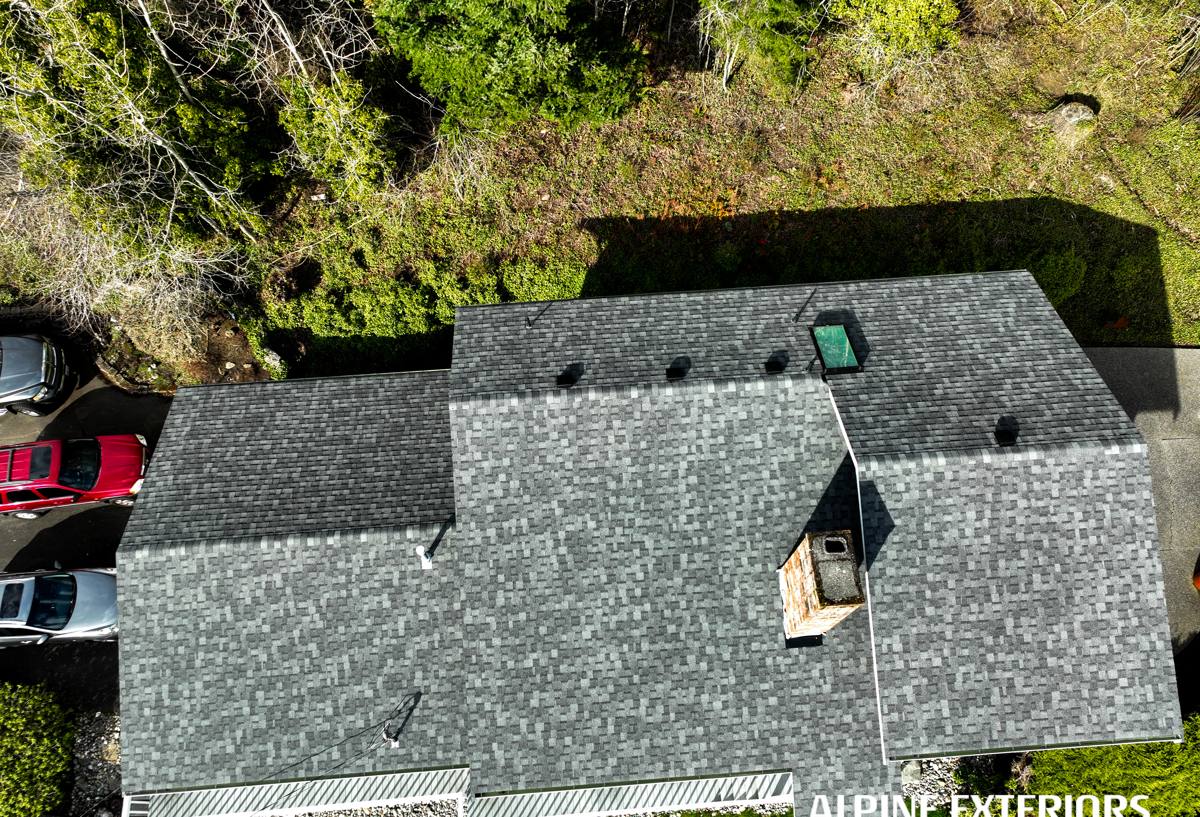
The Three Things Every Island Roof Has to Handle
Salt Air and Corrosion
Airborne salt accelerates rust on anything ferrous — nail heads, drip edge, flashing, even the fasteners holding down ridge caps. On a lot of roofs we've replaced in this area, the shingles themselves still had years of life left, but the exposed metal underneath had corroded to the point of failure. That's a maintenance-burden issue more than a defect in any one product; it just means metal components need to be chosen and installed with corrosion resistance as a priority, not an afterthought.
Driving Rain and Wind Exposure
Wind off the water pushes rain sideways and up under roof edges, valleys, and anywhere two roof planes meet. A roof that would shed water fine in a calm rain can leak in a wind-driven storm if the underlayment and flashing weren't built with that exposure in mind from the start.
A Long Moss Season
Shade from mature trees, marine humidity, and mild winters add up to a moss season that runs much longer here than in drier parts of Washington. Moss isn't just cosmetic — it holds water against the roof surface, works its way under shingle tabs, and slowly lifts and loosens the roofing material it's growing on.
What a Correct Roof Replacement Actually Involves
A roof replacement is more than stripping off old shingles and nailing down new ones. For a Lummi Island home, the parts that matter most are usually the ones you can't see once the job is finished:
- Full tear-off and deck inspection — plywood or plank decking gets checked for rot, soft spots, and water staining before anything new goes down. Covering up bad decking just hides the problem.
- Ice-and-water barrier at vulnerable points — eaves, valleys, and roof-to-wall transitions get a self-adhering waterproof membrane underneath the main underlayment, not just felt paper.
- Corrosion-resistant flashing and fasteners — stainless or heavily coated hardware at chimneys, vents, and valleys instead of standard-grade metal that will rust faster in salt air.
- Proper ventilation — balanced intake and exhaust venting so heat and moisture don't get trapped in the attic, which speeds up both shingle aging and moss growth from underneath.
- Ridge, hip, and valley detailing — these are the highest-wind-load, highest-water-flow points on the roof, and they're where cut corners show up first as leaks.
Comparing Roofing Materials for This Climate
There's no single "best" roofing material for every Lummi Island home — it depends on your budget, your roof's slope and tree exposure, and how long you plan to own the house. Here's how the common options stack up against the specific conditions out here:
| Material | Typical Lifespan | Moss/Algae Resistance | Salt-Air Considerations | Relative Cost |
|---|---|---|---|---|
| Architectural asphalt shingles | 25–30 years | Good with algae-resistant granules; still needs periodic cleaning under heavy tree cover | Fasteners and flashing must be corrosion-rated; shingles themselves aren't affected by salt | $ |
| Standing seam metal | 40–50+ years | Sheds moss well due to steep, slick surface and minimal seams for debris to catch | Requires marine-grade coatings and fasteners; panel and fastener quality matters more here than almost anywhere | $$$ |
| Synthetic slate/shake | 40–50 years | Very good; dense material resists moss root penetration | Performs well in salt air; hardware still needs to be corrosion-resistant | $$$ |
We'll walk through these trade-offs with you at the estimate — including where a mid-grade shingle with the right underlayment and flashing package actually outperforms a premium product installed without those details.
Our Process for a Lummi Island Roof Replacement
- On-site inspection. We look at the current roof, the attic ventilation, tree cover, and how the roof has been performing — not just its age.
- Written estimate. Material options, scope of work, and timeline, with no pressure to decide on the spot.
- Scheduling around logistics. Material delivery and crew transport to the island get built into the timeline up front, not figured out the morning of the job.
- Tear-off and deck inspection. Old roofing comes off, decking gets checked and repaired as needed before anything new goes down.
- Underlayment, flashing, and moisture barriers installed. This is the layer that actually keeps water out — it gets done right the first time.
- New roofing material installed to manufacturer spec, with attention to ventilation and fastener corrosion resistance throughout.
- Cleanup and final walkthrough. Site is cleared of debris and nails, and we walk the finished roof with you.
Ventilation and Moisture: The Part You Don't See
A shaded, humid site like much of Lummi Island puts extra demand on attic ventilation. Without enough intake at the soffits and exhaust at the ridge, heat and moisture get trapped underneath the roof deck. That trapped moisture does two things: it shortens the life of the roofing material from below, and it creates exactly the damp, still conditions moss and algae need to take hold on the surface above. A roof replacement is the right time to correct ventilation problems, since the deck and roofline are already fully exposed — retrofitting proper venting later is far more disruptive and costly.
Working an Island Job the Right Way
Reaching Lummi Island means a ferry crossing, and that changes how a roofing job needs to be planned. Materials, dumpsters, and crew all have to move on a schedule instead of just showing up whenever. A contractor who hasn't worked the island before will often underestimate this — leading to delayed starts, half-finished tear-offs sitting exposed overnight, or last-minute scrambles for a forgotten material delivery. A crew that already works Lummi Island regularly builds the ferry schedule, tide-dependent access points, and material staging into the plan from day one, so your roof doesn't sit open to the weather any longer than it has to. That matters everywhere, but it matters more here, where an unplanned delay during a driving rain can mean real water damage to a house that's mid-tear-off.
Signs Your Roof Needs Replacing, Not Just Repairing
Not every roofing problem calls for a full replacement. Here's what tends to tip the scale from repair to replacement on homes we see in this area:
- Shingles curling, cracking, or losing significant granules across large sections of the roof
- Moss mats thick enough that you can't see the shingle surface underneath
- Soft or spongy spots when walking the roof, which usually mean deck damage below
- Rust staining or visible corrosion at flashing, vents, or fastener heads
- Leaks showing up in the attic or on ceilings in more than one location
- Multiple shingles lifted or blown off after a wind event, especially at the ridge or edges
- A roof approaching or past 20–25 years old, even if it looks intact from the ground
Keeping a New Roof Performing Once It's In
A well-installed roof still needs some upkeep in this climate. Gutters should be cleared regularly so trapped debris doesn't hold moisture against the eaves. Moss growth should be addressed early, before it has a chance to lift shingle edges — a light annual treatment is far cheaper than dealing with an established moss mat. And any tree limbs overhanging the roof are worth trimming back, both to reduce shade and debris and to prevent physical damage during wind events. None of this is complicated, but skipping it is the fastest way to shorten the life of an otherwise good roof out here.
If your roof is showing its age or you just want an honest read on how much life it has left, we're happy to take a look. Request a free, no-pressure estimate using the form below, and we'll give you a straight answer about what your Lummi Island home actually needs.