 Ferndale Siding
 Why Birch Bay Roofs Wear Differently Than Roofs a Few Miles Inland
Birch Bay sits right on the water in Whatcom County, and that waterfront position changes what a roof has to put up with year after year. Homes here take on a mix of stresses that inland Ferndale properties see in a much milder form: salt-laden air, wind that drives rain sideways instead of straight down, and long stretches of damp shade that keep moss growing for most of the year. None of these are dramatic on their own, but stacked together over a decade or two, they age a roof faster than its warranty paperwork assumes.
Salt Air Speeds Up Corrosion
Air coming off the bay carries fine salt that settles on exposed metal — nail heads, drip edge, flashing, vent stacks. Galvanized coatings that would last decades a few miles inland wear thin sooner here, and once that coating is gone, rust takes over. Rusted fasteners back out of the deck, lose their grip, and let shingles lift; rusted flashing pits and eventually opens seams that used to shed water fine.
Wind-Driven Rain Finds the Gaps
Open water means open wind. During fall and winter storms, rain doesn't just fall on a Birch Bay roof — it gets pushed sideways and even upward under shingle laps, around vent flashing, and into valleys that would stay dry in a calmer setting. A roof that's technically intact can still leak in these conditions if the underlayment, lap spacing, or flashing details weren't built with wind-driven rain in mind.
A Long Moss Season
Tree cover and mild, wet winters mean moss in this part of Whatcom County can grow nearly year-round, not just in the rainiest months. Moss holds moisture directly against the shingle surface long after the rest of the roof has dried out, which speeds up granule loss, works its way under tabs, and pries them up over time. Left alone, a moss mat on a north-facing slope can shave years off a roof's usable life.
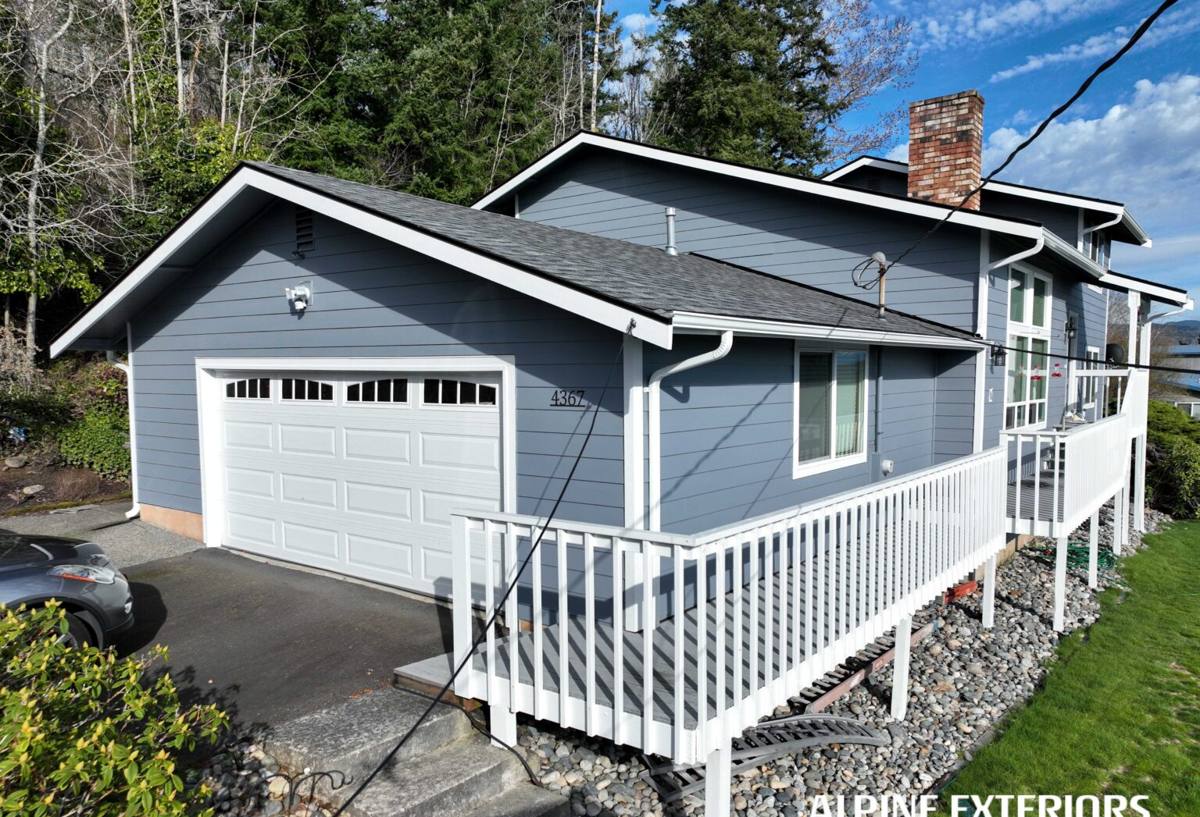
The Repair Calls We See Most Often in Birch Bay
- Granule loss and lifted shingle tabs where moss has held moisture against the roof deck.
- Rusted or separated flashing around chimneys, skylights, and roof valleys.
- Nail pops and exposed fasteners along ridge caps, which take the brunt of wind exposure.
- Soft or spongy decking near eaves, usually from water trapped by clogged gutters or ice.
- Torn, creased, or missing shingles after a windstorm off the water.
- Slow leaks around vent boots where rubber collars have dried out and cracked.
Most of these show up as a small stain on a ceiling or a shingle out of place — not as an obvious hole. That's exactly why a repair should start with a real inspection instead of a guess.
What a Correct Roof Repair Actually Involves
A repair that just patches the spot you can see from the ground often doesn't hold. Water travels along decking and underlayment before it shows up as a stain, so the visible damage and the actual entry point are frequently in two different places. Doing the job right means finding the real cause, not just covering the symptom.
Finding the Real Source of a Leak
This usually means getting into the attic to follow water staining back toward its high point, checking the condition of the decking around that area, and inspecting flashing at every nearby penetration — chimney, skylight, vent stack, or valley. A leak that looks like a shingle problem is very often a flashing problem instead, and no amount of shingle replacement fixes that on its own.
Matching Materials, Not Guessing
A repair should use fasteners and flashing rated for the exposure the roof actually sees — near the bay, that generally means corrosion-resistant fasteners rather than standard galvanized, and flashing metals that hold up to salt air over time. Shingle color and profile should match closely enough that the repair doesn't stand out as a patch, which matters both for appearance and for resale.
Flashing and Underlayment Details Matter More Than the Field Shingles
Most leaks start at a transition point — where a roof plane meets a wall, a chimney, or a valley — not in the open field of shingles. A correct repair pays the most attention to these details: proper step flashing, counterflashing that's actually tucked and sealed rather than caulked over, and underlayment that laps the right direction so wind-driven rain can't work its way underneath.
Repair or Replace? The Factors Worth Weighing
Not every damaged area needs a full roof replacement, and not every roof is worth repairing indefinitely either. These are the questions we walk through with homeowners before recommending either path.
| Factor | Favors Repair | Favors Full Replacement |
|---|---|---|
| Roof age | Under roughly 15 years, or near the middle of its expected life | Near or past the manufacturer's expected service life |
| Extent of damage | Isolated to one slope, valley, or penetration | Spread across multiple slopes or recurring in different spots |
| Decking condition | Solid, dry decking under the damaged area | Soft, delaminated, or repeatedly wet decking |
| Repair history | First or second repair on this roof | Several past repairs in different locations over a few years |
| Moss and staining | Surface growth without granule loss | Heavy, long-term moss with visible granule loss and shingle curling |
Where the answer is genuinely close, we'd rather tell you a repair should buy you several more years than push a replacement you don't need yet. The reverse is also true — patching a roof that's structurally near the end of its life just delays a bigger cost.
Our Roof Repair Process
- Inspection and diagnosis — we look at the roof from both the exterior and, when accessible, the attic side to trace the actual source of the problem rather than just the visible symptom.
- A written scope and honest recommendation — you get a clear explanation of what's failing, why, and whether a targeted repair or a broader fix makes more sense for your situation.
- Material matching — we source shingles, flashing, and fasteners that match your existing roof system and hold up to bay-side exposure.
- The repair itself — damaged material is removed back to sound decking, any soft decking is replaced, and new underlayment, flashing, and shingles go in with proper lap and fastening.
- Cleanup and walk-through — debris and old material are hauled off, and we walk the finished area with you before we call the job done.
Roofing Materials We Work With — and the Trade-offs of Each
Most Birch Bay homes are roofed in asphalt composition shingles, and for good reason: they're cost-effective, come in a wide range of colors and profiles for close matching, and are straightforward to repair in sections without redoing the whole roof. Their main trade-off in this climate is that granule loss and moss vulnerability show up sooner on shaded, north-facing slopes than they would in a drier area.
Metal roofing holds up well against wind uplift and sheds moss and debris more easily than shingles, which is an advantage on exposed, water-facing homes. The trade-off is that repairs require different techniques and fasteners than shingle work, matching an existing metal profile can be harder if the original panel is older, and the upfront material cost runs higher.
Cedar shake has a traditional look that fits the Pacific Northwest, but it's the highest-maintenance option in a damp, moss-prone climate like Birch Bay's — it needs more frequent treatment and inspection to avoid moisture retention and rot, which is a real cost to factor in over the life of the roof rather than a reason to rule it out outright. We'll walk you through these trade-offs honestly rather than push whichever material is easiest for us to install.
Maintenance Checklist Between Repairs
A little upkeep between repairs goes a long way toward keeping small issues small in a climate like this one.
- Remove moss buildup gently once a year or two rather than letting it accumulate for several seasons.
- Keep gutters and downspouts clear so water doesn't back up under the eaves during heavy rain.
- Trim back overhanging branches to cut down on shade and the debris that traps moisture on the roof.
- Have flashing and vent boots checked each fall before storm season, since these fail before the shingles themselves usually do.
- Deal with small leaks or lifted shingles promptly — a spot repair now is almost always cheaper than replacing rotted decking later.
Why It Matters to Hire a Crew That Already Works in Birch Bay
A roof repair that's correct for a dry, inland climate isn't automatically correct here. A crew that regularly works Whatcom County's waterfront communities already knows which details fail first in this exposure — which flashing metals hold up to salt air, which slopes need extra attention for moss, and how much wind allowance a repair needs to actually survive the next storm off the water. That familiarity shows up in fewer callbacks and repairs that are built for the conditions your roof actually faces, not just textbook conditions.
If you're dealing with a leak, storm damage, or a roof that's overdue for a look, we're happy to come take a look and give you a straight answer about what it needs. Reach out for a free, no-pressure estimate using the form below.