 Ferndale Siding
 Siding Installation Built for Point Roberts' Marine Exposure
Point Roberts sits on its own peninsula, exposed on multiple sides to open water. That geography means homes here take a harder hit from weather than most inland Whatcom County properties — steady wind off the water, salt-laden air, driving rain that comes in sideways, and shaded, damp corners where moss and algae get a foothold and never really let go. Siding that performs fine in a sheltered subdivision a few miles inland can fail early out here. We install siding on Point Roberts homes the way this specific exposure demands, not the way a generic spec sheet says to.
This page covers what a correct siding installation looks like for this area specifically — the material, the detailing, the process — and why it matters to hire a crew that already understands what it takes to work in Point Roberts, including the logistics of getting there.
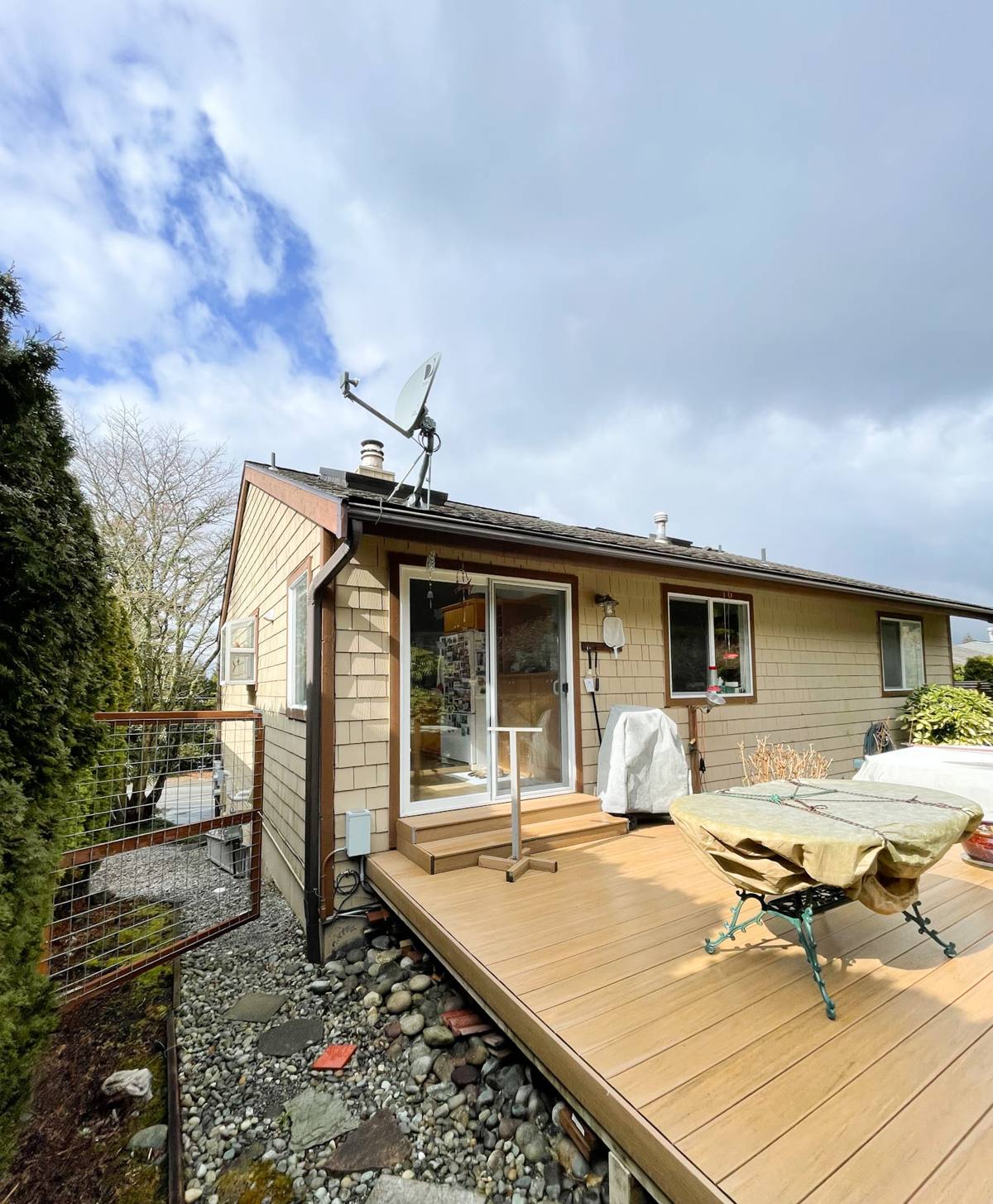
What Salt Air, Rain, and Moss Actually Do to Siding
Salt Air and Coastal Wind
Airborne salt is corrosive to metal fasteners, flashing, and trim, and it accelerates the breakdown of coatings that aren't formulated to resist it. Over years, siding facing the water side of a Point Roberts property will see more UV bleaching and finish wear than the same product on a home a few miles inland. Fastener choice and finish quality matter more here than in most of the county.
Driving, Wind-Driven Rain
Rain that falls straight down is a manageable problem for any siding system. Rain that's pushed sideways by wind finds every gap, lap, and penetration in a wall — around windows, at trim boards, behind poorly lapped courses. On an exposed peninsula like this, wind-driven rain is closer to the rule than the exception, which is why the drainage plane behind the siding matters as much as the siding itself.
Extended Moss and Algae Season
Between the marine humidity and the tree cover common to this part of Whatcom County, north-facing and shaded wall sections stay damp longer through the year. That extended dampness is exactly what moss, algae, and mildew need to establish themselves on a wall surface, and once organic growth takes hold on a porous or poorly finished material, it's a recurring maintenance fight rather than a one-time cleaning.
Why We Install Only James Hardie Fiber Cement
We're a James Hardie–only siding contractor. We don't install vinyl, LP SmartSide, primed wood, or other fiber cement brands, and on a property like this the reasoning is straightforward:
- Non-combustible core — fiber cement doesn't feed a fire the way wood-based products can, which matters anywhere with dry-season wildfire exposure.
- Engineered for Pacific Northwest moisture — Hardie's HZ5 product line is formulated for exactly the wet, freeze-thaw-adjacent climate this region sees.
- Factory-cured ColorPlus finish — baked on under controlled conditions, it resists fading, chipping, and the moisture intrusion that eventually causes lesser paint finishes to peel and let moss and mildew get a grip on the substrate.
- Dimensional stability — it doesn't swell, cup, or rot the way wood-based sidings can when they take on repeated moisture cycling.
- Strong, transferable warranty — backed by a manufacturer with decades of track record in wet coastal climates, not just a marketing claim.
None of that is theoretical marketing language — it's the same reasoning that led us to stop offering the alternatives entirely rather than sell a product we don't believe holds up on homes like the ones we work on out here.
What a Correct Installation Involves in This Climate
The siding board is only part of the system. On an exposure like Point Roberts, the assembly behind the board is what actually determines whether the wall stays dry.
Drainage Plane and Rainscreen Gap
We install a weather-resistive barrier with a proper drainage gap behind the siding rather than nailing panels directly to a flat wall. That gap lets any moisture that gets past the cladding drain and dry out instead of sitting against the sheathing — critical on a wall that's going to take wind-driven rain regularly.
Flashing at Every Penetration
Windows, doors, hose bibs, vents, and deck ledgers are the places water actually gets in. Proper head flashing, kick-out flashing at roof-to-wall intersections, and correctly lapped house wrap around every opening matter more on this peninsula than almost anywhere else in the county.
Fastening and Clearances
Hardie specifies fastener type, spacing, and penetration depth for a reason — under-driven or over-driven nails, or the wrong fastener metal in a salt-air environment, are a common cause of early failure. We also hold the manufacturer-specified ground clearance and roof clearance so the bottom course isn't sitting in a moisture trap.
Factory-Primed Cut Edges
Every field cut gets sealed with Hardie's approved touch-up product before installation. An unsealed cut edge is a direct path for moisture into the fiber cement core, and it's one of the most common shortcuts on rushed jobs.
The Border Factor: Why Local Experience Actually Matters Here
Point Roberts is a U.S. exclave — the only practical land route in and out crosses the Canadian border twice. That's not a footnote; it's an operational reality that affects every siding project out here. Crew members need valid ID or passports for daily crossings. Material deliveries, dump trailers, and equipment moves all have to account for border wait times and customs realities that simply don't exist on a job three miles outside Ferndale proper.
A crew that hasn't worked this route before tends to underestimate it — showing up late, running short on material mid-job, or scheduling in a way that assumes normal cross-town logistics. We plan Point Roberts projects around that reality: staging material in advance, scheduling crossings with buffer time, and setting homeowner expectations up front instead of discovering the logistics mid-project. It's a small thing until it's the reason a job runs three days over.
Our Process for a Point Roberts Siding Installation
- On-site assessment — we walk the exterior, check the existing wall assembly, identify moss/moisture damage, and note wind exposure on each elevation.
- Material and color selection — we help you choose the right Hardie plank profile, texture, and ColorPlus color for the home and its exposure.
- Scope and scheduling — we build a realistic timeline that accounts for weather windows and border-crossing logistics, and confirm permitting with Whatcom County.
- Tear-off and inspection — old siding comes off and the sheathing gets inspected for rot or moisture damage before anything new goes up.
- Weather barrier and drainage plane — house wrap, flashing, and rainscreen furring are installed correctly before the first board goes on.
- Siding installation — Hardie boards installed to manufacturer fastening, clearance, and lap specifications.
- Trim, caulking, and touch-up — HardieTrim details, sealed cut edges, and final finish work.
- Final walkthrough — we go over the finished work with you before calling the job done.
Cost Factors for Siding Installation in Point Roberts
Every home is different, but these are the variables that actually move the price on a project out here:
| Factor | Why It Matters |
|---|---|
| Home size and wall complexity | More square footage and more corners, dormers, and trim details mean more labor and material |
| Existing wall condition | Rot or moisture damage found during tear-off adds sheathing repair before new siding can go on |
| Siding profile and finish | Lap width, texture, and ColorPlus color selection all affect material cost |
| Exposure and elevation detailing | Water-facing elevations often need extra flashing and drainage detailing given the wind exposure |
| Access and logistics | Border-crossing scheduling and material staging factor into project timeline and cost |
| Permitting | Whatcom County permit requirements apply and are factored into project planning |
We give straight, itemized estimates rather than a single vague number — you should know what you're paying for before work starts.
What to Expect After Installation
Correctly installed Hardie siding is low-maintenance, but "low-maintenance" isn't "zero-maintenance," especially in a climate this wet. A short annual routine keeps it performing the way it's designed to:
- Rinse the exterior once or twice a year to clear salt residue and organic buildup, especially on shaded or water-facing walls
- Check caulking at trim joints and penetrations annually and re-seal if it's cracked or pulling away
- Keep gutters and downspouts clear so water isn't sheeting down the wall face
- Trim back vegetation and tree cover that keeps a wall section shaded and damp longer than it needs to be
- Watch for any early moss or algae growth and address it before it spreads across a full wall section
None of this is heavy work, but skipping it is how a well-installed system ends up looking neglected years before it should.
Get a Free, No-Pressure Estimate
If you own a home in Point Roberts and your siding is showing its age — moss that won't go away, boards that are cupping or delaminating, or paint that keeps failing — it's worth having a crew that already knows this stretch of coastline take a look. Fill out the form below for a free estimate, and we'll walk you through what your home actually needs, with no pressure to move forward.