 Ferndale Siding
 Building Decks for Point Roberts' Unusual Exposure
Point Roberts sits on its own peninsula, surrounded on three sides by water, which means homes here take a version of Whatcom County weather that's more intense than what you'd find a few miles inland in Ferndale or Bellingham. Salt-laden air comes off the water nearly year-round, driving rain arrives sideways during winter storms, and the long gray stretch from October through April keeps every horizontal surface damp long enough for moss and algae to take hold. A deck built to a generic spec sheet doesn't hold up out here the way it would in a drier, less exposed location.
We build and replace decks for homeowners across Ferndale and Whatcom County, and Point Roberts jobs get their own set of decisions from the ground up — fastener choice, board spacing, ledger flashing, and framing hardware all get selected with this specific exposure in mind, not a one-size-fits-all approach.
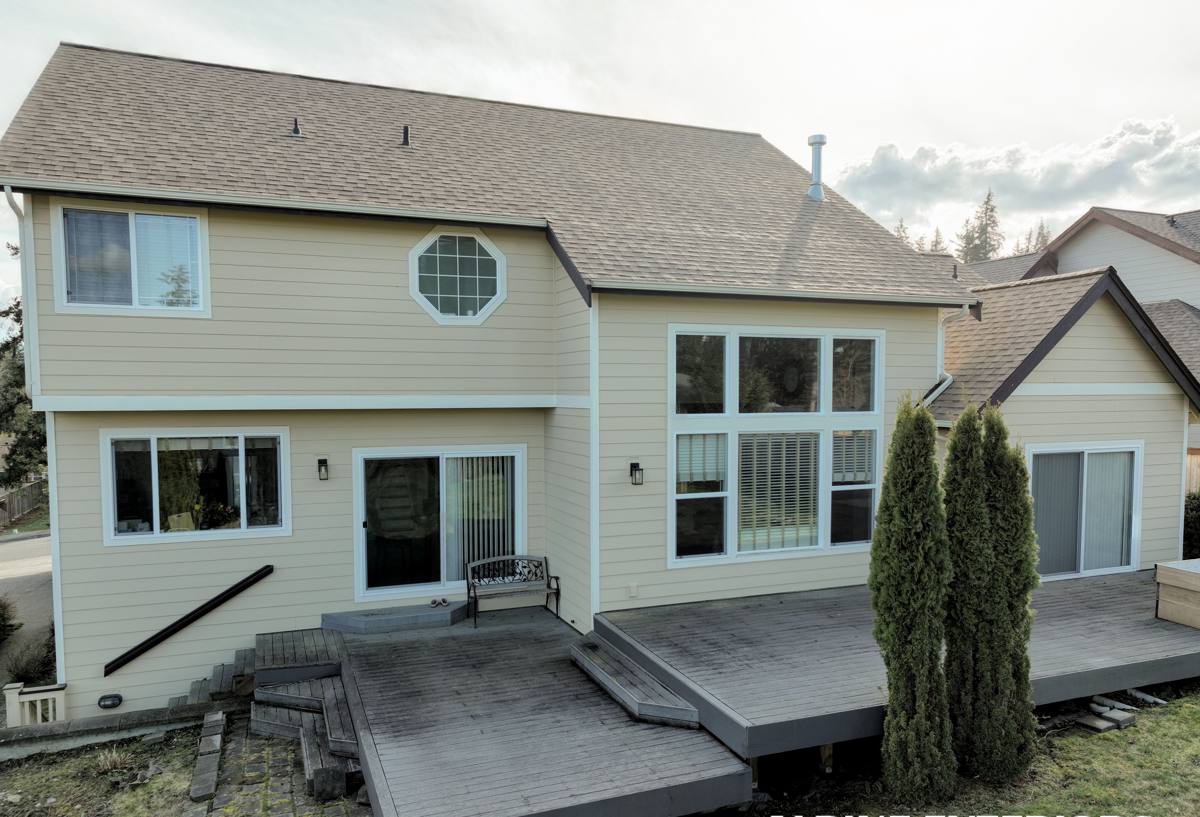
What Point Roberts' Climate Actually Does to a Deck
Salt Air and Metal Fasteners
Ordinary galvanized fasteners and hardware corrode faster near saltwater exposure than they would inland. Once a nail or screw head starts rusting, it weakens, stains the surrounding wood or composite, and eventually fails. Any deck we build this close to the water gets stainless steel or marine-grade coated fasteners and hardware as the standard, not an upgrade option — it's cheaper to spec it right the first time than to re-fasten a deck in eight years.
Driving Rain and Water Intrusion
Wind-driven rain doesn't just fall on a deck — it gets pushed sideways into ledger boards, post bases, and any gap where the structure meets the house. Poorly flashed ledger connections are one of the most common causes of hidden rot we find on older decks in this area. Correct flashing at the ledger, proper slope away from the house, and gapping between boards for drainage all matter more here than in a drier climate.
Moss, Algae, and the Long Wet Season
With months of damp, low-light conditions, moss and algae growth on deck surfaces is close to guaranteed unless the material and gap spacing allow real airflow and drainage underneath. Moss holds moisture against the deck surface, which accelerates wood decay and makes composite boards slippery. Board selection and underlying ventilation are as important as the finish on top.
Choosing the Right Decking Material
There's no universally "best" decking material — there's a best fit for how a homeowner uses the deck, their maintenance appetite, and their budget. Here's how the common options actually perform under Point Roberts conditions:
| Material | Moisture/Salt Behavior | Maintenance | Typical Lifespan Here |
|---|---|---|---|
| Pressure-treated wood | Handles moisture well when properly sealed; needs reapplication | Annual cleaning + sealing recommended | 15-20 years with upkeep |
| Cedar | Naturally rot-resistant, but salt air and UV gray it faster | Periodic sealing/staining to preserve color and protection | 15-25 years with upkeep |
| Composite (capped) | Resists moisture and salt corrosion well; low water absorption | Occasional washing to control surface algae | 25-30+ years |
| PVC decking | Fully synthetic, essentially immune to rot and salt damage | Lowest maintenance of the group | 30+ years |
We install all of these and will tell you honestly which one fits your situation rather than pushing whatever has the best margin. A lot of Point Roberts homeowners who want a low-maintenance, close-to-the-water deck lean toward capped composite or PVC because they don't have to think about sealing schedules, but a well-maintained cedar or treated wood deck still looks great and costs less upfront.
What a Correctly Built Deck Involves
Framing and Structure
The framing is what you don't see and what matters most. Joist spacing, beam sizing, and post footings need to be sized for actual loads — furniture, hot tubs, and gatherings — not the bare minimum. Footings should go below frost depth and bear on solid, undisturbed soil, which sometimes means more digging than a homeowner expects on a first quote.
Ledger Attachment and Flashing
Where the deck attaches to the house is the single most common failure point we see on decks that weren't built for this climate. Proper ledger flashing — installed so water sheds outward and down, never behind the flashing — combined with correct lag bolt or through-bolt spacing, is non-negotiable on any deck we attach to a structure.
Fasteners and Hardware
As covered above, this is where corner-cutting shows up years later as rust streaks and failing connections. Stainless or coated marine-grade hardware throughout, including hidden fastener systems where the decking calls for it.
Railings and Code Compliance
Railing height, baluster spacing, and guard requirements are set by code, and inspectors in Whatcom County will check them. We build to code as the floor, not the ceiling, and can talk through railing material options — wood, metal, or cable — based on your view and maintenance preference.
Finish and Drainage Details
Board spacing for drainage, any under-deck drainage systems if you want dry storage below, and stair details all get finalized before we start cutting, not improvised on site.
Our Process for Point Roberts Deck Projects
- On-site assessment. We look at the existing structure (if replacing), the ground conditions, sun/wind exposure, and how you actually plan to use the space.
- Design and material selection. We walk through decking material, railing style, and layout options with honest pros and cons for your specific site and budget.
- Written estimate. A clear, itemized quote — no vague allowances that turn into surprise change orders.
- Permitting. We handle the permit process where required so the deck is built to code and won't cause problems at resale.
- Demolition and framing (if applicable). Old decking and, when needed, framing come out; new structure goes in with corrosion-resistant hardware and proper flashing.
- Decking, railing, and finish work. Final surface installation, railings, stairs, and any trim or skirting.
- Walkthrough. We go over the finished deck with you, including basic care and, if applicable, sealing or cleaning recommendations for your material.
Repair, Replace, or Rebuild?
Not every aging deck needs a full teardown. If the framing underneath is sound — no soft spots, no rot at the ledger, footings still solid — we may be able to replace just the decking boards and railings, which costs meaningfully less than a full rebuild. But if there's structural rot, undersized framing, or a ledger connection that was never properly flashed, patching the surface just hides the problem for a couple more years before it resurfaces. We'll tell you straight which situation you're in and won't recommend a full rebuild if a repair will genuinely hold up.
Signs Your Deck Needs More Than a Surface Fix
- Soft, spongy, or spring-loaded feeling boards, especially near the house
- Visible gaps, rust streaks, or staining around fasteners and hardware
- Wobble or movement in railings or posts
- Water stains or soft wood on the siding or trim directly above the ledger connection
- Persistent moss or algae that returns within weeks of cleaning
- Footings or posts visibly settling, tilting, or cracked
- Boards cupping, splitting, or separating from fasteners
Why Local Experience Matters for This Job
Point Roberts is a specific microclimate even within Whatcom County — its water exposure on three sides means it sees more salt-air corrosion and wind-driven rain than most of Ferndale or the surrounding mainland. A crew that mostly builds decks in drier, more sheltered parts of the county can still do competent framing and still miss the details that matter here: the fastener grade, the flashing detail, the drainage gap. We've built and repaired decks throughout this stretch of the county long enough to know which shortcuts show up as problems in year three versus year fifteen, and we spec every Point Roberts job accordingly rather than defaulting to whatever's standard elsewhere.
What Affects Your Project's Cost
| Factor | Why It Matters |
|---|---|
| Deck size and shape | More square footage and multiple levels or angles increase material and labor |
| Decking material | Composite and PVC cost more upfront than wood but need less long-term maintenance |
| Framing condition | Full rebuilds cost more than resurfacing but are necessary when structure is compromised |
| Height and access | Elevated decks need more substantial framing, footings, and often stairs |
| Railing style | Cable and metal railings typically cost more than standard wood balusters |
| Site access | Tight or difficult access can add labor time for material handling and demolition |
If you're planning a new deck or need to replace one that's showing its age, we're happy to come take a look and give you a straightforward, no-pressure estimate. Fill out the form below and we'll set up a time to walk the site with you.