 Ferndale Siding
 Why Siding Wears Differently in the Nooksack Area
Homes in and around Nooksack sit in a stretch of Whatcom County where three things gang up on exterior siding at once: salt-tinged air moving in off the Strait of Georgia and Bellingham Bay, long stretches of driving rain that comes in sideways during fall and winter storms, and a moss season that can run eight months out of the year on north- and west-facing walls. Individually, any one of those is manageable. Together, they shorten the useful life of siding that wasn't built or installed for this specific combination.
Salt air accelerates corrosion on fasteners and trim metal. Driving rain finds every gap in flashing, caulk, and lap joints and pushes water sideways rather than letting it run straight down. Moss and algae hold moisture against the wall surface long after a storm has passed, which keeps siding damp for days instead of hours. A siding replacement done right in this area has to account for all three, not just one.
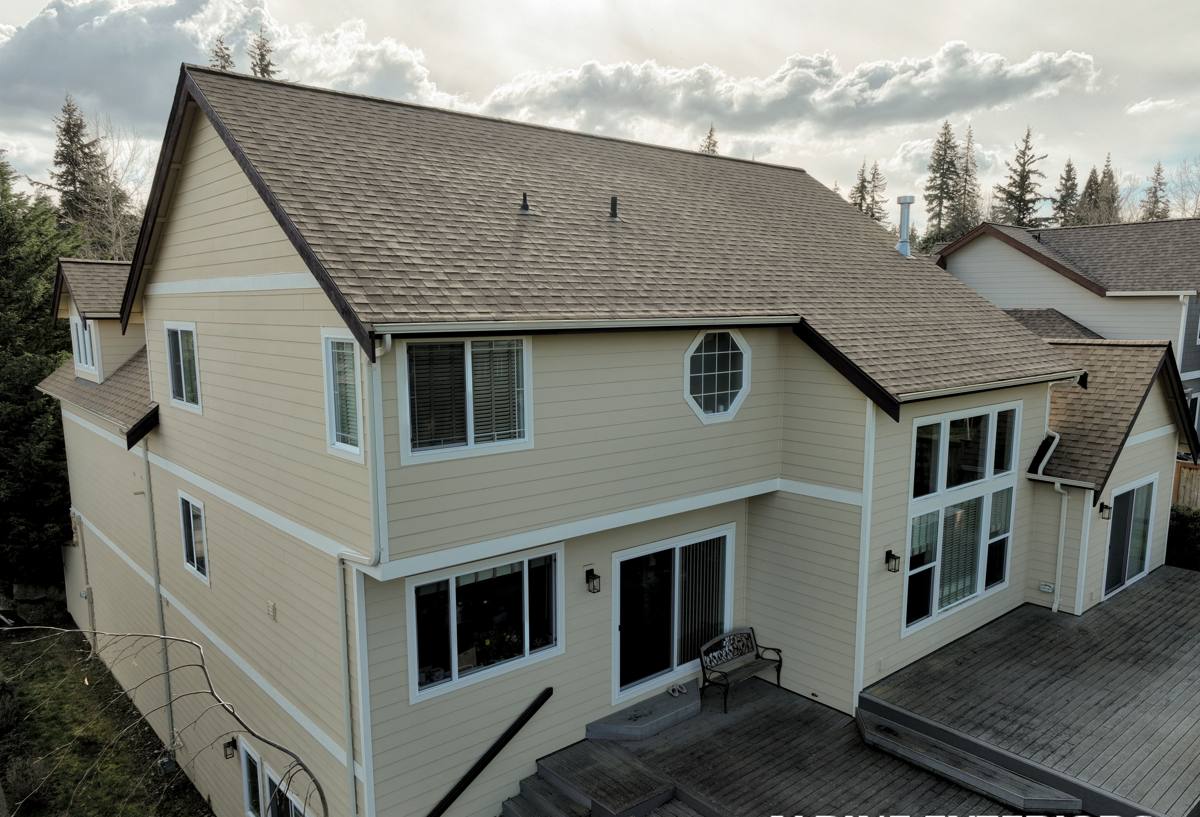
How to Tell a Nooksack Home Actually Needs New Siding
Not every stained or aging wall needs full replacement. Some signs point to a cleaning or spot repair; others tell you the siding system itself has failed and is no longer protecting the wall behind it.
- Soft or spongy spots when you press on the siding, especially near the bottom courses and around window trim
- Persistent moss or dark streaking that returns within weeks of cleaning
- Paint that's bubbling, peeling, or won't hold for more than a couple of years
- Visible warping, cupping, or buckling on wall sections that face prevailing wind and rain
- Gaps opening up at seams, corners, or where siding meets trim, window flashing, or the foundation
- A musty smell or visible staining on interior walls that share an exterior wall with damaged siding
If you're seeing two or more of these, especially on the sides of the house that take the brunt of Whatcom County's weather, it's worth a real inspection rather than another round of pressure washing.
Why This Company Installs Only James Hardie Fiber Cement
We get asked regularly why we don't offer vinyl, LP SmartSide, or cedar as options. The honest answer is that after years of tear-offs in this climate, we stopped installing products that consistently gave homeowners here problems — not because those products are worthless everywhere, but because they're a poor match for salt air, sustained moisture, and moss exposure specifically.
Vinyl expands and contracts more than fiber cement and can warp under repeated wet-dry cycling; engineered wood products like LP SmartSide perform well in drier climates but are more sensitive to sustained moisture at cut edges and seams; raw or primed wood needs a maintenance schedule most homeowners can't realistically keep up with in a climate this wet. James Hardie fiber cement is non-combustible, dimensionally stable in swings of humidity, and holds its factory-applied ColorPlus finish far longer than field-applied paint. It's engineered in HZ5 and HZ10 formulations specifically for climates with prolonged moisture exposure, which describes Nooksack and the rest of Whatcom County well.
That's the whole reason we standardized on one manufacturer instead of offering a menu. We'd rather install one product correctly and stand behind it than offer several and hope the wrong one holds up.
What Correct Installation Involves Here
The siding material is only part of the equation. In an area with this much wind-driven rain, the installation details matter as much as the product choice:
- Weather-resistant barrier installed and lapped correctly behind the siding, not just stapled up as an afterthought
- Proper flashing at every window, door, and roofline intersection, sloped to shed water outward
- Correct fastener type and spacing — stainless or coated fasteners driven to Hardie's specification, not overdriven or underdriven
- Minimum clearance between the bottom of the siding and grade, decks, or roof lines to keep splash-back and standing moisture away from the material
- Caulking only where Hardie's install guide calls for it — over-caulking traps moisture instead of shedding it
- Proper joint and corner treatment so water sheds past seams instead of wicking into them
Skipping any one of these doesn't show up on day one. It shows up two or three winters later, usually right at the seams and window trim first — the same spots where sideways rain hits hardest.
Our Process for a Nooksack-Area Siding Replacement
1. On-Site Assessment
We start by walking the exterior wall by wall, checking for soft sheathing, existing moisture damage, and which sides of the house are taking the worst weather exposure. This tells us whether it's a straightforward siding swap or whether sheathing repair needs to be priced in before new siding goes up.
2. Tear-Off and Sheathing Check
Old siding comes off in sections so we can inspect the sheathing and framing underneath as we go, rather than finding hidden rot after the new weather barrier is already installed. Any soft or water-damaged sheathing gets replaced before anything else happens.
3. Weather Barrier and Flashing
This is the step that determines whether the siding lasts fifteen years or fifty. We install and lap the weather-resistant barrier correctly, then flash every penetration and transition — windows, doors, hose bibs, vents, roof-to-wall intersections — before a single piece of Hardie board goes up.
4. James Hardie Installation
Panels or lap siding go up to Hardie's published fastening and clearance specifications, not shortcuts. Corners, trim, and seams get detailed so water sheds outward at every joint.
5. Final Walkthrough
We walk the finished job with you, check clearances and caulk lines, and go over care and warranty registration before we consider the job done.
What Nooksack-Area Siding Replacement Typically Involves Cost-Wise
Every home is different, but the factors that move the price are consistent. Use this as a general guide, not a quote — actual numbers depend on your home's size, current condition, and access.
| Cost Factor | Why It Matters Locally |
|---|---|
| Sheathing condition under old siding | Homes with long-term moisture exposure near the coast often need sheathing repair before new siding goes on |
| Home size and wall complexity | More corners, gables, and window trim mean more flashing and cut detail work |
| Siding profile chosen | Lap siding, panel siding, and shingle-style Hardie products differ in material and labor cost |
| Trim and accessory scope | Replacing trim, fascia, and soffit at the same time affects both cost and how well the whole system sheds water |
| Access and site conditions | Sloped lots, mature landscaping, or tight setbacks common in established neighborhoods can add labor time |
Why Hiring a Crew That Already Works Nooksack Matters
A crew that works this specific part of Whatcom County regularly knows things a traveling or out-of-area contractor doesn't: which wall orientations take the worst of the driving rain, how much moss regrowth to expect on shaded sides, and how the local building department expects siding and flashing details to be documented. That local familiarity shows up in fewer surprises during the job and fewer callbacks after it.
It also matters for scheduling. We work around this area's wet season rather than fighting it — timing tear-off and weather-barrier installation for stretches of drier weather whenever the forecast allows, so your walls aren't sitting open to a storm system longer than necessary.
Maintenance After Your New Siding Goes Up
James Hardie siding installed correctly needs far less upkeep than wood or engineered wood alternatives, but "less" isn't "none," especially in a climate that grows moss well.
- Rinse the exterior once or twice a year to knock off pollen, salt residue, and early moss growth before it takes hold
- Keep gutters clear so overflow doesn't run down the wall face and feed moss growth on north- and west-facing sections
- Trim back shrubs and trees so siding gets airflow and isn't held wet by shade and foliage contact
- Inspect caulk lines at trim and window flashing every year or two and have any gaps addressed promptly
- Watch for any soft spots or discoloration after major storms, particularly on walls facing the prevailing weather
Get an Honest Look at Your Siding
If your Nooksack-area home is showing moss that won't quit, paint that won't hold, or siding that's simply past its useful life, we'll come take a straightforward look and tell you what we actually see — no pressure, no upsell to a product we don't stand behind. Use the form below to request a free estimate.