 Ferndale Siding
 Custom Windows for Nooksack Homes
Nooksack sits inland along the river valley in Whatcom County, and homes out here deal with a specific mix of weather stress: long stretches of driving rain, heavy humidity that settles into the valley, and a moss season that seems to start earlier and last longer every year. Windows are one of the first places that shows up. Fogged glass, soft trim, sticky sashes, and drafts around the frame are usually the earliest signs that a window system is losing the fight against moisture, not a sign that something dramatic is wrong yet — but it will get there if it's ignored.
We install custom windows for homes throughout this part of the county, and "custom" isn't a marketing word here — it means the window is built and installed to match the actual opening, the actual wall assembly, and the actual exposure of your house, rather than forcing a stock size into a rough opening and caulking around the gaps.
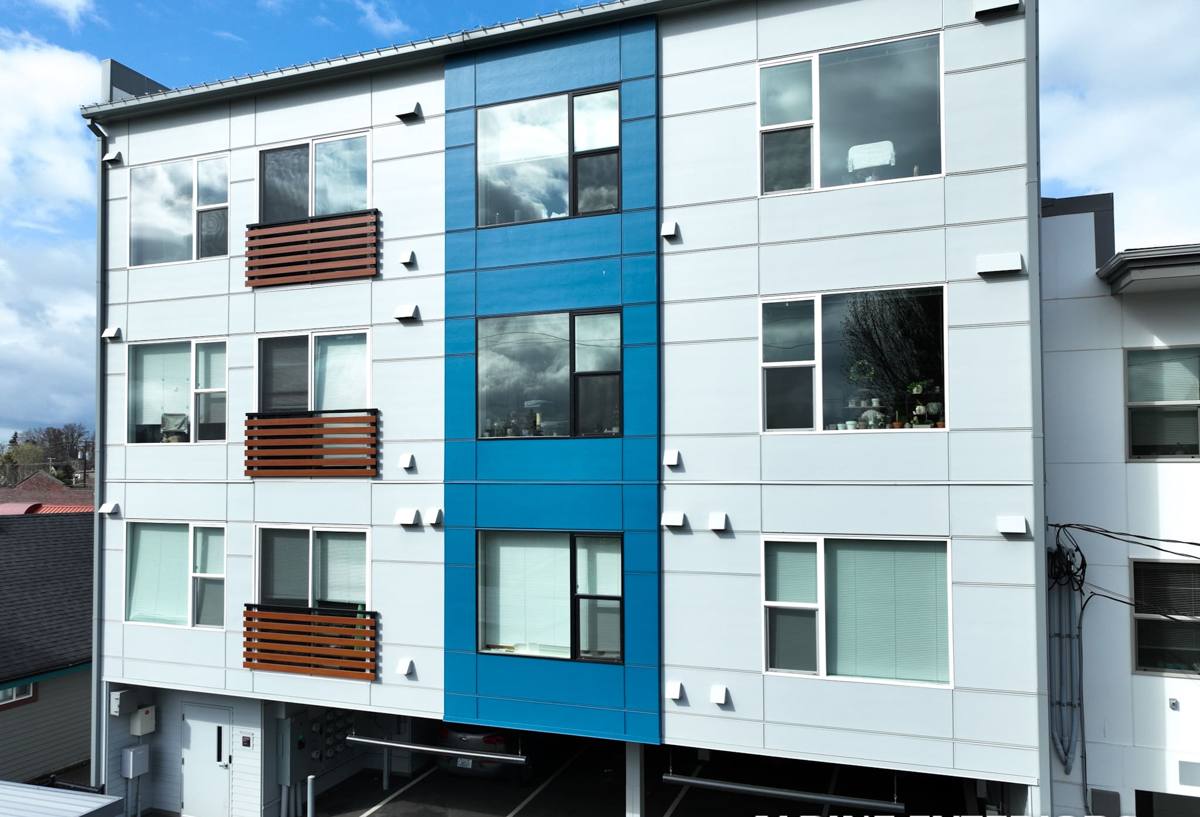
What "Custom" Actually Means for a Nooksack Home
Most houses in this area aren't perfectly square, especially older farmhouses and homes built in stages over the years, which is common around Nooksack. A custom window is measured and ordered to the real dimensions of your opening — width, height, and depth — instead of relying on a nearest-standard-size unit that then needs to be packed out or trimmed down on site. That matters more here than in a dry climate, because every shim gap, every field-cut trim piece, and every place where the installer improvises is a potential path for water to get behind the siding.
Common window situations we run into out here
- Original wood windows from a farmhouse or older build that have swollen, rotted at the sill, or simply stopped sealing
- Vinyl replacement windows installed 15-25 years ago that are now clouding between the panes (failed seal) or letting cold air through the frame
- Additions or outbuildings with openings that don't match any stock window size
- Homes with wide eaves on some walls and almost none on others, so one side of the house takes far more direct rain than the rest
- Larger view or picture windows facing the valley that need extra attention to structural support and flashing because of their size
The Moisture Risks We Watch For
Whatcom County's marine-influenced climate means the coastal areas get salt-laden air and near-constant humidity, and even further inland along the Nooksack River, that moisture load doesn't disappear — it just shows up as prolonged dampness, slower drying times after rain, and a longer moss and algae season on north-facing walls and rooflines. For windows, the practical effect is that any weak point in the seal around the frame stays wet longer than it would in a drier climate, which is exactly the condition that rot, mold, and frame failure need to take hold.
The failures we see most often aren't from the glass itself — modern insulated glass units are generally reliable. They're from:
- Bad flashing integration — the window wasn't tied into the house wrap or building paper correctly, so water gets behind the siding instead of shedding over it
- Gaps at the sill — the lowest point of the window opening is the hardest-working part of the assembly, and it's the first place rot shows up if it wasn't detailed correctly
- Old or missing sealant — caulk breaks down over years of UV and rain cycling; once it cracks, it's actively channeling water into the wall rather than keeping it out
- Undersized or missing drip caps above the window, which matters a lot on walls that take direct, driving rain with no eave protection
Choosing the Right Window Materials
There's no single "best" window material for every home — it depends on your budget, the style of the house, and how much upkeep you want to take on. Here's how the common options compare for a wet, humid climate like this one.
| Frame Material | Moisture Resistance | Maintenance | Typical Lifespan |
|---|---|---|---|
| Vinyl | Very good — won't rot, but seams and corner welds need to be quality-built | Low — occasional cleaning, no painting | 20-30+ years |
| Fiberglass | Excellent — dimensionally stable, resists warping in wet-dry cycling | Low | 30-40+ years |
| Wood | Fair — needs a well-maintained finish or it absorbs moisture and can rot at joints | High — periodic painting/sealing required | Varies widely with upkeep |
| Wood-clad (wood interior, metal/vinyl exterior) | Good — exterior shell protects the wood, but any breach in the cladding traps moisture against the wood | Moderate | 25-35 years with care |
| Aluminum | Poor for our climate on its own — conducts cold and can condense unless thermally broken | Low | Long-lived but underperforms thermally here |
For most homes in this area, we steer people toward vinyl or fiberglass because they handle the wet-dry cycling without the upkeep burden of solid wood. If the look of real wood matters for a period-appropriate home, wood-clad units can work, but we're honest that they require attention to any nicks or gaps in the cladding — a small breach there traps moisture right against the wood core, which is the opposite of what you want in this climate.
Our Installation Process
A custom window is only as good as the install. Here's how we approach it:
- On-site measurement — we measure the actual rough opening, check for square, and note the wall assembly (siding type, house wrap condition, sill depth) before anything is ordered
- Remove and inspect — when we pull the old window, we check the framing, sill, and sheathing underneath for hidden rot or moisture damage before it gets covered back up
- Repair what's found — if there's soft wood or water damage at the opening, we address it before the new window goes in, not after
- Flash and seal correctly — proper flashing tape and integration with the house wrap so water is directed out and over the siding below, not trapped behind it
- Set and shim the window — leveled, plumb, and shimmed so the sash operates correctly and the seal isn't stressed unevenly
- Insulate the gap — low-expansion foam or backer rod around the perimeter, not just caulk, to cut drafts without over-pressuring the frame
- Exterior trim and finish sealant — trimmed out and sealed with a quality exterior sealant rated for our climate's UV and moisture exposure
- Final function check — every sash operates, locks engage, and weatherstripping seats correctly before we call it done
Flashing and Weatherproofing — Where Most Failures Start
If we had to point to one step that separates a window installation that lasts 25+ years from one that causes problems in five, it's flashing. The window itself can be excellent, but if it isn't integrated into the wall's drainage plane correctly, water finds its way behind the siding and into the wall cavity, where it can sit for a long time before you ever see a stain or feel a soft spot. In a drier climate that mistake might take a decade to show consequences. In a valley climate with regular rain and slow drying, it shows up much faster. This is also why we don't recommend re-using old flashing or reflashing over deteriorated house wrap just to save a step — it defeats the purpose of a new window.
Energy Performance
Beyond keeping water out, a well-installed custom window also cuts drafts and stabilizes indoor temperatures — relevant for both the damp winters and the warmer, increasingly common hot stretches in summer. Look for a window's U-factor (lower is better for winter heat retention) and its air leakage rating rather than relying on the frame material alone. A well-sealed vinyl or fiberglass window with a mid-range U-factor, properly installed, will usually outperform a "premium" window that's been sloppily flashed and shimmed. Installation quality affects real-world energy performance as much as the glass package does.
Why a Crew That Already Works This Area Matters
Window installation isn't identical everywhere. A crew that mostly works in dry inland climates may not think twice about flashing details that are non-negotiable here. Working regularly around Nooksack and the rest of Whatcom County means we're used to designing for the moss, the humidity, and the long rainy stretches as the default condition, not the exception — and we know which parts of a wall assembly tend to be hiding moisture damage before we even open it up.
Custom Windows Checklist Before You Sign a Contract
- Are the windows measured for your actual openings, or being fit to stock sizes?
- Does the quote specify the flashing method and materials, not just "seal and caulk"?
- What happens if rot or damage is found once the old window is removed — is that addressed separately or included?
- What's the warranty on the window unit itself, and separately, on the installation labor?
- Is the U-factor and air leakage rating listed for the specific window model, not just a general claim of "energy efficient"?
- Will the crew clean up and haul away the old windows and materials?
If you're weighing custom windows for a home in Nooksack, we're glad to take a look and give you a straight, no-pressure estimate — including what we find when we check the opening itself, not just a quote based on a phone description.