 Ferndale Siding
 Roofing in Cordata: What the Climate Actually Demands
Cordata sits close enough to the water and far enough into the Whatcom County weather pattern that a roof here has to handle a specific combination of stress: salt-laden air moving in off the Strait, long stretches of driving rain in the fall and winter, and a moss season that can run eight months or more if a roof isn't built and maintained to resist it. None of these factors alone is unusual for western Washington. Together, on a roof that wasn't designed with them in mind, they shorten a roof's useful life by years.
Salt air accelerates corrosion on any exposed metal — flashing, fasteners, drip edge, vent caps. Driving rain doesn't just fall straight down; wind pushes it sideways and up under laps, ridges, and penetrations that would stay dry in a calmer climate. And moss doesn't just look bad — its root structure works into shingle mat and lifts tabs, while the moisture it holds against the roof surface keeps the deck and underlayment wet far longer than they should ever be. A correct roof installation in Cordata accounts for all three from the first layer of felt to the last cap shingle.
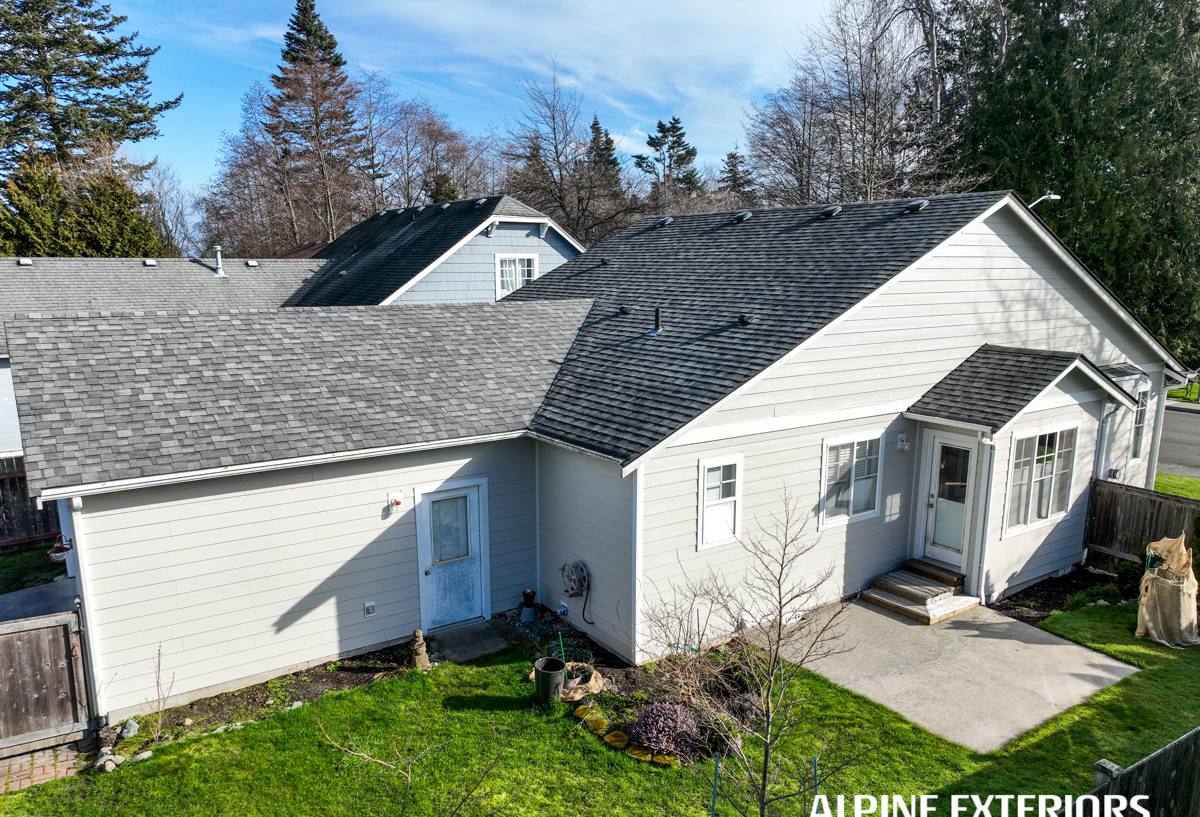
Why "Standard" Roofing Practices Fall Short Here
A lot of roofing problems we get called out to inspect in this area aren't failures of the shingle or metal itself — they're failures of installation practices that were fine for a drier, calmer climate but aren't sufficient for Cordata's conditions. Underlayment that's adequate in low-rain regions leaves a roof vulnerable to wind-driven water intrusion here. Standard fastener schedules and standard metals corrode faster in salt-influenced air. Standard ventilation, if it's undersized or poorly balanced, traps moisture that feeds moss and rot instead of letting the roof dry out between storms.
None of this means Cordata needs exotic materials. It means the installation details — underlayment coverage, fastener choice, flashing sequencing, ventilation balance — have to be treated as climate-critical, not as boilerplate steps to get through.
The Three Climate Factors, and What Each One Requires
| Climate Factor | What It Does to a Roof | What the Installation Should Do About It |
|---|---|---|
| Salt air | Accelerates corrosion of exposed metal, fasteners, and flashing | Corrosion-resistant flashing and fastener specification, especially at ridges, valleys, and penetrations |
| Driving rain | Pushes water sideways and upward under laps and around penetrations | Full underlayment coverage, correctly lapped and sealed; extra attention at valleys, walls, and roof-to-wall transitions |
| Long moss season | Holds moisture against the roof surface; roots lift shingle tabs over time | Balanced intake/exhaust ventilation, proper deck drying time before install, and a maintenance-aware material choice |
What a Correct Roof Installation Includes
A new roof is more than shingles nailed to a deck. Every layer underneath the visible surface is doing work, and in a climate like this one, skipping or shortcutting any layer shows up as a leak, premature moss growth, or a shortened lifespan within a few years rather than decades.
Deck Inspection and Repair
Before anything goes down, the existing roof deck gets inspected for soft spots, rot, or delamination — issues that are common on older Cordata homes where moss and moisture have been sitting against the roof for years without treatment. Any compromised sheathing gets replaced before the new system goes on. Installing over a bad deck just hides the problem temporarily.
Underlayment
Given how much wind-driven rain this area sees, underlayment coverage isn't a place to economize. Ice-and-water or high-performance synthetic underlayment at eaves, valleys, and any low-slope transitions gives the roof a real second line of defense if wind manages to push water past the primary roofing surface.
Flashing and Metal Work
Flashing at chimneys, skylights, sidewalls, and valleys is where most roof leaks actually originate — not in the open field of shingles. In salt-influenced air, the metal itself and the fasteners holding it matter. Properly sequenced, corrosion-resistant flashing work is one of the most important — and most often rushed — parts of a roof installation.
Ventilation
A roof deck that can't breathe stays damp longer, which directly feeds moss growth and can lead to rot from the underside. Balanced intake at the eaves and exhaust at or near the ridge helps the roof assembly dry out between the rain events that define this climate.
Field Installation
Correct nailing patterns, proper exposure and lap dimensions, and manufacturer-specified fastening all matter more in a high-wind, high-rain environment than they would somewhere drier and calmer. This is also where moss-resistant material choices, if the homeowner wants them, get put to use — for example, shingles or metal roofing with treatments or profiles that make moss establishment slower and cleanup easier.
Material Options for Cordata Homes
There's no single "best" roofing material for every home — the right choice depends on the home's style, the budget, and how much long-term maintenance the homeowner wants to take on. Here's how the common options stack up against this specific climate.
| Material | How It Handles Salt Air & Rain | Moss Resistance | Typical Lifespan Here |
|---|---|---|---|
| Architectural asphalt shingles | Good, when installed with proper underlayment and flashing | Moderate; benefits from algae/moss-resistant granule treatments | 20–30 years with regular upkeep |
| Standing seam metal | Excellent, with corrosion-resistant coatings and fasteners | Very good; smooth surface sheds moss more easily | 40–50+ years |
| Composite/synthetic shingle | Good; resists moisture absorption well | Good to very good depending on product | 30–50 years |
Whatever material a homeowner chooses, we walk through the real trade-offs honestly — upfront cost, maintenance expectations, and how each option actually performs in Whatcom County weather, not just in a manufacturer brochure.
Our Process for a Cordata Roof Installation
- On-site inspection. We assess the existing roof, deck condition, ventilation, and any problem areas — moss buildup, staining, soft spots — specific to the home.
- Written estimate. A clear scope of work and pricing, with material options explained in plain terms.
- Tear-off and deck assessment. Old roofing is removed and the deck is inspected and repaired as needed before anything new goes down.
- Underlayment and flashing installation. Full coverage underlayment and properly sequenced, climate-appropriate flashing at every penetration and transition.
- Ventilation check and correction. Intake and exhaust ventilation are balanced to the home's actual attic space, not just installed to code minimums.
- Field installation. Shingles, metal, or composite roofing installed to manufacturer specification and adjusted for local wind and rain exposure.
- Final walkthrough. We review the completed roof with the homeowner and go over basic maintenance expectations for the local climate.
Why Hiring a Crew That Already Works in Cordata Matters
Roofing crews that mostly work drier, calmer regions can install a technically sound roof that still underperforms here, simply because they're used to specifying underlayment, flashing, and ventilation for a different climate. A crew that regularly works Ferndale and the surrounding Whatcom County neighborhoods already knows how driving rain behaves against this area's typical rooflines, how quickly moss re-establishes on an under-ventilated roof, and which flashing and fastener choices hold up against the salt air coming off the water. That local knowledge shows up in fewer callbacks and a roof that actually performs the way it's supposed to for its full expected lifespan.
Signs a Cordata Home May Need a New Roof Soon
- Shingles that are cupping, curling, or losing significant granules
- Moss growth that returns quickly after cleaning, or has visibly lifted shingle tabs
- Dark streaking or staining across large areas of the roof surface
- Soft spots, sagging, or visible daylight through the attic decking
- Water stains on interior ceilings or in the attic after heavy rain
- A roof approaching or past its material's typical lifespan, especially if it was installed before local best practices for ventilation and flashing were standard
Any one of these on its own might just call for a repair. Several together, or a roof already past its expected service life, usually means it's time to plan for a full replacement rather than keep patching a system that's working against the climate.
Get a Straight Answer for Your Roof
If you're weighing repair versus replacement, or just want an honest read on how much life is left in your current roof, we're happy to take a look. We'll walk the roof, explain what we find in plain language, and give you a written estimate with no pressure to move forward before you're ready. Fill out the form below to schedule a free estimate for your Cordata home.