 Ferndale Siding
 Metal Roofing in Blaine: Built for Salt Air, Driving Rain, and a Long Moss Season
Blaine sits at the northern edge of Whatcom County on Semiahmoo Bay and Drayton Harbor, close enough to the water that salt air is a daily condition for most homes in town, not just the ones with a water view. That coastal exposure, paired with the driving rain that comes ashore hard here and a moss season that can run most of the year on shaded roof planes, makes Blaine one of the more demanding places in the county to keep a roof performing over the long haul. We work out of Ferndale and cover the rest of Whatcom County, and Blaine is regular territory for our crew, which matters because a roof built for this climate looks noticeably different from one built for a drier, more sheltered inland town.
This page is specifically about metal roofing for Blaine homes: what the local climate demands from it, which panel and coating choices actually hold up here, what a correct installation involves, and the honest trade-offs between metal and other roofing materials. We install roofing, siding, windows, and decks, and we treat the roof as the component that takes the hardest, most direct hit from this climate every year.
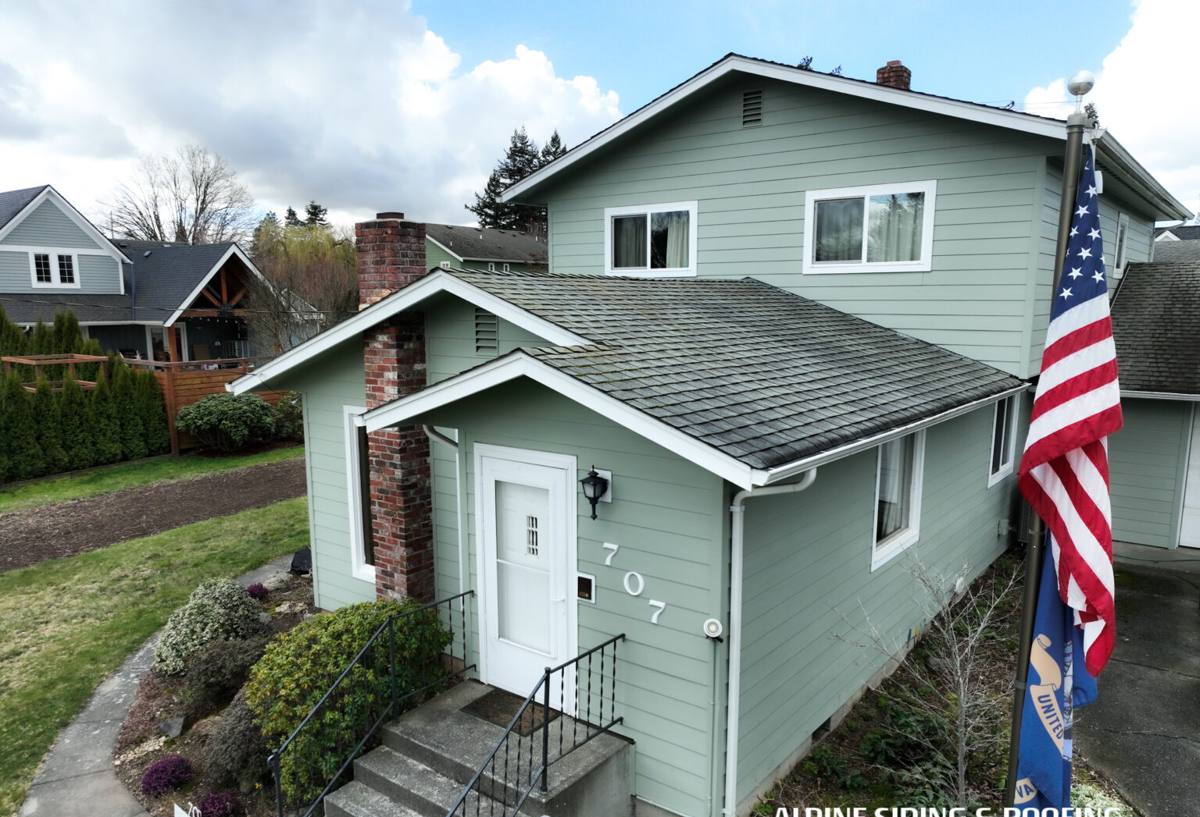
What Blaine's Climate Demands From a Metal Roof
Salt Air and Corrosion
Homes on or near the water in Blaine take on salt-laden air as a constant condition, and that accelerates corrosion on any exposed metal component faster than it would twenty miles inland. Metal roofing is, obviously, entirely metal, which makes material selection, coating quality, and fastener choice more consequential here than almost anywhere else in the county. A panel and fastener system that would hold up fine in a drier, inland town can start showing rust streaking and white corrosion spotting years earlier on a house that catches wind straight off the bay.
Driving Rain and Wind-Driven Water
Storms coming off the water in Blaine don't just fall straight down — wind pushes rain sideways into panel seams, ridge caps, and the flashing at valleys and penetrations. Metal roofing sheds water well by design, but that only holds true if the seams, laps, and flashing details are actually built to handle water arriving at an angle instead of assuming it always runs straight downhill. Blaine's exposed position means that sideways-driven load shows up more often and with more force than it does further inland.
A Moss Season That Metal Handles Differently
Mild temperatures and near-constant moisture give moss and algae a long growing season on shaded and north-facing roof surfaces across Whatcom County, and Blaine is no exception. Metal's smooth, non-porous surface gives moss far less to grab onto than a shingle's granule surface, which is one of metal roofing's genuine advantages here. It isn't immune, though — debris that collects in valleys or against a low-slope transition can hold moisture against the panel long enough for moss and organic staining to take hold, so panel layout and drainage detail still matter.
Panel Types: Standing Seam vs. Exposed-Fastener Metal
Not all metal roofing is built the same way, and the difference matters more in a coastal town than most homeowners expect. The two main categories are standing seam panels, which interlock at raised seams with fasteners concealed underneath, and exposed-fastener panels, which are screwed directly through the panel face, typically with a rubber washer at each screw.
Exposed-fastener panels cost less upfront and are common on outbuildings and agricultural structures, but every one of those screw penetrations is a potential leak point, and the rubber washers that seal them degrade with age and UV exposure. On a house this close to the water, where fasteners already face accelerated corrosion, replacing hundreds of aging screw seals over the life of a roof is a real maintenance burden. Standing seam construction has no fasteners penetrating the panel face at all — the clips that hold it down are hidden beneath the seam, which removes the single most common failure point on exposed-fastener systems. For residential roofing in Blaine, we install standing seam almost exclusively for that reason.
| Panel System | Salt-Air Performance | Maintenance | Typical Service Life |
|---|---|---|---|
| Standing seam, concealed fastener | Strong; no face penetrations to fail | Low; occasional clip and sealant checks | 40-60 years |
| Exposed-fastener panel | Weaker; screw washers degrade and corrode faster near open water | Higher; washer replacement over time | 20-30 years before major maintenance |
| Corrugated or ag-style panel | Similar exposure issues as exposed-fastener systems | Higher | 20-30 years |
Steel vs. Aluminum: An Honest Trade-off This Close to the Water
Most standing seam roofing is either coated steel or aluminum, and the choice matters more in Blaine than in an inland town. Steel, typically a zinc-aluminum coated substrate under a factory paint finish, is stronger, more widely available, and generally less expensive than aluminum. It performs well for decades when the coating and paint system are intact, but any scratch, cut edge, or coating failure that exposes bare steel gives salt air a place to start corrosion, and that risk is higher on a home taking direct wind off the bay than on one set back from the water.
Aluminum doesn't rust, because it doesn't contain iron, which makes it a genuinely stronger long-term choice for homes with heavy, sustained salt exposure. The trade-off is a real one: aluminum panels cost more than steel, dent somewhat more easily under impact, and offer less structural stiffness at the same thickness. For a Blaine home with direct water exposure, we'll walk through both options honestly rather than defaulting to whichever is cheaper to install — the right call depends on how close to the water the house sits and how long the homeowner plans to stay.
Coatings That Matter This Close to the Water
The paint system on a metal roof does as much work as the metal underneath it, especially in a salt-air environment. PVDF coatings, sold under names like Kynar 500 or Hylar 5000, are the higher-grade option: they resist fading, chalking, and film breakdown far longer than lower-tier finishes, which matters in a climate that combines strong UV in the dry months with near-constant salt and moisture the rest of the year. SMP (silicone-modified polyester) coatings cost less and still perform adequately in milder climates, but they don't hold color and gloss as long under sustained coastal exposure. For a Blaine roof, we spec PVDF finishes as the standard rather than the upgrade, because the gap in real-world performance between the two coating types shows up faster here than it would on a home further inland.
What a Correct Metal Roof Installation Involves
Panel and coating choice only matter if the installation underneath is done correctly. Metal roofing has its own installation logic that's different from shingle roofing, and skipping the details below is where most metal roof problems we see actually originate.
Fasteners, Clips, and Thermal Movement
Metal panels expand and contract with temperature swings more than shingles do, and standing seam systems use floating clips specifically to let panels move without buckling or tearing loose fasteners. Fasteners and clips need to be corrosion-resistant hardware rated for coastal exposure, not standard-grade material chosen because it's cheaper or more readily on hand.
Underlayment Beneath the Panels
A high-temperature, self-adhered underlayment goes beneath the panels, not a standard felt or synthetic underlayment rated only for shingle roofs. That layer is the roof's real backup if wind-driven rain ever gets past the panels themselves, and it needs to handle the heat that builds up under metal in direct sun as well as sustained moisture underneath.
Flashing at Valleys, Penetrations, and Roof-to-Wall Transitions
Every valley, vent pipe, and place where the roof meets a wall or chimney is a place metal panels have to be cut and flashed rather than run continuously. Those transitions need custom-fabricated flashing that matches the panel profile, properly lapped and sealed, because a generic flashing detail borrowed from shingle roofing won't shed wind-driven rain the way a metal-specific detail will.
Avoiding Galvanic Corrosion Between Dissimilar Metals
Different metals in direct contact with each other, especially in the presence of moisture, can set off galvanic corrosion that eats away at one of the two metals faster than either would corrode on its own. Fasteners, flashing, and any secondary metal components need to be compatible with the panel material, which is a detail that's easy to get wrong if a crew isn't specifically experienced with metal roofing.
- Corrosion-resistant fasteners and clips matched to the panel material, not generic hardware
- High-temperature, self-adhered underlayment rated for metal roofing, not a shingle-grade product
- Custom-fabricated flashing at every valley, penetration, and wall transition
- Metal components chosen to avoid galvanic corrosion between dissimilar metals
- Panel layout that accounts for thermal expansion rather than fastening panels rigidly in place
Cost Factors: Metal vs. Other Materials for a Blaine Roof
Metal isn't the automatic right answer for every roof, and we won't tell a homeowner it is. Architectural asphalt shingles remain a reasonable, lower-cost option for many Blaine homes when installed with corrosion-resistant fasteners and proper flashing for the local climate. Metal costs more upfront, but it typically lasts two to three times as long, sheds moss and wind-driven rain better by design, and needs less ongoing maintenance over the life of the roof. For a homeowner planning to stay long-term in a house exposed to Blaine's salt air and driving rain, that lifespan difference usually justifies the higher initial cost.
| Factor | Why It Matters |
|---|---|
| Panel material: steel vs. aluminum | Aluminum costs more but resists salt-air corrosion better over the life of the roof |
| Coating system: PVDF vs. SMP | PVDF costs more upfront but holds color and finish integrity longer under coastal sun and salt exposure |
| Roof size and complexity | More valleys, dormers, and penetrations mean more custom flashing and fabrication work |
| Existing roof condition | Tear-off can reveal deck or structural repairs needed before panels go on |
| Wind and salt exposure of the site | Homes taking direct wind off the bay warrant closer attention to fastener grade and flashing detail |
These are general drivers, not a quote. Two houses on the same street in Blaine can face very different exposure depending on tree cover and distance from open water, so we walk the roof in person before putting a real number on the work.
Signs a Metal Roof Needs Attention
- Rust streaking at fastener heads, seams, or cut edges, especially on walls facing open water
- Chalking, fading, or dulling of the paint finish well ahead of the coating's expected life
- Loose or lifted panels, or fasteners that have visibly backed out on exposed-fastener systems
- Moss or dark staining collecting in valleys or low-slope transitions where debris gathers
- Oil-canning (visible waviness in the flat part of a panel) that's gotten more pronounced over time
- Water staining on interior ceilings near valleys, chimneys, or wall transitions
A metal roof showing early signs of trouble is usually a flashing, fastener, or coating problem rather than a failure of the panel material itself, and most of these are worth a professional look before they turn into a leak.
Why a Crew That Already Works Blaine Matters
Metal roofing rewards installation experience more than most roofing materials, because so much of what makes it perform, or fail, is in details that aren't visible once the job is done: clip spacing, underlayment choice, custom flashing fabrication, and fastener compatibility. A crew that installs metal roofs across Whatcom County regularly, on homes that face this much direct salt air and wind-driven rain, makes different judgment calls than one installing metal occasionally between shingle jobs. That local, repeated experience is what tells us which panel and coating combination actually earns its keep on a house exposed to Blaine's weather, rather than just following a generic spec sheet.
If you're considering metal roofing for a Blaine home, or want an honest read on whether metal or shingles make more sense for your specific property, we're glad to take a look. Reach out using the form below to schedule a free, no-pressure estimate.