 Ferndale Siding
 Storm Damage Roof Repair for Marietta Homes
Marietta sits low and close to the water, right where Bellingham Bay meets the mouth of the Nooksack River. That location is part of what makes it a great place to live, and it's also exactly why roofs here take a beating that roofs twenty miles inland don't. Salt-laden air off the bay, driving rain that comes in sideways during winter storms, and a moss season that barely takes a break all work against asphalt shingles, flashing, and fasteners year-round. When a storm rolls through and takes a bite out of your roof, you need someone who understands that combination of stressors, not a general contractor who's never worked this close to the water.
This page covers what storm damage roof repair actually involves for a Marietta property, what we look for, and how we handle the job from first call to final inspection.
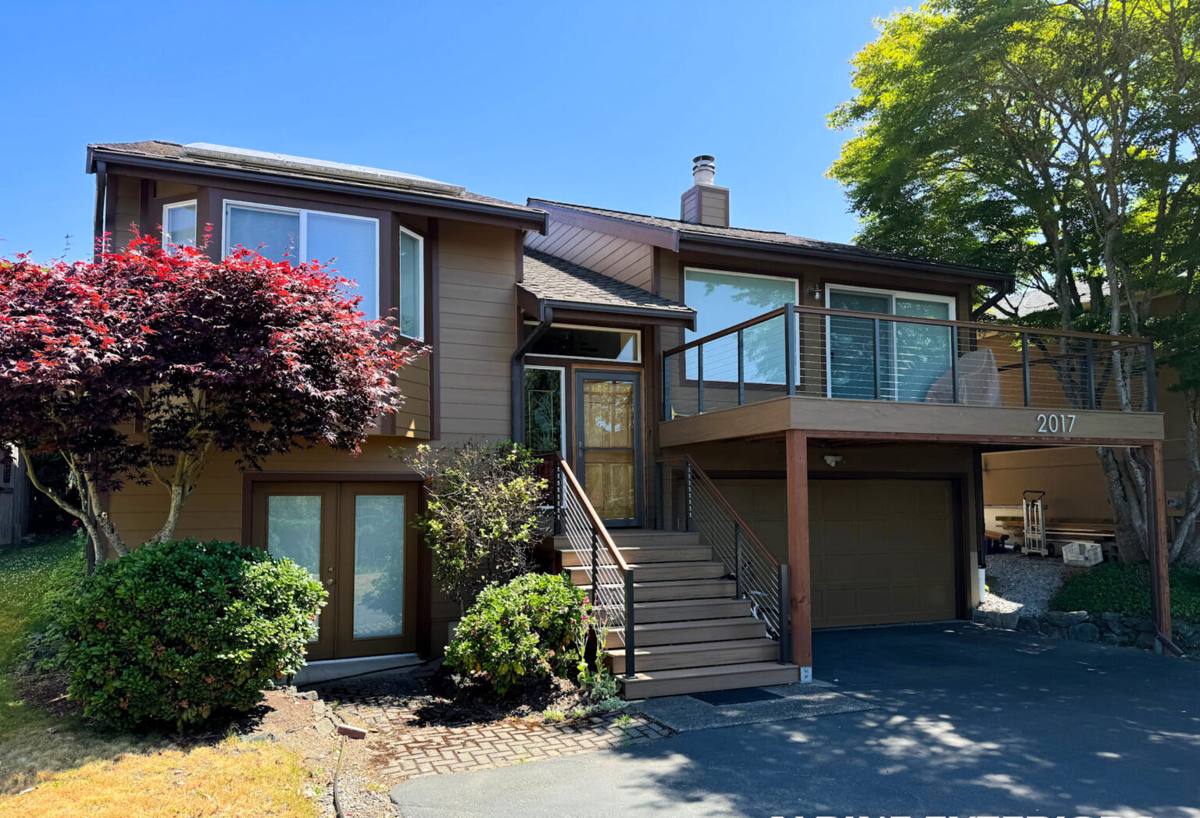
Why Marietta Roofs Take Extra Punishment
Salt Air and Corrosion
Proximity to Bellingham Bay means airborne salt settles on roofing metal — flashing, drip edge, nail heads, gutter hardware — faster than it does even a few miles inland. Salt accelerates corrosion on unprotected or lower-grade fasteners and metal components. A roof that would hold up fine in a dry inland town can show rust streaks and weakened flashing seams years earlier out here. It's not dramatic, it's just steady wear that adds up.
Driving Rain and Wind-Driven Water Intrusion
Whatcom County storms off the Pacific don't just drop rain straight down — they push it sideways. Wind-driven rain finds every gap in a roof system: lifted shingle tabs, compromised flashing, old pipe boots, nail pops. Once wind has already loosened or lifted material during a storm, that same roof becomes an open door for the next rain event, even a moderate one. This is why storm damage often shows up as a leak days or weeks after the actual wind event, not during it.
Moss and Moisture Retention
Ferndale's long wet season and mild temperatures are close to ideal moss-growing conditions. Moss holds moisture directly against the shingle surface, which speeds up granule loss and, on north-facing or shaded slopes, can lift shingle edges over time. A storm-damaged roof with existing moss growth is more vulnerable — moss-softened shingles tear and lift more easily under wind load than a clean, well-maintained roof.
What Storm Damage Actually Looks Like
Homeowners often expect storm damage to be obvious — a hole, a missing section. Sometimes it is. More often it's subtle, and that's what makes a proper inspection worth doing after any significant wind or hail event.
- Lifted, cracked, or missing shingle tabs, especially on the roof's windward side
- Bent, lifted, or separated flashing around chimneys, vents, and roof-to-wall junctions
- Displaced or cracked ridge cap shingles along the roof's peak
- Granule buildup in gutters, which signals accelerated shingle wear from wind abrasion
- Loose or exposed nail heads where wind has worked fasteners upward
- Damaged or dented gutters, downspouts, or roof vents
- Water stains on interior ceilings or attic sheathing that show up days after a storm
- Debris impact marks — branch strikes, blown debris scarring on shingle surfaces
What a Correct Storm Damage Repair Involves
1. Full-Roof Assessment, Not Just the Obvious Spot
A homeowner usually calls because of one visible problem — a leak in a bedroom ceiling, a shingle in the yard. A proper repair starts with inspecting the whole roof, because wind damage rarely stays confined to one spot. We check all slopes, all flashing points, and the attic interior where accessible, so we're not sending someone back up in three weeks for a second, related leak.
2. Matching the Repair to the Damage, Not Overselling
Not every storm-damaged roof needs full replacement. If the roof is otherwise in good condition and the damage is isolated — a section of shingles, a flashing detail, a vent boot — a targeted repair is the honest answer. We'll tell you plainly when a repair makes sense versus when the roof's overall age or condition means a repair is a short-term patch on a longer-term problem.
3. Flashing and Fastener Quality for a Coastal Environment
Given the salt-air exposure around Marietta, we pay particular attention to the corrosion resistance of the metal and fasteners going back on the roof. Cutting corners on flashing grade or fastener coating here shows up as a callback in a few years, not a few decades. That's a maintenance and warranty trade-off worth getting right the first time, not a matter of brand preference.
4. Proper Underlayment and Water-Shedding Detail
Storm repairs are also a chance to check that underlayment and step flashing are doing their job at valleys, walls, and penetrations — the places wind-driven rain actually gets in. A shingle repair that ignores the water path beneath it is a repair that fails again in the next storm.
Our Process for Marietta Storm Repairs
- Contact and initial description. Tell us what you're seeing — visible damage, an active leak, debris in the yard. That helps us prioritize, since active leaks get scheduled faster.
- On-site inspection. We walk the roof (or use appropriate equipment for steep or unsafe pitches) and document damage across every slope, plus flashing and penetration points.
- Honest scope and written estimate. You get a clear explanation of what's damaged, what needs repair versus what's still sound, and a written price before any work starts.
- Repair work. We replace damaged shingles, flashing, and fasteners with materials suited to this area's salt-air and rain exposure, and re-seal or re-flash any compromised water-shedding points.
- Final walk-through. We show you the completed work and answer questions before we consider the job done.
Repair vs. Replacement: Cost Factors
Every storm repair decision comes down to a handful of practical factors. This isn't a price list — actual costs depend on roof size, pitch, and access — but it's the honest framework we use to advise you.
| Factor | Favors Repair | Favors Replacement |
|---|---|---|
| Roof age | Under roughly 15 years, still within expected lifespan | Near or past the shingle's rated service life |
| Damage extent | Isolated to one or two areas | Spread across multiple slopes or the whole roof |
| Existing moss/wear | Minimal, roof otherwise well-maintained | Significant moss history and granule loss beyond the storm damage itself |
| Underlying decking | Sound, no rot found during inspection | Soft spots or water-damaged sheathing discovered |
| Insurance scope | Adjuster's scope matches a repair-level claim | Adjuster's scope or damage pattern supports full replacement |
Working With Insurance Claims
Storm damage repairs are often insurance claims, and having a contractor who documents damage clearly and consistently makes that process smoother. We provide clear photo documentation and a written scope of damage that you can submit alongside your claim. We're not a public adjuster and won't promise a specific claim outcome, but we'll give your insurer an accurate, well-documented picture of what the storm actually did to your roof.
Why a Crew That Already Works Marietta Matters
Roofing crews unfamiliar with this specific stretch of Whatcom County sometimes treat every roof the same way they would inland — standard-grade flashing, standard fastener coatings, no particular attention to moss history or wind exposure from the bay. A crew that regularly works Marietta and the surrounding Ferndale area already knows which roof orientations catch the worst of the wind off the water, which neighborhoods run heavier moss loads, and what fastener and flashing specs actually hold up here long-term. That familiarity translates into fewer callbacks and a repair that's built for the conditions your roof actually faces, not generic conditions.
After the Repair: Reducing Future Storm Risk
A few habits go a long way toward protecting a Marietta roof between storms:
- Keep gutters and downspouts clear so wind-driven rain has somewhere to go
- Address moss growth before it spreads across a full slope, not after
- Trim back tree limbs that could strike the roof in high wind
- Schedule a post-storm visual check after any significant wind event, even without visible leaks
- Keep an eye on attic ventilation, since poor airflow speeds up moisture-related roof wear
If a recent storm has left your Marietta roof with missing shingles, a new leak, or damage you're not sure how to assess, we're glad to take a look. Request a free, no-pressure estimate using the form below and we'll walk you through exactly what we find and what it would take to fix it right.