 Ferndale Siding
 Building Decks That Actually Hold Up in Marietta
Marietta sits close enough to Bellingham Bay and the Lummi Bay shoreline that salt-laden air is a daily fact of life, not an occasional nuisance. Add Whatcom County's long wet season — months of driving rain followed by a slow, shaded moss season that can run well into spring — and you have a set of conditions that will find every weak point in a deck within a few years if the build wasn't planned for them. We've built and repaired decks throughout the Ferndale area long enough to know which shortcuts show up as callbacks, and which details actually matter here versus in a drier inland climate.
A deck in Marietta isn't fighting the same battle as one in Spokane or even in Bellingham proper. The combination of salt exposure, near-constant moisture, and heavy shade from mature evergreens means fasteners corrode faster, framing lumber stays damp longer between dry spells, and any flat or poorly-drained surface becomes a moss farm. None of that is exotic — it's just physics and biology — but it has to be designed for from the footings up, not patched in afterward.
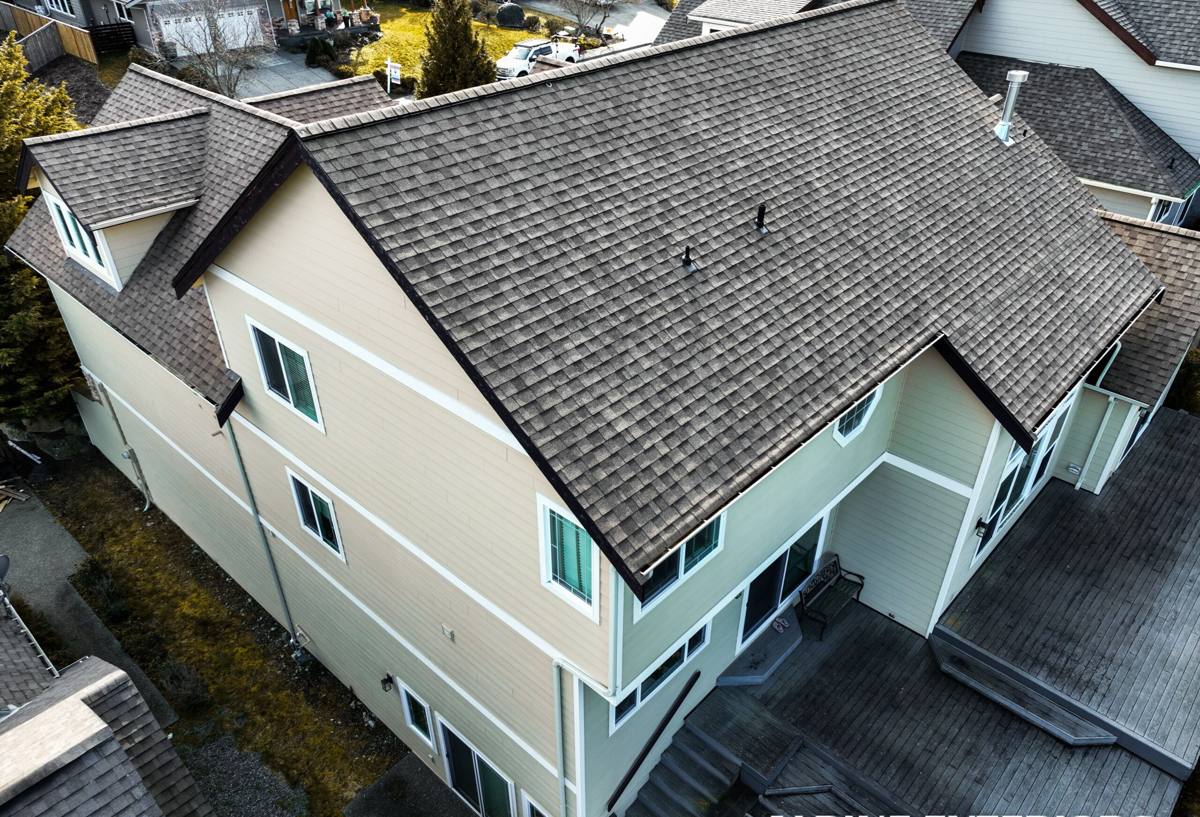
What Local Conditions Do to an Under-Built Deck
Salt Air and Metal Fasteners
Standard galvanized fasteners are fine in a lot of the country. Near the water in Whatcom County, salt in the air accelerates corrosion at joist hangers, screws, and bolts — especially where two metals meet or where a fastener is exposed to standing moisture. Once a hanger starts rusting, it loses holding strength long before it looks obviously bad, which is part of why deck failures often surprise homeowners.
Driving Rain and Water Path
Wind-driven rain doesn't just fall straight down — it gets pushed sideways and up under railings, ledger boards, and stair stringers. If a deck's water path wasn't planned (flashing behind the ledger, gaps for drainage between boards, slope away from the house), water finds its way into framing and stays there, since Marietta's air rarely gets dry enough for long enough to let trapped moisture fully evaporate.
Moss and Shade
Decks tucked under fir or cedar cover, or on the shaded side of a house, hold moisture longer and grow moss on any surface that doesn't drain and dry quickly. Beyond looking bad, moss holds water against the decking surface and becomes genuinely slick — a real slip hazard on stairs and landings.
What a Correct Deck Build Involves
A deck that's going to last in this environment isn't more complicated than a standard build — it just can't skip steps that don't matter as much in drier climates.
- Footings sized and set below frost depth, on undisturbed soil, with proper drainage around them so they aren't sitting in saturated ground all winter
- Ledger board flashed correctly where the deck attaches to the house — this is the single most common source of hidden rot on older decks we've opened up
- Corrosion-resistant hardware rated for the fastener/lumber combination being used, not just "outdoor rated" in general
- Joist tape or flashing on top of joists so screw penetrations don't become a hundred small entry points for water
- Proper board spacing and slope so water sheets off instead of pooling
- Railing posts anchored to blocking rated for real lateral load, not just screwed to the rim joist
Skip any one of these and the deck may look fine for a couple of years — the problems that show up in year four or five in this climate almost always trace back to one of these steps being shortcut at the start.
Choosing a Decking Material for This Climate
There's no single "best" decking material — there's a best material for a given budget, maintenance appetite, and how much sun or shade the deck sits in. Here's how the common options actually perform under Marietta's conditions.
| Material | Moisture/Salt Behavior | Moss Resistance | Maintenance |
|---|---|---|---|
| Pressure-treated lumber | Good if properly sealed and re-sealed; framing-grade PT still needs coastal-rated fasteners | Low — needs regular cleaning | Annual cleaning, re-sealing every 1-2 years |
| Cedar | Naturally decay-resistant but still needs finish maintenance near salt air | Moderate — sheds moisture reasonably well | Cleaning plus periodic oiling or staining |
| Composite decking | Doesn't absorb moisture or rot; some early composite products had moisture-related warping, current products are far more stable | Better — smoother/capped surfaces shed moss more easily than wood grain | Occasional washing, no sealing or staining |
| PVC decking | Fully moisture-resistant, doesn't support rot | Best of the common options — hard, non-porous surface | Lowest — washing only |
We'll walk through the real trade-offs with you rather than push whatever has the best margin. Wood costs less up front and can look great, but it demands upkeep that a lot of homeowners underestimate once they're a few years in. Composite and PVC cost more initially but remove most of the maintenance burden — which matters more here than in a dry climate, since neglected wood decking degrades faster under constant moisture and shade.
A Note on Warranties
Composite and PVC manufacturers offer strong material warranties, but nearly all of them require installation per their published specs — correct joist spacing, approved fasteners, proper gapping — to stay valid. Part of doing the job right is installing to the manufacturer's actual spec sheet, not just "how decking usually goes in," so that warranty is worth something if you ever need it.
Our Deck Building Process
- On-site assessment — we look at drainage, sun/shade exposure, existing structure if this is a replacement, and how the deck ties into the house
- Design and material walkthrough — layout, railing style, and an honest comparison of material options for your budget and maintenance preference
- Permitting — we handle the permit application and inspections required for the scope of work
- Demolition (if replacing) — including a check of the ledger area and framing behind the old deck for hidden rot before anything new goes up
- Footings and framing — set to code depth, flashed and fastened for coastal conditions
- Decking, railing, and stairs — installed to manufacturer spec with attention to drainage and slope
- Final walkthrough — we go over care and maintenance specific to whatever material you chose
Permits and Whatcom County Considerations
Most deck construction and replacement work in this area requires a building permit, and elevated decks typically need engineered or code-compliant guardrails and stair specs reviewed as part of that process. Setback requirements can also come into play depending on lot size and proximity to property lines, especially on the smaller, older lots common around Marietta and greater Ferndale. We pull the permit and coordinate inspections as part of the job so you're not tracking that down yourself.
Maintenance Checklist for a Marietta Deck
Whatever material you choose, a little seasonal attention goes a long way in this climate. Here's what we recommend to every homeowner after a build:
- Sweep debris (needles, leaves) off the deck regularly — trapped organic matter is what moss and mildew feed on
- Rinse or wash the surface at least once a season, more often in shaded areas
- Check railing posts and stair connections annually for looseness
- Inspect the ledger flashing area where the deck meets the house every year or two
- For wood decking: re-seal or re-stain on the manufacturer's recommended interval — don't wait until it looks obviously dry or gray
- Keep gutters and downspouts near the deck clear so runoff isn't dumping extra water onto or under the structure
- Trim back overhanging branches that keep the deck shaded and damp longer than it needs to be
Cost Factors to Expect
| Factor | Impact on Cost |
|---|---|
| Decking material choice | Largest single factor — pressure-treated lowest, PVC/high-end composite highest |
| Deck size and shape | Larger footprints and multi-level designs increase framing and labor |
| Height off grade | Elevated decks need more substantial footings, framing, and stair/rail engineering |
| Railing style | Cable, glass, or composite rail systems cost more than standard wood or metal baluster rail |
| Site access and demolition | Removing an old deck, or working a tight/sloped lot, adds labor time |
We give straightforward, itemized estimates so you can see exactly where the cost is coming from and adjust material or scope if needed — no guesswork, no vague lump-sum numbers.
Why Hire a Crew That Already Works in Marietta
A deck built by someone unfamiliar with this climate will often look correct on the day it's finished — the problems it develops show up two, three, or five years later, after the crew is long gone. We build for the conditions Marietta actually gets: salt air working on every metal fastener, driving rain testing every flashing detail, and a moss season that punishes any surface that can't drain and dry. That's not a sales pitch, it's just what changes when you've repaired enough coastal Whatcom County decks to know exactly where they tend to fail.
If you're planning a new deck, replacing an aging one, or just want a second opinion on a deck that's showing early trouble, we're happy to take a look and give you a straightforward, no-pressure estimate — just fill out the form below.