 Ferndale Siding
 Siding Replacement Built for Lynden's Climate
Lynden sits in a part of Whatcom County where the weather doesn't do your siding any favors. Winters bring long stretches of driving rain off the Pacific, spring and fall stay damp enough to keep moss and algae established on north-facing walls for months at a time, and the proximity to Bellingham Bay and the Salish Sea means a steady trace of salt air working into anything porous or improperly sealed. None of that is dramatic on its own. It's the cumulative effect over ten, fifteen, twenty years that wears out the wrong siding product, or the right product installed the wrong way.
We do siding replacement for homes in and around Lynden as part of our regular Ferndale-area service territory, and the failure patterns we see are consistent: rot at butt joints that were never caulked or flashed correctly, paint that's peeling because the substrate underneath couldn't hold a finish through repeated wet-dry cycles, and moss buildup on shaded walls that's holding moisture against the wall longer than the material was ever designed to tolerate. A siding replacement done right in this climate isn't just a cosmetic upgrade — it's a chance to fix the underlying moisture management that the original installation probably got wrong.
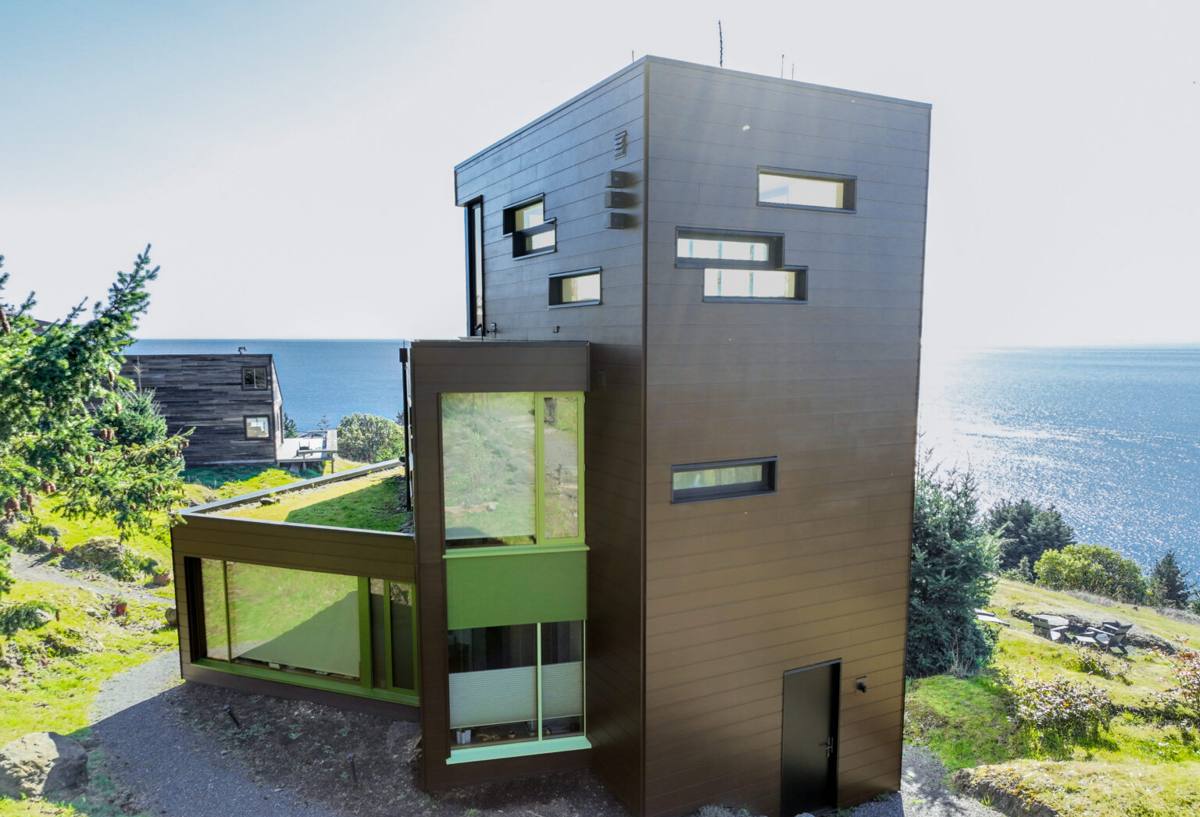
Why We Only Install James Hardie Fiber Cement
We install one siding system: James Hardie fiber cement. We don't offer vinyl, LP SmartSide, Cemplank, Allura, primed spruce, or cedar, and that's a deliberate standard, not a limitation of what we're capable of installing. Fiber cement is non-combustible, which matters in a region where wildfire smoke seasons have become a normal part of the summer, and it holds up to sustained moisture exposure in a way that wood-based and engineered-wood products simply don't over the long run. Hardie's ColorPlus factory finish is baked on under controlled conditions, which means it resists the fading and chalking that field-applied paint jobs are prone to, especially on walls that take direct afternoon sun.
Hardie also builds region-specific product lines — the HZ5 formulation is engineered for climates with freeze-thaw cycles and sustained moisture, which describes Whatcom County well. That's a meaningful difference from a one-size-fits-all siding product. When we tell a Lynden homeowner we're not installing vinyl or LP SmartSide on their house, it's not a sales pitch — it's because we've seen what those products do in this specific climate over a fifteen-year horizon, and we don't want our name on a job that's going to need premature repair.
What This Means in Practice
- Every job we quote in Lynden is a Hardie fiber cement job — there's no "good, better, best" tier that downgrades to a cheaper material.
- We use Hardie's specified fasteners, clearances, and flashing details, not generic substitutes.
- Color and texture come from Hardie's ColorPlus line or Hardie primed products finished with a compatible topcoat — we don't mix in off-brand trim or panel to save cost.
What a Correct Siding Job Looks Like on a Lynden Home
The siding itself is only part of the system. Most of the siding failures we get called out to inspect trace back to something behind the siding, not the panel or plank itself. A correct replacement addresses the whole wall assembly:
Moisture Barrier and Drainage Plane
Fiber cement needs to sit over a proper weather-resistive barrier with a drainage gap behind it, not tight against the sheathing. In a climate that gets as much driving rain as Whatcom County does, any water that gets past the siding needs a path to drain and dry out instead of sitting against the wall assembly. We install house wrap or building paper correctly lapped, and where the wall assembly calls for it, a rainscreen furring strip to create that drainage gap.
Flashing at Every Penetration
Windows, doors, hose bibs, light fixtures, deck ledgers — every penetration through the siding is a place water can get behind the wall if it isn't flashed correctly. This is the detail that separates a siding job that lasts thirty years from one that starts showing rot in five. We flash to Hardie's installation specifications, not just "close enough."
Butt Joints and Caulking
Horizontal lap siding has butt joints where boards meet, and those joints are a common failure point when they're caulked with the wrong product or left uncaulked and unflashed. We use joint treatments that are rated for sustained wet exposure, and where practical we favor engineered details like H-channel or hidden flashing over caulk-only joints, since caulk is a maintenance item and flashing is not.
Clearance From Grade and Hard Surfaces
Siding installed too close to soil, mulch beds, decks, or patios wicks moisture up from below regardless of how good the material is. Hardie specifies minimum clearances from grade and from roof lines, and we hold to those even when it means adjusting trim or grading details other crews might skip.
Our Process for a Lynden Siding Replacement
| Step | What Happens |
|---|---|
| 1. On-site assessment | We walk the exterior, check for rot, moisture intrusion, and existing flashing problems, and look at wall orientation for sun and shade exposure. |
| 2. Scope and estimate | You get a written estimate covering material, tear-off, sheathing repair (if needed), moisture barrier, and finish details — no vague allowances. |
| 3. Tear-off and sheathing inspection | Old siding comes off and we inspect the sheathing underneath. Any soft or water-damaged sheathing gets flagged and repaired before anything new goes up. |
| 4. Weather barrier and drainage plane | House wrap or building paper installed correctly, with a rainscreen gap where the wall assembly calls for it. |
| 5. Flashing | Windows, doors, and all penetrations flashed before siding installation begins. |
| 6. Hardie installation | Fiber cement installed to manufacturer spec — fastener pattern, clearances, joint treatment, and finish. |
| 7. Final walkthrough | We walk the finished exterior with you before calling the job done. |
Signs a Lynden Home Needs Siding Replacement, Not Just Repair
Not every siding problem needs a full replacement. But there are signs that patching individual boards is just delaying a bigger job:
- Soft or spongy spots when you press on the siding, especially near the bottom courses or below windows
- Paint that's peeling or bubbling across multiple walls rather than one isolated spot
- Persistent moss or algae staining that comes back within a season of cleaning
- Visible gaps or warping at butt joints and corners
- Rot or staining on the trim boards around windows and doors
- Interior signs like musty smell, staining, or soft drywall near exterior walls
If you're seeing two or more of these across different parts of the house, that usually points to a systemic moisture problem in the wall assembly rather than a single bad board, and replacement is the more honest recommendation.
Cost Factors for a Lynden Siding Replacement
We don't publish blanket per-square-foot pricing because every house is different, but the factors that move the number are consistent:
| Factor | Why It Matters |
|---|---|
| House size and wall complexity | More corners, gables, and dormers mean more cutting, flashing, and trim work. |
| Sheathing condition | Rot discovered during tear-off adds repair scope that can't be fully known until the old siding is off. |
| Siding profile | Lap siding, shingle-style panels, and vertical board-and-batten carry different material and labor costs. |
| Trim and detail work | Window and door trim, corner boards, and fascia detailing add labor time. |
| Access and site conditions | Tight lot lines, steep grades, or landscaping that limits staging area can add time. |
The only way to get an accurate number is a site visit — anything quoted without seeing the house is a guess.
Why Hire a Crew That Already Works in Lynden
Lynden and the surrounding Whatcom County communities have their own building patterns, permit expectations, and weather exposure that differ even from nearby coastal towns. A crew that works this area regularly already knows how local homes were typically built, what wall assemblies are common, and what the drainage and flashing failures tend to look like when they've been sitting for years. That familiarity shortens the assessment phase and means fewer surprises once tear-off starts. It also means we're not learning the region's weather patterns on your project — we've already seen what a Lynden winter does to a wall assembly that wasn't detailed correctly.
Working locally also means we're accountable locally. If something needs a callback after the job is done, we're not driving in from out of the area to handle it.
What to Ask Before Hiring Anyone for Siding Work
- Are they installing the actual manufacturer-specified fastening, flashing, and clearance details, or just hanging panels?
- Do they inspect and repair sheathing as part of the job, or just cover over whatever's underneath?
- Is the estimate written with specific scope, or a vague lump sum?
- Are they licensed and insured for exterior work in Washington?
- Will they walk you through the finished job before calling it complete?
Get a Free Estimate
If your Lynden home has siding that's showing its age, or you just want an honest read on whether repair or replacement makes more sense, we're happy to take a look. The estimate is free, there's no pressure, and you'll get a clear, written scope of what the job actually involves — fill out the form below to get started.