 Ferndale Siding
 Deck Repair Built for Lummi Island's Marine Climate
A deck on Lummi Island lives a harder life than a deck fifteen miles inland. Salt-laden air off the Georgia Strait and Hale Passage works on fasteners and finishes year-round, wind-driven rain finds its way into joints that would stay dry elsewhere in Whatcom County, and the tree cover that gives so many island properties their privacy also keeps decks shaded and damp long after a storm has passed. We repair decks on Lummi Island regularly, and the failures we see here follow a pattern that's distinct from what we find on a typical Ferndale or Bellingham lot.
This page covers what actually goes wrong with decks in this specific environment, how we diagnose and fix it, and what to expect from a repair project on an island that requires a ferry crossing for every trip out.
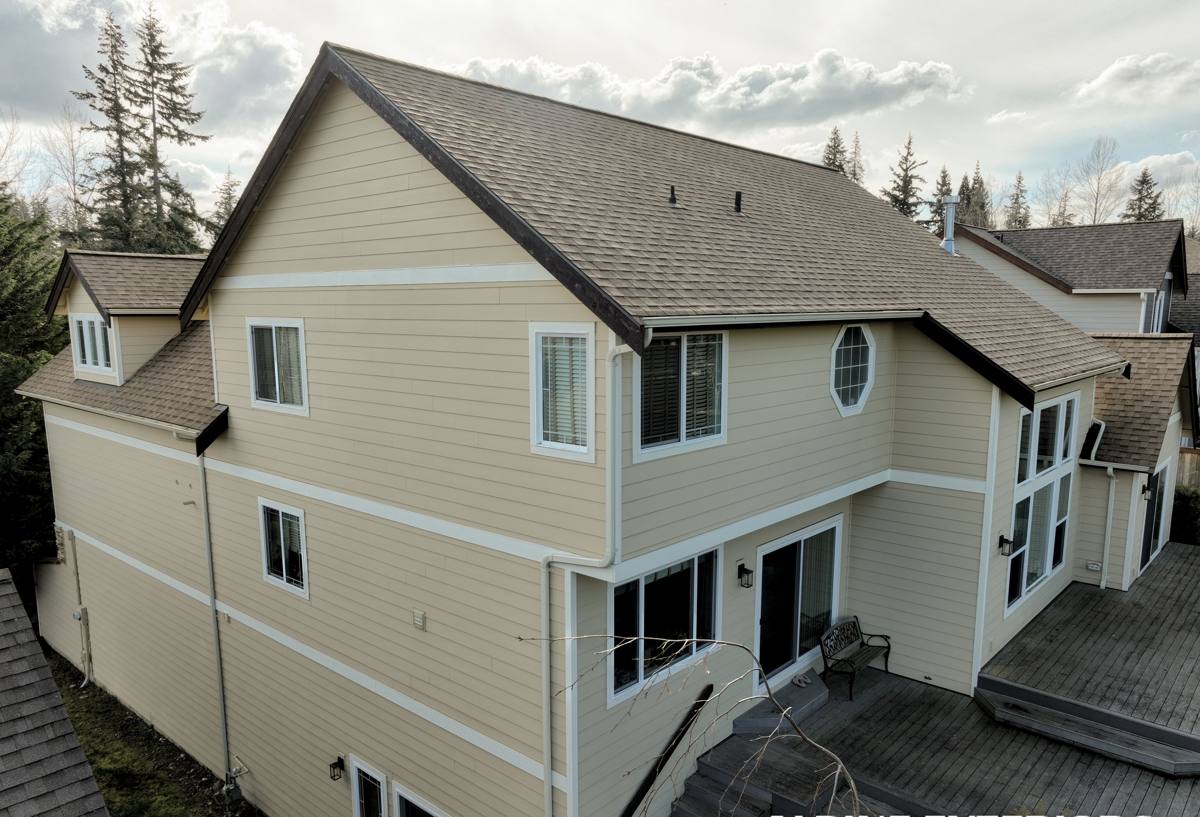
What Salt Air and Driving Rain Actually Do to a Deck
Two forces drive most of the deck damage we find on Lummi Island, and they compound each other.
Salt Air and Metal Fatigue
Airborne salt accelerates corrosion on anything metal — nails, screws, joist hangers, bolts, and railing hardware. Standard electro-galvanized fasteners that hold up fine forty miles inland can start rusting within a few years this close to saltwater. Once a fastener corrodes, it loses grip strength long before it looks obviously bad, which is why a deck can feel solid underfoot right up until a ledger board connection or a joist hanger lets go.
Driving Rain and Wind Exposure
Storms coming off the water don't just rain down — they come in sideways. That matters for deck construction because driving rain gets pushed into places vertical rain never reaches: under flashing laps, behind ledger boards, into end-grain cuts on joists and beams, and around post bases. Wood that's designed to shed water from above can still take on moisture from the side, and end grain soaks up water many times faster than the face of a board.
Moss and Extended Dampness
Between the tree canopy common on island lots and the region's long wet season, many Lummi Island decks stay damp for extended stretches. Moss and algae take hold on shaded boards and railings, and beyond looking bad, that growth holds moisture against the wood surface and creates a slick, slippery walking surface — a real safety issue on stairs and landings.
Common Deck Problems We Find on Lummi Island
- Corroded fasteners and hardware — rusting joist hangers, screws backing out as they corrode, and railing bolts that have weakened without visible warning
- Ledger board rot — the board that attaches the deck to the house is a common failure point where water gets trapped against the siding
- Soft or spongy decking — usually moisture that's penetrated the wood fibers rather than just sitting on the surface
- Failed or missing flashing — often the real root cause behind a ledger or rim joist that's rotting
- Post base and footing issues — wood posts set directly in or near soil that stays wet longer in shaded, low-airflow areas
- Moss-covered and slick surfaces — a maintenance issue that becomes a structural one if left untreated for years
- Loose or wobbly railings — often the first sign of hardware corrosion or post rot below the surface
Signs Your Deck Needs Repair, Not Replacement
Most decks we're called out to don't need to be torn out and rebuilt — they need targeted repair of the specific components that failed. Here's how to tell which situation you're in before you call anyone:
- Boards flex or feel spongy when you walk on them in certain spots, but the frame underneath feels solid
- A railing wiggles more than it used to, especially near a post or corner
- You can see rust streaks below joist hangers or around screw heads
- One section (often near the house or under a tree) looks and feels worse than the rest of the deck
- The deck is less than 15-20 years old and was built with reasonably sound materials
- Stairs feel less solid than the main deck surface
If most of the frame, ledger, and footings are sound and the damage is concentrated in specific boards, connections, or the railing system, repair is almost always the honest recommendation. Full replacement makes sense when the frame itself has widespread rot, the ledger connection has failed structurally, or the deck was undersized or under-built to begin with.
How We Diagnose a Deck Before Recommending Any Work
We start every deck repair with a physical inspection, not a guess from the surface. That means checking:
- The ledger board connection to the house, including flashing condition where it's accessible
- Joists and beams by probing suspect areas for soft spots, particularly at cut ends and near the ledger
- Fasteners and hardware for corrosion, looking underneath as well as at visible surfaces
- Post bases and footings for movement, rot, or contact with standing water
- Railing posts and connections, since these take direct load from people leaning on them
- Decking boards for cupping, splitting, and moisture retention
We'll tell you plainly what's structural and needs attention now, what's cosmetic and can wait, and what's borderline. We don't pad a repair scope with work that isn't needed, and we don't downplay a structural issue to make a quote look smaller.
What a Correct Repair Involves
The fix has to match the actual cause, not just replace the board that looks bad. A few examples of how that plays out:
If a ledger board is rotting because flashing was missing or installed wrong, replacing the board without correcting the flashing just buys a few more years before the same failure repeats. If joist hangers are corroding, we replace them with hardware rated for the exposure rather than matching whatever grade was used originally. If a post base is failing because it's sitting in wet soil, we address the drainage and support, not just the post.
For fastener and hardware replacement on island properties, we use stainless steel or high-corrosion-rated galvanized hardware rather than standard grade — it costs more up front but it's the right call this close to saltwater, and it's a small part of the overall project cost compared to what premature hardware failure costs in repeat repairs.
Repair vs. Full Rebuild: What Drives the Decision
| Factor | Leans Toward Repair | Leans Toward Rebuild |
|---|---|---|
| Frame condition | Solid, isolated soft spots | Widespread rot in joists/beams |
| Ledger connection | Sound, flashing fixable | Structurally compromised |
| Age of structure | Under 15-20 years | Original build decades old or undersized |
| Footings/posts | Stable, minor surface rust | Movement, rot, undersized footings |
| Scope of damage | Concentrated in one area | Spread across the whole deck |
Cost naturally follows scope. A repair addressing a ledger, a section of decking, and hardware upgrades is a fraction of a full rebuild. But if the frame itself is compromised in multiple places, patching it piecemeal often costs more over a few years than doing the rebuild once, correctly, with materials suited to the exposure.
Decking Material Options for Salt-Air, High-Moisture Exposure
When we're replacing decking boards as part of a repair, the material choice matters more here than it would on a sheltered inland deck.
| Material | How It Handles This Climate | Trade-Offs |
|---|---|---|
| Pressure-treated lumber | Resists rot well; standard choice for framing and budget decking | Needs regular sealing/staining; can still hold moss if shaded |
| Cedar | Naturally rot- and insect-resistant, ages well visually | Requires more upkeep to maintain appearance; softer surface |
| Composite decking | Doesn't absorb moisture into the board itself; very low maintenance | Higher upfront cost; can still get slick with moss/algae film if shaded and needs occasional cleaning |
There's no single right answer — it depends on your budget, how much upkeep you want to do, and how shaded the deck is. We'll walk through the honest trade-offs for your specific property rather than steering you toward whatever's easiest for us to install.
Why a Ferry-Familiar Local Crew Matters
Every trip to Lummi Island means a ferry crossing, and that has real implications for how a deck repair project runs. Materials, tools, and crew all have to make that crossing on a fixed schedule, which means the job needs to be planned tightly — not showed up to and figured out as you go. A crew that already works the island knows the ferry schedule, plans material deliveries around it, and doesn't burn half a day figuring out logistics that a Ferndale-based crew unfamiliar with the island would have to learn on your dime.
It also means we're not guessing at what island homes typically need. We've seen how quickly hardware corrodes here, how differently a shaded deck under evergreen cover behaves compared to an open one, and which repair approaches actually hold up through a few more Whatcom County winters instead of needing to be redone in three years.
Maintaining Your Deck After the Repair
A good repair buys you years, but the climate doesn't stop working on your deck once we leave. A few habits go a long way:
- Rinse or sweep moss and debris off the deck surface periodically, especially in shaded areas and on stairs
- Keep gutters and downspouts clear so runoff isn't dumping extra water onto or near the deck
- Reseal or restain wood decking on the schedule appropriate to the product — don't wait until it's visibly failing
- Check railings and stair connections for looseness once or twice a year
- Trim back overhanging branches where practical to cut down on shade and debris buildup
None of this is complicated, but it's the difference between a repair that lasts and one that needs revisiting sooner than it should.
Ready for an Honest Look at Your Deck?
If your Lummi Island deck has soft spots, a wobbly railing, rusting hardware, or just doesn't feel as solid as it used to, we're glad to come take a look. We'll give you a straight assessment of what's actually going on, what needs fixing now versus later, and a free, no-pressure estimate for the work — no upsell, just an honest read on your deck.