 Ferndale Siding
 Metal Roofing Built for Kendall's Climate
Kendall sits far enough into Whatcom County that homeowners deal with a specific mix of weather stress: damp, moss-friendly winters, wind-driven rain off the foothills, and enough temperature swing across the seasons to work every fastener and seam on a roof. A metal roof handles that mix better than most alternatives, but only if it's specified and installed correctly for this exact environment. We've installed and repaired metal roofing across Ferndale and the surrounding Whatcom County communities, including Kendall, and this page walks through what actually matters for a metal roof on a home out here.
This isn't a general metal roofing overview. It's specific to what a correct metal roof installation looks like for a Kendall property, given the rain volume, the moss pressure, and the salt-tinged air that reaches even the inland parts of the county off the Strait of Georgia and Bellingham Bay weather systems.
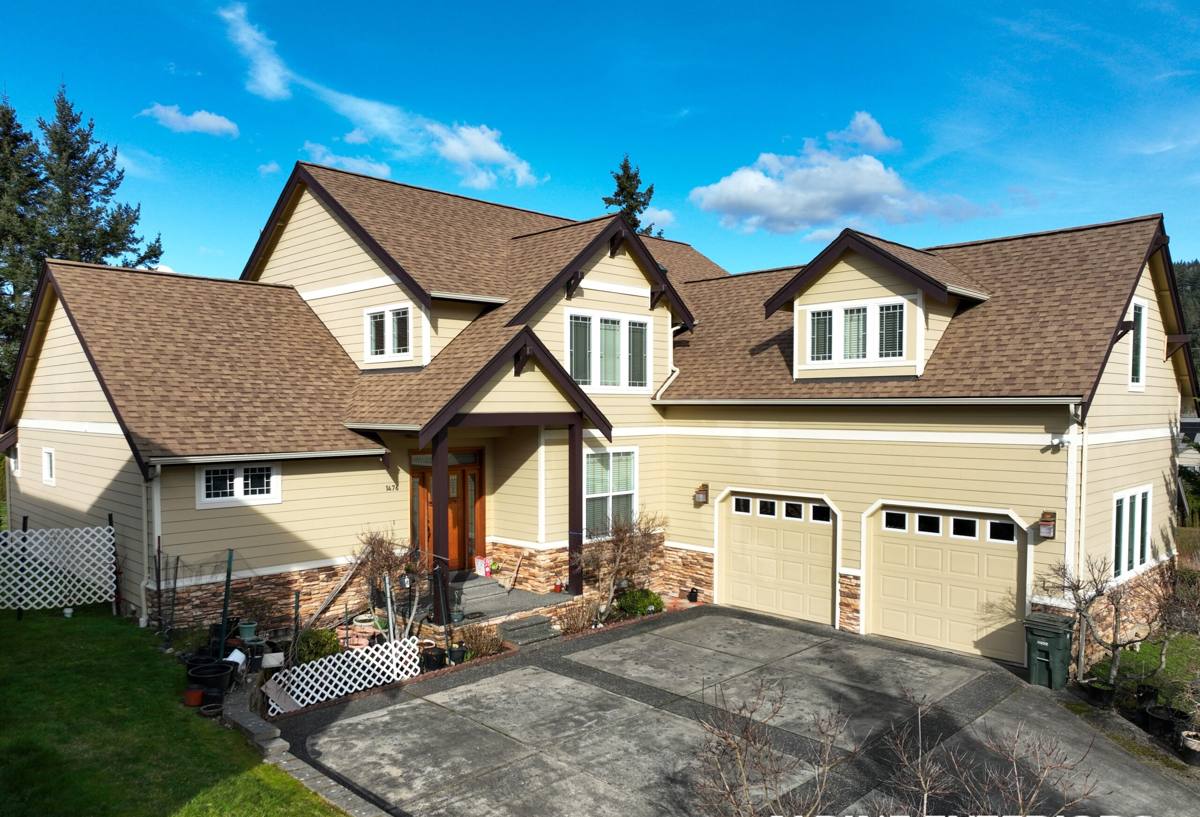
Why Kendall Homes Are Good Candidates for Metal Roofing
Metal roofing has a real advantage in this climate: it sheds water fast, it doesn't hold moisture the way organic roofing materials do, and it gives moss far less to grab onto. That matters in a place where roofs stay damp for long stretches of the year and moss season isn't a two-week nuisance but a months-long condition.
What the Climate Demands
- Fast water shedding during sustained, driving rain events
- Resistance to moss and algae growth on shaded or north-facing slopes
- Corrosion resistance where salt-laden air reaches inland from the coast
- Panel and fastener systems that tolerate repeated wet-dry and temperature cycling without loosening
- A roof assembly that doesn't trap moisture underneath the metal itself
Metal checks these boxes when the underlying assembly — underlayment, ventilation, flashing, fastener choice — is done right. It's the assembly that fails first, not the panels.
What a Correct Metal Roof Installation Involves
The Deck and Underlayment
Before any metal goes down, the roof deck needs to be sound and dry. In a wet climate like this, we check for soft spots, water staining, or rot in the sheathing — issues that are common on older Kendall homes where a roof has been reroofed once or twice without ever pulling back to inspect the deck itself. A high-quality synthetic or self-adhering underlayment goes down next, with extra attention at eaves and valleys where wind-driven rain tends to find its way under standard felt.
Panel Selection and Layout
Standing seam panels are generally the better choice for this climate because the fastening system is concealed, which removes one of the most common failure points on exposed-fastener metal roofs: fastener backout and gasket degradation over years of thermal cycling. Exposed-fastener panels are a lower-cost option and can be appropriate on outbuildings, shops, or budget-driven projects, but we're upfront that they require more long-term maintenance in a climate this wet.
Flashing and Penetrations
Most metal roof failures we get called out to inspect aren't panel failures — they're flashing failures. Chimneys, skylights, vent stacks, and valleys are where water finds a way in if the flashing details aren't built for sustained rain rather than occasional showers. We treat every penetration as its own small project, not an afterthought once the field panels are up.
Ventilation
A metal roof that's sealed up tight without proper attic or roof-deck ventilation can trap moisture underneath it, which defeats the purpose of switching to a moisture-resistant material in the first place. Balanced intake and exhaust ventilation keeps the underside of the deck dry and extends the life of both the roof and the framing beneath it.
Moss and Algae: The Ongoing Battle in This Area
Moss doesn't care what material your roof is made of — it cares about shade, moisture, and organic debris. Metal roofing gives it a much harder surface to establish on compared to asphalt shingles or wood, especially on the slick, low-friction surface of standing seam panels. But no roof is fully moss-proof if it sits under overhanging trees and never gets sun exposure.
What Actually Reduces Moss Pressure
- Keeping overhanging branches trimmed back so more sun and airflow reach the roof surface
- Clearing gutters and valleys of needles and leaf debris before they compost in place
- Choosing panel finishes and colors that shed water quickly rather than holding a film
- Addressing any existing moss on the roof or in the gutters before installation, not after
We factor all of this into how we lay out valleys, gutters, and drip edges specifically for a Kendall property's tree cover and slope orientation.
Salt Air and Corrosion: What Kendall Homeowners Should Know
Kendall isn't beachfront, but Whatcom County's proximity to Bellingham Bay and the Strait of Georgia means salt-laden air does travel inland, especially during storm systems. Over years, that airborne salt can accelerate corrosion on the wrong metal or the wrong fastener finish. This is one of the most overlooked details in metal roof estimates — two roofs can look identical on the surface and have very different corrosion resistance depending on the coating system and fastener hardware used.
Coating and Material Considerations
| Factor | Why It Matters Here |
|---|---|
| Panel coating (paint system) | A quality baked-on paint finish resists fading and chalking under sustained damp exposure and occasional coastal salt air |
| Base metal (steel vs. aluminum) | Aluminum has a natural edge in corrosion resistance in salt-influenced air; coated steel is a strong, more economical option when detailed correctly |
| Fastener hardware | Fasteners and gaskets need to match the panel's expected service life — mismatched hardware is a common early-failure point |
| Flashing metal | Dissimilar metals in contact can corrode faster; flashing should be compatible with the panel material, not just whatever's on hand |
How Our Process Works
1. On-Site Assessment
We look at the existing roof, the deck condition, ventilation, tree cover, and any moss or water staining before recommending a system. We don't sell a standard package without seeing the actual house.
2. Straightforward Proposal
You get a clear scope: panel type, gauge, coating, underlayment, flashing plan, and ventilation approach, along with the reasoning behind each choice for your specific roof.
3. Deck Prep and Repair
Any soft or damaged sheathing gets replaced before underlayment goes down. This step gets skipped by crews trying to move fast — it shouldn't be, especially in a climate where hidden rot is common.
4. Installation
Underlayment, flashing, and panels go in with attention to the details that matter most in sustained rain: valley construction, penetration flashing, and fastener spacing appropriate to wind exposure on your specific site.
5. Final Walkthrough
We walk the finished roof with you, cover basic maintenance expectations, and make sure gutters and drip edges are functioning as intended before we consider the job done.
Cost Factors to Understand Before You Compare Bids
Metal roofing costs vary more than people expect, and the lowest bid is often the one that's cutting corners on the parts you can't see once the roof is finished.
| Cost Factor | What Drives It |
|---|---|
| Panel system | Standing seam costs more upfront than exposed-fastener panels but needs less long-term maintenance |
| Roof complexity | Valleys, dormers, and multiple penetrations add labor and flashing detail regardless of panel type |
| Deck condition | Rot or soft sheathing found during tear-off adds cost but shouldn't be skipped |
| Coating and material grade | Higher-grade coatings and aluminum options cost more but pay off in corrosion resistance here |
| Ventilation upgrades | Older homes often need intake or exhaust vent improvements as part of the reroof |
We'd rather explain these trade-offs plainly than quote a number without context. A metal roof is a long-term investment, and understanding what you're paying for matters more than chasing the lowest line-item price.
Maintenance Expectations for a Kendall Metal Roof
Metal roofing is low-maintenance compared to most alternatives, but "low" isn't "none," especially with the tree cover and moisture common around Kendall properties.
- Clear gutters and valleys of debris at least twice a year, more often under heavy tree cover
- Trim back branches that overhang the roof to reduce shade and debris buildup
- Do a visual check after major wind or storm events for lifted flashing or debris impact
- Watch for any moss establishing in shaded valleys and address it before it spreads
- Keep an eye on sealant at penetrations if your roof uses an exposed-fastener system
Why Local Experience Matters for This Job
A metal roof installed by a crew unfamiliar with Whatcom County's rain volume, moss pressure, and salt exposure can look fine for the first year or two and then start showing problems that trace directly back to underlayment choice, flashing details, or ventilation that wasn't sized for this climate. We work this area regularly, which means we're not guessing at how a Kendall roof needs to be detailed — we've seen what holds up here and what doesn't, and we build accordingly.
If you're weighing a metal roof for a Kendall property, we're happy to take a look and walk you through what your specific roof needs — no pressure, no generic package pitch. Use the form below to request a free estimate.