 Ferndale Siding
 Windows Built for Kendall's Wet, Wooded Climate
Kendall sits back from the water, tucked into the Nooksack River valley toward the foothills of Whatcom County, but the same marine weather system that pushes moisture off the Salish Sea and up through the lowlands still shapes what happens to a window here. Long wet winters, heavy shade from surrounding timber, and a short dry stretch in summer mean windows in this area work harder than a spec sheet from a big-box store ever accounts for. A window that's fine in a dry climate can fail early here — swelling, fogging between panes, or rotting at the sill — if it wasn't chosen and installed with this specific weather pattern in mind.
Custom windows aren't just about a non-standard size or a fancy shape, though that's part of it for older farmhouses and additions in and around Kendall that don't match modern rough openings. Custom, done right, means matching the frame material, glass package, and flashing detail to the actual conditions the window will sit in for the next 20-plus years. That's a different conversation for a shaded, moisture-heavy lot in Kendall than it is for an open, sun-exposed yard closer to town.
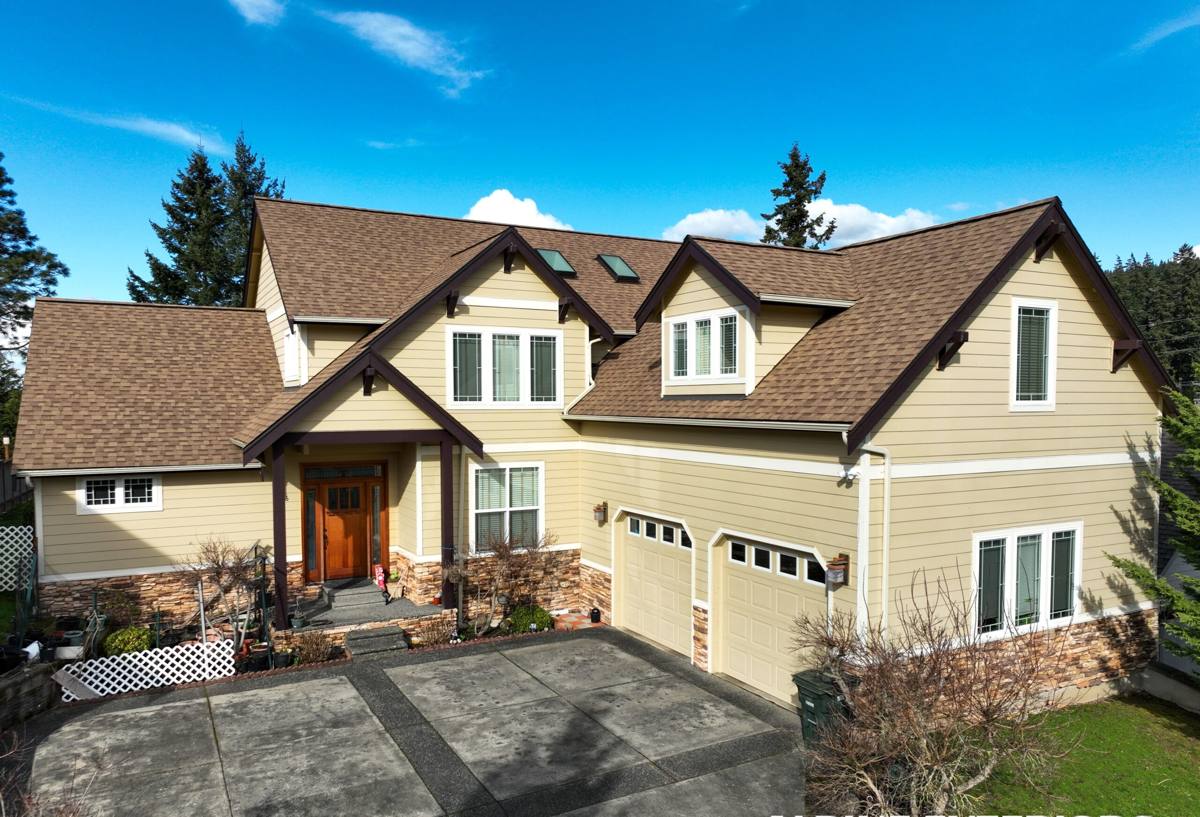
What Salt Air, Rain, and Moss Do to Windows Here
Three things wear down windows in this part of Whatcom County faster than almost anywhere else in the state, and Kendall gets all three even though it's inland from the coast.
Driving Rain and Wind-Driven Moisture
Storms coming off the water track inland and dump most of their rain against west- and south-facing walls. Wind pushes that rain sideways into any gap in flashing, trim, or caulk. Over years, that's how water gets behind a window frame without ever showing an obvious leak inside — it just rots the sheathing and framing slowly, from the outside in.
Salt-Laden Marine Air
Even away from the immediate shoreline, the marine air that moves through Whatcom County carries fine salt content that accelerates corrosion on unprotected metal hardware, fasteners, and lesser window components. It's a slow process, but it's constant, and it's part of why we don't spec hardware or flashing that isn't rated for coastal-adjacent exposure.
Moss and Sustained Shade
Kendall's tree cover is a blessing for privacy and a problem for windows. Shade keeps surfaces damp for days after a storm instead of drying out in an afternoon of sun. That prolonged dampness is exactly what moss, algae, and mildew need to take hold on sills, trim, and any wood component. Once moss gets a foothold at a joint or seal, it holds water against that spot permanently — which is how a small gap becomes a rot pocket in a couple of wet seasons.
Choosing the Right Custom Window for a Kendall Home
There isn't one universally "best" window material — there's a best fit for a given house, exposure, and budget. Here's how the common options actually stack up for this climate.
| Frame Material | How It Handles This Climate | Maintenance | Typical Fit |
|---|---|---|---|
| Vinyl | Won't rot; handles moisture well; can flex in temperature swings | Low — occasional cleaning | Most homes, best value |
| Fiberglass | Very stable in wet/cold cycling; strong resistance to warping | Low | Larger custom openings, higher-exposure walls |
| Wood (clad exterior) | Excellent look; interior wood is protected but any exterior wood exposure is a moisture risk here | Higher — cladding seams need periodic inspection | Character/historic homes where appearance drives the decision |
| Aluminum | Prone to condensation and corrosion in salt-influenced marine air unless thermally broken | Moderate to high | Rarely our first recommendation for full exposure walls here |
For most Kendall homes we lean toward vinyl or fiberglass for anything on a rain- or shade-exposed wall, and reserve wood-clad options for homes where the architectural look is the priority and the owner understands the added upkeep.
Glass Packages Worth Paying For
The frame gets most of the attention, but the glass package does most of the work against this climate:
- Dual-pane, low-E glass with argon fill — the standard baseline for new custom windows here, cuts condensation risk significantly over single or older dual-pane units
- Warm-edge spacer systems — reduce the cold edge effect that causes fogging and interior condensation on shaded walls
- Triple-pane — worth the upgrade cost on north- or west-facing walls with heavy shade and wind exposure, less necessary on protected south sides
- Tempered or laminated glass — required by code in certain locations (near doors, low sills, wet areas) regardless of climate
What a Correct Custom Window Installation Involves
The window itself is maybe half the job. The other half — the part that actually determines whether it lasts — is what happens at the rough opening before the new window ever goes in.
Full-Frame vs. Insert Replacement
An insert replacement drops a new window into the existing frame and is faster and less invasive, but it only makes sense when the existing frame, sill, and surrounding sheathing are dry and sound. A full-frame replacement removes everything down to the rough opening, which is the only way to actually inspect and fix hidden rot — common on older Kendall homes where a window has been quietly taking on moisture for years behind intact-looking trim.
Flashing and Water Management
This is where most water damage actually starts, and it's the detail a rushed installer skips. Correct flashing means:
- A sloped sill pan that directs any water that does get in back outside, not into the wall cavity
- Proper layering of house wrap and flashing tape so water sheds downward over every seam, shingle-style
- Sealant used only where it belongs — as a backup to good flashing, never as the only line of defense
- Weep holes and drainage paths left clear, not sealed shut
Insulation and Air Sealing
Gaps around the new frame get filled with low-expansion foam or backer rod and sealant, not just stuffed with fiberglass. A poorly sealed gap is both an energy leak and a path for humid air to reach cold framing and condense — which, again, is how rot starts on the inside of a wall you can't see.
Our Process From Estimate to Cleanup
- On-site assessment — we look at each opening's exposure, current condition, and what's actually happening behind the trim, not just the window itself
- Honest recommendation — insert vs. full-frame, material and glass package suited to that specific wall's sun and rain exposure
- Written estimate — clear scope, materials, and timeline, no vague allowances
- Installation — proper removal, inspection of the opening, correction of any hidden damage found, and installation to manufacturer and code specification
- Final check and cleanup — operation, seal, and finish checked at every opening before we leave
Signs Your Kendall Home Needs New or Custom Windows
- Visible condensation or fogging between the panes (a failed seal, not a cleaning problem)
- Soft or discolored wood at the sill or trim, or moss actively growing on the frame
- Windows that are hard to open, close, or lock — often a sign the frame has shifted or swollen
- Noticeable draft or cold spots near the window even when it's fully closed
- Visible daylight or gaps around the frame from outside
- Rising heating bills with no other obvious cause
- An odd size or shape that's never had a window that actually fits well
Cost Factors for Custom Windows in Kendall
| Factor | Why It Moves the Price |
|---|---|
| Frame material | Vinyl is typically the most affordable; fiberglass and wood-clad cost more upfront |
| Glass package | Triple-pane and upgraded low-E coatings add cost but reduce long-term condensation and energy loss |
| Insert vs. full-frame | Full-frame costs more in labor but is often required once hidden rot is found |
| Hidden damage repair | Rotted sheathing or framing discovered during removal adds to scope — this is common on older, shaded walls |
| Size and shape | Custom or oversized openings, and true divided-lite or specialty shapes, cost more than stock sizes |
| Access and site conditions | Second-story or hard-to-reach openings add labor time |
We won't quote a number without seeing the actual openings — anyone who does is guessing, and on an older home in a wet climate that guess can be off by a lot once the wall is opened up.
Why Hire a Crew That Already Works in Kendall
Windows are one of the few exterior components where a mistake doesn't show up right away — it shows up two or three winters later, as rot behind trim that looked fine when it was installed. A crew that already works this specific area has seen what actually fails here: which orientations take the worst of the driving rain, where moss builds up fastest under the tree cover, and which older Kendall homes tend to have non-standard openings that need a genuinely custom approach rather than a forced-fit stock window.
That local pattern recognition is worth more than a lower bid from a crew working from a generic checklist. It's the difference between a flashing detail that's technically installed and one that's installed correctly for what this valley's weather actually does to a wall.
Keeping Custom Windows Performing Long-Term
A well-installed window still needs a small amount of upkeep in this climate, and it's cheap insurance against the bigger problems above:
- Clear debris and needles from sills and tracks each fall, before the wet season sets in
- Knock moss growth off frames and trim promptly rather than letting it establish
- Check exterior caulk lines yearly for cracking or separation, especially on the rain-exposed side of the house
- Keep gutters and downspouts clear so overflow doesn't wash directly down the wall past window openings
If you're weighing new windows for a Kendall home, we're happy to take a look and give you a straight assessment of what your openings actually need — no pressure, no obligation. Fill out the form below for a free estimate.