 Ferndale Siding
 Deck Replacement Built for Fairhaven's Coastal Conditions
Fairhaven sits close enough to Bellingham Bay that salt-laden air, driving rain off the water, and a moss season that can run eight months or more all work against an outdoor deck. If you've noticed soft spots near the ledger board, black streaking on the decking, or fasteners bleeding rust down the face boards, that's not cosmetic — it's the early stage of structural failure. A deck replacement done right for this neighborhood accounts for the coastal exposure from day one, not as an afterthought.
We're a Whatcom County crew based out of Ferndale, and Fairhaven is regular territory for us. That matters more than it sounds like it should, because a deck built to a generic spec sheet and a deck built for this specific stretch of the county behave very differently after five winters.
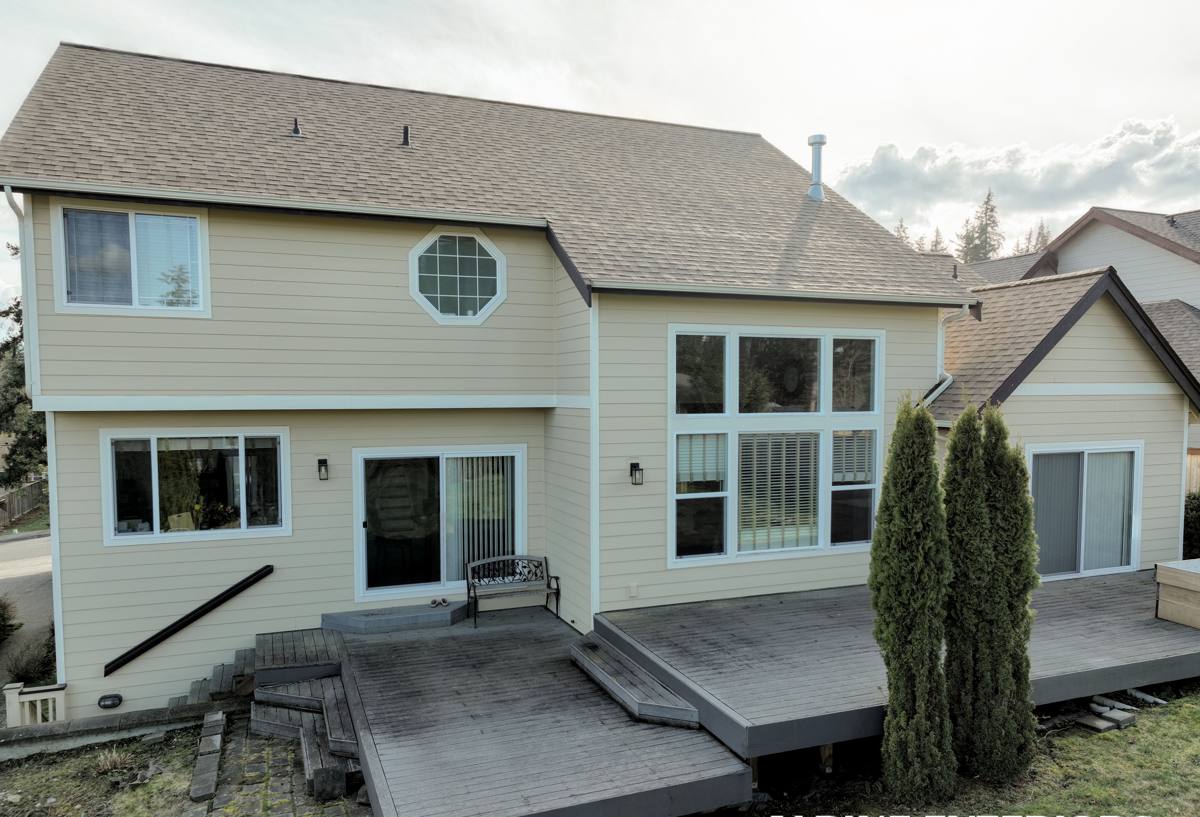
Why Decks Fail Faster Near the Water
Salt Air and Metal Fasteners
Salt-carrying wind off the bay accelerates corrosion on anything that isn't rated for it. Standard interior-grade screws, joist hangers, and nails will rust, weep, and eventually lose their grip strength well before a homeowner expects to be thinking about deck repairs. Once a fastener corrodes, the wood around it stays wet longer, and rot follows the metal.
Driving Rain and End-Grain Absorption
Fairhaven gets weather that comes in sideways, not just straight down. That means water gets driven into joints, board ends, and ledger connections that a flatter rain pattern would mostly miss. End grain on cut boards soaks up water like a straw, and if it isn't sealed or flashed properly, that's where rot starts first — usually out of sight, underneath the decking.
Moss, Algae, and a Long Wet Season
Whatcom County's moss and algae season isn't a few weeks in spring — it's most of the year on a shaded, north-facing, or tree-covered deck. Moss holds moisture against the wood surface constantly, and it makes boards slick and dangerous underfoot long before the wood itself is structurally compromised. A deck design that ignores drainage and airflow will grow moss again within a season or two, no matter how well it's cleaned.
Signs Your Fairhaven Deck Needs Replacing, Not Just Repair
- Soft, spongy decking that flexes underfoot, especially near the house or along the perimeter
- Rust streaks running down from screw heads or metal connectors
- Visible gaps or separation where the deck ledger meets the house siding or rim joist
- Persistent moss or black algae that returns within weeks of cleaning
- Wobble in the railing posts, which usually means post rot below the surface, not a loose bolt
- Wood that feels damp or cool to the touch even on a dry day — a sign moisture is trapped inside
- Visible daylight or gaps between boards that have widened noticeably over a few years
One or two of these can sometimes be spot-repaired. Several at once, especially anything involving the ledger board or support posts, usually means the framing has been compromised and a full replacement is the honest recommendation.
What a Correct Deck Replacement Involves
Structural Framing First
The framing underneath is what actually determines how long a deck lasts — the surface boards get all the attention, but a beautiful deck board fastened to rotted or undersized joists is a short-term fix wearing a long-term appearance. For this area, we use lumber rated for ground contact and exterior exposure where it's called for, and we pay close attention to the ledger board connection, since that's the single most common failure point on decks attached to a house in a wet climate.
Flashing and Water Management
Proper ledger flashing keeps water from tracking behind the board and into the house rim joist — this is one of the most skipped steps on lower-cost deck jobs, and it's also the one most likely to cause hidden rot and, eventually, water intrusion into the home itself. We flash the ledger, joist tops, and any post-to-beam connections so water sheds away from end grain and fastener points instead of sitting on them.
Fasteners and Hardware Rated for Coastal Exposure
Given the salt air this close to the bay, we use corrosion-resistant fasteners and connectors rated for exterior and coastal exposure rather than standard interior-grade hardware. It costs a little more upfront and saves the rust-streaking, loosening, and premature hardware failure that shows up within a few years on decks built with the cheaper option.
Decking Material Selection
Whether you go with a quality pressure-treated wood, cedar, or composite decking depends on your budget, maintenance appetite, and how much shade and moss exposure the deck actually gets. We'll walk through the honest trade-offs for your specific site rather than pushing one material as a default.
Decking Material Comparison for a Fairhaven Site
| Material | Moss/Algae Resistance | Maintenance | Typical Lifespan Here |
|---|---|---|---|
| Pressure-Treated Wood | Moderate — needs regular cleaning and sealing | Annual cleaning, re-sealing every 2-3 years | 15-20 years with upkeep |
| Cedar | Moderate — natural oils help but fade over time | Cleaning plus periodic oiling or staining | 15-20 years with upkeep |
| Composite Decking | Good — resists moisture absorption | Occasional washing, no sealing/staining | 25-30+ years, varies by product warranty |
Composite costs more upfront but saves labor over the deck's life on a site like Fairhaven, where the cleaning and re-sealing cycle on wood is more frequent than it would be in a drier inland location. Wood costs less initially and can look great, but it asks more of the homeowner every year to keep it that way in this climate.
Framing and Support: What's Underneath Matters Most
A lot of deck replacement quotes focus almost entirely on the visible decking material and skip past the framing, footings, and post condition. On a coastal deck, that's backwards. We inspect and, where needed, replace or upgrade:
- Ledger board and its flashing and fastening to the house structure
- Support posts, checking for rot at the base and at the soil line
- Footings, confirming they're set to adequate depth and haven't shifted or heaved
- Joists and beams, sized correctly for the actual span and load, not just matched to what was there before
- Railing posts and their attachment, since a loose railing is a safety issue as much as a maintenance one
Our Deck Replacement Process
1. On-Site Assessment
We come out, walk the existing deck, and check the framing underneath wherever we can access it — not just the surface. We'll tell you plainly if what you're dealing with is a repair situation or a full replacement, and why.
2. Honest, Written Estimate
You get a clear scope and price range before any work starts, including what material options look like for your specific site and budget. No pressure, no inflated urgency tactics.
3. Permitting
Deck replacements of most sizes require a permit through the applicable jurisdiction. We handle that process so you don't have to chase it down yourself, and so the finished deck is built to code — which matters both for safety and for resale down the line.
4. Demolition and Framing Repair
We remove the old decking and inspect the frame fully once it's exposed. If rot extends further than expected — which happens more often than homeowners assume, especially near ledgers and posts — we'll show you what we found before proceeding.
5. Rebuild with Coastal-Rated Materials
New framing, flashing, corrosion-resistant hardware, and your chosen decking material go in, built to handle the rain and salt exposure specific to this part of Whatcom County.
6. Final Walkthrough
We walk the finished deck with you, cover basic maintenance expectations for your chosen material, and make sure you're clear on what upkeep (if any) is needed to get the lifespan you're paying for.
Cost Factors for a Fairhaven Deck Replacement
| Factor | Why It Affects Price |
|---|---|
| Deck size and shape | Larger and multi-level decks require more material and labor hours |
| Framing condition | Rot found once old decking is removed can add repair scope |
| Decking material chosen | Composite costs more per board foot than pressure-treated wood, but less over time |
| Height and access | Elevated decks and difficult site access add labor time |
| Railing and stairs | Additional linear footage of railing or stair runs adds to scope |
| Permit requirements | Structural inspections and permit fees vary by scope and jurisdiction |
We won't quote a number without seeing the site — anyone who does is guessing, and a deck estimate that ignores the framing condition underneath is guessing on the part that matters most.
Why Hire a Crew That Already Works in Fairhaven
A contractor who works this specific area regularly already knows what a deck built for the bay-adjacent side of Whatcom County needs to hold up — the fastener grade, the flashing detail at the ledger, the drainage slope that keeps moss from taking over a shaded deck. That's not something you get from a crew that mostly builds decks in a drier, more sheltered part of the region and treats every job the same. We're based in Ferndale, we know this stretch of the county, and we build accordingly rather than defaulting to a one-size-fits-all spec.
Maintenance That Actually Extends the Life of a New Deck
- Sweep debris and standing leaves off the deck regularly, especially in fall, so they don't trap moisture against the boards
- Clean moss and algae buildup at least once or twice a year rather than letting it establish
- Check railing posts and stair connections annually for any looseness
- Re-seal or re-stain wood decking on the schedule appropriate to the product, not just when it visibly needs it
- Keep gutters and downspouts near the deck clear so runoff isn't dumping directly onto or under it
If you're seeing early warning signs on your deck, or you just know it's due, we'd rather take a look and give you a straight answer than have you guess. Reach out for a free, no-pressure estimate — we'll walk the deck, check the framing, and tell you honestly what it needs.