 Ferndale Siding
 Why Semiahmoo Homes Need a Different Approach to Windows
Semiahmoo sits about as close to the water as a Whatcom County home can get, and that proximity changes what "good windows" means. A window that performs fine in inland Ferndale or Lynden can start failing years early once it's facing Semiahmoo Bay or the Strait, dealing with salt-laden air, wind-driven rain that hits glass and trim horizontally instead of straight down, and the long, damp moss season that keeps north- and west-facing surfaces wet for weeks at a stretch. None of that is exotic — it's just the normal marine climate here — but it means windows, frames, and the flashing behind them need to be selected and installed with that exposure in mind, not treated like a standard suburban install.
We work windows in and around Semiahmoo regularly enough to know which failure patterns show up first in this specific setting: corroded hardware, clouded or fogged double-pane glass, soft trim at the sill, and finish that's chalked or pitted faster than the manufacturer's warranty would suggest. Custom windows done right for this area aren't just about matching an unusual opening size — they're about choosing materials and details that actually hold up a few hundred yards from salt water.
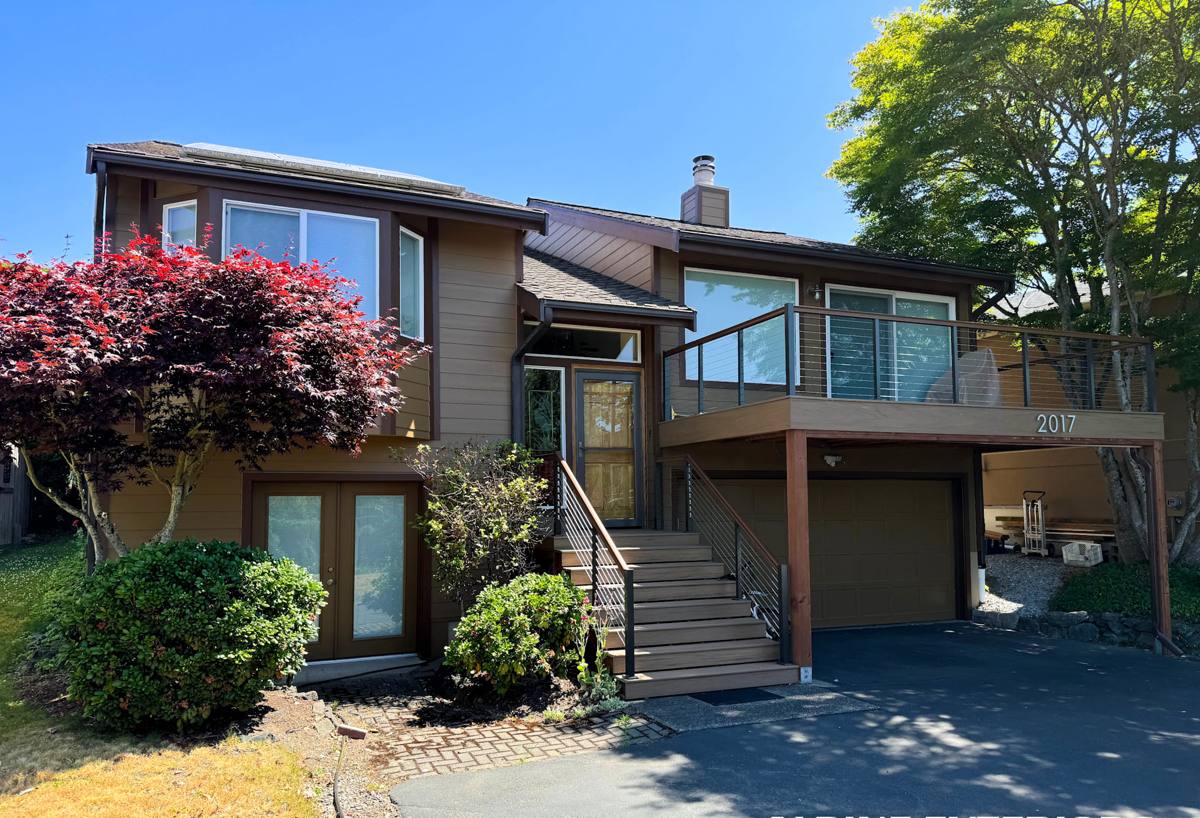
What "Custom" Actually Means Here
Custom doesn't have to mean a specialty shape or an oversized picture window, though we do plenty of that. More often in Semiahmoo it means matching an older home's existing rough openings without reframing the whole wall, working around unusual trim details on a waterfront-style build, or replacing a window that was never quite standard size to begin with. It can also mean choosing a configuration — casement instead of double-hung, for example — because it seals tighter against wind-driven rain than the stock option would.
Common reasons homeowners here go custom
- Original openings that don't match modern standard sizes, common in older coastal cottages and remodeled homes
- Wanting a tighter-sealing operating style (casement or awning) for wind and rain exposure rather than double-hung
- Larger view openings toward the water that need proper structural and moisture detailing, not just a bigger pane of glass
- Matching trim, grid pattern, or exterior color across an addition or partial remodel
What Salt Air, Rain, and Moss Actually Do to a Window
Each of these has a distinct failure pattern, and knowing which one is at work matters for what we recommend.
Salt air
Airborne salt is corrosive to metal hardware — hinges, cranks, locks, and screws — and it accelerates the breakdown of lower-grade finishes on aluminum and some vinyl products. It's why we lean toward frame materials and hardware rated for coastal or marine exposure rather than a generic inland-grade product, even though the price difference is real.
Driving rain
Rain that comes in sideways off the water finds any weakness in flashing, sealant, or the window-to-wall transition. A window itself can be excellent and still leak if the flashing behind the trim wasn't lapped correctly. This is the single most common cause of hidden water damage we find when we pull old trim off a Semiahmoo home.
Moss and sustained moisture
Shaded, north-facing walls and anything under tree cover stay damp for long stretches during our fall-through-spring stretch. Wood trim and sills in those conditions rot faster, and moss holding moisture against a sill or casing accelerates that further. Painted wood needs more upkeep in these spots than it would on a sunnier, more exposed wall.
Frame Material: What Actually Holds Up on the Water
| Material | Salt-Air & Moisture Performance | Maintenance | Typical Cost Position | Best Fit |
|---|---|---|---|---|
| Vinyl (quality-grade) | Good — won't corrode or rot; check UV/color stability rating | Low | Lower-mid | Most standard and near-standard openings |
| Fiberglass | Very good — dimensionally stable, resists moisture and salt exposure well | Low | Mid-upper | Larger openings, higher-exposure walls |
| Aluminum-clad wood | Good exterior protection, but interior wood still needs care; cladding seams are a watch point near salt air | Moderate | Upper | Homeowners wanting a wood interior look with protected exterior |
| Bare wood | Weakest in this specific climate unless meticulously maintained | High | Varies | Historic-match projects where upkeep is accepted |
We're not going to tell you bare wood is a bad product — it isn't, and plenty of people love the look and are willing to keep up with it. Our standard for direct water and salt exposure in Semiahmoo is that we'd rather steer a homeowner toward vinyl, fiberglass, or well-detailed clad options because the maintenance burden and moisture risk are lower, and we stand behind the installation more confidently when the materials are built for this exposure.
Glass and Weatherstripping Matter as Much as the Frame
The frame gets most of the attention, but two other details do a lot of the actual work:
- Dual-pane, low-E glass cuts condensation risk and helps with the temperature swings common near open water
- Argon or krypton gas fill adds a little more thermal performance, worth it on west- and north-facing exposures
- Marine-grade or corrosion-resistant hardware on cranks, hinges, and locks — this is the detail cut most often on budget installs and the first thing to fail here
- Compression weatherstripping on casement and awning styles seals tighter against wind-driven rain than sweep-style seals on sliders
Installation: Where Most Window Failures Actually Start
A quality window installed poorly will leak and fail early. A modest window installed correctly will usually outperform it. The install is where we spend the most care, and it's also the part homeowners can't see once trim goes back on — which is exactly why it's worth understanding.
Our process
- On-site assessment — we measure the actual opening, check the condition of the framing and sill for hidden rot (common on older Semiahmoo-area homes with long moss exposure), and talk through material and style options for that specific wall
- Removal — old window comes out, and we inspect the sheathing and framing underneath before anything goes back in
- Flashing and waterproofing — this is the step that matters most in a driving-rain climate: properly lapped flashing tape, a sloped sill pan, and correct sealant placement so water is directed out, not trapped behind the trim
- Window set and shim — leveled, plumbed, and secured per manufacturer spec, not just "close enough"
- Insulation and air sealing around the frame, avoiding over-packing that can bow the frame
- Interior and exterior trim finished to match existing detailing where we're doing a partial replacement
- Final function and seal check before we call the job done
If a crew skips the sill pan or rushes the flashing lap to save an hour, you won't see the problem for a year or two — and by then it's water damage in the wall, not just a caulking touch-up.
Signs Your Semiahmoo Windows May Already Need Attention
- Fogging or a milky haze between panes — a sign the seal has failed and the gas fill is gone
- Hardware that's stiff, corroded, or won't latch fully — common on the water side of a home
- Soft or discolored trim at the sill or bottom corners, especially on shaded or moss-prone walls
- Noticeable draft or a whistle during wind events
- Visible daylight or gapping around the frame
- Difficulty opening or closing that didn't used to be there
- Paint or finish that's chalking, peeling, or pitting faster than expected for its age
Any one of these can usually be repaired if caught early. Several at once, especially soft trim plus a stuck sash, usually means it's more cost-effective to replace than keep patching.
Cost Factors — What Actually Moves the Price
| Factor | Why It Matters |
|---|---|
| Frame material | Vinyl is generally the most budget-friendly; fiberglass and clad-wood cost more but hold up better under direct salt exposure |
| Opening size and shape | Custom or oversized openings, especially view windows, cost more to fabricate and install correctly |
| Operating style | Casement and awning styles seal tighter but typically cost more than sliders or double-hung |
| Condition of existing framing | Hidden rot found during removal adds repair work before the new window can go in — this is common on older coastal-exposed walls |
| Number of windows | Doing several at once on one visit is usually more efficient than one-off replacements over time |
| Trim and finish matching | Matching existing exterior trim profiles on a partial replacement takes more labor than a full re-trim |
We won't quote a number without seeing the actual openings and their condition — anyone who gives you a firm price over the phone for custom coastal work is guessing. What we can tell you honestly is that the material and hardware upgrades that matter most for salt-air exposure are usually a modest percentage of the total job cost, not the reason a project blows past budget. Hidden framing repair is more often what does that, and it's unpredictable until the old window comes out.
Why Local Experience in Semiahmoo Specifically Matters
Whatcom County covers a lot of ground, and inland conditions are genuinely different from what a home on Semiahmoo Bay deals with. A crew that mostly works drier, more sheltered neighborhoods can under-spec hardware or skip a sill pan detail that would be fine there and cause problems here within a couple of wet seasons. We've replaced enough windows in this specific stretch of coastline to know where water actually gets in on these homes, which walls hold moss longest, and which hardware grades hold up versus which ones seize up early. That's not something you can fully substitute with a generic install checklist — it comes from doing the work in this exact climate, repeatedly.
If your property is part of a community with design or exterior-appearance guidelines, we're also used to working within those constraints on color, grid pattern, and trim profile rather than treating it as an afterthought.
Maintenance That Actually Extends the Life of Coastal Windows
- Rinse salt residue off frames and glass periodically, especially after wind events off the water
- Keep moss and debris cleared from sills and tracks — trapped moisture is the real damage driver, not the moss itself
- Lubricate hardware (cranks, hinges, locks) on a schedule appropriate to the manufacturer, since salt air accelerates wear
- Check and refresh exterior caulking annually — it's cheap insurance against water intrusion
- Watch for soft spots at the sill early, before they spread into the wall framing
None of this is complicated, but it's easy to skip, and skipping it is what turns a 25-year window into a 12-year window in this climate.
Getting Started
If you're dealing with a foggy pane, a stuck sash, soft trim, or you're just planning ahead for a Semiahmoo home that's showing its age against the salt air and rain, we're happy to come take a look. We'll walk the openings with you, tell you honestly what's failing and what isn't, and lay out real options and a real price range — no pressure, no obligation. Use the form below to request a free estimate.