 Ferndale Siding
 Building a Deck That Actually Holds Up Out Here
A deck built to a generic national spec doesn't last long in this part of Whatcom County. Between salt-laden air drifting in off the water, rain that can settle in for days at a time, and a moss season that runs longer here than almost anywhere else in the state, a deck around Sudden Valley takes a different kind of beating than one built in a dry inland climate. We build and replace decks for homes in this area regularly, and almost every repair call we get traces back to the same root cause: a deck that was built for the wrong climate.
This page is about one thing — custom deck construction and replacement for homes in and around Sudden Valley — and what actually needs to happen differently here versus a standard build.
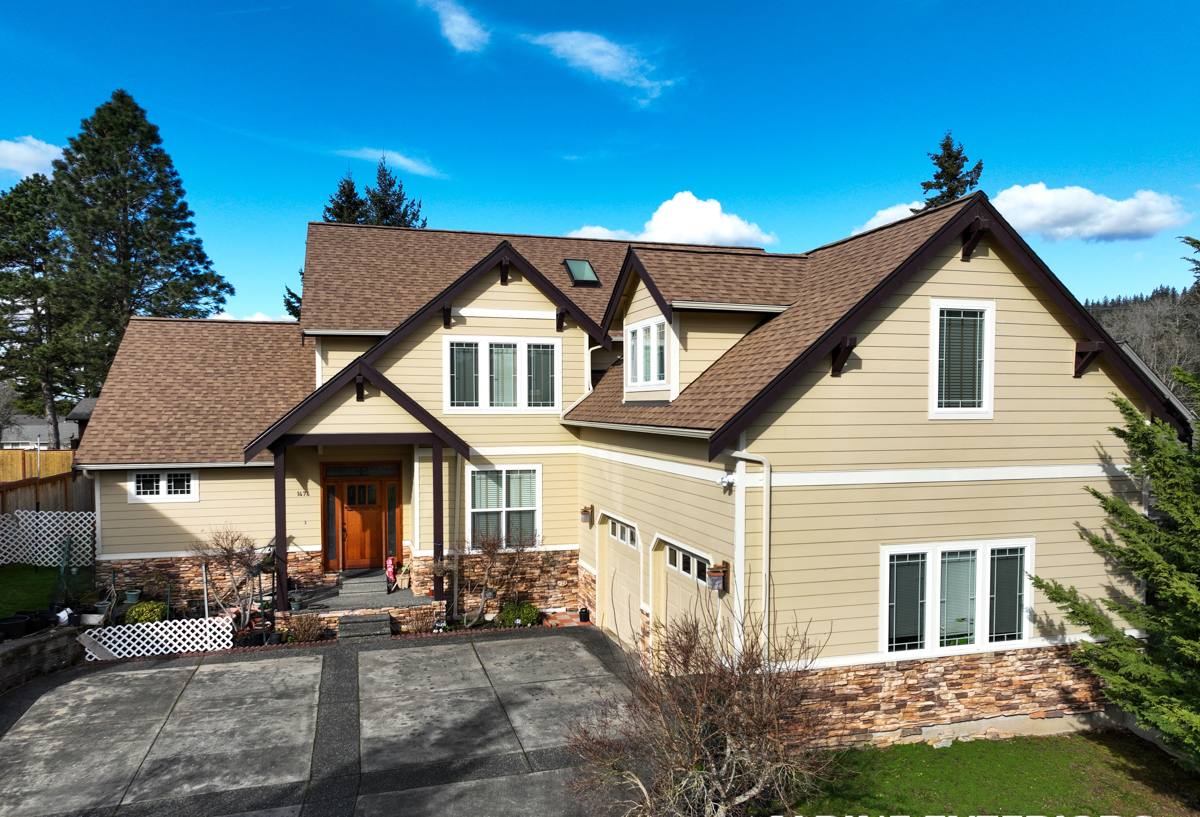
What Sudden Valley Properties Ask of a Deck
Tree Cover and Shade
A lot of lots in this area sit under mature evergreen canopy. That's part of the appeal of living here, but it also means decks stay damp longer after a rain, get less direct sun to dry out, and collect needles and debris that trap moisture against the boards. A deck design that ignores this — tight board spacing, no airflow underneath, wood in constant shade — is signing up for moss and rot years ahead of schedule.
Sloped and Uneven Lots
Many homes here are built on grade, which usually means a deck isn't a simple flat slab-on-post situation — it's stepped, elevated, or cantilevered off a hillside. That changes the engineering: footing depth, post height, and lateral bracing all need to be sized for the actual slope, not assumed from a flat-lot plan.
Permitting Jurisdiction
If your property sits in unincorporated Whatcom County rather than inside Ferndale city limits, your permit and inspections run through the county, not the city. The requirements aren't wildly different, but the paperwork, fee schedule, and inspection scheduling are — and a crew that pulls permits in this area regularly won't waste your time figuring that out for the first time on your job.
Picking the Right Decking Material for This Climate
There's no single "best" decking material — there's a best material for your budget, your maintenance appetite, and how much sun and rain your particular deck will see. Here's how the common options actually perform out here, honestly:
| Material | Upfront Cost | How It Handles Rain & Salt Air | Maintenance | Realistic Lifespan |
|---|---|---|---|---|
| Pressure-treated wood | Lowest | Prone to cupping and splitting if not sealed regularly; absorbs moisture in shaded spots | Annual cleaning and re-sealing | 10–15 years with upkeep |
| Cedar | Moderate | Naturally rot-resistant but still needs sealing to fight the wet season and prevent graying | Sealing every 1–2 years | 15–20 years with upkeep |
| Standard composite | Higher | Doesn't rot, but uncapped edges and older composite formulations can absorb moisture and grow mold in shaded, damp spots | Periodic washing, moss treatment in shaded areas | 20–25 years |
| Capped composite / PVC | Highest | Fully sealed surface resists moisture and salt exposure best of the group; holds up well in shade | Occasional washing | 25+ years |
We're honest with clients about wood: it can look great and cost less up front, but in a shaded, wet-climate lot it demands real annual upkeep to hit its expected lifespan. If a homeowner isn't going to reseal on schedule, we'll say so — a capped composite costs more today but removes that maintenance burden entirely, which matters more here than in a drier climate where wood decks coast along with less attention.
What a Correctly Built Deck Involves
Regardless of material on top, the structure underneath is what determines whether a deck lasts 10 years or 30. In this climate, a few details matter more than they would elsewhere:
- Ledger flashing: The board that attaches the deck to your house is the single most common point of hidden rot. Proper flashing — not just caulk — keeps driving rain from working its way behind the ledger and into the house framing.
- Corrosion-resistant fasteners: Standard galvanized hardware can start rusting within a few years in salt-influenced air. We use stainless steel or hot-dip galvanized fasteners and connectors rated for the exposure.
- Footings below frost depth and sized for the load: On sloped Sudden Valley lots this often means deeper or more numerous footings than a flat-lot deck of the same size would need.
- Joist spacing and airflow: Under-deck ventilation matters more in shaded, damp lots — tight joist spacing with no airflow is exactly what keeps moisture trapped against the framing.
- Proper drainage slope: A deck surface needs a slight pitch away from the house so water doesn't pool against siding or door thresholds — an easy detail to get wrong and a common source of rot we find on older decks.
Guardrails and Code
Any deck more than 30 inches above grade needs a code-compliant guardrail — a common requirement on stepped or hillside builds in this area given how often decks end up elevated on sloped lots. We build to current Whatcom County code, not to whatever was standard when an older deck went in.
Our Process, Start to Finish
- Site visit and design: We look at the slope, shade pattern, drainage, and how the deck will actually get used before drawing anything up.
- Material selection: We walk through the honest trade-offs above based on your budget and how much upkeep you want to take on.
- Permitting: We handle the permit application and inspection scheduling with the appropriate jurisdiction — county or city, depending on where your property sits.
- Demolition (for replacements): Old decking, framing, and footings are removed, and we check the ledger area and house framing behind it for hidden moisture damage before building back.
- Framing and structure: Footings, posts, beams, joists, and ledger flashing go in to spec, sized for your actual slope and load.
- Decking, railing, and finish work: Surface material and railing go on last, followed by a final walkthrough with you.
- Final inspection: We schedule and stand by for the final county or city inspection so the permit closes out cleanly.
Keeping a Deck Healthy Once It's Built
A well-built deck in this climate still needs seasonal attention — the moss season here is long enough that neglect shows up fast. A simple maintenance routine goes a long way:
- Sweep needles and debris off the deck surface and out from between boards regularly, especially under tree cover
- Clean and treat for moss at least once a year, more often on shaded sections
- Re-seal or re-stain wood decking on schedule — don't wait until it looks gray and dry
- Check and clear the gap under the ledger flashing so water isn't tracking behind it
- Inspect fasteners and connectors periodically for rust, especially on older galvanized hardware
- Trim back overhanging branches where practical to let more light and air reach the deck surface
What We Commonly Find on Older Decks in This Area
When we're called out to inspect or replace an aging deck around Sudden Valley, the same handful of problems show up over and over:
- Rot at the ledger board from years of trapped moisture behind inadequate flashing
- Undersized or shallow footings on sloped lots that were never engineered for the actual grade
- Moss buildup thick enough to make the surface slick and to hold moisture against the boards year-round
- Rusted-through fasteners and hardware from standard galvanized products not rated for the air quality here
None of these are dramatic failures — they're slow, and that's exactly why they get missed until a board gives way or a homeowner notices soft framing during a routine walk of the deck.
Why It Matters That We Already Work This Neighborhood
A deck contractor who mostly builds in drier, flatter parts of the state will default to standard-spec framing and off-the-shelf fastener choices — because that's what works where they usually build. A crew that already works Sudden Valley and the surrounding Ferndale area knows to spec corrosion-resistant hardware without being asked, sizes footings for sloped lots as a matter of course, and already knows which jurisdiction handles your permit. That local familiarity shows up in fewer surprises during the build and in a deck that's actually built for the conditions it will sit in for the next two or three decades.
If you're planning a new custom deck or replacing one that's showing its age, we're happy to come take a look and talk through what makes sense for your lot, your budget, and how much upkeep you want to sign up for. There's no pressure and no obligation — just an honest read on the job, using the estimate form below.