 Ferndale Siding
 Building Decks That Actually Hold Up in Lynden
Lynden homeowners ask for a lot of the same things when they call about a deck: something that looks good, doesn't need constant babysitting, and won't rot out in five years. That's a reasonable ask, but it only happens when the deck is designed and built for the conditions it's actually going to sit in. A deck in Lynden isn't dealing with the same year-round exposure as one built on the dry side of the state, and treating it like it is leads to the callbacks we get asked to fix on other people's work.
We're based out of Ferndale and have built and repaired decks throughout Whatcom County, including a fair number of jobs in and around Lynden. That means we already know what the ground looks like out here, how the moisture moves through a typical lot, and which details get skipped on a rush job. This page is about what a custom deck built for Lynden actually needs — not a generic deck pitch.
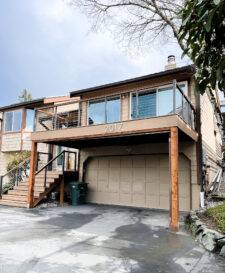
What Lynden's Climate Does to a Deck
Whatcom County sits close enough to the water that salt-laden air is a real factor, even inland toward Lynden, especially on breezy days coming off the bay. Combine that with long stretches of driving rain through fall and winter, and a moss season that can run for months on shaded or north-facing surfaces, and you've got three separate stressors working on the same structure at once.
Moisture That Doesn't Let Up
The problem with this climate isn't any single storm — it's the duration. Wood and fasteners that get wet, dry out a little, then get wet again over and over through the winter are under a different kind of stress than a deck that sees a hard rain and then bakes dry for a week. Any gap in flashing, any spot where two boards trap water, any fastener that isn't rated for exterior exposure becomes the place where rot or corrosion starts first.
Moss and Organic Growth
Moss doesn't just look bad — it holds moisture against the decking surface and can make boards slippery well past what most people expect from "a little green film." Lynden properties with mature trees or partial shade tend to fight this more than open lots, and deck orientation matters more here than people assume when they're first planning the layout.
Salt Air and Metal Fasteners
Even without direct coastal exposure, the region's air carries enough salt to accelerate corrosion on the wrong grade of screws, brackets, and joist hangers over time. Once a fastener starts to corrode, it loses holding strength long before it looks obviously bad, which is part of why we don't cut corners on hardware grade.
What a Correctly Built Deck Includes
A deck that's going to hold up to a Whatcom County winter isn't just "wood on top of posts." The parts that don't show are usually the parts that determine whether the deck lasts 10 years or 25.
- Footings sized and set below frost depth and rated for the actual load of the structure, not just what's convenient to dig
- Ledger board flashing that sheds water away from the house band joist instead of trapping it against the siding
- Joist tape or a comparable moisture barrier on top of every joist, protecting the wood underneath the decking fasteners
- Stainless or hot-dip galvanized fasteners and structural hardware rated for exterior, coastal-influenced exposure
- Proper board spacing and airflow underneath the deck so wet decking can actually dry between rain events
- Drainage planning so water sheds off the deck surface and away from the foundation, not pooling at low corners
- Guardrails and stair framing built to current code, not just "close enough" spacing
Skip any one of these and the deck can still look fine for a season or two. The failures show up later, usually as soft spots near the ledger, rusted-out hangers, or boards that cup and split after their second or third wet winter.
Choosing Materials for Lynden Conditions
There's no single "right" decking material for every homeowner — it depends on budget, how much upkeep you want to do, and how the deck will be used. What matters is being honest about the trade-offs up front instead of after the first winter.
| Material | Maintenance | Moisture Behavior | Typical Lifespan Here |
|---|---|---|---|
| Pressure-treated wood | Annual cleaning, periodic sealing/staining | Prone to checking and splinter if sealing lapses | 10–15 years with upkeep |
| Cedar | Regular sealing to hold color and resist moisture | Naturally moisture-resistant but still needs a finish here | 15–20 years with upkeep |
| Composite decking | Occasional washing, no staining or sealing | Doesn't rot, but surface can still hold moss/algae if shaded | 25+ years, most carry long manufacturer warranties |
| PVC decking | Lowest maintenance of the group | Fully moisture-resistant, sheds water well | 25+ years, typically longer warranty coverage |
We'll walk through this table in person with your specific site conditions — how much shade the deck gets, whether it's under trees that drop debris, and how much maintenance you actually want to commit to. There's no wrong answer here as long as it's an informed one.
Design Considerations Specific to Lynden Lots
Grade and Drainage
Lynden's mix of open farmland-adjacent lots and more established residential streets means site grading varies a lot from property to property. Before we finalize footing locations, we look at where water naturally moves across the yard so the deck doesn't end up sitting in a spot that stays saturated through the winter.
Sun Exposure and Layout
Given how long the moss season runs on shaded surfaces here, we factor sun exposure into layout decisions — board orientation, gaps, and even which decking material handles shade best on your particular lot. A deck tucked under mature trees needs different choices than one in full open exposure.
Proximity to the House
Ledger attachment is one of the most common failure points we find on older decks, especially where flashing was skipped or installed incorrectly during the original build. Getting this connection right is non-negotiable on a rebuild or new build, since it's the single hardest spot to fix later without tearing the deck apart.
Our Process, Start to Finish
- On-site assessment — we look at grade, drainage, sun exposure, and how the deck ties into the house before we talk materials
- Design and material walkthrough — honest conversation about trade-offs based on your budget and maintenance preference, not a upsell script
- Permitting — we handle the permit process with Whatcom County or the City of Lynden as applicable, so footings, railings, and stairs meet current code
- Site prep and footings — footings set to proper depth and load rating before anything else happens
- Framing — structural framing with correctly flashed ledger attachment and corrosion-rated hardware throughout
- Decking installation — board spacing and fastening set up for drainage and airflow, not just a tight, uniform look
- Railings, stairs, and finish details — code-compliant guardrails and stair framing, plus any lighting or trim details you've chosen
- Final walkthrough — we go over the finished deck with you, including basic maintenance guidance specific to the material you chose
Repair, Rebuild, or Replace?
Not every deck problem means starting from scratch. Sometimes a deck's framing is sound and it's the surface boards or railings that have failed; other times the ledger flashing or footings are compromised and a rebuild is the honest recommendation. We'll tell you which situation you're in rather than defaulting to the more expensive answer.
Signs a Deck Needs More Than Surface Repair
- Soft or spongy spots near where the deck attaches to the house
- Visible rust staining around fastener heads or hardware
- Persistent moss or algae that comes back within weeks of cleaning
- Railings or stair stringers that flex noticeably under normal use
- Gaps or separation where the ledger meets the house siding
If you're seeing any of these, it's worth getting an honest structural look before spending money on cosmetic fixes that won't address the underlying issue.
Maintenance That Actually Matters
Whatever material you choose, a little seasonal attention goes a long way in this climate. For wood decks, that means cleaning and resealing on a schedule rather than waiting until the finish has already failed. For composite or PVC decking, it's mostly about keeping debris and organic buildup from accumulating in shaded corners where moss gets a foothold. Clearing gutters and downspouts near the deck also matters more here than people expect — overflow during a heavy rain event can send extra water right at the ledger connection.
Why Hire a Crew That Already Works in Lynden
A deck builder who mostly works in a drier climate can still build something that looks right on installation day. The difference shows up two or three winters later, once the moisture cycling, the moss season, and the salt-influenced air have had time to find every shortcut. Working regularly throughout Whatcom County, including Lynden, means we're not guessing at how these conditions behave — we've seen what fails and built our process around avoiding it.
If you're planning a new deck, replacing an old one, or just want an honest opinion on whether yours needs repair or replacement, we're happy to come take a look. The estimate is free, there's no pressure, and you'll get a straight answer about what your deck actually needs.