 Ferndale Siding
 Building Decks for Blaine's Corner of Whatcom County
Blaine sits close enough to the water that homes here deal with a different set of outdoor conditions than a deck builder would plan for further inland. Between the salt-laden air coming off the water, the long stretch of wet months typical of Whatcom County, and the shaded, moisture-holding conditions that let moss take over untreated surfaces, a deck built here has to be planned differently from day one. We work on decks throughout the Ferndale area, and the projects we take on in and around Blaine consistently need the same extra attention to material choice, fastener selection, and drainage that a generic build wouldn't include.
This page focuses on one service, in one area: custom deck construction for Blaine homeowners. It's meant to give you a realistic picture of what your deck is up against, what a properly built deck actually involves, and why local experience matters more here than it might in a drier, inland climate.
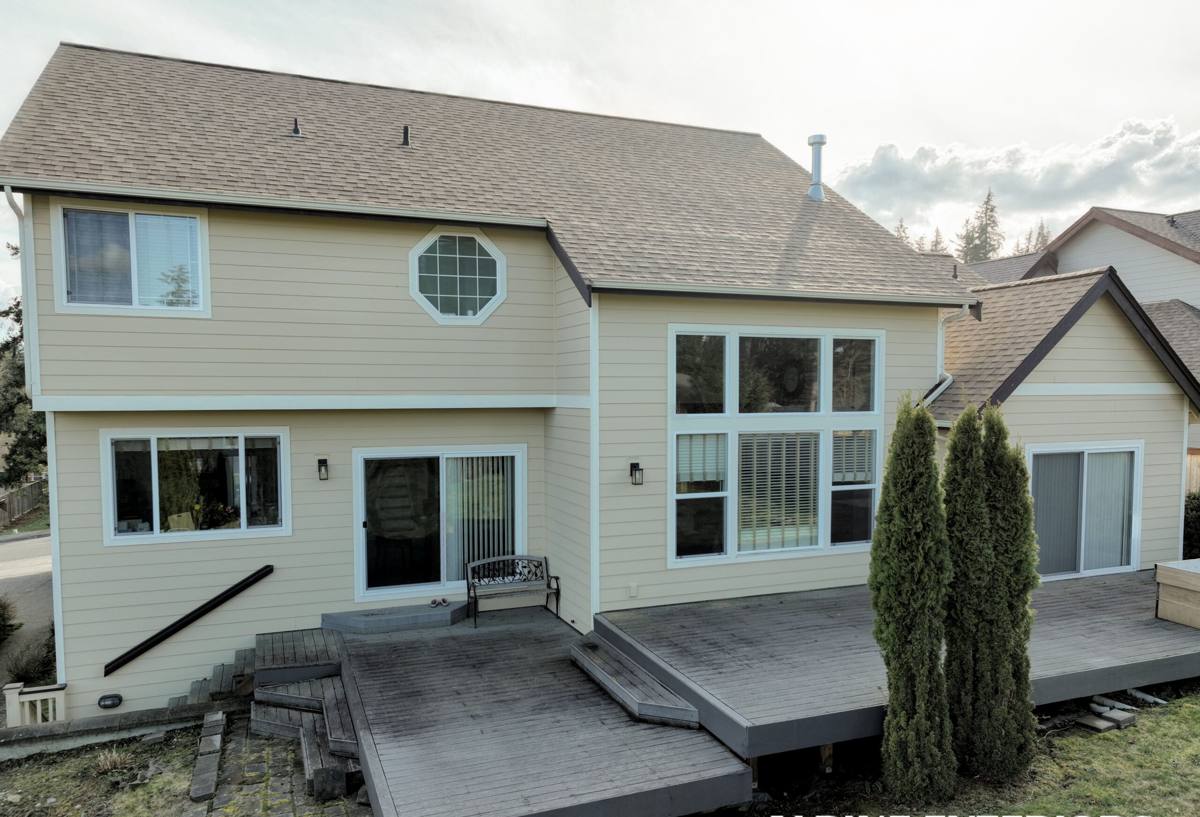
What Blaine's Weather Does to an Outdoor Deck
Salt Air and Metal Hardware
Proximity to salt water speeds up corrosion on anything metal — nails, screws, joist hangers, bolts, and railing hardware. Standard interior-grade fasteners will start rusting within a season or two in this environment, and once a fastener corrodes, it loses holding strength long before it looks obviously bad. That's a structural issue, not a cosmetic one, and it's one of the most common shortcuts we see on decks that were built without local conditions in mind.
Driving Rain and Moisture Trapping
Whatcom County gets long stretches of steady, wind-driven rain rather than short, heavy downpours. That pattern matters for decks because it drives water sideways into places a vertical rain wouldn't reach — under railings, behind ledger boards, and into any gap where two pieces of decking meet without a drainage path. A deck that isn't detailed for this kind of rain will trap water in exactly the spots where rot and hardware failure start.
Moss and Algae Season
Shaded decks, decks under tree cover, and decks on the north or east side of a house hold moisture longer through Whatcom County's wet season, which gives moss and algae a long window to establish themselves. Beyond the maintenance headache, moss holds water directly against the decking surface and any fasteners nearby, extending the amount of time wood or metal stays wet after a rain has already passed.
Choosing the Right Decking Material for This Location
There's no single "best" decking material — the right choice depends on how much maintenance you're willing to do, your budget, and how exposed your specific lot is to sun, shade, and salt air. Here's how the common options compare for a Blaine-area build:
| Material | Moisture Resistance | Maintenance | Typical Lifespan |
|---|---|---|---|
| Pressure-treated lumber | Good if properly sealed and refinished | Annual cleaning, refinishing every 2-3 years | 15-20 years with upkeep |
| Cedar | Naturally moisture and insect resistant, but surface still needs care | Regular cleaning, periodic oiling or sealing | 15-25 years with upkeep |
| Composite decking | Very good — doesn't absorb water like wood | Low — periodic washing, no sealing or staining | 25-30+ years, manufacturer-dependent |
| PVC decking | Excellent — essentially non-porous | Low — occasional washing | 25-30+ years, manufacturer-dependent |
In a climate like Ferndale's, the tradeoff usually comes down to upfront cost versus long-term maintenance. Wood costs less to install but demands real, ongoing upkeep to keep moisture out — skip a season of sealing and you're playing catch-up. Composite and PVC cost more upfront but shrug off the wet-season conditions with far less attention. We'll walk through this tradeoff honestly based on your specific site, sun exposure, and budget rather than pushing one material across the board.
What a Correctly Built Deck Involves Here
Footings and Ledger Attachment
Everything about a deck's long-term stability starts below grade and at the point where the deck attaches to the house. Footings need to be sized and set to the depth required for the soil and frost conditions in this area, and the ledger board connection — where the deck ties into your home's rim joist — needs proper flashing to keep water from working its way behind it and into the house structure itself. This is the single most common failure point we find on older or poorly built decks: a ledger that was never flashed correctly, quietly rotting the connection for years before it's visible.
Framing and Fasteners
Joists, beams, and posts need to be sized correctly for the span and the expected load, using lumber rated for ground contact where it's in contact with soil or concrete. Given the salt air in this area, we treat fastener selection as a real decision, not an afterthought — hot-dip galvanized or stainless steel hardware holds up considerably longer here than standard coated fasteners, especially at joist hangers and structural bolts that you won't be able to inspect or replace easily once the decking is down.
Drainage and Airflow Underneath
A deck that can't breathe underneath stays damp longer after every rain. Proper spacing between boards, clearance between the framing and the ground, and thoughtful grading beneath the deck all help water move away instead of pooling. This is especially important on lower decks close to grade, which are common on flatter Blaine-area lots and are more prone to trapped moisture than a raised deck with open airflow beneath it.
Our Process From Estimate to Finished Deck
- On-site assessment — we look at your lot's sun and shade exposure, drainage, soil, and how close you are to salt air influence, since all of that affects material and hardware recommendations.
- Design and material selection — we go over layout, size, railing style, and decking material options with honest pros and cons for your specific situation and budget.
- Permitting — we handle the permit application through the applicable local building department for your project.
- Footings and framing — footings are set to the required depth, and the frame is built with fasteners and hardware chosen for this climate.
- Decking, railings, and finish work — decking is installed with proper spacing for drainage, followed by railings and any finish details.
- Final walkthrough — we go over the completed deck with you, including what maintenance to expect and when.
Railings, Fasteners, and Hardware That Hold Up to Salt Air
Railings take a lot of direct weather exposure and a lot of hand contact, which makes them one of the first places corrosion or wood failure becomes visible. For wood railings, we use fasteners and connectors rated for exterior or coastal exposure rather than standard-grade hardware. For metal or cable railing systems, stainless steel components are worth the added cost in this environment — standard coated steel components in a salt-air setting can start showing surface corrosion within a couple of years, well before the rest of the structure shows any wear.
Maintenance Homeowners Should Expect
No deck is maintenance-free, even composite and PVC systems, though the level of upkeep varies a lot by material. Here's a realistic checklist for keeping a Blaine-area deck in good shape through the wet season:
- Sweep debris off the deck regularly, especially fallen leaves and needles that trap moisture against the surface
- Wash the deck surface at least once or twice a year to remove moss, algae, and grime buildup before it takes hold
- For wood decks, inspect and reseal or restain on the schedule appropriate to the product — don't wait until you see visible graying or cupping
- Check railing posts and stair connections periodically for looseness, which can signal fastener corrosion underneath
- Keep gutters and downspouts near the deck clear so roof runoff isn't dumping extra water onto or under the structure
- Trim back overhanging vegetation that keeps sections of the deck shaded and damp longer than the rest
Permits and Local Considerations
Deck projects in this area typically require a building permit, with requirements varying depending on whether your property falls under City of Ferndale jurisdiction or unincorporated Whatcom County. Requirements can also shift based on deck height, size, and proximity to property lines. We handle the permit process as part of the job so you're not left navigating that on your own, but it's worth knowing upfront that a properly permitted deck is inspected at key stages — which is also a good check on the footing and framing work being done correctly in the first place.
Why Hire a Crew That Already Works in Blaine
A deck builder who mainly works inland, in a drier or less exposed climate, won't necessarily default to salt-air-rated hardware or think through wind-driven rain details unless it's pointed out. Working regularly in and around Blaine and the broader Ferndale area means these aren't special requests we have to be reminded of — they're baseline decisions we make automatically because we've seen what happens to decks that skip them. That local familiarity shows up in smaller ways too: knowing which lots tend to hold more shade and moisture, which orientations take the worst of the wind and rain, and what kind of upkeep local homeowners actually find realistic to keep up with.
If you're planning a new deck or replacing one that's showing its age, we're happy to come take a look and give you a straightforward, no-pressure estimate — just fill out the form below.