 Ferndale Siding
 Why Birch Bay Decks Wear Differently
Birch Bay sits right on the water, and that changes how a deck ages compared to one a few miles inland in Ferndale or elsewhere in Whatcom County. Salt-laden air corrodes fasteners and hardware faster than fresh air does. Wind-driven rain off the Strait of Georgia doesn't just fall on a deck — it gets pushed sideways, into ledger connections, under railing posts, and into any gap where flashing is thin or missing. And the long, damp moss season that runs through fall, winter, and spring keeps deck boards wet for weeks at a stretch, which is exactly the condition wood rot and fastener corrosion need to take hold.
None of this means a deck in Birch Bay is doomed. It means the repair has to account for the actual exposure the structure sees, not just patch what's visibly broken. We've worked on enough decks along this stretch of coastline to know where the damage usually starts and what a repair needs to hold up long-term.
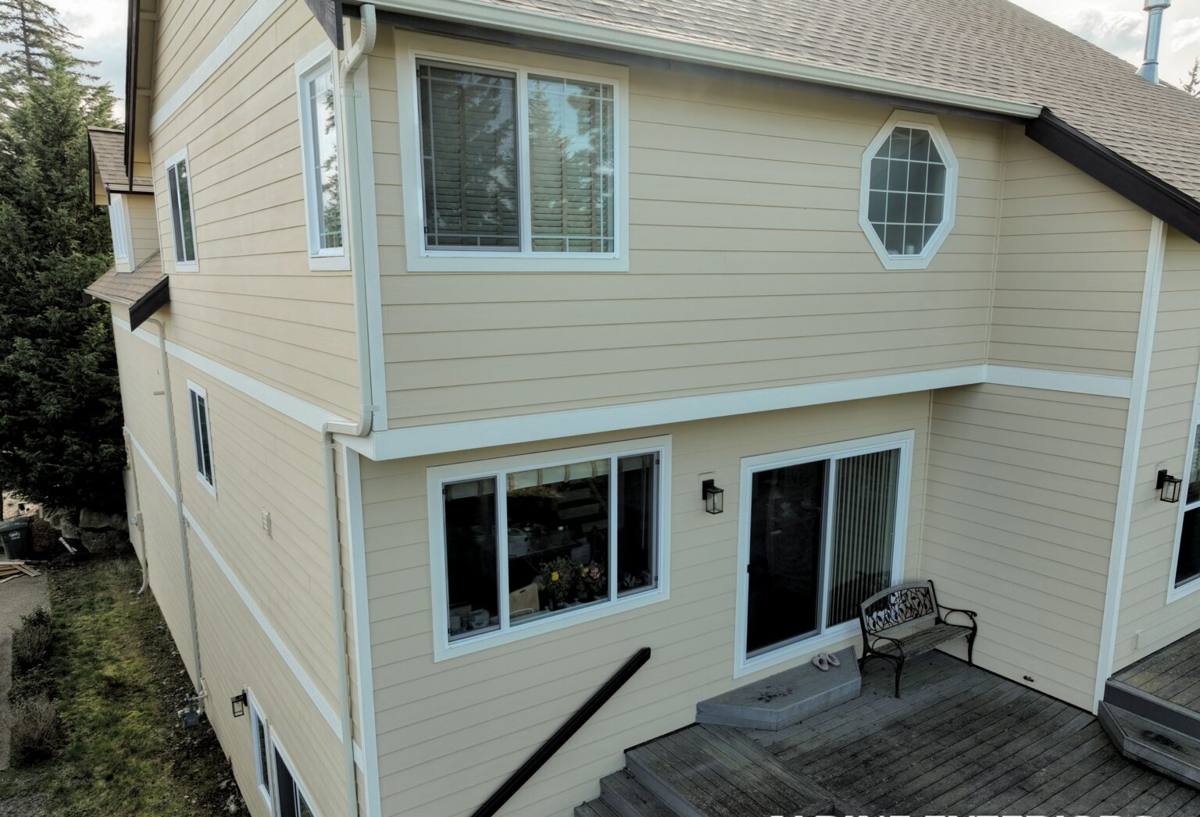
The Early Warning Signs Homeowners Miss
Deck problems rarely start where they're easiest to see. By the time boards are visibly cupping or a railing feels loose, there's often been moisture intrusion happening underneath or behind the surface for a season or two already. Here's what we look for on an inspection:
- Soft or spongy spots underfoot, especially near the house or along board ends
- Rust streaking below fastener heads or joist hangers
- Green or black staining that doesn't wash off with a simple rinse — a sign moss and algae have gotten a foothold in the wood grain itself
- Gaps opening up between deck boards and the ledger board where it meets the house
- Railing posts that flex or wiggle when pushed, even slightly
- Discoloration or swelling at the base of support posts, where they sit closest to standing moisture
Any one of these on its own might be minor. Two or three together usually means it's time for a real inspection before the next wet season makes the repair bigger and more expensive.
What a Correct Deck Repair Actually Involves
Diagnosing the Real Problem, Not Just the Symptom
A board that's rotted at one end is a symptom. The cause might be a failed ledger flashing, a joist hanger that's corroded from years of salt exposure, or grading around the house that pushes water back toward the deck instead of away from it. We start every repair by tracing the moisture path, because replacing a board without fixing what let water in just buys a year or two before the same spot fails again.
Structural Components Get Priority
Ledger board attachment, joist hangers, support posts, and footings are what keep a deck safe — surface boards are what you notice. Any repair we do checks these structural elements first, even when the visible complaint is a squeaky board or a stained railing. In a marine climate like Birch Bay's, hardware corrosion on structural connectors is one of the most common hidden issues we find.
Matching Materials to Exposure
Not every part of a deck sees the same weather. A section shaded by the house and protected from wind-driven rain can often be repaired with standard materials. A section exposed to the open water side needs fasteners rated for coastal/marine exposure and, where wood is used, a species and treatment level suited to near-constant dampness. We spec materials by location on the deck, not a single blanket choice for the whole structure.
Repair vs. Replace: How We Make the Call
Homeowners often assume any deck showing wear needs a full tear-off. That's frequently not true — but sometimes it is the more honest answer. Here's the general logic we use:
| Condition | Usually Repairable | Usually Needs Replacement |
|---|---|---|
| Surface graying, minor cupping | Yes — cleaning, sanding, refinishing | No |
| Isolated rotted boards, structure sound | Yes — board-by-board replacement | No |
| Rusted or corroded joist hangers | Yes — hardware swap if joists are sound | Only if joists themselves are compromised |
| Soft/spongy framing or joists | Sometimes — sistering sound framing | Often, if rot is widespread |
| Failed ledger connection to house | Yes — reflash and reattach | Rare, unless rim joist behind it is rotted |
| Undersized or failing footings | No | Yes — this is a structural rebuild issue |
We'll always tell you plainly when a repair is a reasonable short-to-mid-term fix versus when you're better off putting that money toward a rebuild. A patch job on a structurally failing deck isn't a service we're willing to sell you.
Our Process, Start to Finish
1. On-Site Inspection
We walk the entire deck, check underneath where accessible, test railings and posts by hand, and probe any suspect boards or framing with a screwdriver or awl — soft wood tells you a lot faster than a visual look alone.
2. Straight Talk on Findings
You get a plain explanation of what's failing, why, and what your real options are — not a sales pitch toward the most expensive option. If a repair will genuinely hold up, we say so.
3. Written Scope and Estimate
Before any work starts, you know what's being replaced, what hardware is being used, and roughly what it will cost. No surprise change orders for work we should have caught during inspection.
4. The Repair Itself
Structural issues get fixed first — hangers, ledger, posts, footings if needed — then decking, railings, and finish work. We don't cover a bad connection with a new board on top.
5. Final Walkthrough
We check the repaired areas together, test railings and stairs for solidness, and make sure drainage and flashing details are doing their job before we call it done.
Materials and Hardware Choices That Matter Here
In a coastal microclimate like Birch Bay, hardware choice is not a minor detail — it's often the difference between a repair that lasts and one that fails again in a few years. We use fasteners and connectors rated for the exposure level of each part of the deck, and we're upfront about the trade-offs between material options:
- Pressure-treated lumber is cost-effective and widely used, but performance depends heavily on correct fastener pairing and finishing — the wrong combination accelerates corrosion rather than preventing it.
- Composite decking resists rot and doesn't need refinishing, but it still requires a sound, well-ventilated structure underneath, and not every composite product handles prolonged dampness or algae growth the same way — we'll walk you through what fits your site.
- Cedar and other naturally resistant woods look great and handle moisture reasonably well, but they need more regular maintenance (cleaning, sealing) to keep that resistance intact in a wet, salt-air environment.
We don't push one product line as a universal answer. What we install depends on your deck's sun exposure, proximity to the water, how much upkeep you want to do, and your budget — and we'll lay out the honest maintenance expectations for whatever you choose.
Maintenance That Actually Extends Deck Life Here
A repaired deck still needs upkeep suited to this climate, or you'll be back to square one in a few years. A few things worth doing on a regular basis:
- Clean moss and algae off boards and railings at least once a year, ideally before the wettest months set in
- Keep gutters and downspouts clear so roof runoff isn't dumping extra water onto or near the deck
- Check fastener heads and hardware for early rust once a year — catching it early is far cheaper than replacing corroded joist hangers later
- Reapply sealant or finish on wood decking on the schedule the product actually requires in a marine climate, which is often more frequent than the label assumes for drier regions
- Make sure nothing — planters, furniture legs, stored items — sits directly on deck boards long-term, since it traps moisture underneath
Why Local Experience on This Coastline Matters
A deck repair crew that mostly works inland jobs will often use the same hardware and approach they'd use anywhere in Whatcom County. That's not wrong for most locations — but Birch Bay's direct salt-air exposure and wind-driven rain patterns call for different fastener grades, different flashing attention, and a sharper eye for the specific failure points that show up near the water. We work this area regularly, so we're not guessing at what holds up here — we're applying what we've already seen fail and what's held up instead.
That local pattern recognition is what separates a repair that lasts one wet season from one that lasts many.
If your deck is showing any of the signs above, or it's just been a while since anyone looked at the structure underneath, we're happy to come take a look. Reach out for a free, no-pressure estimate — we'll tell you honestly what needs attention and what can wait.