 Ferndale Siding
 New Roof Installation in Bellingham, Built for Whatcom County Weather
A new roof in Bellingham has to do more than keep rain out for a season or two. It has to shed water through months of steady drizzle, resist moss that thrives in our shade and humidity, and hold up under the salt-laden air that moves off Bellingham Bay and up through the county. We're based in Ferndale and work Bellingham roofs regularly, so this page walks through what actually matters for a roof replacement here — not generic advice pulled from a national roofing site.
Whether your current roof is failing early, was patched one too many times, or is simply at the end of its service life, the goal of a new install is the same: a system that's flashed correctly, ventilated correctly, and matched to what this climate does to a roof year after year.
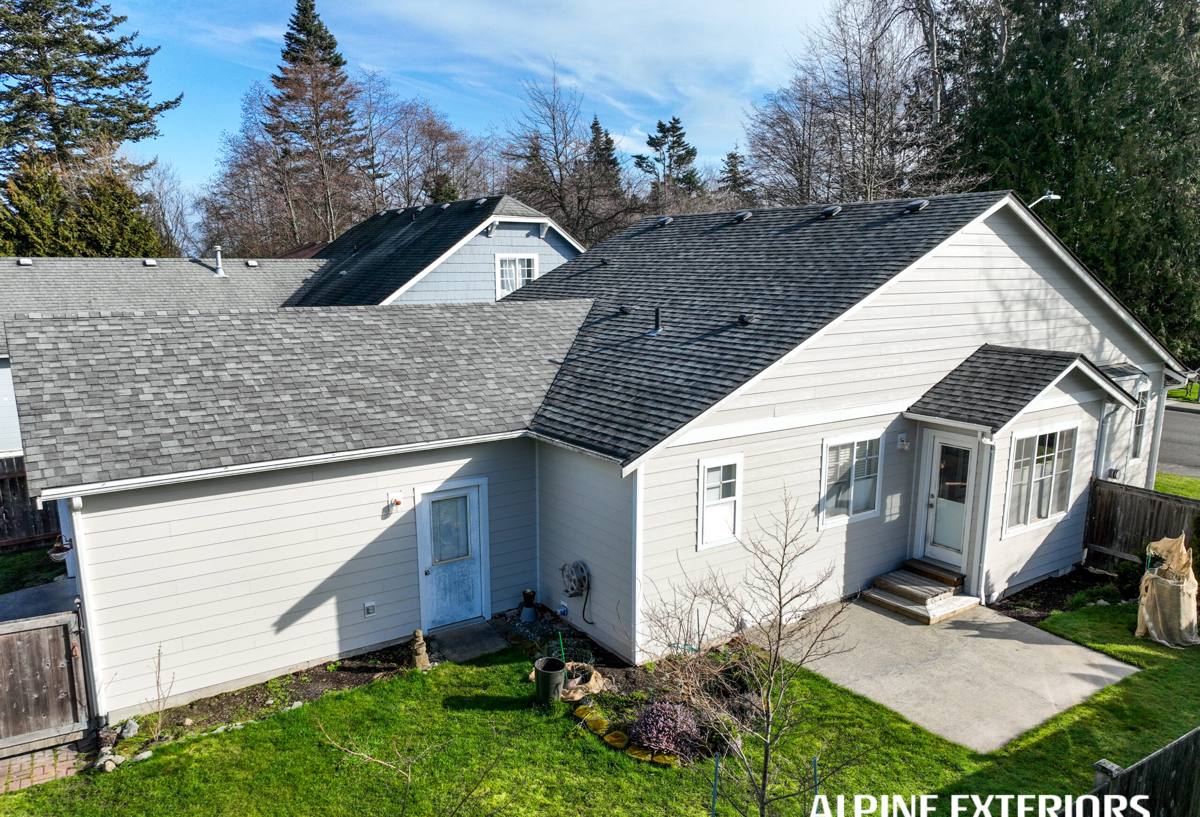
What Bellingham's Climate Actually Does to a Roof
Driving Rain and Long Wet Stretches
Whatcom County doesn't get the heaviest annual rainfall in the state, but it gets a lot of low-intensity, wind-driven rain over many consecutive days. That pattern is hard on roofs in a specific way: water gets pushed sideways under shingle tabs, into open laps, and along valleys where flashing wasn't installed with enough overlap. A roof that would be fine in a drier climate with looser detailing can leak here within a few winters if the underlayment and flashing work aren't done right the first time.
Moss and Constant Shade
Bellingham's tree cover and marine humidity give moss everything it needs — moisture that doesn't fully dry out and shaded north-facing slopes that stay damp for days. Moss isn't just cosmetic. It lifts shingle edges as it grows, holds water against the roof deck, and accelerates granule loss. A new roof install is the right time to address moss risk directly, through material choice, zinc or copper strips, and attention to any spots on the roof that rarely see direct sun.
Salt Air
Being close to the bay means airborne salt reaches fasteners, flashing, and any exposed metal on the roof. Salt exposure speeds up corrosion on lower-grade fasteners and untreated metal edges. It's a slower process than the moss and rain issues, but over ten or fifteen years it's the difference between flashing that's still doing its job and flashing that's rusted through at the nail heads.
What a Correct New Roof Installation Involves
A roof replacement is really a system of layers, and each one has a job. Skipping or shortcutting any layer is usually where problems start.
- Tear-off and deck inspection: Old roofing comes off down to the deck so we can check for soft spots, rot, or delamination — problems that are invisible from the attic side but obvious once the old covering is gone.
- Deck repair: Any damaged sheathing gets replaced before anything new goes down. Installing new roofing over a compromised deck just hides the problem.
- Ice and water shield at vulnerable areas: Eaves, valleys, and areas around penetrations get a self-adhering waterproof membrane, not just felt, because these are the spots where wind-driven rain and ice dams (on the rare cold snap) cause the most damage.
- Synthetic underlayment across the field: A high-quality synthetic underlayment resists the prolonged moisture exposure typical of our wet season better than older felt products.
- Flashing at every transition: Chimneys, skylights, sidewalls, and roof-to-wall intersections all need step flashing, counter-flashing, or kickout flashing installed correctly — this is the single most common source of leaks on roofs that are otherwise in good shape.
- Ventilation: Balanced intake and exhaust ventilation keeps the attic temperature and moisture level in check, which matters both for shingle life and for controlling condensation during our cool, wet winters.
- Field material installation: Shingles, metal panels, or another chosen material installed to manufacturer spec, with attention to nailing pattern and exposure — details that affect wind resistance and warranty validity.
- Ridge and hip finishing, plus cleanup: Ridge caps sealed and finished, then a full site cleanup including magnetic nail sweep.
Choosing a Roofing Material for This Area
There's no single "best" roofing material for Bellingham — it depends on your budget, your roof's slope and exposure, and how much long-term maintenance you want to take on. Here's how the common options actually compare for our climate specifically.
| Material | Performance in Rain/Moss Conditions | Salt Air Considerations | Typical Lifespan Here |
|---|---|---|---|
| Architectural asphalt shingles | Good when installed with proper underlayment and ventilation; moss-resistant granule options available | Standard; fasteners and flashing quality matter more than the shingle itself | 20-30 years |
| Standing seam metal | Excellent water shedding on driving rain; sheds moss growth better due to smooth surface | Requires marine-grade or properly coated fasteners and panels to avoid corrosion | 40-50+ years |
| Wood shake/shingle | Higher maintenance burden in our moisture and moss conditions; needs regular treatment | Not significantly affected by salt, but moisture retention is the bigger concern | 20-30 years with upkeep |
| Synthetic composite | Good moisture resistance, consistent performance, low moss susceptibility | Not metal-based, so salt corrosion isn't a factor | 30-50 years |
For most Bellingham homes, we recommend architectural asphalt or standing seam metal — both give a strong balance of cost, longevity, and low maintenance in exactly the conditions this area produces. We'll walk through the honest trade-offs for your specific roof rather than pushing one product line.
Ventilation and Moisture Control Deserve Extra Attention Here
In a drier climate, a roof with mediocre ventilation might just run a little hot in summer. In Bellingham's marine climate, poor ventilation traps moisture in the attic year-round, which can lead to condensation, mold on the underside of the deck, and premature failure of the roofing material from the inside. During a new roof install we assess soffit intake and ridge or box vent exhaust as a system — adding more exhaust vents without matching intake often makes ventilation worse, not better, because it can pull conditioned or humid air from the living space instead of drawing fresh air through the soffits.
Flashing Details That Matter Most Locally
Because Bellingham roofs deal with sustained wind-driven rain rather than just heavy downpours, flashing details that might be "good enough" elsewhere aren't good enough here.
Valleys
Open metal valleys or a properly woven closed valley with ice and water shield underneath handle high water volume better than a simple shingle-over valley in our conditions.
Chimney and Sidewall Flashing
Step flashing integrated with each course, backed by counter-flashing set into the masonry or siding, prevents the wind-driven rain from working its way behind the flashing edge — a common failure point on older Bellingham roofs we've seen.
Roof-to-Wall Transitions
Kickout flashing at the bottom of any roof-wall intersection directs water away from the wall and siding below. Missing kickout flashing is one of the most frequent causes of hidden water damage we find on tear-offs in this area.
Our Process for a Bellingham Roof Replacement
- On-site inspection: We look at the existing roof, attic ventilation, and any visible signs of moisture or moss damage, and take measurements.
- Written estimate: A clear scope of work and price, with material options explained so you understand what you're choosing between.
- Scheduling around weather: We plan installs for dry weather windows where possible, and use appropriate protection if conditions shift mid-project — tear-off is never left exposed overnight without dry-in protection.
- Tear-off, deck inspection, and repair: Old material removed, deck checked and repaired as needed.
- Underlayment, flashing, and material installation: Installed to manufacturer specifications to keep your warranty valid.
- Final walkthrough: We review the completed work with you and answer any questions before we consider the job done.
Why a Crew That Already Works Bellingham Makes a Difference
Roofing crews that mostly work drier inland areas sometimes under-detail flashing and skip upgraded underlayment because it's never bitten them before. A crew that regularly works Bellingham and the rest of Whatcom County has already seen what happens when those shortcuts meet our rain and moss — and builds the extra protection in as standard practice, not an upsell. Being based in Ferndale also means we're close enough to respond quickly if a question or issue comes up after the job is done, rather than being a distant crew that's hard to reach for a callback.
Signs Your Bellingham Roof May Need Replacement, Not Repair
- Granule loss heavy enough that you can see bare asphalt in multiple spots, especially on south or west-facing slopes
- Moss coverage that comes back quickly after cleaning, especially on shaded north slopes
- Soft or spongy spots when walked on, which usually means deck damage underneath
- Daylight visible through the roof deck from inside the attic
- Shingles curling, cupping, or losing their seal in multiple areas rather than just one isolated spot
- Repeated leaks in different locations after past patch repairs
- Roof age approaching or past the manufacturer's expected lifespan for the material
Cost Factors to Expect
Roofing costs vary by roof size, pitch, material choice, and how much deck repair is needed once tear-off begins — we won't quote a firm number without seeing the roof. In general, expect steeper or more complex roofs (multiple valleys, dormers, chimneys) to cost more per square than a simple gable roof, and expect metal roofing to carry a higher upfront cost than asphalt but a longer service life. We'll give you a clear, itemized estimate so there are no surprises once work begins.
If your Bellingham roof is showing its age or you just want an honest opinion on whether repair or replacement makes more sense, we're glad to come take a look. Fill out the form below for a free, no-pressure estimate from a crew that works this area regularly.