 Ferndale Siding
 Asphalt Shingle Roofing Built for Lynden's Climate
Lynden sits in the heart of Whatcom County's farmland, but the roofs here answer to the same weather system that soaks the rest of the county: long, low-pressure stretches off the Pacific that push driving rain sideways for days at a time, followed by cool, damp stretches where nothing dries out fast. Add in a moss season that can run from October through April in a wet year, and you've got conditions that are tough on asphalt shingles specifically — not because the material is weak, but because it's unforgiving of shortcuts. A roof installed correctly for this climate will outlast its rated lifespan. One installed with the wrong underlayment, poor ventilation, or lazy flashing details will show problems years before it should.
This page is about one job in one place: asphalt shingle roofing on Lynden homes. We're not going to give you a generic national rundown of shingle types — we'll tell you what actually matters for a roof that has to survive Whatcom County winters, one growing season of moss and moisture, and everything an agricultural area's dust, pollen, and windblown debris can throw at a roof deck.
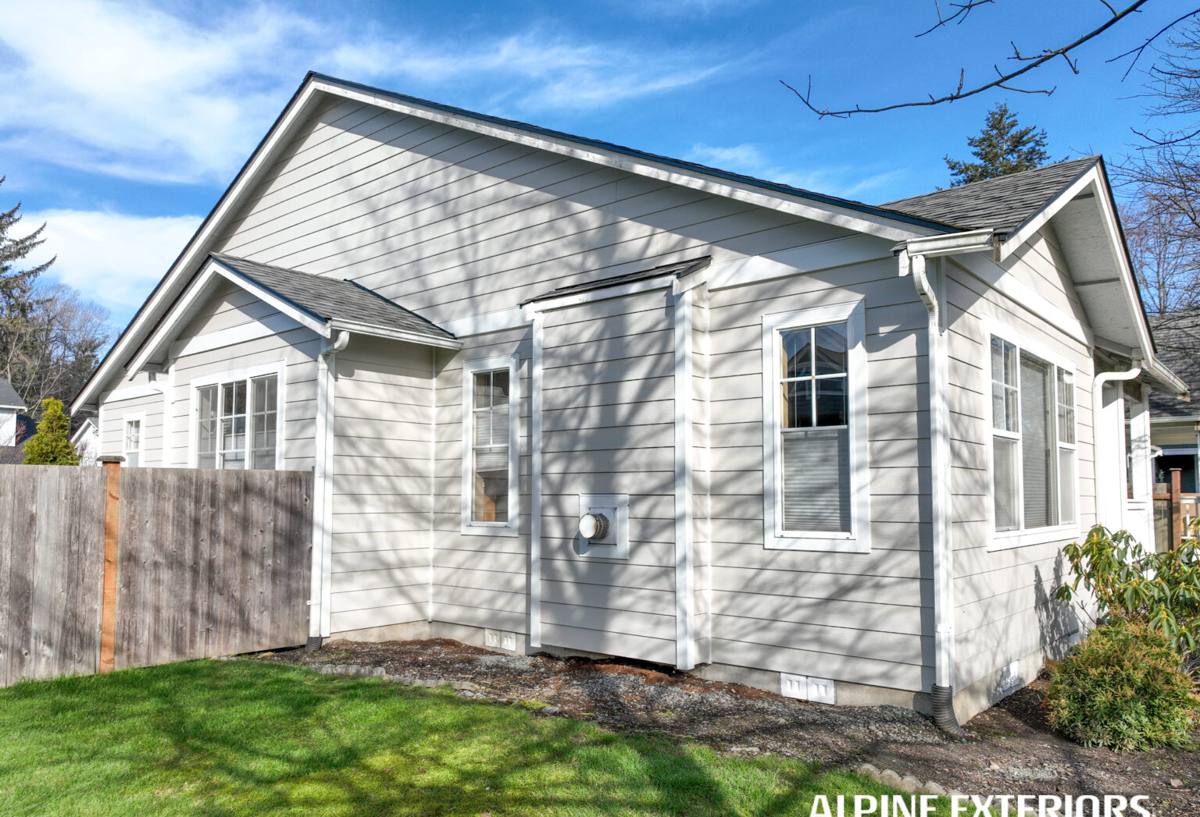
What Lynden's Weather Actually Does to a Shingle Roof
Moisture That Doesn't Leave
Asphalt shingles are designed to shed water, not sit in it. The problem in this part of Washington isn't any single storm — it's the cumulative effect of weeks of overcast, damp air that keeps roof surfaces wet longer than manufacturers assume in their standard warranty testing. That extended dampness is exactly what moss, lichen, and algae need to get established, and once moss roots into a shingle's granule surface, it holds even more water against the mat underneath.
Wind-Driven Rain
Storms coming off the Strait of Georgia and down through the county don't always arrive straight down — they arrive at an angle, which means rain gets pushed up under shingle tabs, around chimney and vent flashing, and into any gap that a fair-weather installation would never expose. Correct nailing patterns, sealed tab lines, and properly lapped flashing matter more here than in drier climates.
Temperature Swings and Freeze-Thaw
Whatcom County doesn't get brutal winters, but it does get enough freeze-thaw cycling — cold nights followed by wet, warmer days — to stress any trapped moisture in a roof deck or underlayment. Over several seasons, that cycling is what turns a small, unnoticed leak into rotted sheathing.
What a Correct Asphalt Shingle Job Involves Here
A shingle roof is a system, not a single layer of material. Skipping any of these steps is how a roof that looks fine on installation day starts failing in year four or five instead of year twenty.
- Deck inspection and repair — every sheet of the roof deck gets checked for soft spots, delamination, or rot before anything new goes down. Covering a bad deck with new shingles just hides the problem.
- Ice and water shield at vulnerable points — valleys, eaves, and roof-to-wall transitions get a self-adhering waterproof membrane, not just felt, because these are the spots where wind-driven rain finds its way in first.
- Synthetic underlayment across the field — a full water-resistant layer beneath the shingles, properly lapped, so that if wind ever lifts a shingle or a tab seal fails, there's a real second line of defense.
- Balanced attic ventilation — intake at the eaves and exhaust at the ridge, sized to the attic's actual square footage. Without this, moisture from inside the house condenses on the underside of the deck and rots it from below, regardless of how good the shingles are.
- Correct flashing at every penetration — chimneys, plumbing vents, skylights, and sidewall intersections all need step flashing or counterflashing installed in the right sequence with the shingle courses, not caulked over as an afterthought.
- Manufacturer-spec nailing — the right number of nails, in the right zone of each shingle, driven flush (not overdriven or underdriven). This single detail affects wind rating more than almost anything else.
Choosing the Right Shingle for a Lynden Roof
Not every asphalt shingle is a good fit for this climate. The biggest factor to weigh isn't looks — it's how the shingle handles sustained moisture and moss pressure over its lifespan.
| Shingle Type | Typical Lifespan | Wind Rating | Moss & Algae Resistance | Best Fit |
|---|---|---|---|---|
| 3-Tab (economy) | 15–20 years | 60–70 mph | Low unless AR-rated | Budget re-roofs, rental properties |
| Architectural / Laminate | 25–30+ years | 110–130 mph | Good with algae-resistant (AR) granules | Most Lynden homes |
| Impact-Resistant (Class 4) | 30+ years | 110–130 mph | Good with AR granules | Homes wanting hail/impact durability and possible insurance discounts |
For this area, we steer most homeowners toward algae-resistant architectural shingles. The AR granules — copper- or zinc-infused, depending on manufacturer — actively inhibit the algae and moss growth that plain granules can't fight off. It costs a little more up front than a basic 3-tab, but in a climate where moss season is a recurring event rather than a rare nuisance, it's the difference between a roof that needs moss treatment every year or two and one that stays clean far longer.
A Note on Warranties and Installation Sensitivity
Manufacturer warranties on asphalt shingles are conditional on correct installation — ventilation, underlayment, and nailing all have to meet spec, or a legitimate warranty claim can be denied later regardless of the shingle brand. This is one of the main reasons we don't treat installation as a formality: a great shingle installed wrong gives you none of the protection its rating promises.
Signs a Lynden Roof Needs Attention
Most shingle roof failures don't happen overnight. They show warning signs for months, sometimes years, before a leak actually shows up inside the house.
- Granules collecting in gutters or at downspout outlets (a sign shingles are wearing down to the mat)
- Dark streaking or green-black patches, especially on north-facing slopes that stay shaded and damp longer
- Moss visibly lifting shingle edges, even in small patches
- Curling, cupping, or cracked shingle tabs
- Soft or spongy spots when walked on (a sign of deck damage underneath)
- Daylight visible through the attic roof deck, or damp insulation near the eaves
- Missing or lifted shingles after a windstorm
- Rust streaks or gaps around flashing at chimneys and vents
Our Process for a Lynden Roofing Project
- On-site assessment — we get on the roof (not just a drive-by look) to check the deck, existing ventilation, flashing condition, and how many layers are already up there.
- Honest scope and written estimate — full tear-off versus repair, what the deck needs, what ventilation upgrades make sense, and a clear price before any work starts.
- Tear-off and deck prep — old material removed down to the deck, sheathing repaired or replaced as needed, and the surface cleared and inspected before anything new goes down.
- Underlayment and flashing installation — ice and water shield at valleys and eaves, synthetic underlayment across the field, new flashing at every penetration.
- Shingle installation to manufacturer spec — correct exposure, nailing pattern, and starter/ridge detailing so the wind and warranty ratings actually apply.
- Ventilation check and adjustment — intake and exhaust balanced for the attic, correcting any prior mismatch we found during assessment.
- Cleanup and magnetic sweep — job site and surrounding yard cleared of debris and stray nails before we consider the job done.
- Final walkthrough — we go over the finished roof and the warranty paperwork with you directly, no rushed handoff.
What Affects the Cost of a Lynden Re-Roof
Two roofs of similar size on similar homes can come in at very different price points once the specifics are accounted for. Here's what actually moves the number.
| Factor | Why It Matters |
|---|---|
| Roof pitch and complexity | Steep or cut-up roofs (multiple valleys, dormers, hips) take longer and need more flashing detail than a simple gable roof. |
| Number of existing layers | Washington building code generally limits roofs to two layers of shingles; a second tear-off adds labor and disposal cost but is often necessary for a correct, code-compliant install. |
| Deck condition | Rotted or delaminated sheathing found during tear-off has to be replaced before new shingles go down — this is the most common source of a mid-project cost adjustment. |
| Ventilation upgrades | Adding or correcting ridge and soffit ventilation is inexpensive relative to a full roof, but essential in this climate to prevent deck rot from the inside. |
| Shingle class chosen | Basic 3-tab, standard architectural, and impact-resistant (Class 4) shingles carry different material costs and different long-term value. |
| Access and site conditions | Steep driveways, tree cover, or limited staging space on a property can add setup time and equipment needs. |
Living With an Asphalt Shingle Roof in a Moss-Prone Climate
Even a well-installed, algae-resistant shingle roof benefits from basic upkeep in a place like this. Keeping gutters clear so water isn't backing up under the eave line, trimming back overhanging branches that shade the roof and keep it damp, and having moss buildup addressed before it lifts shingle edges will all extend a roof's real-world life well beyond what a neglected roof of the same material would achieve. None of this requires aggressive pressure washing, which can strip granules and shorten shingle life — a gentle, low-pressure moss treatment applied correctly is enough to keep growth in check between major service visits.
Why It Matters That We Already Work in Lynden
Roofing crews that only pass through an area occasionally tend to install for "average" conditions. A crew that regularly works Lynden and the rest of Whatcom County builds for what this specific climate actually does over a decade — the moss pressure, the wind-driven rain, the freeze-thaw stretches. That means defaulting to algae-resistant shingles instead of the cheapest option, treating attic ventilation as a required step instead of an upsell, and knowing which flashing details tend to get skipped by crews unfamiliar with how weather moves through this part of the county. It also means we're accountable locally — if something needs a follow-up look after a storm, we're not driving in from three counties away.
Get a Straightforward Estimate
If your Lynden home's asphalt shingle roof is showing its age, took storm damage, or you're just planning ahead, we're happy to take a direct look and give you an honest assessment — no pressure, no inflated scope. Use the form below to request a free estimate and we'll get back to you with next steps.