 Ferndale Siding
 Point Roberts Is a Different Climate Problem Than the Rest of Whatcom County
Point Roberts sits out on its own peninsula, surrounded by water on three sides, which means homes there take a harder hit from the elements than most inland Whatcom County properties. Salt air off the water works into siding seams, fasteners, and trim joints year-round. Driving rain off the Strait finds every gap in flashing and caulking. And the long Pacific Northwest moss season — roughly October through May — keeps north-facing and shaded walls damp for months at a time. None of this is unique to Point Roberts, but the exposure is more constant there than it is a few miles inland in Ferndale proper, and siding that would hold up fine on a sheltered lot can start showing real wear on a waterfront or exposed Point Roberts elevation years earlier.
Repair work in this environment isn't just cosmetic patching. Done right, it's about finding where moisture has actually gotten behind the cladding, fixing the cause, and restoring the wall's ability to shed water — not just covering up a stain or a crack.
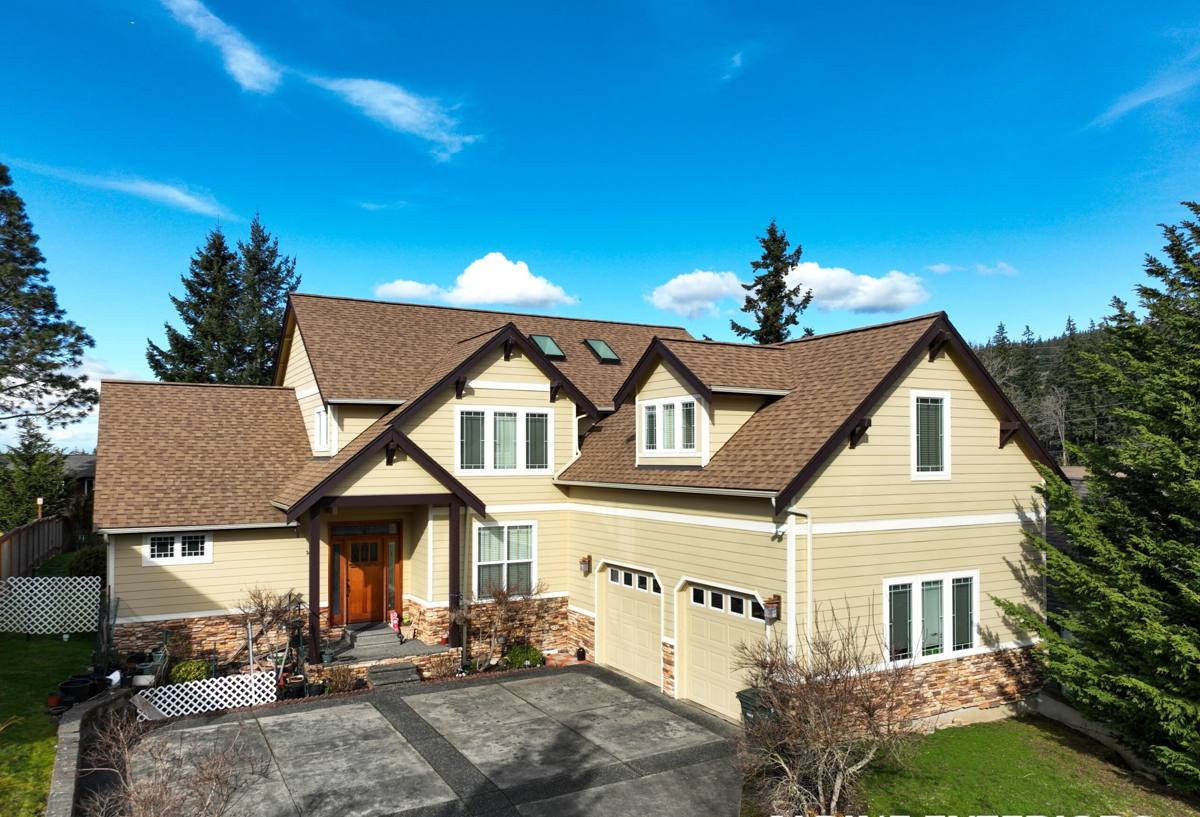
Why a Crew That Already Works Point Roberts Matters
Point Roberts is a U.S. exclave — the only way to reach it by land is through Canada, crossing the border twice each way. That's a real logistical fact of doing repair work there, not a minor inconvenience. A contractor who doesn't already work the area regularly has to plan every trip around border wait times, carry the right paperwork for tools and materials, and often ends up quoting a premium just to cover the uncertainty.
A crew that already services Point Roberts on a routine basis handles this differently. We batch estimates and repair visits so a trip is efficient rather than a special one-off crossing, we keep the right documentation in order, and we don't show up short a part or a color-matched panel because we weren't prepared for what an exclave job requires. That familiarity translates into fewer delays and a more accurate first quote — not a markup for the inconvenience.
Signs Your Siding Needs Repair Right Now
Most siding repair calls in Point Roberts start with one of these:
- Visible cracks or chips at corners, around windows, or near the foundation line
- Soft or spongy siding when pressed — a sign moisture has already gotten behind the surface
- Dark streaking or persistent moss/algae growth that doesn't wash off and keeps coming back
- Gaps or separation at butt joints, trim boards, or where siding meets flashing
- Peeling, bubbling, or chalking paint, especially on older or non-Hardie siding
- Fastener staining — rust streaks bleeding from nail or screw heads
- Woodpecker or impact damage that has broken through the surface
- Interior signs: a musty smell, discoloration on interior drywall, or a spike in heating costs, all of which can trace back to a siding failure letting moisture into the wall assembly
Any one of these on its own might be minor. Several together, especially on a wall that faces the water or stays shaded most of the day, usually means water has been getting behind the siding for a while.
Common Repair Issues We See in Point Roberts Specifically
Salt-Accelerated Fastener and Trim Failure
Salt air corrodes exposed metal faster than an inland environment does. We see this most at fastener heads, flashing edges, and any place where the original installer used the wrong fastener material or left metal exposed to weather instead of siding.
Moisture Intrusion at Penetrations and Butt Joints
Driving rain finds the smallest gap. Around hose bibs, vents, light fixtures, and horizontal butt joints where siding boards meet, failed caulking or missing flashing lets water track behind the cladding — usually invisible from the outside until the damage has spread.
Moss and Algae Staining on Shaded or North-Facing Walls
Point Roberts' long damp season keeps shaded walls wet longer than sunnier elevations. Persistent growth isn't just cosmetic — it holds moisture against the siding surface and, over years, can contribute to coating breakdown, particularly on older paint-grade or non-factory-finished siding.
Impact and Weather Damage
Storm debris, ladders, equipment, and the occasional woodpecker all cause localized damage that needs a clean patch or board replacement rather than a full re-side.
What a Correct Repair Actually Involves
A repair that only addresses the visible symptom tends to fail again within a season or two. A repair done to spec addresses three things every time:
- The cause, not just the damage. If a board cracked because it was fastened too tight or too close to the edge, replacing it the same way just sets up the next crack.
- The water management behind the siding. House wrap, flashing, and drainage gaps matter as much as the visible board — if they're compromised, the repair won't hold.
- A finish and color match that actually blends. James Hardie's ColorPlus factory finish weathers slowly and evenly over time, which is part of what makes it worth installing in the first place — but it also means a patch cut from a brand-new board can look slightly different from siding that's been up for several years. We match by product line, profile, and color code, and we're upfront when a repair area will need a wider board swap or a bit of blending time rather than promising an invisible patch that isn't realistic.
Repair or Replace: How We Make the Call
| Factor | Usually Points to Repair | Usually Points to Replacement |
|---|---|---|
| Extent of damage | Isolated to one or two elevations or a handful of boards | Widespread across most of the exterior |
| Underlying wall condition | House wrap and sheathing test dry and sound | Moisture has reached sheathing or framing in multiple areas |
| Siding material | Existing James Hardie siding that can be matched and patched | Original material is a discontinued line, or a product we don't install (vinyl, LP, cedar) that's failing systemically |
| Age of siding | Well within expected service life | Nearing or past the end of its practical lifespan |
| Cost over time | Repair cost is a small fraction of full replacement | Repeated repairs are starting to add up to a meaningful share of replacement cost |
We'll tell you honestly which side of that table your home falls on. If a repair is the right call, we won't upsell a full re-side; if the damage is widespread enough that repair is just delaying the inevitable, we'll say that too.
Our Process for a Point Roberts Repair
Because of the border crossing, we plan Point Roberts visits a little more deliberately than a job across town in Ferndale:
- An initial assessment — often from photos and a phone conversation first, to scope the visit before we cross
- A single, well-prepared site visit to confirm the damage, check behind the siding where needed, and take exact measurements and color/profile matches
- A written scope and estimate before any work begins, including whether the repair area will need feathering or a wider board replacement to blend the finish
- Material sourcing and prep ahead of the repair visit, so we're not making a second trip for a missing part
- The repair itself: removing only the affected boards, correcting the underlying cause (flashing, fasteners, sealant), installing matched Hardie material to spec, and sealing and finishing to blend as closely as the existing weathering allows
- A final walkthrough before we leave, so you know exactly what was fixed and why
Why We Repair With James Hardie, Not a Mixed Patch
We only install James Hardie fiber cement siding, and that standard applies to repair work too. Hardie's ColorPlus finish and HZ5 product engineering are built for exactly the conditions Point Roberts sees — moisture cycling, salt exposure, and sustained damp weather — and repairing with matched Hardie material keeps that performance intact across the whole wall. Patching a Hardie wall with a different fiber cement brand, or with vinyl or wood trim as a stopgap, creates a wall with mismatched moisture behavior and expansion characteristics, which tends to show up as a new problem a few years later at the seam between old and new material. If your existing siding isn't Hardie and it's failing broadly, we'll say so plainly and talk through what a proper Hardie repair or replacement would look like, rather than trying to patch a product we don't stand behind long-term.
After the Repair: Keeping Moss Season From Undoing the Work
A correct repair should hold for years, but Point Roberts' damp season rewards a little upkeep. Keep gutters and downspouts clear so water isn't sheeting down the wall face. Trim back vegetation and tree cover that keeps a wall shaded and damp longer than it needs to be. Rinse visible moss and algae growth on shaded elevations before it builds up, using a gentle wash rather than a pressure washer aimed directly at siding seams, which can force water behind the boards. And keep an eye on caulking at trim and penetrations — it's the first line of defense against driving rain and the cheapest thing to stay ahead of before it fails.
If you're seeing any of the warning signs above on a Point Roberts home, we're happy to take a look and give you an honest read on repair versus replacement — no pressure, no obligation. Reach out for a free estimate using the form below.