 Ferndale Siding
 Building Decks That Hold Up in Kendall's Climate
A deck in Kendall has to earn its keep. This part of Whatcom County sees long stretches of steady rain, heavy morning dew, and tree cover that keeps moisture sitting on wood and composite surfaces far longer than it would in a drier climate. Add in the salt-laden marine air that moves through this stretch of the county from the shoreline near Ferndale inland, and you've got a combination that's hard on fasteners, framing, and finishes if the deck wasn't built with that reality in mind. A deck that looks fine going up in July can start showing soft spots, rust streaks, and moss by the following spring if the details underneath weren't done right.
Deck building isn't complicated in theory, but in a climate like this, the margin for error is small. The framing lumber, the flashing at the house, the fastener coatings, the gaps between boards — all of it either sheds water properly or it doesn't. This page covers what actually matters for a deck built in Kendall, how we approach the build, and what to expect from the process.
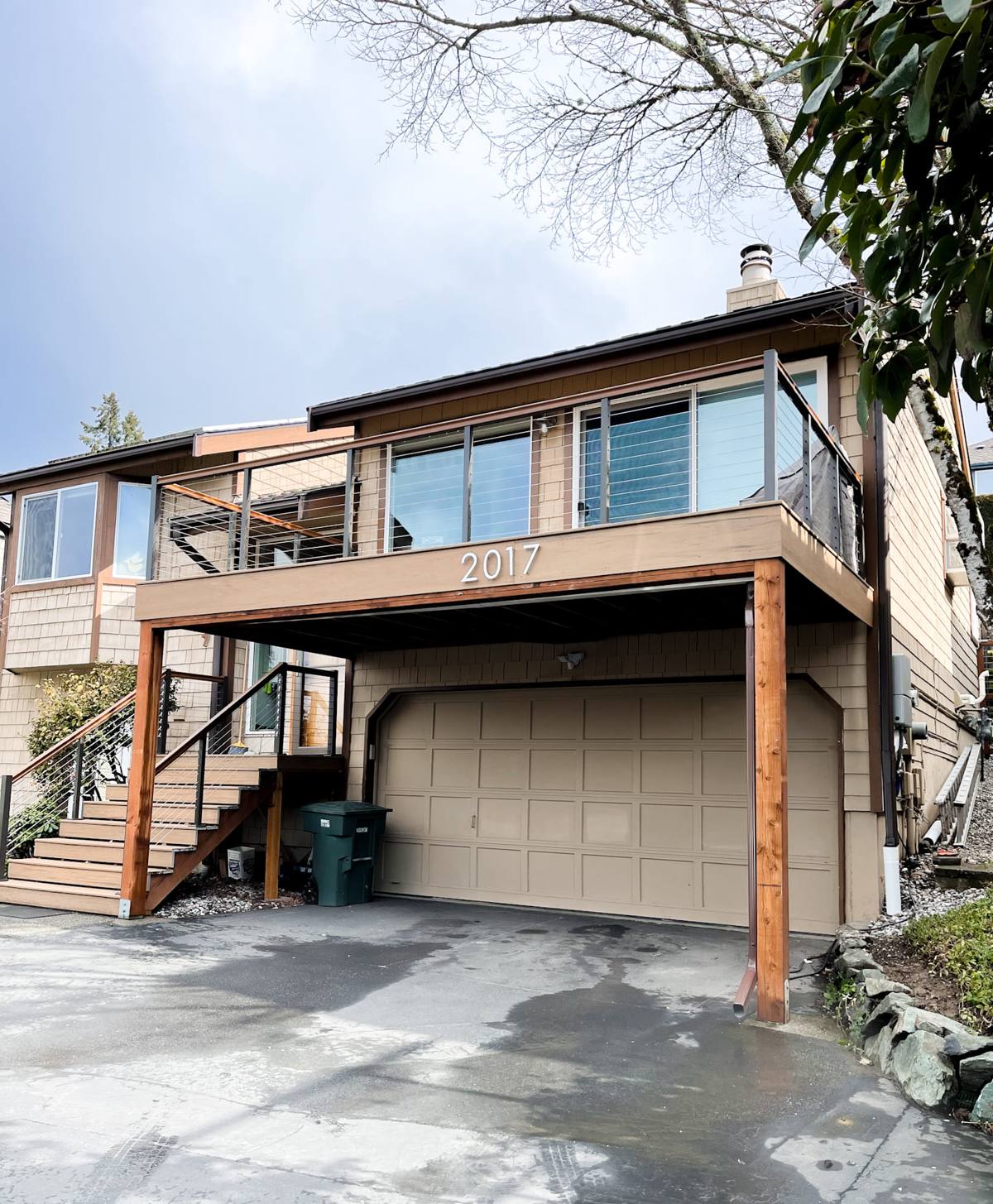
What Kendall Properties Typically Need From a Deck
Kendall sits in a more wooded, shaded setting than a lot of Whatcom County's coastal or open lowland areas. That changes how a deck needs to be built and maintained:
Shade and Slow Drying
Tree canopy is common around homes in this area, and while it's a nice feature for shade in summer, it means decks here often go days without full sun exposure after a rain. Surfaces stay damp longer, which accelerates algae and moss growth on anything that isn't ventilated properly underneath and between boards.
Ground Moisture and Drainage
Properties near the river valley and foothill terrain around Kendall can have higher ground moisture than you'd see on higher, more exposed lots. That matters for footing depth, post placement, and making sure water has somewhere to go instead of pooling against structural posts.
Seasonal Debris
Needles, leaves, and moss spores collect on decking surfaces and in the gaps between boards through fall and winter. A deck built with tight, poorly spaced boards or no ventilation underneath turns that debris into a moisture trap instead of letting it wash or blow through.
Footings, Posts, and Ledger Flashing: Where Decks Actually Fail
Most deck problems we get called out for in Whatcom County don't start with the decking boards on top — they start underneath, where nobody looks until something's wrong.
Footings Below Frost Depth
Footings need to be poured to the depth required by county code, not just "deep enough to feel solid." Shallow footings shift over time with freeze-thaw cycles and saturated soil, which is exactly what leads to a deck that starts to rock or separate from the house years later.
Ledger Board Flashing
The ledger board — where the deck attaches to the house — is the single most common failure point on decks in wet climates. If it isn't flashed correctly to shed water away from the house's sheathing and framing, moisture gets trapped behind the deck and starts rotting both the ledger and the wall structure behind it, often invisibly for years. This is not a spot to cut corners, and it's one of the first things we check on any deck we're asked to repair or replace rather than build new.
Post Bases and Ground Contact
Posts should sit on proper post bases that keep the wood off the concrete and off standing water, not buried or set directly in soil. Ground-contact rot at the base of support posts is one of the more common reasons an otherwise decent-looking deck fails a structural inspection.
Choosing Decking Material for a Wet, Shaded Climate
There's no single "best" decking material — it depends on how much upkeep you want to do and how much shade and moisture the deck will actually see. Here's how the common options compare for a property like those around Kendall:
| Material | Upfront Cost | Maintenance | How It Handles Moisture & Shade |
|---|---|---|---|
| Pressure-treated lumber | Lowest | Annual cleaning, periodic sealing | Needs regular sealing in shaded, damp spots or it grays and checks faster |
| Cedar | Moderate | Sealing every 1-2 years | Naturally rot-resistant but still needs upkeep in constant shade and moisture |
| Composite decking | Higher | Occasional washing, no sealing | Resists rot and doesn't need sealing, but can grow surface algae in deep shade if not cleaned periodically |
| PVC decking | Highest | Occasional washing | Fully moisture-resistant surface, best option for consistently shaded, damp areas |
Our honest take: in a heavily shaded, damp setting, cheaper pressure-treated boards tend to disappoint homeowners because the maintenance schedule required to keep them looking good is more than most people actually stick to. Composite and PVC cost more upfront but hold up with far less ongoing work, which tends to be the better long-term value once you factor in sealing labor and replacement boards over time. We'll walk through the real trade-offs for your specific site and sun exposure rather than pushing one product across the board.
Framing, Fasteners, and Drainage Details That Matter Long-Term
Fastener Corrosion Resistance
Standard zinc-coated screws and nails corrode faster in a marine-influenced, high-moisture climate. We use stainless steel or heavy-duty coated fasteners rated for treated lumber and coastal exposure, because rust streaks and failing fasteners are one of the most common complaints on older decks in this part of the county.
Board Spacing for Drainage
Decking boards need consistent gaps to let water drain through instead of sitting on the surface. Too tight, and you get standing water and premature rot or algae growth; too wide, and small debris and moisture collect in the gaps themselves. Getting this consistent across the whole deck is a basic craftsmanship detail that a lot of quick jobs skip.
Underneath Ventilation
Airflow beneath the deck matters as much as what's on top. Proper joist spacing and ground clearance let air move through and dry out the substructure between rain events, which is especially important on shaded lots where the ground rarely gets direct sun.
Railings, Stairs, and Code Compliance
Guardrail height, baluster spacing, and stair rise/run are all governed by Whatcom County building code, and they're not optional details — they're safety requirements. A deck that's more than a small step off the ground needs a code-compliant guardrail, and any staircase needs consistent rise and run so it doesn't become a trip hazard. We build to code on every project and pull the required permits so you're not left with an unpermitted structure that becomes a problem at resale.
- Guardrails required above code-specified height thresholds
- Baluster spacing tight enough to prevent a small child from passing through
- Stair rise and run kept consistent step to step
- Handrails on stairways with enough steps to require one
- Ledger and footing inspections scheduled where required by county permit
How We Approach a Deck Build in Kendall
Every property is different, but the process holds a consistent shape:
1. On-Site Assessment
We walk the site, look at sun exposure, drainage patterns, and how the deck will tie into the house, and talk through what you actually want to use the space for.
2. Design and Material Selection
We go over layout, decking material, and railing options with real trade-offs explained — not just a sales pitch for the most expensive option.
3. Permitting
We handle the permit application with Whatcom County where required, so the structure is documented and inspected properly.
4. Demo (If Replacing an Existing Deck)
Old decking, framing, and any compromised structural components are removed and hauled off.
5. Footings, Framing, and Ledger Work
This is where the long-term durability of the deck gets decided — footings to proper depth, correctly flashed ledger attachment, and square, level framing.
6. Decking, Railings, and Stairs
Decking is installed with consistent, drainage-appropriate spacing, followed by code-compliant railings and any stairs.
7. Final Walkthrough
We go over the finished deck with you, confirm everything is solid, and answer any maintenance questions before we consider the job done.
Signs an Existing Deck Needs Replacing, Not Just Repairing
Homeowners often ask whether an older deck can just be patched. Sometimes it can — but certain signs point to a bigger problem underneath that repair alone won't fix:
- Soft, spongy, or spring-y decking boards, especially near the house
- Visible rot or discoloration at the ledger board where the deck meets the wall
- Rust streaking around fastener heads or visibly corroded hardware
- Railings or posts that wobble or flex under light pressure
- Standing water or persistent dark staining between boards after rain
- Posts sitting directly in soil or in contact with standing water
If you're seeing more than one of these, it's usually worth having someone check the framing and footings before spending money resurfacing a deck that has structural problems underneath.
Why It Matters to Hire a Crew That Already Works in Kendall
Decking that gets built for a dry-climate spec sheet doesn't always hold up once it's sitting under tree cover in a damp part of Whatcom County for a few winters. Knowing how much shade a lot typically gets, how the ground drains near the river valley and foothill terrain, and which fastener and flashing details actually matter here versus in a drier region comes from having built and repaired decks in this specific area, not just from a general product manual. That's the difference between a deck that still looks and performs well in five years and one that starts needing attention after the first couple of wet seasons.
If you're planning a new deck or replacing one that's showing its age, we're happy to take a look and give you a straightforward, no-pressure estimate — just fill out the form below and we'll get in touch.