 Ferndale Siding
 Why Sandy Point Windows Wear Out Faster Than Most
Sandy Point sits right on the water, and that changes the math on window replacement compared to a house a few miles inland in Ferndale or Bellingham. Homes here take a steady diet of salt-laden air, wind-driven rain that hits window frames sideways instead of straight down, and a moss and mildew season that runs longer than almost anywhere else in Whatcom County. None of that is dramatic on its own, but stacked up year after year, it's exactly the combination that breaks down seals, corrodes hardware, and rots frames well before a window's rated lifespan is up.
We've worked on enough waterfront and near-waterfront homes in this part of the county to know the failure patterns are different from a typical suburban replacement job. Salt air accelerates corrosion on aluminum components and cheap hardware. Constant moisture pressure finds any gap in flashing or sealant and turns it into a slow leak. And moss doesn't just grow on roofs — it takes hold in window sills, tracks, and trim wherever water sits instead of draining. A window replacement done for a Sandy Point home needs to account for all three from day one, not as an afterthought.
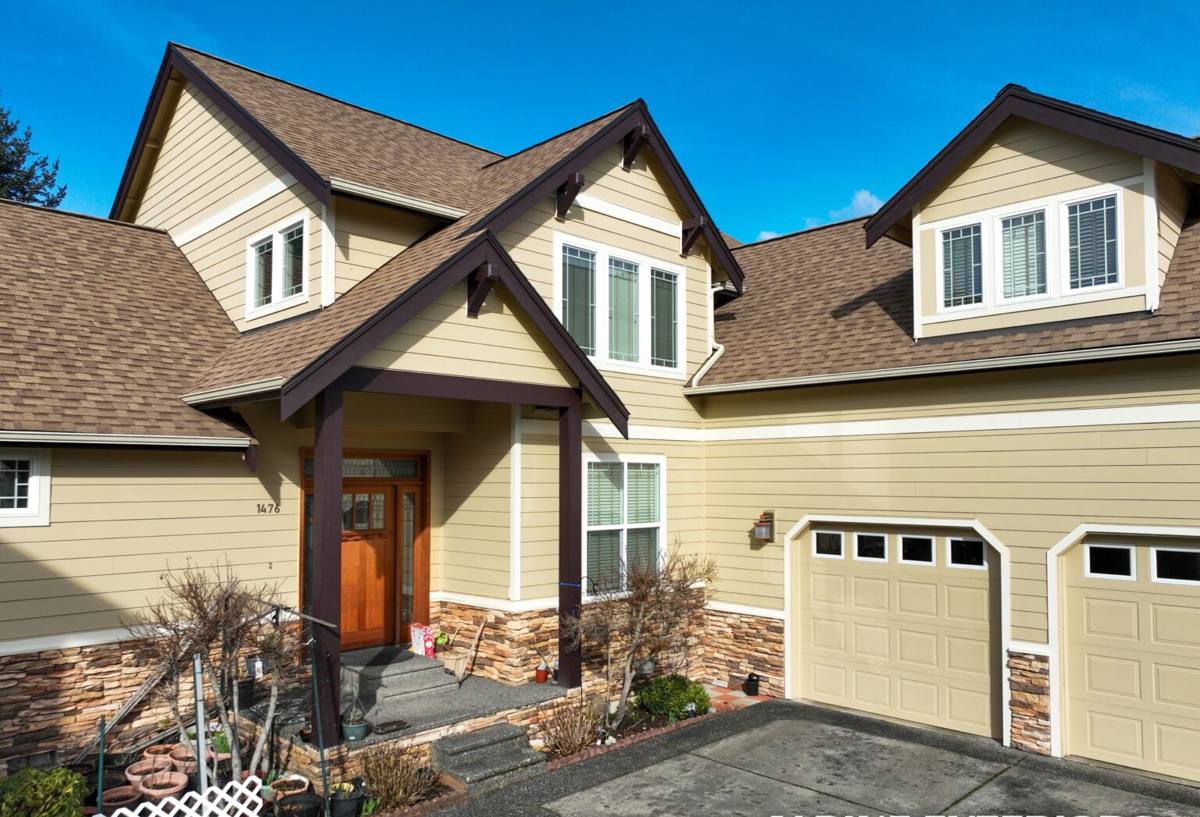
Signs Your Windows Are Telling You It's Time
Most homeowners don't replace windows because they woke up and decided to — they replace them because the windows started causing problems. In this climate, watch for:
- Fogging or a permanent haze between panes (the seal on the insulated glass unit has failed)
- Soft or discolored wood at the sill or lower corners of the frame
- Windows that stick, won't latch fully, or have visibly warped out of square
- Drafts you can feel with a hand near the frame on a windy day
- Hardware — locks, cranks, hinges — that's pitted, stiff, or corroded
- Persistent moss, algae, or black staining on the exterior sill that keeps coming back
- A noticeable jump in heating costs with no other explanation
Any one of these can show up on a window that's otherwise fine. Two or three together, especially on the side of the house facing the water or prevailing wind, usually means the window's protective seal has given out and it's now just a matter of time.
What a Correct Window Replacement Actually Involves
Swapping the sash inside an old frame is the fastest way to do a window job, and it's also the fastest way to trap a moisture problem behind a nice new interior. In a marine environment like Sandy Point, we treat every replacement as a full-frame job unless the existing frame and flashing are in genuinely good shape — because covering up a compromised opening just delays the damage, it doesn't stop it.
The parts that matter most here
Flashing and water management around the rough opening do more to determine how long a window lasts than the window itself. We integrate flashing tape and drainage paths so that any water that gets past the exterior trim has somewhere to go besides into your wall framing. Sealant choice matters too — not every exterior-grade caulk holds up to constant salt exposure and UV, and we use products rated for it rather than whatever's cheapest at the yard.
Hardware and frame material
Standard mill-finish aluminum hardware pits and corrodes fast this close to the water. We spec corrosion-resistant hardware and frame materials suited to marine air, which costs a little more up front and saves a service call two winters from now.
Choosing the Right Window Material for a Waterfront Property
There's no single "best" window material for every house, but some hold up better than others in salt air and constant damp. Here's how the common options compare for a Sandy Point application:
| Material | Salt Air / Corrosion Resistance | Moisture Behavior | Maintenance |
|---|---|---|---|
| Vinyl | Very good — won't corrode or rust | Handles moisture well, no rot risk | Low; occasional cleaning |
| Fiberglass | Excellent — dimensionally stable, resists pitting | Excellent; minimal expansion/contraction | Low; holds paint well if color changes later |
| Aluminum-clad wood | Fair to good depending on hardware/finish quality | Good if flashing is correct, but wood core is a risk if seals ever fail | Moderate; watch exterior seals over time |
| Bare wood | Poor without diligent upkeep | Needs vigilant sealing and repainting to avoid rot | High; not what we recommend this close to the water |
We generally steer waterfront and near-waterfront homeowners toward vinyl or fiberglass for this reason — not because wood windows are a bad product everywhere, but because the maintenance burden of keeping a wood frame sealed against salt air and driving rain, year after year, is a lot to ask of anyone who isn't planning to repaint and re-caulk on a strict schedule. It's a trade-off we're upfront about rather than something we gloss over.
Our Process for a Sandy Point Window Job
- On-site assessment. We look at every window opening individually — sun exposure, wind exposure, existing flashing condition, and any signs of past water intrusion.
- Honest scope. We tell you which windows genuinely need full-frame replacement and which can be handled with an insert if the frame is sound. We don't upsell work that isn't needed, and we don't recommend a shortcut that'll cause problems later.
- Material and product selection. Based on the opening's exposure, we recommend frame material, glass package, and hardware suited to the conditions on that specific side of the house.
- Removal and prep. Old units come out carefully, and we inspect the rough opening for rot or damage before anything new goes in — this is where a hidden moisture problem usually shows up.
- Flashing and installation. Proper flashing sequencing, shimming for a square and plumb fit, and insulation around the frame to eliminate drafts and thermal gaps.
- Sealing and finish work. Exterior sealant rated for marine/UV exposure, interior trim finished to match, and a final check of operation on every window before we call it done.
- Walkthrough. We go over each window with you — how it operates, what maintenance it needs, and what to watch for going forward.
What Affects the Cost
Every home is different, but the main cost drivers on a Sandy Point window job tend to be the same handful of factors:
| Factor | Why It Matters |
|---|---|
| Full-frame vs. insert replacement | Full-frame costs more but is often necessary once flashing or the rough opening is compromised |
| Frame material | Fiberglass typically costs more than vinyl but offers better long-term stability in this climate |
| Number and size of openings | Larger picture windows and multi-window bays cost more than standard single units |
| Existing rot or water damage | Any framing repair needed before the new window goes in adds to the scope |
| Glass package | Upgraded glazing for sound, sun exposure, or energy performance adds cost but can be worth it on a water-facing elevation |
| Access and site conditions | Second-story or hard-to-access openings take more time and labor |
We'd rather walk your specific house and give you real numbers than throw out a broad estimate that doesn't hold up once we see the actual conditions. Every Sandy Point property faces the water a little differently, and that affects what each opening actually needs.
Why It Matters That We Already Work This Area
Window replacement done right in Sandy Point isn't the same job as window replacement done right a few miles inland. A crew that mostly works subdivisions further from the water can still do competent work, but they may not default to corrosion-resistant hardware, marine-rated sealants, or full flashing details unless you specifically ask — because most of their jobs don't need it. We build those choices into the plan from the start because we see the alternative: windows that looked fine at installation and started failing within a few years because the materials and details weren't matched to the exposure.
We're also familiar with the practical side of working in a waterfront community — narrower access in some areas, wind conditions that affect scheduling, and the general pace of a smaller residential community where a crew showing up on time and cleaning up after itself actually matters to your neighbors, not just you.
Protecting the Investment After Installation
New windows still need a little attention in this climate to get their full lifespan out of them:
- Rinse salt film off frames and glass periodically, especially after storms
- Keep sills and tracks clear of moss and debris so water can drain instead of pooling
- Check exterior caulking annually and touch up before a small gap becomes a leak path
- Operate hardware regularly through the year so locks and cranks don't seize up
- Have a professional take a look if you notice a draft, sticking sash, or fogging — early fixes are cheaper than late ones
None of this is a heavy maintenance schedule, but skipping it entirely is how a good installation ends up underperforming in a marine environment.
Get a Straight Answer for Your Home
If your windows are drafty, fogged, sticking, or just showing their age, we're happy to come take a look and tell you honestly what needs to happen — whether that's a full replacement, a partial one, or just some maintenance to buy a few more years. Reach out for a free, no-pressure estimate and we'll walk your Sandy Point home in person before recommending anything.