 Ferndale Siding
 Point Roberts Decks Live a Harder Life Than Most
Point Roberts sits out on its own peninsula, surrounded by water on three sides, which means every deck out there takes a steadier dose of salt-laden air than a deck fifteen minutes inland in Ferndale. Add Whatcom County's long wet season, driving rain that comes in sideways off the water, and a moss season that can run from October clear into May, and you've got a set of conditions that ages a deck faster than the calendar suggests. We've worked on enough decks out here to know the failure patterns are different from what we see on a typical inland job, and the repair has to account for that or it just fails again in a few years.
This page is about deck repair specifically for Point Roberts — what tends to go wrong, what an honest repair actually looks like, and why the logistics of getting a crew out to the peninsula matter more than most homeowners realize.
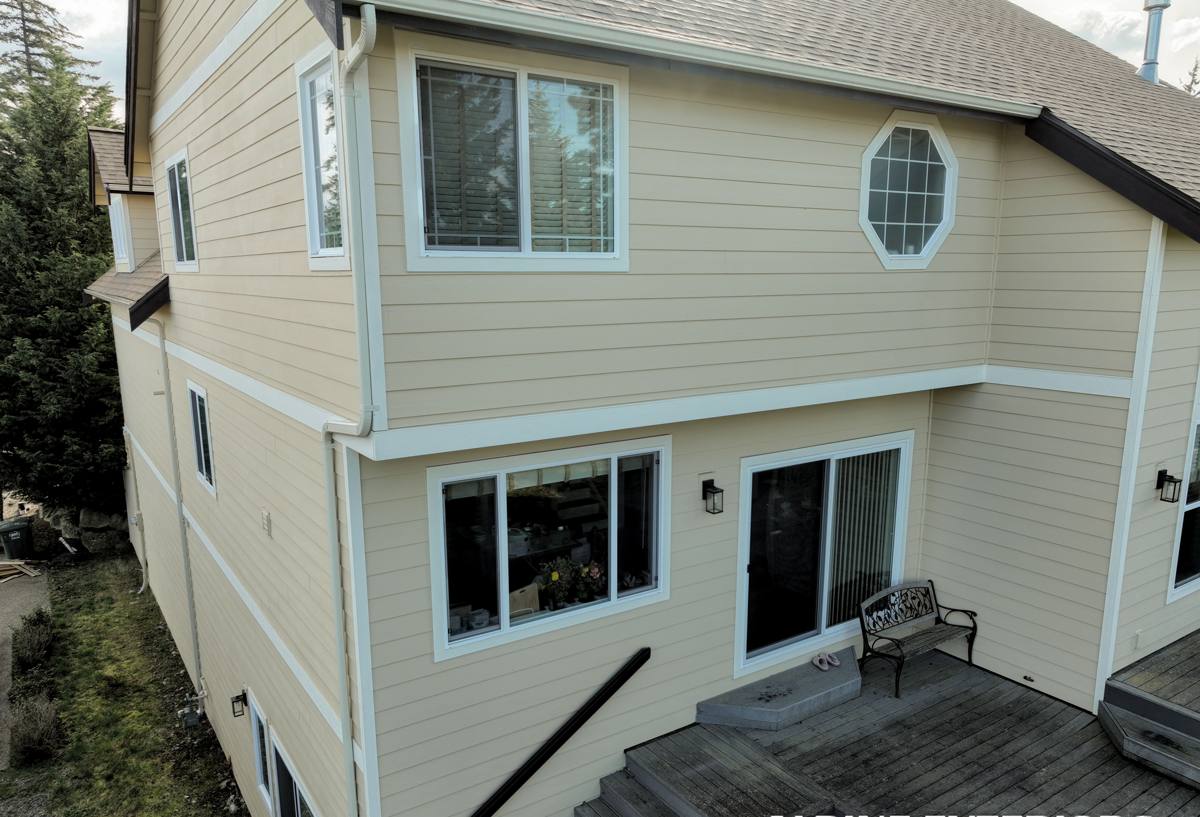
What Salt Air, Rain, and Moss Actually Do to a Deck
Salt air and fasteners
Salt-laden air accelerates corrosion on anything metal — nails, screws, joist hangers, bolts. A deck built with standard hot-dip galvanized hardware ten or fifteen years ago may look fine from the top but have hangers and fasteners underneath that have lost real strength. This is the single biggest hidden risk we find on Point Roberts decks: hardware failure you can't see without getting underneath the structure.
Driving rain and the ledger connection
The point where a deck attaches to the house — the ledger board — is the single most important spot on the whole structure, and it's also the spot most likely to have been flashed poorly or not at all, especially on older decks. Driving rain pushes water sideways and upward under lap siding and behind trim in a way that gentler rain doesn't, and if that ledger connection isn't properly flashed, water gets behind it and starts rotting the ledger, the rim joist, and sometimes the wall framing behind the siding. This is slow, hidden damage — by the time you see soft wood or staining on the interior wall, it's usually been going on for years.
Moss and the walking surface
A long moss season means deck boards, especially anything shaded or north-facing, stay damp for extended stretches. Moss and algae hold moisture against the wood or composite surface, which speeds up wood decay and turns the deck into a slip hazard well before it looks structurally bad. Moss growth between boards can also trap debris and hold water right where drainage matters most.
The Deck Problems We Actually Find in Point Roberts
- Ledger board rot from missing or failed flashing at the house connection
- Post base rot where posts sit in or near grade and never fully dry out
- Corroded joist hangers and fasteners that have lost holding strength but show no surface sign
- Cupped, split, or soft decking boards, often worst on shaded or north-facing sections
- Loose or wobbly guardrails and stair rails from post connections that have loosened over time
- Moss and algae buildup between boards and on stair treads, creating slip risk
- Undersized or poorly placed footings on older decks built before current code expectations
What a Correct Repair Actually Involves
A deck repair done right starts with getting underneath the deck, not just walking the surface. Surface boards can look presentable while the framing underneath is compromised, and the reverse is also true — a deck with rough-looking boards can have perfectly sound framing. We separate structural issues from cosmetic ones before we talk about scope, because that distinction drives the whole plan.
Structural first
Ledger flashing, post connections, joist hangers, and footing condition get checked first. If the structure underneath isn't sound, replacing boards on top is just putting new paint on a cracked wall — it looks better for a season and then the same problems resurface.
Then the walking surface
Once we know the frame is sound, we address decking boards, railings, and stairs. Sometimes that's targeted board replacement; sometimes enough of the surface has failed that a full resurface makes more sense than patching board by board.
Code-rated hardware, matched to conditions
Given the salt air exposure out here, we don't use whatever hardware happens to be cheapest — we use fasteners and connectors rated for the corrosion exposure the location actually has. That's a small cost difference on the invoice and a large difference in how long the repair lasts.
Repair or Replace: How We Help You Decide
Not every deck problem calls for a full rebuild, and not every "just replace a few boards" request is actually the right fix. Here's the general framework we use, with the honest trade-offs laid out.
| Condition Found | Typical Fix | Why |
|---|---|---|
| Ledger flashing missing/failed, framing still sound | Re-flash ledger connection, targeted framing repair | Stops the source of rot before it spreads further |
| Isolated post or joist rot, rest of frame solid | Sister or replace affected members | No need to rebuild what isn't damaged |
| Widespread hardware corrosion | Full hardware replacement with corrosion-rated fasteners | One bad hanger found usually means others are close behind |
| Cupped/split boards, frame sound | Resurface with new decking | Cheaper than rebuild, restores safe walking surface |
| Multiple footings undersized or failing, deck 20+ years old | Full rebuild from footings up | Patching an undersized structural system just delays the real cost |
We'll tell you plainly which category your deck falls into, and we won't sell you a full rebuild if a targeted repair will hold up.
Our Process for a Point Roberts Job
Point Roberts is a U.S. exclave — the only land route in from Ferndale and the rest of Whatcom County runs through Canada. That's just geography, but it matters for scheduling a repair. We plan our Point Roberts trips to get a full day's productive work out of the crossing rather than making the trip for a quick look and then coming back again a week later. That means our initial assessment tends to be thorough enough to scope the whole job in one visit, and we batch material deliveries and labor days to keep the project moving without repeated back-and-forth trips.
Practically, here's what that looks like for you:
- We assess the deck in person — top and underneath — and give you a clear, written scope
- We separate structural repairs from cosmetic ones, with honest reasoning for each
- We schedule the work in as few trips as reasonably possible, given the logistics of getting a crew to the peninsula
- We do the repair with corrosion-rated hardware and proper flashing at every connection point
- We walk you through what was done and what to watch for going forward
Materials We Use and Why
For framing repairs, we use pressure-treated lumber rated for ground contact where posts or beams are near grade, since that's where moisture sits longest. For fasteners and connectors, we spec hardware rated for coastal or high-corrosion exposure rather than standard interior-grade galvanized products — the up-front cost difference is modest, and it's the right call given how hard salt air is on standard fasteners out here.
For decking surfaces, the right material depends on your budget and how much upkeep you want to take on. Wood decking costs less up front but needs regular sealing or staining, especially with a moss season this long — skip that maintenance and you'll be back to repairs sooner than you'd like. Composite decking costs more initially but handles moisture and moss growth better and needs far less ongoing attention. Neither is the "correct" answer in every case — we'll talk through what fits your situation rather than pushing one option.
Maintenance Checklist to Get More Years Out of Your Deck
- Clear moss and debris from between boards and off stair treads before it builds up into a slip hazard
- Check for standing water on the deck surface after a hard rain — pooling means drainage isn't working right
- Look under the deck once a year for staining, soft wood, or rust streaks around hardware
- Keep gutters and downspouts near the deck clear so runoff isn't dumping extra water onto or under it
- Reseal or restain wood decking on the schedule the product calls for — don't stretch it out in a wet climate
- Check railing and stair post connections for movement at least once a year
Why It Matters That We Already Work in Point Roberts
A crew that's never worked the peninsula before is guessing at logistics on your dime — figuring out border crossing timing, material delivery, and scheduling as they go. We've already worked that out. More importantly, we know what a Point Roberts deck's exposure actually does over time, because we've opened up enough of them to see the pattern of salt-corroded hardware, rain-driven ledger rot, and moss-related wear firsthand. That experience shapes the repair we recommend — we're not applying a generic inland fix to a coastal-exposure problem.
If your deck out in Point Roberts has soft spots, a wobbly railing, standing water after rain, or you just want an honest look at what shape it's really in underneath, we're glad to come take a look. Fill out the form below for a free, no-pressure estimate.