 Ferndale Siding
 Siding Repair Built for Nooksack's Weather, Not a Generic Climate
Nooksack sits inland from the coast, but it's still squarely inside Whatcom County's marine-influenced weather pattern. Homes here take on the same driving rain and long wet season as the rest of the lowlands, plus the added humidity that comes from being tucked into the Nooksack River valley, surrounded by farmland and drainage that keeps ground moisture high well into summer. Siding that isn't repaired correctly here doesn't fail quickly and dramatically, it fails slowly, behind the surface, which is exactly why so many repair calls we get involve more damage than the homeowner expected when they first noticed a problem.
This page is specifically about siding repair for houses in and around Nooksack, not a general overview of how siding works. If you're looking at a cracked panel, a soft spot near a window, or moss creeping up a north-facing wall, this is what actually needs to happen to fix it right.
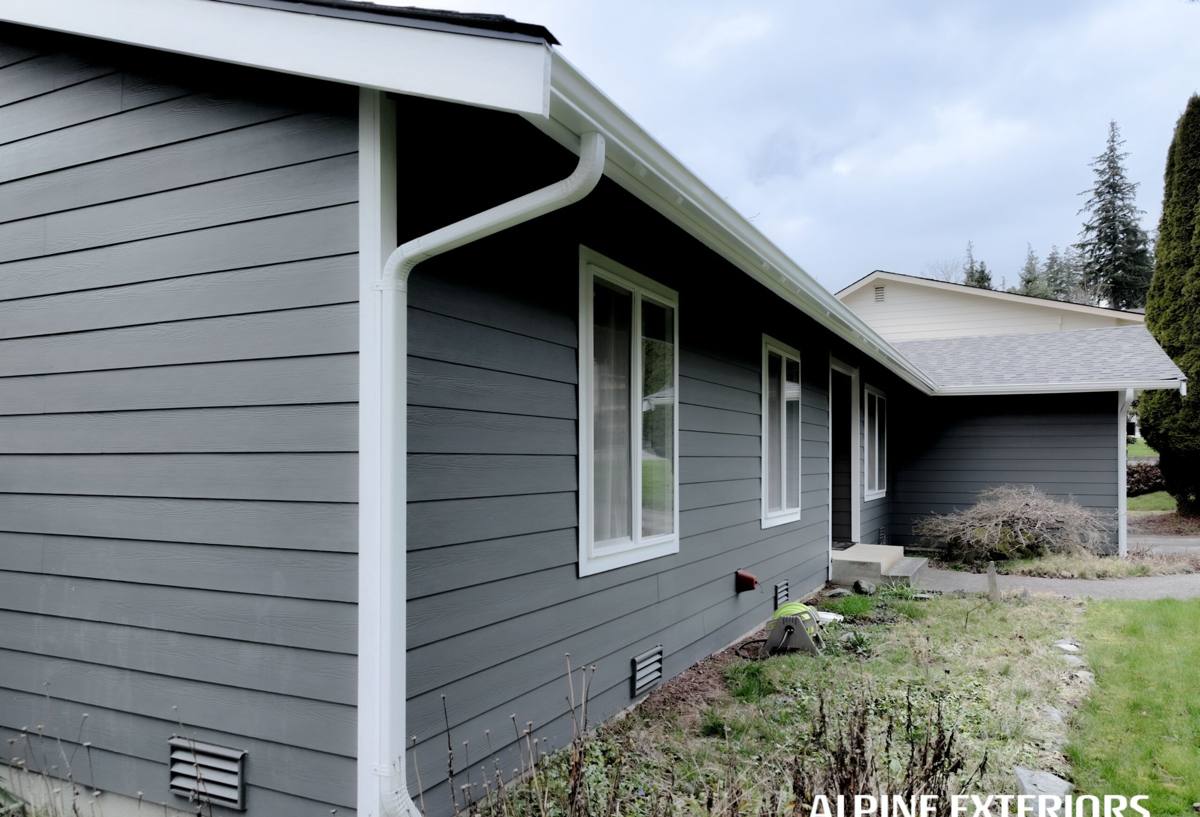
What the Local Climate Does to Siding Over Time
Driving Rain and Wind-Driven Moisture
Whatcom County doesn't just get rain, it gets rain pushed sideways by wind and funneled through the lowland valleys. That wind-driven rain finds every gap in flashing, every failed caulk joint, and every seam where siding wasn't lapped correctly. On a well-installed wall, water sheds off the surface and never gets behind the cladding. On a wall with even one bad seam, water tracks behind the panel and sits there, because the same weather pattern that pushes rain in doesn't dry things out quickly afterward.
A Long Moss and Algae Season
Between the rain and the tree cover common on Nooksack lots, siding here can stay damp for weeks at a stretch, especially on north- and east-facing walls that don't get direct sun. That's ideal growing conditions for moss and algae, and it's a longer season than most of the country deals with, often stretching from fall through spring. Moss isn't just cosmetic. It holds moisture against the siding surface, works into seams and fastener holes, and accelerates whatever damage is already starting underneath.
Marine Air Working Inland
Nooksack isn't on the water, but the marine air off Bellingham Bay and the Salish Sea moves through the county's lowlands, carrying salt-laden moisture further inland than people expect. Combined with the valley's own humidity, it's a steady, low-grade corrosive environment for exposed fasteners, trim, and any siding material that wasn't engineered to handle sustained moisture exposure.
Common Siding Repair Issues We See Around Nooksack
Not every repair call is the same, but a handful of patterns show up again and again on homes in this area:
- Soft or swollen panels near ground level, downspouts, or anywhere splashback keeps a wall wet longer than the rest of the house.
- Moss and algae staining on shaded walls and under roof overhangs where airflow and sun exposure are limited.
- Caulk and sealant failure around windows, doors, and trim joints, usually the first thing to give out, and the first thing that lets water in.
- Warped or buckled panels, common on older wood or engineered wood products that were never rated for this level of sustained moisture.
- Cracked or chipped fiber cement from impact damage, usually fixable without replacing the whole wall if it's caught early.
- Hidden rot at seams and corners that isn't visible until a panel is pulled and the sheathing behind it is exposed.
- Pest and woodpecker damage, more common on softer wood-based sidings than on fiber cement.
What a Correct Siding Repair Actually Involves
A repair that only addresses what's visible from the ground is a repair that comes back. The damaged panel or trim board is rarely the whole story. It's usually a symptom of a moisture path that needs to be traced and closed before anything gets replaced. That means:
- Removing enough siding around the damaged area to see the sheathing, house wrap, and flashing underneath, not just patching over the visible spot.
- Checking for soft or delaminated sheathing, which needs to be addressed before new siding goes back on, not covered up.
- Confirming flashing at windows, doors, and horizontal trim is actually directing water out and away from the wall, not behind it.
- Repairing or replacing the weather-resistive barrier where it's torn, compressed, or improperly lapped.
- Matching replacement material, profile, and reveal so the repair doesn't stand out as a visibly different patch.
- Re-caulking and sealing joints with products rated for sustained exposure, not general-purpose caulk that will fail again in a season or two.
Skipping any of those steps is how a small, contained repair turns into a much larger one a couple of years later, once hidden moisture has had time to spread into the framing.
Repair or Replace? How We Make That Call
Not every damaged section needs a full wall replacement, and not every small-looking repair is actually small once the wall is opened up. Here's the general logic we use when we're standing in front of a Nooksack home deciding what makes sense:
| Sign | Usually Points To |
|---|---|
| Isolated crack or impact damage, sheathing dry underneath | Spot repair, replace the damaged piece and match the material |
| Soft panels in one or two areas, rest of the wall solid | Section repair with a moisture check at the boundaries |
| Rot or soft sheathing found in multiple areas of the same wall | Full wall replacement, patching won't address the underlying cause |
| Siding is an aging wood-based product nearing the end of its service life | Full replacement is usually more cost-effective than ongoing repairs |
| Persistent moss or algae with no structural damage | Cleaning and sealant maintenance, not replacement |
We'll always tell you honestly which category your situation falls into, including when a repair is genuinely the right call and a full replacement would be overkill.
Our Siding Repair Process for Nooksack Homes
- Inspection. We look at the damaged area and the surrounding wall, including anything that might be a related but separate issue, such as a leaking gutter, poor grading, or missing kick-out flashing.
- Diagnosis and honest scope. We tell you what we find, including if the damage is more limited, or more extensive, than it looked from the ground.
- Written estimate. You get a clear scope of work and price before anything is opened up, plus what happens if we find additional damage once we're into the wall.
- Repair. We remove only what needs to come off, address the moisture path, and rebuild with material that matches the existing wall as closely as possible.
- Cleanup and walkthrough. We show you what was found and what was done, so you're not left guessing what's behind your own wall.
The Material We Use for Repairs, and Why
We install and repair with James Hardie fiber cement siding exclusively. We don't install vinyl, LP SmartSide, primed spruce, or cedar, and that standard applies to repair work too. When a repair is on an existing Hardie wall, matching is straightforward. Hardie's ColorPlus factory finish is manufactured to a consistent standard, so replacement boards blend in without the mismatched, chalky look you get trying to match a field-painted repair years later.
When we're called out to repair a wall that isn't Hardie, whether it's wood, vinyl, or an engineered wood product, we'll be straightforward about what we can and can't do. Cosmetic patch work on other materials is sometimes reasonable as a short-term fix, but if the damage is coming from ongoing moisture exposure, patching a product that's already showing its climate limitations usually just delays the same failure. In those cases we'll tell you plainly whether a section or full replacement with Hardie's HZ5 product line, engineered specifically for climates with sustained moisture and moderate freeze-thaw exposure, is the more durable long-term answer for a Nooksack property.
Why a Crew That Already Works in Nooksack Matters
We're based in Ferndale and handle siding repair calls throughout Whatcom County, including Nooksack, on a regular basis. Siding repair done wrong in this climate doesn't just look bad, it traps moisture and speeds up the exact damage you called someone to fix. A crew that works this area regularly already knows which wall orientations on local homes take the worst of the moss and rain, what flashing details tend to fail first on houses built during certain eras, and how to sequence a repair around the wet season instead of getting caught mid-project by it. That local pattern recognition is the difference between a repair that solves the problem and one that just covers it up for a season.
What Siding Repair Typically Costs
Costs vary a lot depending on what's actually found once the wall is opened up, but here are the general factors that move the price:
| Factor | Why It Matters |
|---|---|
| Extent of visible damage | A single panel is far less involved than a multi-panel section |
| Hidden moisture or rot | Sheathing and framing repair adds cost beyond the siding itself |
| Material match | Matching an existing Hardie ColorPlus color is simpler than matching a discontinued or field-painted product |
| Accessibility | Second-story, steep-grade, or obstructed walls take more labor time |
| Flashing and house wrap repair | Proper moisture-path correction adds time but prevents repeat failures |
Small spot repairs on an otherwise sound wall are typically a modest, contained expense. Repairs that involve hidden rot, multiple panels, or sheathing replacement cost more, simply because more is actually being fixed. We'll never guess at a price before we've actually looked at the wall, and we'll tell you upfront if what looked like a small job has turned into something bigger once we're into it.
Get an Honest Look at Your Siding
If you're dealing with a soft spot, a stubborn moss patch, or damage you're not sure is cosmetic or structural, we're glad to take a look. We work Nooksack and the rest of Whatcom County regularly, and we'll give you a straight answer about what's actually going on and what it takes to fix it, not just a quote to reopen it every couple of years. Reach out for a free, no-pressure estimate; the form below gets you started.