 Ferndale Siding
 Siding Built for the Nooksack Side of Ferndale
The Nooksack River lowlands east of town put a different kind of stress on a house than the drier neighborhoods closer to I-5. Homes here sit low, close to water, often shaded by mature evergreens and surrounded by farmland that stays damp well into late spring. Add the salt-tinged marine air that rolls in off Bellingham Bay and the Strait of Georgia, and you get a climate that is genuinely hard on exterior materials — not in a dramatic way, but in the slow, cumulative way that shows up as soft trim, streaked paint, and moss-packed siding laps five or ten years down the road.
We're a Ferndale-based crew, and Nooksack-area homes are a regular part of our route. This page is about one product, in one area: James Hardie fiber cement siding, installed correctly for the specific conditions found around Nooksack — not a generic rundown of siding options.
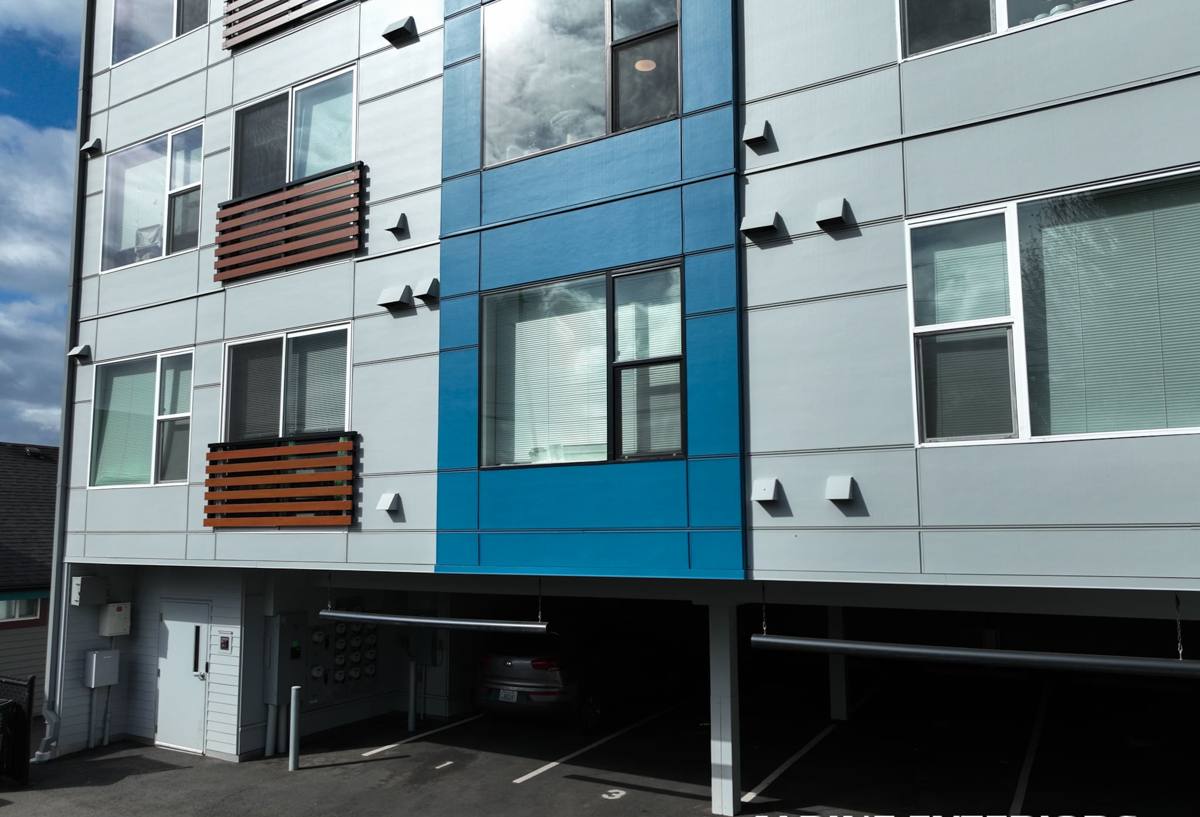
What This Climate Actually Does to Siding
Salt Air
Whatcom County's marine exposure means airborne salt and moisture settle on exterior surfaces year-round, not just during storms. On untreated wood and some engineered wood products, that moisture cycle accelerates swelling, checking, and paint failure at seams and cut edges. Fiber cement doesn't absorb and swell the way wood-based products do, which is a big part of why it holds up better in this specific setting.
Driving Rain
Storms coming off the Pacific tend to arrive sideways, not straight down. That matters more than most homeowners realize — driving rain finds horizontal laps, butt joints, and trim intersections that would stay dry in a calmer climate. A siding job that looks fine on a mild day can leak during a January system if the flashing details and lap spacing weren't done right the first time.
Long Moss Season
Between the shade from tree cover and the number of damp, low-light months, moss and algae growth on north- and east-facing walls is close to a given around Nooksack. This is mostly a cosmetic and maintenance issue rather than a structural one — but it's a real factor in what finish and color you choose, and how the siding is detailed to shed water instead of holding it against the surface.
What a Correct Fiber Cement Install Involves Here
Fiber cement is a durable material, but its performance is only as good as the installation underneath it. In a wet, salt-exposed area like this, a few details matter more than they would in a drier inland climate:
- Rainscreen gap: A drainage gap behind the siding lets bulk water and trapped moisture escape instead of sitting against the wall assembly — important given how many damp weeks this area sees in a row.
- Correct flashing at every penetration: Windows, doors, hose bibs, and vent penetrations all need proper flashing and integration with the water-resistive barrier — this is where most real-world leaks start, not in the field of the siding itself.
- Proper lap and fastener spacing: Hardie's installation specs on minimum lap, fastener placement, and clearance from grade exist for a reason; skipping them is how you get premature edge swelling and cracking.
- Clearance from grade, decks, and roof lines: Keeping siding a proper distance above soil, patios, and roof-to-wall intersections reduces the moisture wicking that drives moss and rot in shaded, low-lying yards.
- Factory-primed and sealed cut edges: Every field cut needs to be sealed before installation — an easy step to skip, and one of the most common causes of edge failure in wet climates.
None of this is exotic. It's just detail work that takes longer to do right, and it's exactly where corners get cut on rushed jobs.
James Hardie Product Lines We Use Around Nooksack
We install James Hardie exclusively — we don't offer LP SmartSide, vinyl, Cemplank, Allura, or raw cedar or primed spruce siding. That's a standard we hold across every job, not just this one. For a rural, tree-shaded, moisture-heavy setting like Nooksack, the product choice within the Hardie lineup usually comes down to look and exposure, not whether fiber cement itself is the right call.
| Product | Typical Use | Why It Fits This Area |
|---|---|---|
| HardiePlank lap siding | Primary wall covering, most home styles | Traditional lap profile sheds driving rain well when installed with correct overlap |
| HardiePanel vertical siding | Farmhouse, board-and-batten, shop or accessory buildings | Common on the rural-style homes and outbuildings around Nooksack |
| HardieShingle siding | Accent gables, dormers | Detail work on custom or older-style homes without the upkeep of real cedar shingle |
| HardieTrim boards | Corners, window and door casing, fascia | Resists the swelling and cracking wood trim shows in constant damp shade |
All of it comes with Hardie's factory-applied ColorPlus finish where selected, which matters specifically in a moss-and-algae-prone area — the baked-on finish resists fading and holds up to washing far better than a field-applied paint job, which means you can actually clean moss and grime off the wall without stripping the color underneath.
HZ5 Engineering
Whatcom County falls in a climate zone where Hardie's HZ5 product formulation — engineered for wetter, harsher regions — is the appropriate specification. It's built to resist moisture-related damage better than the HZ10 formulation used in drier climates. We spec HZ5 as standard on Nooksack and Ferndale-area jobs; it's not an upgrade, it's the correct product for this weather.
Our Process on a Nooksack Job
1. On-Site Assessment
We walk the exterior, check for existing moisture damage, moss buildup patterns, and problem areas around windows, decks, and roof intersections — the same spots that tend to be the first to fail in this climate.
2. Tear-Off and Sheathing Check
Old siding comes off and the sheathing underneath gets inspected. In a damp, shaded property, this is often where hidden problems from a prior installation show up — soft sheathing, missing barrier, or improperly flashed penetrations that were never visible from the outside.
3. Water-Resistive Barrier and Rainscreen
We install or repair the weather barrier, add flashing at every penetration, and build in a drainage gap behind the new siding before a single course goes up.
4. Siding and Trim Installation
Panels, planks, and trim go up to Hardie's fastening and clearance specifications, with every field-cut edge sealed and every joint properly lapped or caulked per spec — not just caulked over and left.
5. Final Walkthrough
We go over the finished exterior with the homeowner, point out anything worth knowing for upkeep in this climate, and clean up the site.
What a Nooksack Siding Project Tends to Cost
Every home is different, and the only accurate number comes from an on-site look. But the factors that move the price on jobs in this area are consistent:
| Factor | Effect on Cost |
|---|---|
| Home size and wall complexity | More corners, gables, and dormers mean more trim work and cutting |
| Existing damage found at tear-off | Rotted sheathing or framing repair adds cost beyond the base siding bid |
| Product mix | Plank vs. panel vs. shingle accents, and ColorPlus color selection, shift material cost |
| Site access | Rural lots with limited driveway access or long carry distances add labor time |
| Trim and detail scope | Full trim replacement vs. siding-only changes total project cost significantly |
We give straight, itemized estimates — not a ballpark number that grows once the tear-off starts.
Living With Fiber Cement in a Moss-Heavy Yard
Fiber cement is low-maintenance, not no-maintenance. In a shaded, damp property, a little routine care keeps it looking right for decades:
- Rinse north- and east-facing walls with a garden hose once or twice a year to keep moss and algae from establishing — a pressure washer isn't necessary and can damage caulk joints if used carelessly.
- Trim back tree limbs and shrubs that hold moisture against the wall or block airflow and sun exposure.
- Keep gutters clear so overflow doesn't run down the siding face, which accelerates staining and moss growth in specific streaks.
- Check caulking at trim joints and penetrations every couple of years and re-caulk as needed — this is normal upkeep for any siding, not a defect.
- Address any moss or lichen promptly with a mild cleaner rather than letting it establish and hold moisture long-term.
Why a Crew That Already Works This Area Matters
Whatcom County's building department has specific requirements around moisture management and weather-resistive barriers, and a crew that regularly pulls permits and passes inspection here already knows what's expected. Beyond paperwork, there's real value in a crew that has already seen how homes in this specific area — closer to the river, more shaded, more exposed to marine air — actually perform over time. That's different knowledge than a crew that mostly works dry, open lots closer to town or a contractor from outside the county installing here occasionally.
We're based in Ferndale, and Nooksack-area homes are part of our regular service area — not a special trip. That matters for warranty follow-up, for material availability, and for someone actually showing up if a question comes up after the job is done.
Signs It's Worth Getting a Look
A few things worth having checked, even if you're not sure you need new siding yet:
- Persistent moss or algae staining that comes back within months of cleaning
- Soft or spongy spots when you press on siding or trim near the bottom courses
- Visible cracking, especially at butt joints or cut edges
- Paint that's peeling or bubbling in patches rather than fading evenly
- Gaps opening up at trim or corner boards
Any of these can mean the current siding is past the point where cleaning or spot repair solves the problem.
If you're weighing options for a Nooksack-area home, we're happy to take a look and give you an honest read on what your siding actually needs — no pressure, no inflated quote to scare you into a bigger job. Use the form below to request a free estimate.