 Ferndale Siding
 Building Decks That Actually Hold Up in Nooksack
Nooksack homes sit in one of the more demanding pockets of Whatcom County for outdoor structures. You're close enough to the water to pick up salt-laden air, far enough inland to catch heavy valley rain off the foothills, and shaded enough through the winter months that moss gets a real head start on any horizontal surface. A deck built here has to do more than look good on installation day — it has to shed water, resist rot, and stay safe underfoot through a wet season that can stretch from October well into April.
We build and replace custom decks for homeowners throughout the Ferndale area, including Nooksack, and the lessons we've learned building in this specific climate shape every deck we design. This page walks through what that actually means: the materials, the structural details, and the decisions that separate a deck that lasts fifteen-plus years from one that needs major repair after five.
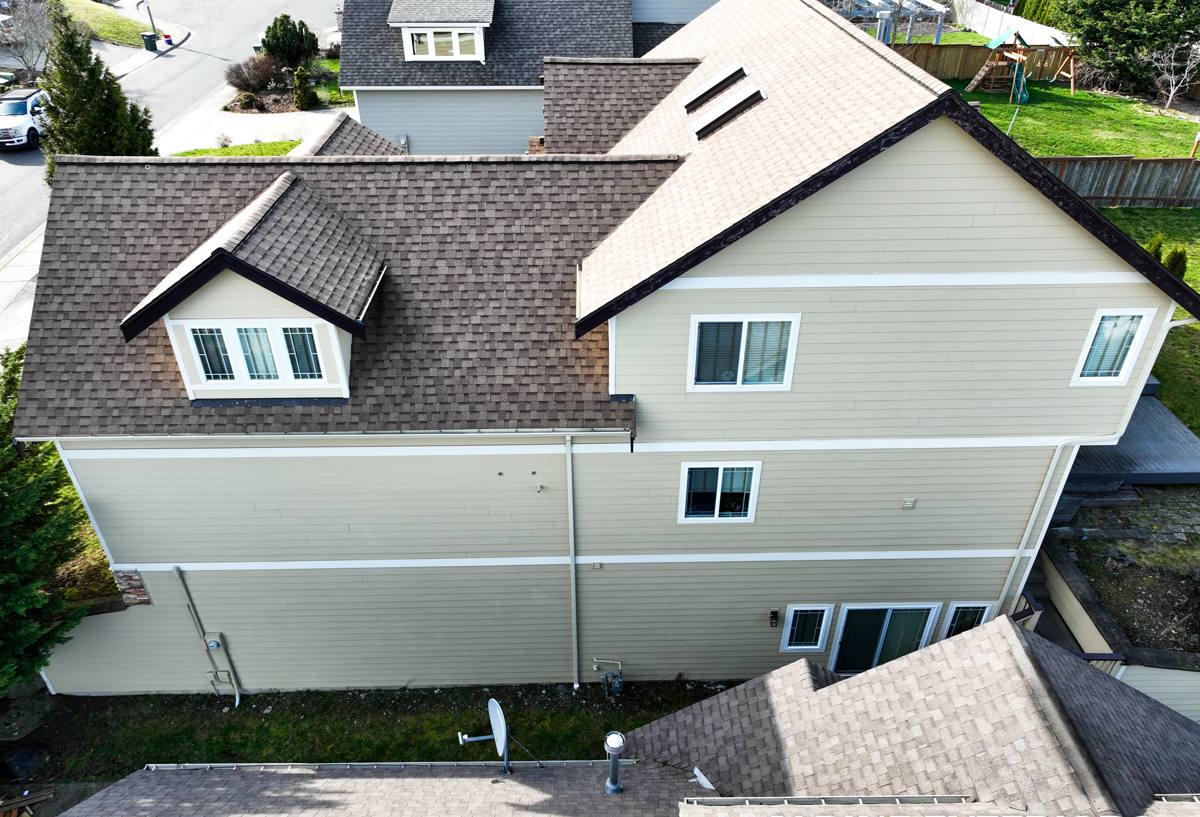
What Nooksack's Climate Does to a Deck
Salt Air and Metal Fasteners
Even well inland from the coast, moisture carrying trace salt corrodes unprotected steel over time. Standard fasteners and connectors that might be fine in a drier climate can start rusting within a few seasons out here. That rust doesn't stay cosmetic — it weakens the connection between your deck boards and the frame, and between the frame and the house.
Driving Rain and Standing Water
Whatcom County rain isn't always gentle. Wind-driven rain gets under railings, into end grain, and into any gap where two pieces of decking meet. A deck with poor drainage or flat, unsloped framing will hold water in low spots, and that's exactly where rot and mold take hold first.
The Long Moss Season
Shaded decks, north-facing decks, and decks under trees stay damp for months at a time here. Moss and algae aren't just a slip hazard — they hold moisture against the board surface, which accelerates wood decay and stains composite and PVC boards if they're not cleaned. A deck design that ignores sun exposure and airflow is fighting an uphill battle before the first winter even arrives.
Getting the Foundation Right
Most deck failures we get called out to repair aren't a decking material problem — they're a framing and fastener problem that was hidden under nice-looking boards for years. For any custom deck we build near Nooksack, the structural details get the same attention as the finish:
- Footings sized and set below frost depth, appropriate to the soil conditions on your lot
- Corrosion-resistant, coastal-rated fasteners and structural connectors throughout — not just at visible points
- Proper flashing where the deck ledger attaches to the house, so water is directed away from the wall structure instead of into it
- Joist spacing and beam sizing matched to your decking material and span, not just a generic minimum
- A slight slope built into the frame so water runs off rather than pooling
- Ventilation gaps under and around the deck so air can move and framing can dry out between storms
None of this is visible once the deck is finished, which is exactly why it's the part worth asking a contractor about directly before you sign anything.
Choosing a Decking Material for This Climate
There's no single "best" decking material — there's a best fit for your budget, your sun exposure, and how much upkeep you actually want to do. Here's how the common options hold up specifically against Nooksack's wet, mossy conditions:
| Material | Moisture & Moss Resistance | Maintenance | Typical Lifespan Here |
|---|---|---|---|
| Pressure-treated wood | Good if sealed regularly; end grain and fasteners are the weak points | Annual cleaning, re-sealing every 1-2 years | 10-15 years |
| Cedar | Naturally rot-resistant but still needs sealing in this climate | Cleaning and oil/stain every 1-2 years | 15-20 years with upkeep |
| Composite decking | Very good; won't rot, but can trap moss/algae on the surface if not cleaned | Periodic washing, no sealing needed | 20-25+ years |
| PVC/capped polymer | Excellent; fully moisture-resistant surface | Occasional washing | 25+ years |
We install all of these depending on what a homeowner wants, but for decks with heavy shade or north exposure — common in parts of Nooksack — we lean toward composite or capped polymer boards and steer clients away from bare pressure-treated wood as a top surface. That's not a knock on treated lumber; it's a maintenance-burden call. It performs fine as structural framing, but as a walking surface in a shaded, damp spot, it demands more sealing and re-staining than most homeowners actually keep up with, and once the sealer lapses, moisture gets in fast.
Railings and Fasteners
Railing systems face the same salt-air and moisture exposure as decking, often worse since they're more exposed to wind-driven rain. We match railing hardware and post connections to the same corrosion standard as the deck's structural fasteners — mixing a nice railing with bargain hardware just moves the failure point somewhere else.
Design Choices That Matter Locally
Sun and Shade Mapping
Before we finalize a layout, we look at how sun actually moves across your specific lot through the seasons. A deck oriented to catch more afternoon sun dries out faster after rain and grows far less moss than one tucked into permanent shade. Sometimes a small shift in footprint or a change to railing height (to reduce shading) makes a real difference over the life of the deck.
Drainage Away From the House
Gutters, downspouts, and grading near the deck all affect how much water ends up under and around it. We coordinate deck placement and any needed drainage work so your new deck isn't sitting in the runoff path from the roofline.
Covered vs. Open Decks
A partial roof or pergola cuts down significantly on the moss and standing-water problems that come with our wet season, at the cost of some open-sky feel. We talk through this trade-off with every Nooksack-area client rather than assuming one answer fits everyone.
Our Process for a Nooksack Deck Project
- On-site assessment: We look at sun exposure, drainage, existing structure (if this is a replacement), and how the deck ties into your home's siding and roofline.
- Design and material selection: We walk through decking, railing, and layout options with honest pros and cons for your specific site — not just a catalog pitch.
- Permitting: Deck projects above a certain size or height typically require a permit through Whatcom County or the applicable local jurisdiction; we handle that paperwork as part of the job.
- Demolition (for replacements): Old decking and framing are removed and inspected for hidden rot before we build back, since problems are often worse than they look from the surface.
- Framing and flashing: Structural work goes in first, with the ledger flashing and fastener details covered above.
- Decking, railing, and finish work: Final surfaces go on, along with any stairs, lighting, or railing details in your plan.
- Final walkthrough: We go over the finished deck with you, including a basic maintenance rundown specific to the material you chose.
Why Local Experience on Decks Actually Matters
A deck built from a generic national spec sheet doesn't account for the fact that a shaded deck in Nooksack behaves differently than the same design in a drier inland climate. A crew that regularly works Whatcom County knows which fastener grades hold up, which decking products actually resist moss versus just claim to, and where water tends to collect on a typical local lot. That experience shows up over years, not on installation day — it's the difference between a deck you re-seal and patch every other year and one you mostly just enjoy.
We're a Ferndale-based crew, and Nooksack is well within our regular service area. We're not commuting in from out of the region to bid a job and disappear — if something needs a warranty check or a question comes up two years down the road, we're still local.
A Quick Checklist Before You Hire Anyone for a Deck Project
- Ask what fastener and connector grade they use, and whether it's rated for coastal/salt-air conditions
- Confirm they pull the required permit rather than skipping it
- Ask how ledger flashing will be handled where the deck meets your house
- Get a clear answer on drainage and slope, not just "it'll be fine"
- Ask for the maintenance schedule for whatever decking material you choose, in writing
- Make sure footings are addressed explicitly, not glossed over as "standard"
What a Deck Replacement Typically Involves
If you're replacing an aging deck rather than building new, the scope usually depends on what's underneath. Sometimes the footings and framing are sound and only decking, railings, and fasteners need to be replaced — a faster, less expensive project. Other times, especially on older decks that were never properly flashed, rot has reached the framing or even the house's rim joist, and the repair needs to go deeper before new decking goes on. We won't know which situation you're in until we get eyes on the structure, which is why an honest on-site look matters more than a phone estimate for replacement work.
If you're planning a new deck or need to replace one that's showing its age, we're happy to come take a look and give you a straightforward, no-pressure estimate — just fill out the form below to get started.