 Ferndale Siding
 Window Installation Built for Marietta's Coastal Climate
Marietta sits close enough to the water that homes here take a different kind of beating than houses further inland in Whatcom County. Salt-laden air off the bay works into metal hardware and fasteners. Driving rain off winter storms tests every seam around a window frame. And the long gray stretch of moss season keeps north-facing walls and window sills damp for months at a time. None of that is dramatic on its own, but stacked together year after year, it's exactly the combination that shortens the life of a poorly installed window and exposes the weaknesses in an aging one.
We install windows for homeowners throughout the Ferndale area, and Marietta jobs get treated with that local context in mind from the first walk-around. A window that would hold up fine in a dry inland climate can fail early here if the flashing, sealants, and frame material aren't matched to what this area actually throws at a house.
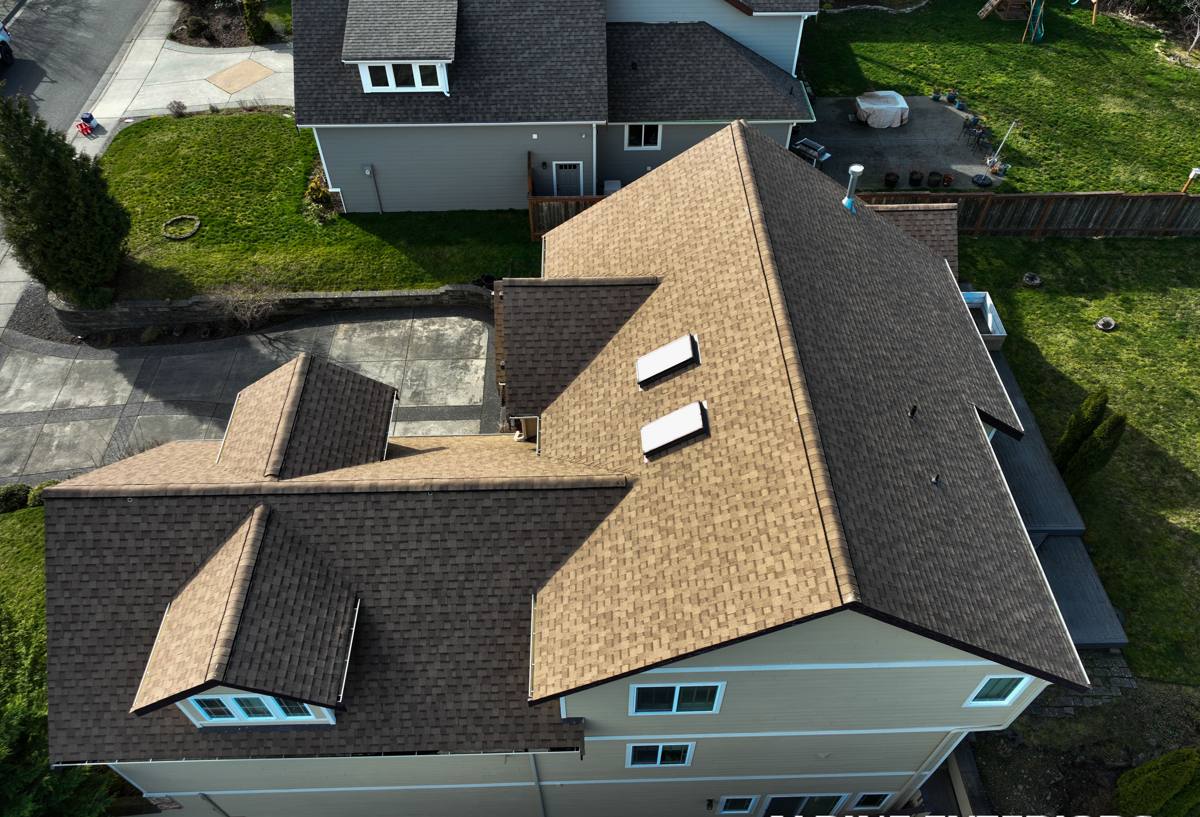
What This Climate Does to Windows Over Time
Salt air and hardware corrosion
Salt air doesn't just affect homes right on the waterfront. It travels on the wind and settles on anything metal — window locks, cranks, screen frames, and especially lower-grade fasteners. Over years, that exposure can pit or corrode hardware that would otherwise last decades, and it accelerates any coating breakdown on aluminum components. This is one reason we're selective about hardware finish and fastener grade on installs in this part of the county.
Wind-driven rain and flashing failure
Rain that falls straight down is a much easier problem to manage than rain that's being pushed sideways into a wall by wind. Marietta gets its share of both, and wind-driven rain is what finds every gap in flashing, every under-caulked joint, and every place where a window was set without proper water management behind the trim. Most of the water damage we find around older windows didn't come from the glass or the frame — it came from water getting behind the assembly through a flashing detail that was never done right in the first place.
Moss season and prolonged moisture
The long wet season that grows moss on roofs and north walls also keeps window sills, sashes, and the wood trim around them damp for extended stretches. Wood that stays wet for weeks at a time is where rot gets its foothold, and it's also where paint and caulk fail fastest. A window installed with the right drainage path and the right materials sheds that moisture instead of holding onto it.
What a Correct Window Installation Actually Involves
A window installation is judged almost entirely on what you can't see once the trim goes back on. The visible parts — the sash, the glass, the lock — are the easy part. The work that determines whether that window is still performing in fifteen years happens underneath.
Tear-out and structural check
Removing the old window is also the best chance to actually see what's been happening in that wall. We check the rough opening, the sheathing, and the framing around it for soft spots, staining, or rot before anything new goes in. Installing a new window into a wet or compromised opening just locks the existing problem in place behind new trim.
Flashing and water management
This is the step that matters most in a climate like this one. Proper flashing directs any water that gets past the exterior cladding back out, rather than letting it pool at the sill or wick into the framing. That means flashing tape or pan flashing at the sill, correctly lapped house wrap at the sides and head, and a drainage path that assumes water will get behind the surface at some point — because eventually, it will.
Air sealing and insulation
Gaps around the window frame need to be sealed with a compatible low-expansion foam or backer rod and sealant — not packed with the wrong material, which can bow the frame or fail to seal fully. This is also where a lot of the comfort and energy improvement homeowners notice after a replacement comes from; a well-air-sealed window stops the draft you feel sitting near it on a windy evening.
Final sealing and trim
Exterior caulking has to be a product rated for the temperature swings and constant moisture cycling this climate produces, applied to a clean, dry surface. Interior trim goes back cleanly, and the window is tested for smooth operation and a tight seal before we call the job done.
Choosing a Window Type for a Marietta Home
Frame material matters more here than it would in a drier, more sheltered inland location. Here's how the common options hold up against salt air, driving rain, and sustained moisture:
| Frame Material | Coastal Durability | Maintenance | Typical Cost |
|---|---|---|---|
| Vinyl | Good — won't corrode or rot, handles moisture well | Low | Lower |
| Fiberglass | Very good — dimensionally stable, resists moisture and salt exposure | Low | Higher |
| Wood-clad | Fair to good — clad exterior helps, but any breach exposes wood to rot | Moderate to high | Higher |
| Aluminum | Fair — prone to corrosion and condensation in salt-air, high-moisture settings | Moderate | Moderate |
We don't push one material on every homeowner. Budget, the home's style, and how exposed a given wall is to weather all factor in. What we do push back on is any product or detail that we know performs poorly in this specific climate, and we'll say so plainly during the estimate rather than let a homeowner find out the hard way ten years down the road.
Our Process, Start to Finish
- Walk-through and measurement: We look at every opening, note existing damage, and measure for an accurate fit rather than a rough estimate.
- Honest assessment: If we find rot, past water intrusion, or a structural issue while we're there, we'll tell you before it becomes a surprise mid-job.
- Written estimate: Materials, labor, and scope spelled out — no vague allowances.
- Careful tear-out: Old windows removed with attention to the surrounding wall assembly, not just the frame.
- Proper flashing and sealing: Done to hold up against wind-driven rain, not just pass a quick visual check.
- Final walkthrough: We test operation, check the seal, and clean up the site before we consider the job finished.
Signs a Marietta Home May Need Window Replacement
- Fogging or moisture between panes of double-glazed glass — a sign the seal has failed
- Soft or discolored wood on the sill, jamb, or trim
- Windows that are difficult to open, close, or lock
- Noticeable drafts near the frame on windy days
- Visible corrosion on hardware, cranks, or metal frames
- Persistent condensation on the inside of the glass in cooler months
- Paint that keeps peeling or bubbling around the frame despite repainting
- A noticeable rise in heating costs without another clear cause
What Affects the Cost of Window Installation
| Factor | Why It Matters |
|---|---|
| Frame material | Vinyl runs lower up front; fiberglass and wood-clad cost more but may last longer in this climate |
| Number of openings | Per-window cost typically drops slightly on larger multi-window jobs |
| Condition of the rough opening | Rot repair or structural work found during tear-out adds cost but shouldn't be skipped |
| Window size and style | Larger units, custom shapes, or specialty operating styles (casement, sliders, bays) cost more than standard sizes |
| Access and exposure | Upper-story or heavily weather-exposed openings can require more preparation and care |
We'd rather walk a homeowner through these factors on-site than throw out a number that doesn't hold up once we see the actual openings.
Why a Crew That Already Works in Marietta Makes a Difference
Window installation isn't a one-size-fits-all trade. A crew that's used to installing in a dry, sheltered climate can do fine work there and still get flashing and sealing details wrong for a place like Marietta, where wind-driven rain and salt air are a fact of life. Working regularly in and around Ferndale and greater Whatcom County means we've seen how windows here actually age — which materials hold up, which details cause callbacks, and which shortcuts show up as problems in five years instead of twenty. That's knowledge you can't get from a spec sheet, and it shows up in the small decisions made throughout the install, not just the finished look.
If you're weighing window replacement for a home in Marietta, we're happy to take a look and give you a straight answer about what your windows actually need — no pressure, no upsell. Reach out for a free estimate using the form below.