 Ferndale Siding
 Marietta Decks Take a Different Kind of Beating
Marietta sits low and close to the water on the edge of Ferndale, and that location shapes what a deck out here goes through year after year. You've got salt-laden air off the bay working into fasteners and metal hardware, driving rain that comes in sideways for weeks at a stretch, and a moss season that can run from October through May in a wet year. None of that is exotic — it's just Whatcom County weather doing what it does — but it means a deck built or repaired without that reality in mind will show problems years before it should.
Most of the deck repair calls we get in this part of Ferndale aren't from one dramatic failure. They're from years of moisture sitting where it shouldn't, fasteners corroding slowly, and moss holding water against wood or composite decking long enough to start real damage. The good news is that almost all of it is preventable or fixable if it's caught before it reaches the framing underneath.
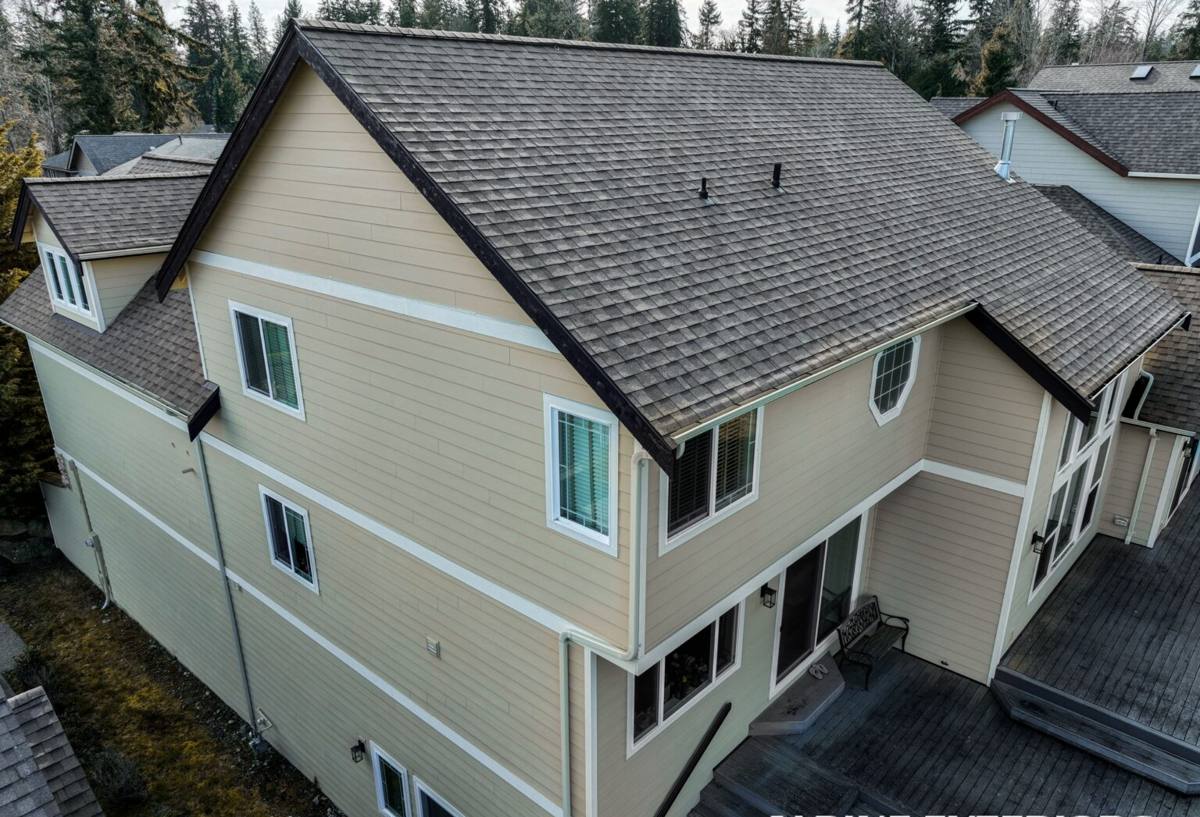
Signs Your Marietta Deck Needs Repair
Not every deck problem is obvious from the surface. Some of the most serious issues hide underneath boards that still look fine from a few feet away. Here's what we tell homeowners to check for, or to have us check for them:
- Boards that feel spongy, springy, or noticeably softer underfoot than the boards around them
- Gaps or movement where the deck ledger board meets the house — a common failure point in wet climates
- Rust streaks below fasteners or visibly corroded screws, nails, or joist hangers
- Persistent green or black staining in the same spots every year, even after cleaning
- Railings or stair posts that wiggle more than they used to
- Gaps opening up between deck boards, or boards cupping/warping
- A musty smell coming from underneath the deck, especially near the house
- Standing water or slow drainage after rain instead of water shedding off the surface
Any one of these on its own might be a minor fix. Several together, especially near the ledger board or support posts, usually means the framing needs a closer look before we touch the surface decking.
Repair or Rebuild?
A deck is worth repairing when the framing — the posts, beams, joists, and ledger connection — is sound and the damage is limited to the visible decking, railings, or isolated rot pockets. It's worth rebuilding when the structural members themselves are compromised, when the deck was undersized or under-fastened for its span to begin with, or when repairs would end up costing close to what a rebuild would anyway. We'll tell you honestly which category your deck falls into — there's no reason to sell a full rebuild when a targeted repair will hold up fine, and no reason to patch something that's structurally tired.
What a Correct Deck Repair Actually Involves
Structural components come first
Before we replace a single board on the surface, we check what's holding the deck up. That means the ledger board attachment to the house (including flashing behind it, which is where a huge share of hidden rot starts), the posts and footings for movement or rot at grade, the beams for sag, and the joists for soft spots or corrosion at the hangers. A deck repair that skips this step and just swaps out worn-looking boards is a cosmetic fix, not a repair — the underlying problem is still there and will keep working on whatever new material gets installed over it.
Decking surface and hardware second
Once the frame is confirmed sound (or repaired where it isn't), we address the decking itself: replacing rotted or split boards, resetting or replacing fasteners with corrosion-resistant hardware appropriate for a marine-air environment, and correcting drainage so water actually leaves the deck surface instead of sitting in low spots. We also look at flashing and any point where the deck meets the house siding, since a deck repair that ignores that transition can create — or leave in place — a path for water into the wall assembly.
Railings and connection points
Loose or wobbly railings are almost always a fastening problem rather than a wood problem, and they're a safety issue as much as a durability one. We check post attachment down to the framing, not just to the surface decking, since a railing that's only screwed into deck boards will eventually fail no matter how new the boards are.
Repairing in Kind vs. Upgrading the Decking Material
When boards need replacing, homeowners usually have a choice: match the existing material or switch to something that handles this climate better. There's no single right answer — it depends on the deck's age, budget, and how much of the surface needs work.
| Material | How it holds up here | Maintenance burden | Best fit |
|---|---|---|---|
| Pressure-treated wood | Reliable if sealed regularly; moss and moisture will find any gap in the finish | Annual cleaning and refinishing recommended | Budget repairs, matching existing wood decks |
| Cedar | Naturally more rot- and insect-resistant, but still needs finish maintenance in this rainfall | Moderate — periodic cleaning and sealing | Homeowners who want a wood look with better natural durability |
| Composite decking | Doesn't rot, resists moss staining better, but quality varies a lot by product and installation | Low — occasional washing | Full or partial resurfacing where long-term upkeep is the priority |
| Older/lower-grade composite | Some early-generation composite products absorb moisture at cut edges and can degrade faster than expected | Depends on product — check manufacturer warranty terms | Repair in kind only if the existing product is performing well |
We'll talk through what's actually installed on your deck before recommending a direction. Mixing materials on a partial repair is sometimes the practical choice, and sometimes it's worth resurfacing the whole deck in one pass so everything ages evenly and the warranty coverage matches across the board.
Moss, Mildew, and the Long Wet Season
Whatcom County's moss season is long enough that it's not really a "season" so much as most of the year. Moss on a deck isn't just cosmetic — it holds moisture against the surface, keeps the wood or composite from drying out between rains, and creates a slick, slippery walking surface. Left alone, it accelerates exactly the kind of rot and staining that leads to a repair call in the first place.
- Sweep debris and organic buildup off the deck regularly through fall and winter, not just in spring
- Keep gutters and downspouts clear so runoff isn't dumping extra water directly onto or under the deck
- Trim back overhanging vegetation that keeps the deck surface shaded and damp
- Clean and reseal wood decking on the schedule the finish product actually calls for, not "whenever it looks bad"
- Check underneath the deck once a year for standing water or blocked drainage paths
None of this is glamorous work, but it's the difference between a deck that needs a repair every few years and one that needs a repair once a decade.
How Our Deck Repair Process Works
- Walk-through and assessment. We inspect the full deck — framing, ledger connection, posts, footings, decking, and railings — not just the spot you called about.
- Honest scope and estimate. You get a clear picture of what's structural, what's cosmetic, and what your real options are, in writing, before any work starts.
- Repair the frame first. Any compromised structural component gets addressed before new surface material goes down over it.
- Surface and hardware work. Damaged boards, fasteners, and flashing get replaced with materials suited to this climate.
- Final check for drainage and attachment. We confirm water sheds properly and every railing and stair connection is solid before we call it done.
What Affects the Cost of a Deck Repair
Deck repair costs vary widely because "deck repair" covers everything from swapping a handful of boards to rebuilding a structural connection at the house. Rather than quote a number that won't actually apply to your deck, here's what drives the price up or down:
| Cost factor | Why it matters |
|---|---|
| Extent of hidden rot at framing | Structural repairs (ledger, joists, posts) cost more than surface board replacement and can't be skipped safely |
| Decking material chosen | Composite generally costs more upfront than pressure-treated wood but less in long-term maintenance |
| Deck size and access | Larger decks and decks with limited underside access take more time and material |
| Railing and stair condition | Code-related railing repairs or replacements add scope beyond the decking surface |
| Existing fastener corrosion | Replacing widespread corroded hardware adds labor even when the wood itself is salvageable |
We give a firm estimate after we've actually looked at the deck — not a phone-quote guess — because the range between a straightforward board swap and a framing repair is too wide to be useful without an inspection.
Why a Crew That Already Works Marietta Matters
A deck repair contractor who works this stretch of Ferndale regularly already knows what the salt air does to fasteners over time, how far the moss and moisture problems tend to extend under a deck before they become visible, and what drainage patterns actually work in a lowland, waterside setting versus a drier lot further inland. That's not something you can fully substitute with a general contractor from out of the area, however capable they are — it's the kind of judgment that comes from repairing decks in this specific microclimate season after season.
It also means we're not guessing at material choices. We know which products and fastening approaches have held up in Marietta's conditions and which ones need extra attention to last, and we'll tell you plainly which is which rather than defaulting to whatever's easiest to install.
Get a Straight Answer on Your Deck
If your deck in Marietta or elsewhere around Ferndale is showing soft spots, corrosion, moss buildup, or a wobble that wasn't there a few years ago, it's worth getting a real inspection before the damage spreads into the framing. We'll give you a free, no-pressure estimate and an honest read on whether you're looking at a repair or something bigger — use the form below to get started.