 Ferndale Siding
 Why a New Roof in Lynden Faces More Than the Average Job
Lynden sits inland from the coast, but "inland" doesn't mean sheltered. Whatcom County's weather doesn't change much as you move a few miles from Ferndale — the same long, wet winters, the same low winter sun angle that keeps north-facing slopes damp for days at a time, and the same marine air moving in off Bellingham Bay and the Strait of Georgia reach Lynden roofs too. A roof here has to hold up to sustained rain events, not just occasional storms, and it has to shed water efficiently for months without a real drying-out period.
The Rain Doesn't Let Up
The issue with Pacific Northwest rain isn't intensity, it's duration. Roofing systems that perform fine in climates with hard, short downpours followed by sun can struggle here, where water sits against underlayment and flashing for extended stretches. Every seam, nail penetration, and transition on a Lynden roof needs to be built assuming it will be wet more often than it's dry for several months of the year.
Moss Isn't Just Cosmetic
Moss season is a real factor in how long a roof lasts here, not just an appearance issue. Moss holds moisture against the shingle surface, works into granule loss over time, and on shaded or tree-lined lots — common around Lynden's farmland and residential streets — it can establish itself within a couple of seasons on a roof that isn't detailed to resist it. A new roof installation is the best point to build in moss resistance, because retrofitting it later is far more limited.
What a Correct New Roof Installation Actually Involves
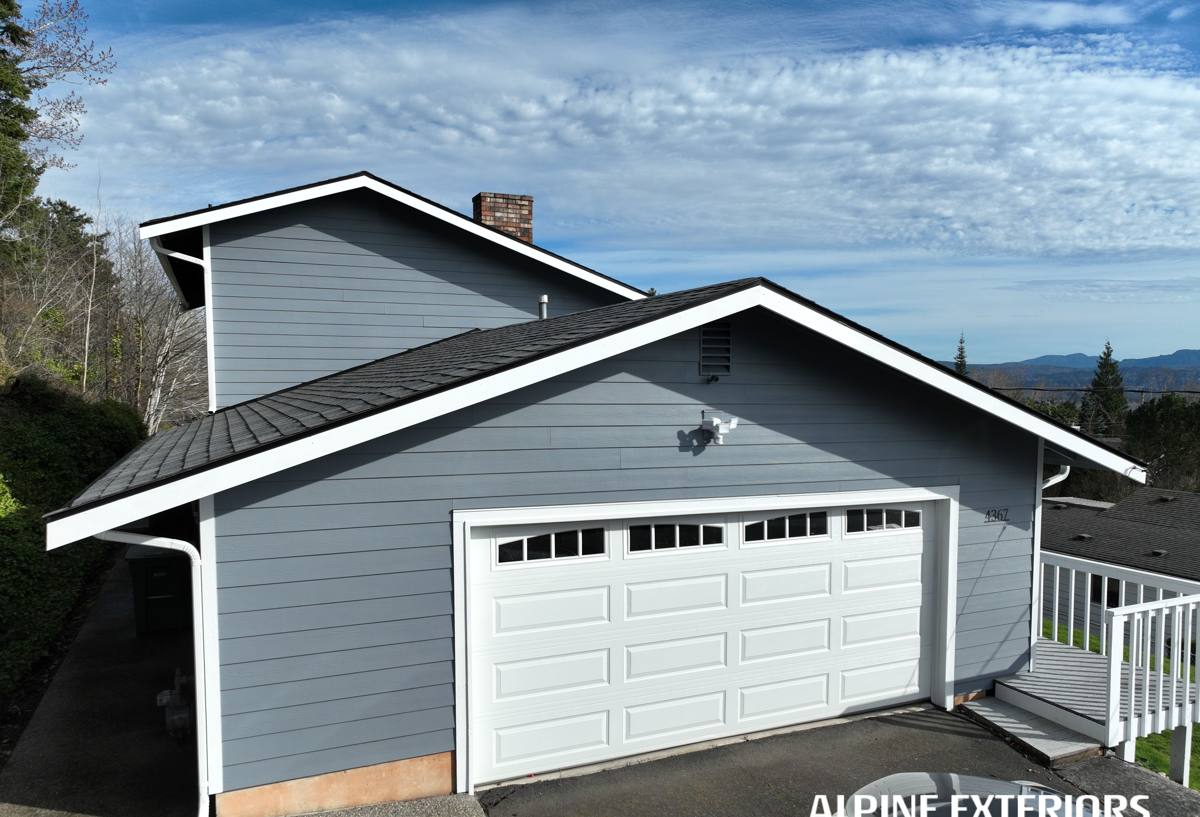
"New roof" gets used loosely. A correct installation is a system of layered components, and skipping or shortcutting any one of them is usually what causes a roof to underperform its expected lifespan — regardless of how good the shingles themselves are.
Tear-Off and Deck Inspection
We remove the existing roofing down to the deck rather than layering over it. That's the only way to actually see the plywood or plank sheathing underneath, which is where moisture damage from years of small leaks tends to hide. Soft, delaminated, or rotted decking gets replaced before anything new goes down — installing new roofing over a compromised deck just guarantees a shorter lifespan for the new material.
Underlayment Strategy for Wet Climates
In a climate like this, underlayment is not a formality. We use ice-and-water shield along eaves, valleys, and any low-slope transitions where water is most likely to back up or pool, and synthetic underlayment across the rest of the deck for a more consistent water barrier than old-style felt paper, which sags and tears more easily during a wet, multi-day install.
Flashing: Where Roofs Actually Fail
Most roof leaks don't come from the field of the shingles — they come from flashing at chimneys, sidewalls, skylights, and roof-to-wall transitions. New flashing, properly stepped and integrated with the underlayment (not just caulked over old metal), is one of the details that separates a roof that lasts from one that leaks within a few years.
Ventilation Balance
A roof needs balanced intake and exhaust ventilation to manage moisture from inside the attic, not just water from outside. Poor ventilation traps humid air against the underside of the deck, which accelerates rot and can void shingle warranties. We size and balance ridge and soffit ventilation as part of the installation, not as an afterthought.
Material Options for Lynden Homes
There's no single "best" roofing material — the right choice depends on budget, roof pitch, how much shade and moss exposure the property has, and how long the homeowner plans to stay in the house. Here's how the common options compare for this climate:
| Material | Typical Lifespan | Moss/Moisture Resistance | Maintenance |
|---|---|---|---|
| Standard 3-tab asphalt | 15–20 years | Fair — needs algae-resistant granules to hold up | Low, but shorter overall life in wet climates |
| Architectural (dimensional) shingles | 25–30 years | Good, especially with algae-resistant (AR) granules | Low |
| Standing seam metal | 40–50+ years | Very good — sheds moisture fast, little surface for moss to grip | Very low |
| Cedar shake | 20–30 years with upkeep | Poor without regular treatment — absorbs and holds moisture | High — periodic treatment and moss removal required |
For most Lynden homes, we steer people toward architectural asphalt with algae-resistant granules or standing seam metal. Cedar shake can still be the right look for a specific home, but we're upfront that it demands ongoing maintenance in this climate to avoid the moisture and moss problems that shorten its life — that's a maintenance-burden trade-off worth knowing before committing to it, not a reason to rule it out entirely.
Our New Roof Installation Process
- On-site inspection and estimate. We walk the roof (or the deck, if it's already stripped) in person, check attic ventilation and any visible deck damage, and give you a written scope and price — not a phone-quote guess.
- Material selection. We go over the options that make sense for your roof's pitch, sun/shade exposure, and budget, including realistic lifespan expectations for each.
- Tear-off. Full removal of the old roofing material and disposal, with the deck inspected as it's exposed.
- Deck repair. Any soft or damaged sheathing is replaced before underlayment goes down — this is called out separately in your estimate rather than buried as a surprise change order.
- Underlayment and flashing. Ice-and-water shield at vulnerable areas, synthetic underlayment across the field, and new flashing at every penetration and transition.
- Roofing installation. Materials installed to manufacturer nailing and exposure specs, which is what keeps wind and warranty ratings intact.
- Ventilation and cleanup. Ridge and intake ventilation balanced, then a full magnetic sweep and site cleanup before we call the job done.
What Drives the Cost of a Lynden Roof Replacement
We won't quote a number without seeing the roof, but the same handful of factors move the price on almost every job:
- Roof size and pitch — more square footage and steeper slopes both add labor time.
- Number of existing layers — a roof with two layers already on it costs more to tear off than a single layer.
- Deck condition — hidden rot found during tear-off means added material and labor to replace sheathing.
- Material choice — asphalt, metal, and cedar sit at different price points, as shown above.
- Roof complexity — valleys, dormers, skylights, and chimneys all add flashing work.
- Access and staging — steep sites or limited driveway access can affect equipment and dumpster placement.
Moss, Algae, and Long-Term Care After Installation
A new roof still needs a little ongoing attention in this climate. Keeping gutters and valleys clear of needles and debris prevents standing water from sitting against the shingle edge. Zinc or copper strips installed near the ridge are a low-maintenance option that helps slow moss regrowth over time as rain washes trace metal down the roof surface. We'd rather set a homeowner up with this kind of passive prevention than have them relying on pressure washing, which can strip granules and shorten shingle life if it's done aggressively or too often.
Signs a Lynden Home May Need a New Roof, Not a Repair
Not every roof problem calls for full replacement — but these are the signs that usually mean patching won't be a lasting fix:
- Bald spots or heavy granule loss in the gutters
- Shingles that are curling, cupping, or cracking across large sections
- Moss mats thicker than about half an inch across multiple areas
- Daylight, staining, or damp sheathing visible from inside the attic
- A roof that's 20–25+ years old, regardless of how it looks from the ground
- Repeated leak repairs in different spots over the past couple of years
- Any visible sagging along the roofline or deck
If more than one or two of these apply, it's worth getting an inspection before another wet season adds to the damage.
Why Hiring a Crew That Already Works Lynden and Whatcom County Matters
A roofing crew that works this area regularly already knows how local building departments handle permitting, what wind and rain exposure actually does to roofs here versus drier climates, and how to sequence a tear-off around a forecast that can change fast. That local familiarity shows up in fewer surprises during the job and in warranty support that doesn't disappear once the invoice is paid — we're not driving in from out of the area for a one-time job, we're still here if something needs a follow-up look.
If your Lynden home is due for a new roof, or you're not sure whether repair or replacement makes more sense, we're happy to take a look. Fill out the form below for a free, no-pressure estimate — we'll walk the roof, answer your questions honestly, and give you a written scope so you know exactly what you're deciding on.