 Ferndale Siding
 Why Sudden Valley Is a Different Kind of Siding Job
Sudden Valley sits under heavy tree cover — fir, cedar, and hemlock canopies that shade roofs and walls for most of the day. That shade is part of what makes the community beautiful, and it's also exactly what makes siding fail early if it isn't the right product installed the right way. Walls that don't get direct sun stay damp longer after every rain. Damp walls in Whatcom County aren't a once-a-week problem — they're a fall-through-spring reality, with long stretches of driving rain punctuated by the kind of salt-tinged coastal air that moves inland off the Strait during winter storm systems.
Put those two things together — persistent shade and persistent moisture — and you get a long moss season. Moss doesn't just look bad on a wall or roofline. It holds water against whatever it's growing on, and if that surface is a wood-based siding product, moisture-holding organic growth is a slow, steady invitation to rot at seams, butt joints, and trim.
None of this means Sudden Valley is a bad place to own a home with wood-look siding — it means the siding has to be chosen and installed with this specific combination of shade, moisture, and moss in mind. That's the whole focus of this page.
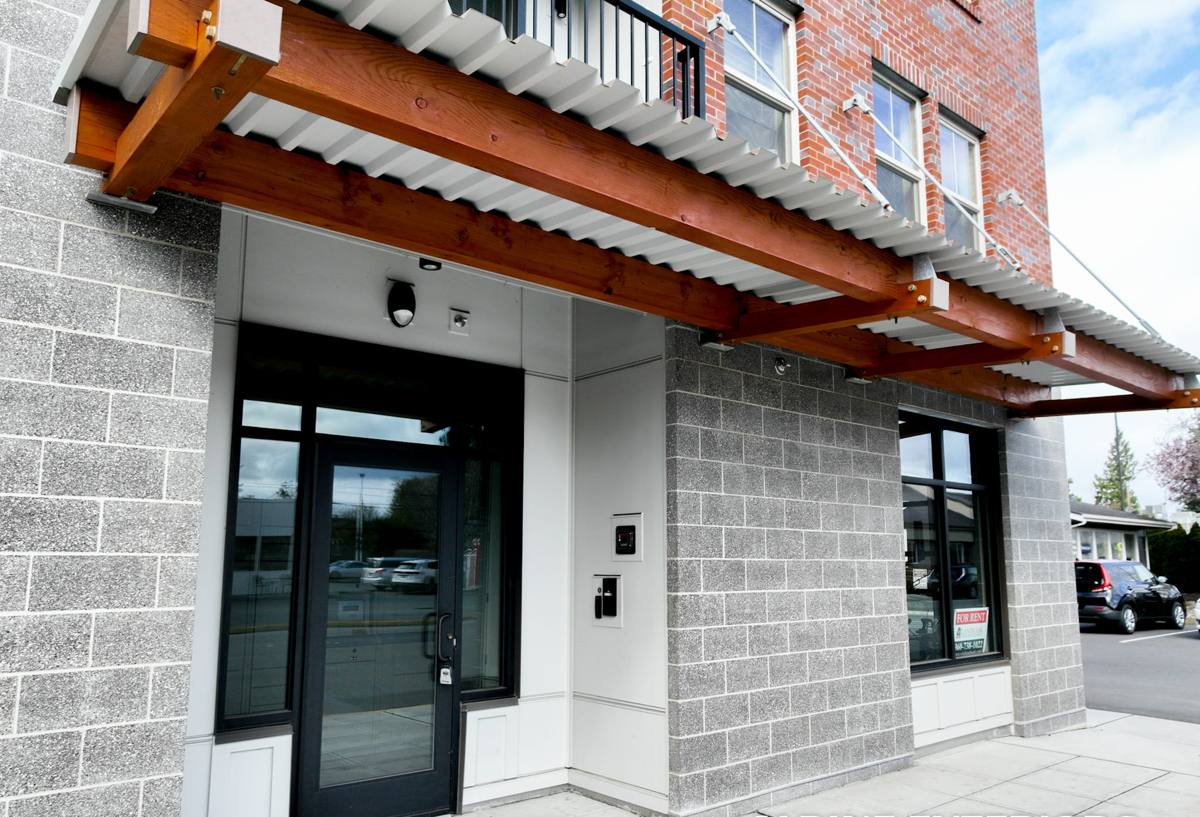
What Siding Actually Has to Survive Here
Before talking about products, it's worth being specific about what's actually working against a wall in this part of Whatcom County:
- Extended damp cycles — shaded walls can stay wet for days after a storm rolls through, instead of drying out in an afternoon like a south-facing, sun-exposed wall would.
- Moss and algae colonization — north- and east-facing walls, and anything under a tree canopy, will grow moss if the material and finish allow it a foothold.
- Driving, wind-pushed rain — Pacific storm systems don't just fall straight down; they push rain sideways into trim, corners, and butt joints, which is where most siding failures actually start.
- Debris load — needles, cones, and leaf litter collect in gutters and against lower siding courses, holding moisture right where wall assemblies are already the most vulnerable.
- UV and moisture cycling on exposed sections — even in a shaded lot, whatever wall does get intermittent sun goes through repeated wet-dry cycling that stresses paint and caulking over the years.
A siding product that handles dry, sunny climates well isn't automatically the right call here. What matters is how a product behaves after the tenth or the hundredth wet-dry cycle, not the first.
Why We Install Only James Hardie Fiber Cement
We don't install LP SmartSide, vinyl, Cemplank, Allura, primed spruce, or cedar. That's a deliberate standard, not a lack of options, and it's worth explaining honestly rather than just asserting it.
Vinyl is inexpensive and low-maintenance in the sense that it doesn't need painting, but it's a poor fit for a heavily shaded, moss-prone lot — it doesn't hold up structurally to the same standard as fiber cement over decades, and it can't be repainted to refresh a look once it fades or chalks. Wood-based composite siding (like LP SmartSide) and real wood or primed spruce products are engineered wood or solid timber at their core — no matter how well they're treated, wood-based cores are the one thing that doesn't want prolonged moisture contact, and prolonged moisture contact is Sudden Valley's default condition for a good chunk of the year. Other fiber cement brands make a reasonable product, but we've standardized on James Hardie specifically because of how the company engineers for regional moisture exposure, not because competing fiber cement is bad.
Fiber cement, done right, is non-combustible — a real consideration on a wooded lot where defensible space and fire-resistant building materials matter — and it doesn't have a wood core to feed rot once moss or debris holds water against it. James Hardie backs its siding with a factory-applied ColorPlus finish (so the color and protective coating are baked on under controlled conditions, not applied on a ladder in variable weather), climate-engineered HZ product formulations built for regions that see sustained damp weather, and a strong transferable warranty that matters if the home changes hands. That combination is why it's what we put on homes in this area, full stop.
What a Correct Installation Actually Involves
The drainage plane comes first
Fiber cement siding is only as good as what's behind it. A correctly built wall assembly includes a weather-resistant barrier and a drainage gap that lets any moisture that does get behind the siding find its way back out instead of sitting against the sheathing. On a shaded, moss-prone lot, this step matters more than almost anywhere else — it's the difference between a wall that dries out and one that slowly rots from the inside.
Flashing at every intersection
Head flashing over windows and trim, kick-out flashing where a roofline meets a wall, and proper flashing at deck ledgers and other penetrations are non-negotiable. These are also the exact spots where debris and standing moisture from tree cover cause the most damage over time if flashing was skipped or done poorly.
Clearance and gaps
Hardie's installation instructions call for minimum ground clearance and specific gaps at butt joints, corners, and trim — with the right caulk or sealant used only where the manufacturer specifies it, not everywhere as a catch-all. Over-caulking is almost as common a mistake as under-caulking, and both trap or redirect water the wrong way.
Fastening and product match
Hardie makes climate-engineered HZ formulations specifically for regions like ours that see sustained wet weather, and the fasteners, nailing pattern, and panel spacing all have to match the product and the wall assembly underneath. Skipping any of this doesn't show up as a problem on install day — it shows up three, five, or ten years later as premature paint failure, buckling, or moisture intrusion.
Our Process for a Sudden Valley Project
- Site walk and assessment — we look at tree cover, sun exposure by wall, existing moss or algae growth, gutter condition, and any soft spots or visible damage before we ever talk product.
- Tear-off and sheathing check — old siding comes off and we inspect the sheathing underneath. Moss-covered siding often hides moisture damage that isn't visible from outside; we address rot or soft sheathing before anything new goes up, not after.
- Weather barrier and drainage plane — installed or corrected to current best practice, including flashing at every window, door, and roof-wall intersection.
- Hardie installation to spec — panels, laps, or shingle siding installed following James Hardie's published instructions for gaps, fastening, and clearance, not a generalized "how we always do it" approach.
- Trim and detail work — corners, fascia, and any transition points get the same attention as the field siding, since these are where failures concentrate.
- Final walk-through and warranty registration — we go over the finished work with the homeowner and make sure the manufacturer's warranty is properly registered.
What Drives Cost on a Job Like This
Every Sudden Valley home is different, but the same factors move the price up or down on most fiber cement projects in this area:
| Cost Factor | Why It Matters Here |
|---|---|
| Home size and wall area | More square footage means more material and labor, straightforwardly. |
| Existing sheathing condition | Moss-covered walls sometimes hide rot; repair work adds cost but is essential to do right. |
| Siding profile (lap, shingle, or panel) | Shingle and detailed profiles take longer to install than plain lap siding. |
| Trim and architectural detail | Homes with more corners, dormers, or trim require more flashing and cutting work. |
| Site access | Tree cover, slopes, and tight lot lines common in Sudden Valley can affect staging and scaffolding needs. |
| Tear-off scope | Removing old wood or composite siding versus siding over a simpler surface changes labor time. |
Choosing a Crew That Already Works This Area
A siding crew that mostly works sunny, open lots in town isn't automatically prepared for a shaded, moss-heavy property. Before hiring anyone for a Sudden Valley project, it's worth asking:
- Have they installed fiber cement on heavily shaded or wooded lots before, and can they describe how they handle the drainage plane differently for that condition?
- Do they follow James Hardie's published installation instructions specifically, or a generic "siding install" process used for every brand?
- Will they inspect and address sheathing condition before installing new siding, or just cover over whatever is underneath?
- How do they handle flashing at roof-wall intersections and around trim — can they walk through it without being asked twice?
- Is the manufacturer's warranty properly registered after the job, and is it transferable if the home is sold?
- Are they licensed and insured to work in Whatcom County, and can they provide proof without hesitation?
Living With Fiber Cement Siding on a Shaded, Wooded Lot
Correctly installed Hardie siding is genuinely low-maintenance, but "low-maintenance" doesn't mean "no maintenance" on a lot like this. A few habits go a long way:
- Keep gutters clear of needles and debris so water isn't overflowing down the face of the siding.
- Trim back branches and foliage that keep a wall in constant shade or that brush directly against the siding.
- Rinse visible moss or algae buildup gently rather than pressure-washing aggressively, which can force water behind panels or trim.
- Check caulking at trim and butt joints every year or two, since this is the first thing to wear in a wet climate and the easiest to touch up before it becomes a bigger problem.
If you're weighing a siding replacement on a Sudden Valley property, we're happy to walk the property, look at what your walls are actually dealing with, and put together a straightforward, no-pressure estimate — fill out the form below to get started.