 Ferndale Siding
 Why Siding Installation in Fairhaven Takes a Different Approach
Homes in and around Fairhaven sit close to the water, which means the siding on those homes deals with a combination of stresses that inland houses simply don't face: salt-laden air moving in off the Salish Sea, wind-driven rain that hits walls sideways instead of straight down, and a moss season that can stretch for more than half the year in Whatcom County's marine climate. None of that is a reason to panic about your siding — it's a reason to be deliberate about what goes on the wall and how it's installed. Siding here isn't just curb appeal. It's the first and most exposed layer of your home's moisture management system, and in this climate a mediocre product or a rushed install shows its problems in years, not decades.
We install siding specifically with that reality in mind. That means starting with a product engineered for wet, coastal climates, and installing it with the flashing, drainage, and fastening details that actually matter here — not just the details that would pass in a drier part of the state.
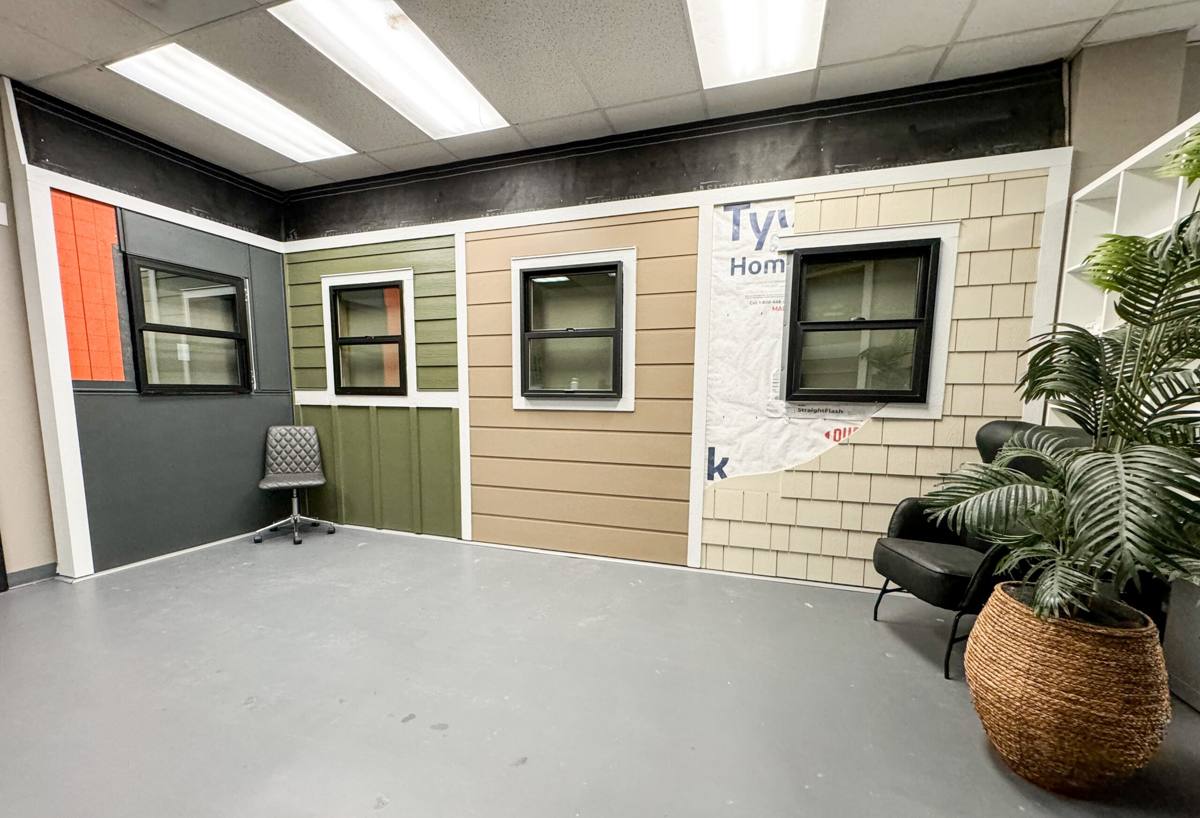
What Salt Air, Rain, and Moss Actually Do to Siding Over Time
Salt and Wind
Airborne salt is corrosive to fasteners and hardware, and it accelerates the breakdown of finishes that aren't built to handle it. Combine that with the wind that comes off open water and you get siding that takes a harder, more constant beating than the same product would on a sheltered inland lot. Wind-driven rain also finds its way into gaps and seams that would stay dry in a calmer setting, which is why the quality of flashing and joint work matters more here than the brand name on the product itself.
Moisture and Moss
Whatcom County's long damp stretches keep exterior surfaces wet for extended periods, and shaded or north-facing walls can stay damp for days after a storm passes. That's exactly the environment moss and algae need to take hold. On a surface that absorbs moisture — bare wood, some engineered wood products, or a field-painted finish that's starting to fail — moss doesn't just sit on top, it holds water against the surface and speeds up rot underneath. On a dimensionally stable, factory-finished product, moss and algae are far easier to rinse off before they ever get a foothold.
Why We Install Only James Hardie Fiber Cement Here
We standardized on James Hardie fiber cement siding for every job we do, including Fairhaven, and the reasoning comes straight from what this climate does to a wall over time. Fiber cement is dimensionally stable — it doesn't expand and contract with temperature and humidity swings the way wood and vinyl do, which matters when a home is cycling through wet mornings and windy afternoons for months at a stretch. It's non-combustible, which is a real advantage regardless of climate. And Hardie's ColorPlus finish is baked on at the factory under controlled conditions, which gives it more consistent resistance to fading, moisture staining, and moss growth than a coat of paint applied on site ever will.
Hardie also builds its products by climate zone. The HZ5 product line is engineered for regions that see the kind of freeze-thaw cycling, rain, and humidity that Whatcom County gets, rather than a one-size-fits-all formulation. Paired with a transferable manufacturer warranty, that gives homeowners a siding system that's been engineered for exactly the conditions Fairhaven throws at it — not just a product that happens to look good going up.
What a Correct Fairhaven Siding Installation Actually Involves
The siding itself is only part of the system. In a coastal, high-moisture climate, the installation details are what separate siding that performs for decades from siding that fails early even though the product itself was a good one.
Water-Resistive Barrier and Drainage Gap
Every installation starts with a continuous water-resistive barrier behind the siding, lapped correctly so water sheds outward and down rather than working its way behind the panel. Behind that, a drainage gap — a rain screen — gives any moisture that does get past the siding a path to drain and air to circulate so the wall can dry. In a climate with as much sustained rain as this one, that gap is not optional detailing; it's the difference between a wall that dries out between storms and one that stays damp.
Flashing and Fastening
Windows, doors, roof-to-wall transitions, and any penetration through the siding are the places water actually gets in. Correct flashing at each of those points, installed in the right order relative to the water-resistive barrier, is where most premature siding failures actually start when it's missing or done out of sequence. Fastening matters too — Hardie specifies fastener type, spacing, and placement for HZ5 climate zones, and following that spec (rather than a generic pattern) is part of what keeps panels secure through wind events without splitting or working loose over time.
Factory Finish and Caulking Discipline
ColorPlus-finished siding is designed to need very little field caulking — the factory finish already seals and protects the face and edges of the board. We caulk where the product is designed to be caulked, with a quality sealant, and we don't over-caulk joints that are meant to be left as designed drainage or expansion points. Over-caulking is a common shortcut that traps moisture instead of releasing it.
Our Installation Process, Start to Finish
- Assessment: We walk the exterior, check for existing moisture damage, and evaluate wall orientation and exposure — a south wall that catches wind-driven rain gets treated differently than a sheltered wall.
- Tear-off and sheathing inspection: Old siding comes off and we inspect the sheathing underneath for rot or soft spots before anything new goes up.
- Repair: Any damaged sheathing or framing gets repaired or replaced — new siding over compromised sheathing just hides a problem instead of solving it.
- Water-resistive barrier and rain screen installation: Installed continuous and properly lapped, with the drainage gap built in.
- Flashing: Windows, doors, and transitions flashed before siding goes over them.
- Siding installation: James Hardie panels or lap siding installed to Hardie's HZ5 fastening and clearance specifications.
- Trim and detail work: Corner boards, trim, and joints finished and sealed where the system calls for it.
- Final inspection and cleanup: We walk the job with you, and the site is cleaned up before we leave.
Cost Factors for a Fairhaven Siding Project
Every home is different, and we'll only give you real numbers after a walk-through, but these are the factors that typically move a siding project's cost up or down:
| Factor | How It Affects the Job |
|---|---|
| Home size and wall complexity | More corners, dormers, and cutouts mean more labor and trim work per square foot |
| Condition of existing siding and sheathing | Rot or moisture damage found during tear-off adds repair scope before new siding can go on |
| Siding profile chosen | Lap siding, panel systems, and shingle-style products differ in material and labor cost |
| Trim and architectural detail | Corner boards, window trim, and custom detailing add time and material |
| Site access | Tight lots, multiple stories, or limited staging space can affect labor time |
Signs Your Current Siding Is Already Losing the Battle
If you're not sure whether it's time to replace siding versus repair it, these are the signs worth taking seriously in this climate:
- Moss or algae staining that keeps coming back within weeks of cleaning
- Soft, spongy spots or visible bubbling under the paint
- Boards that are cupping, warping, or separating at the seams
- Gaps opening up at corners, seams, or around windows
- A musty smell near exterior walls, or visible mold on interior trim near the siding line
- Noticeably higher heating bills without another clear cause
Any one of these on its own might just need a repair. Several at once, especially on a wall that takes the brunt of the weather, usually means the siding system itself has stopped doing its job.
Maintenance After Installation
James Hardie siding is low-maintenance, not zero-maintenance. In this climate we recommend an occasional rinse to clear salt residue and early moss growth before it gets established, keeping gutters and downspouts clear so water isn't dumping down the wall, and a quick visual check of caulked joints every year or two. That's a small amount of upkeep compared to what wood or vinyl siding typically demands to stay looking and performing well out here.
Why Local Experience in Whatcom County Matters
A crew that already works this area knows which walls in Fairhaven and Ferndale take the worst of the wind and rain, how long moss season actually runs here, and how to sequence a tear-off and install around the wet part of the year so exposed sheathing isn't sitting open during a storm. That's not something you get from a crew that mostly works drier inland areas and treats every job the same way. Local experience shows up in the small decisions — where extra flashing attention is warranted, which walls need closer inspection during tear-off, how to schedule around the weather — that add up to siding that actually holds up here.
If you'd like a straightforward, no-pressure look at your home's siding and what it would take to do it right, we're happy to walk the property with you and give you a real estimate — no obligation, just an honest assessment.