 Ferndale Siding
 Building a Deck That Actually Holds Up Near Fairhaven
Fairhaven sits close enough to the water that homes here live with a genuine marine climate year-round: salt-laden air, wind-driven rain that gets pushed sideways into structures, and a wet season that stretches long enough to grow moss on almost anything that stays damp. A deck built the way it would be built in a dry inland town does not last here. We've built and repaired decks throughout the Ferndale and greater Whatcom County area long enough to know exactly which shortcuts fail first in this climate, and we build around them from the start.
This page is about one thing: what a custom deck needs to hold up in the Fairhaven area, what a correct build actually involves, and how we approach the job from first visit to final walkthrough.
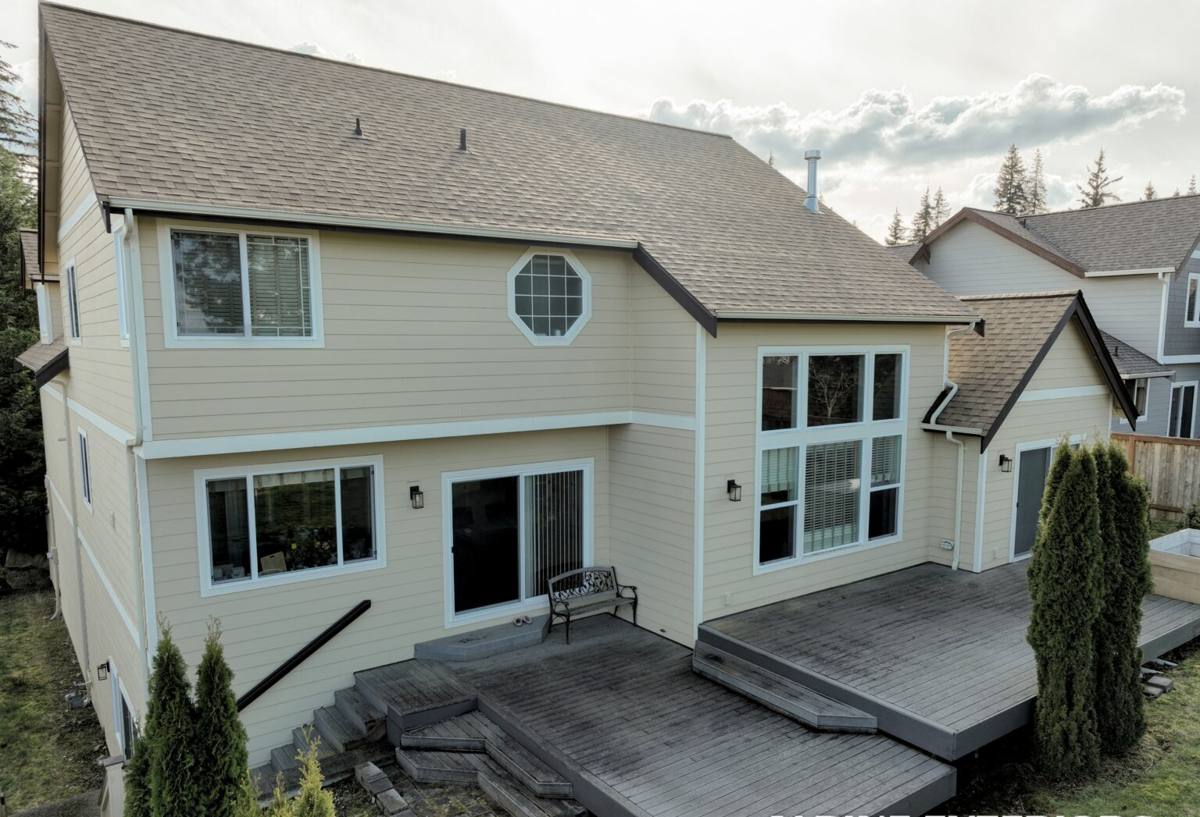
What Coastal Whatcom County Does to an Ordinary Deck
Salt Air and Corrosion
Airborne salt doesn't just affect boats and gutters. It accelerates corrosion on any metal fastener, bracket, or connector that isn't rated for it. A deck built with standard interior-grade screws or unprotected joist hangers will show rust streaks and weakened connections years before an identical deck built inland. The failure is usually invisible until it isn't — a loose railing post or a squeaking joist is often the first sign that hardware underneath has already been corroding for a while.
Driving Rain and Water Intrusion
Rain that falls straight down is manageable. Rain that gets driven sideways by wind off the water finds every gap in flashing, every unsealed fastener hole, and every spot where a ledger board meets the house without a proper water break. Most rot we find in older decks in this area doesn't start in the decking boards — it starts at the ledger board connection to the house, where water has been getting behind the flashing for years.
Moss and Constant Dampness
Whatcom County's wet season runs long, and shaded, low-airflow decks stay damp for weeks at a stretch. Moss doesn't just look bad — it holds moisture against the decking surface, which speeds up wood decay and turns boards slick and dangerous underfoot. Composite and PVC decking resist rot but are not immune to moss growth on the surface; they just don't decay because of it the way wood does.
What a Correctly Built Deck Needs Here
| Component | Standard approach | What we do for this climate |
|---|---|---|
| Ledger board attachment | Basic flashing, caulk seal | Self-adhering flashing membrane behind and over the ledger, with a proper water-shedding gap where possible |
| Fasteners & hardware | Standard exterior-rated screws | Stainless steel or heavy hot-dip galvanized hardware rated for coastal/marine exposure |
| Joist protection | Bare treated lumber | Joist tape over the top edge of every joist to stop water from soaking into end grain and fastener holes |
| Footings | Minimum-depth concrete piers | Footings sized and set to local frost depth and soil conditions, inspected before backfill |
| Decking surface | Owner's preference only | Material matched to sun/shade exposure, airflow, and how much upkeep the owner actually wants to do |
Choosing Decking Material for Salt Air and Moss Season
There's no single "best" decking material — there's the right material for a given deck's exposure, budget, and how much maintenance the owner is willing to do. Here's how the common options actually perform in this climate.
| Material | Moss/moisture behavior | Maintenance | Honest trade-off |
|---|---|---|---|
| Pressure-treated wood | Absorbs moisture; moss can take hold in shaded, damp spots | Needs periodic cleaning and re-sealing | Lowest upfront cost, but shortest service life if maintenance lapses |
| Cedar | Naturally moisture-resistant but still organic — moss and mildew can develop without airflow | Needs regular sealing/staining to hold its look | Attractive and workable, but demands consistent upkeep near the water |
| Composite decking | Won't rot, but moss and algae can still grow on the surface film in shaded areas | Occasional washing; no staining or sealing | Higher upfront cost, much lower long-term labor |
| PVC decking | Fully moisture-resistant core; surface can still grow moss if never cleaned | Lowest maintenance of the group | Highest upfront cost of common options |
We don't push one product line over another as a rule — we walk the site, look at sun exposure and drainage, and tell you honestly which material fits that specific spot and your maintenance tolerance.
A Quick Gut-Check on Material Fit
- Deck is mostly shaded and near landscaping that stays damp — favor composite or PVC, or commit to real maintenance if going with wood
- Deck gets good sun and airflow most of the day — wood or cedar can perform well with routine care
- Deck will see heavy furniture, grills, or planters that sit in one spot for months — prioritize a surface that doesn't trap moisture underneath those items
- Budget is the deciding factor — pressure-treated wood with upgraded coastal-rated hardware is a legitimate, honest starting point
Substructure and Hardware: Where the Real Failures Start
Homeowners naturally focus on the decking surface because that's what they see and walk on. But in our experience, the substructure — ledger connection, joists, beams, footings, and every piece of hardware holding them together — is where coastal decks actually fail. A beautiful composite deck surface sitting on corroding standard hardware and an unflashed ledger is a deck that's failing from underneath while looking fine on top. We treat the substructure as the part of the job that determines whether the deck lasts 10 years or 30, and we don't cut corners there to save money on a part nobody sees at handoff.
Drainage and Layout Choices That Cut Down on Moss
A lot of moss and moisture problems on decks are baked in at the design stage, not caused by bad luck. Board spacing that allows water to drain through rather than pool, a slight slope away from the house, gaps that keep airflow moving under low decks, and avoiding solid skirting that traps damp air underneath all reduce how much moss and mildew take hold over a wet Whatcom County winter. When we design a deck for this area, drainage and airflow are part of the layout conversation from day one — not an afterthought once the deck is already damp two winters in.
Permits and Structural Requirements
Deck projects in this area typically require a permit once you're past a certain size or height off grade, and inspections usually cover footing depth, ledger attachment, and guardrail/stair details before the decking goes down. Guardrails, baluster spacing, and stair rise-and-run all need to meet current building code — this isn't optional trim work, it's what keeps the deck safe and keeps you covered if you ever sell the house. We handle the permit process as part of the job rather than leaving you to navigate it, and we build to pass inspection the first time, not to squeak by.
Our Process for a Fairhaven-Area Deck Project
- Site visit — we look at sun exposure, drainage, soil, existing structure (if replacing a deck), and how the space will actually be used.
- Design and material selection — we walk through material options honestly, including maintenance expectations, and settle on a layout that accounts for drainage and airflow.
- Written estimate — a clear scope and price range before any work starts, so there are no surprises mid-project.
- Permitting — we prepare and submit what's needed and coordinate inspections at the right stages.
- Build — footings, framing with coastal-rated hardware and flashing, then decking, railings, and stairs.
- Final walkthrough — we check the deck with you, cover basic care, and answer questions before we consider the job done.
What a Fairhaven-Area Deck Typically Costs
Deck pricing depends on size, height off grade, material, railing style, and site access — a low deck off a walkout basement is a different job than an elevated deck with stairs and custom railings. As a broad range, expect pressure-treated wood decks to sit at the lower end of the cost spectrum, cedar in the middle, and composite or PVC decks at the upper end due to material cost, even though labor costs are often similar across materials. We give firm, itemized numbers after seeing the site — not before.
Maintenance Checklist for a Coastal Deck
- Sweep debris and standing leaves off the deck regularly, especially in fall and winter
- Wash the surface at least once or twice a year to remove early moss and algae before it takes hold
- Check railing posts and stair stringers annually for looseness — a sign hardware may be corroding
- Keep planters and heavy furniture from sitting in one spot for months without moving them
- Reseal or restain wood decking on the schedule the product actually requires, not just when it looks bad
- Clear gutters and downspouts near the deck so runoff isn't draining directly onto or under it
Why Hire a Crew That Already Works This Area
A deck built by a crew unfamiliar with coastal Whatcom County conditions can look identical to one built correctly — until the first few winters of driving rain and salt air find every shortcut. We've worked on homes throughout Ferndale and the surrounding communities, including areas like Fairhaven that sit close to the water, and we build every deck assuming it has to survive that climate, not a milder one. That means coastal-rated hardware as standard, real flashing at every ledger connection, and material recommendations based on what actually holds up here — not just what's cheapest to install.
If you're planning a new deck or need an honest look at whether an existing one is holding up, we're glad to come take a look. Reach out for a free, no-pressure estimate using the form below.