 Ferndale Siding
 Siding Repair Built for Everson's Climate, Not a Generic Checklist
Everson sits inland in Whatcom County's low-lying river-valley farmland, but "inland" doesn't mean sheltered. Weather systems roll in off the water and push through the whole county, so Everson homes deal with the same long, wet winters, humid summers, and moss-friendly shade as houses closer to the coast. Add driving rain that comes in sideways during winter storms and a marine-influenced air that stays damp for months at a time, and you get a climate that is genuinely hard on exterior siding — especially siding that was installed without much thought given to drainage, ventilation, or the specific failure points of the material.
A siding repair here isn't just "find the crack and caulk it." It's understanding why that crack formed in the first place, whether moisture has already gotten behind the surface, and whether the repair will actually hold up through another Whatcom County winter or just look fine until spring. That's the standard we hold every repair to, and it's why we treat Everson repair calls differently than a quick patch-and-go visit.
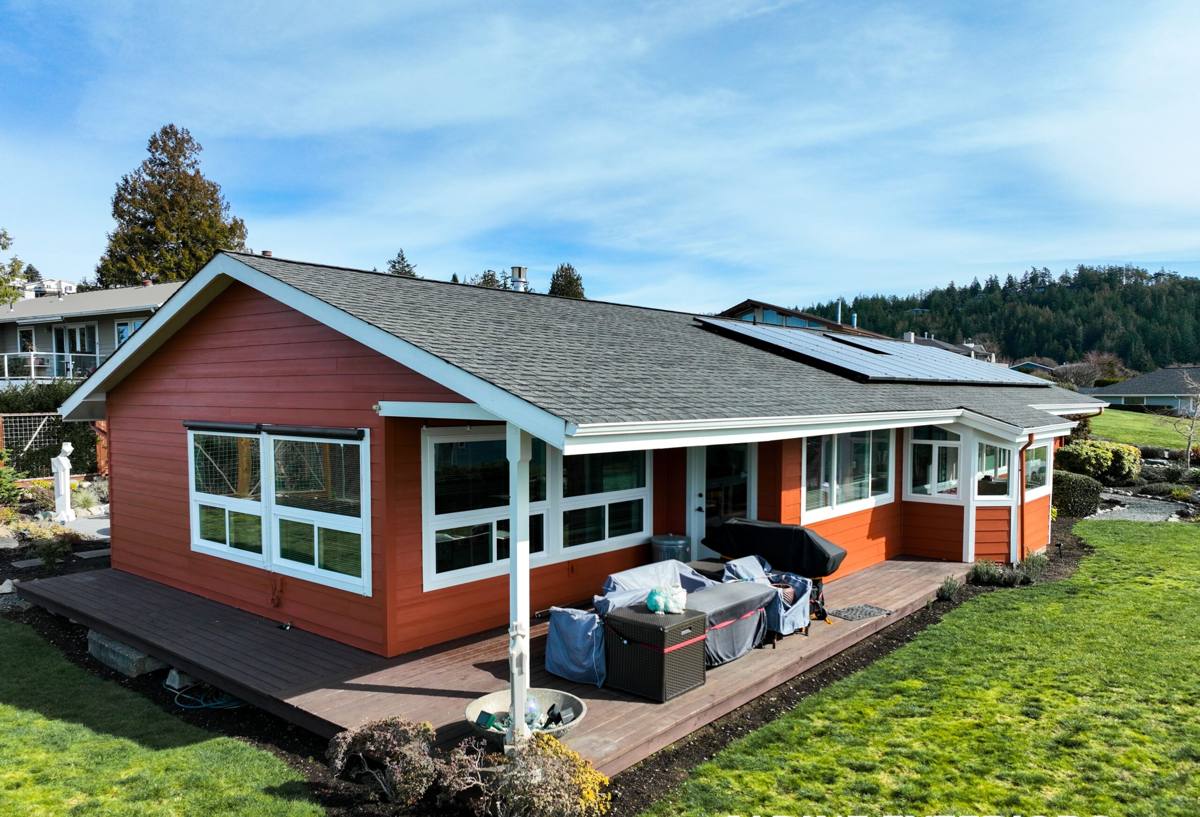
What Whatcom County Weather Does to Siding Over Time
Moisture that doesn't dry out fast
Everson doesn't get the intense downpour-and-clear-out storms of other climates — it gets long stretches of steady, low-intensity rain and overcast days. That means any water that finds its way behind siding, into a seam, or under a piece of trim has a long window to sit there before conditions are dry enough to let it evaporate. Materials that absorb moisture (rather than shed it) pay for that in swelling, delamination, or rot.
A long moss season
Shaded walls, north-facing exposures, and tree-lined lots in and around Everson stay damp far longer than open, sun-exposed elevations. That's exactly what moss and algae need to take hold. Once organic growth establishes itself on a siding surface, it holds even more moisture against the material and accelerates whatever damage was already starting underneath.
Salt-tinged, driving rain
Storms pushing through the county carry salt-laden marine air well beyond the immediate coastline, and wind-driven rain forces water into laps, joints, and fastener penetrations that would stay dry in calmer weather. Over years, that combination degrades caulking, corrodes fasteners, and finds every weak point in a siding installation.
Signs an Everson Home Needs Siding Repair, Not Just a Repaint
Paint can hide a lot of problems temporarily, which is part of why siding damage in this climate often gets discovered later than it should. Homeowners in Everson should watch for:
- Soft, spongy, or crumbling spots when you press on the siding, especially near the bottom courses or around windows and doors
- Visible cracking, buckling, or warping in individual panels or boards
- Persistent moss or algae growth that keeps coming back within weeks of cleaning
- Paint that's peeling, bubbling, or failing faster in one area than the rest of the house
- Gaps opening up at seams, corners, or where siding meets trim, windows, or the foundation
- Staining or discoloration that suggests water is tracking down from a specific point, like a flashing detail or a caulk joint
- A musty smell or visible moisture inside on an exterior wall that lines up with a damaged section outside
Any one of these on its own might be minor. Several together, or any sign of soft or spongy material, usually means water has already moved past the surface — which changes what the repair needs to accomplish.
What a Correct Siding Repair Actually Involves
A repair that only addresses what's visible from the driveway is a repair that will likely need to be redone. Doing it right means:
Finding the actual water path
Damaged siding is usually a symptom, not the root cause. Before replacing a board or panel, we look at what let water in — a failed caulk joint, missing or incorrect flashing, a clogged gutter dumping water onto a wall, or siding that was installed too close to grade or a deck surface. Replacing the material without fixing the entry point just buys time.
Checking what's behind the siding
Once a section is opened up, we check the water-resistive barrier, sheathing, and framing underneath for hidden rot or moisture damage. In a climate that stays damp as long as Whatcom County's does, damage can spread well past the boundary of what's visibly cracked or stained outside.
Matching materials and fastening correctly
Repairs need to be fastened, flashed, and sealed to the same standard as a proper original installation — not just enough to hold until the next inspection. That includes correct fastener spacing, proper caulk and sealant selection for our climate, and integration with existing flashing rather than just caulking over the gap.
Matching the finish
A repair that's structurally sound but visually obvious wasn't fully finished. Wherever possible, we match paint, texture, and reveal so the repaired section reads as part of the house rather than a patch.
Repair or Replace? How We Make That Call for Everson Homes
Not every damaged section needs a full re-side, and not every siding problem can be solved with a repair. We look at the extent of the damage, the age and condition of the rest of the siding, and how the existing material has performed in our climate.
| Situation | Repair usually makes sense | Replacement usually makes more sense |
|---|---|---|
| Damage extent | Isolated to one wall, corner, or a handful of boards | Widespread across multiple elevations |
| Underlying material | Sheathing and framing test dry and sound | Rot has spread into structural framing |
| Siding age | Relatively recent, still performing well elsewhere | Already near or past its expected service life |
| Root cause | A one-time or localized failure (flashing, caulk, impact damage) | A material or system-wide moisture problem |
| Cosmetic match | Discontinued or faded material can still be reasonably blended | Color or profile can no longer be matched at all |
When damage has spread far enough, or the underlying material simply isn't holding up to Whatcom County's moisture, patching it further stops making financial sense. In those cases we'll say so plainly, and if a homeowner decides to replace rather than keep repairing, our recommendation is James Hardie fiber cement siding — it's the only siding system we install, specifically because of how it performs in exactly the kind of wet, moss-prone climate Everson deals with.
Our Siding Repair Process
- On-site assessment — We inspect the damaged area and the surrounding siding, and check for signs of hidden moisture rather than just the obvious visible damage.
- Diagnosis of the cause — We identify what let water or damage in, not just where it shows.
- Honest repair-vs-replace recommendation — You get a straight answer about whether a repair will hold, or whether it's a stopgap.
- Written scope and estimate — Clear about what's being repaired, how, and what it costs before any work starts.
- The repair itself — Removing damaged material, correcting the underlying cause (flashing, drainage, sealant), replacing and fastening new material to spec, and integrating it with the existing wall.
- Finish match — Paint and detail work so the repair blends rather than stands out.
- Final walkthrough — We show you what was found, what was fixed, and what to keep an eye on going forward.
Why It Matters That We Already Work in Everson and Whatcom County
Siding repair isn't just a materials question — it's a local-conditions question. A crew that works Everson and the surrounding Ferndale-area communities regularly already knows what our winters do to caulk joints, how fast moss reestablishes on shaded walls in this climate, and which failure patterns show up again and again on homes in the county. That means less time spent diagnosing and more time spent fixing the actual problem.
It also means practical things go smoother: knowing what to expect from local weather windows when scheduling exterior work, understanding regional building requirements, and having a real, ongoing presence in the area if a question comes up after the work is done — not a one-time visit from a crew that's moved on to a different region.
Questions worth asking any siding contractor
- Will you show me what's happening behind the damaged siding, not just patch the surface?
- What caused this damage, and will the repair address that cause?
- Is this a lasting repair, or a stopgap I should budget to redo?
- What materials and fasteners will you use, and are they suited to our climate?
- Do you warranty the repair, and for how long?
Materials We Use for Repair Work
Where a repair involves replacing siding material, we use James Hardie fiber cement — the only siding system we install. It's non-combustible, engineered specifically for wet, moisture-heavy climates like ours through Hardie's HZ5 product line, and finished with a factory-applied ColorPlus finish that resists fading and holds up to the moss, algae, and driving rain that punish painted surfaces here. When a repair is happening on a home that already has Hardie siding, matching the existing product and finish is usually straightforward. When a repair is happening on a home with a different siding material, we'll be upfront about what can realistically be matched versus what can't, and where a full re-side with Hardie is the more honest long-term answer.
Cost Factors for Siding Repair in Whatcom County
Every repair is different, but the main variables that drive cost are consistent across jobs in this area:
| Factor | Why it affects cost |
|---|---|
| Extent of hidden damage | Rot found behind the siding, in sheathing or framing, adds labor and material beyond the visible repair |
| Access and elevation | Second-story, steep-roof, or hard-to-reach walls take more time and equipment |
| Material match | Matching an older or discontinued siding profile and color can take more sourcing effort than using current stock |
| Root-cause correction | Fixing flashing, drainage, or a gutter problem alongside the siding repair adds scope but prevents repeat damage |
| Number and size of repair areas | Several small repairs across a house often cost more in total labor than one larger, contiguous section |
We provide a written estimate before any work begins, so there are no surprises once the wall is opened up — and if we find something worse than expected once we start, we'll explain it and get your approval before doing anything beyond the original scope.
Keeping Repaired Siding in Good Shape Afterward
A good repair should be close to a "fix it and forget it" job, but a little maintenance goes a long way in this climate. We recommend:
- Rinsing off moss and algae buildup on shaded walls before it has a chance to hold moisture against the siding
- Keeping gutters clear so water isn't overflowing directly onto siding below
- Trimming back vegetation and tree cover that keeps a wall shaded and damp longer than necessary
- Checking caulk joints around windows, doors, and trim once a year, since sealant is often the first thing to fail
- Watching for early signs of damage nearby the repaired section — new problems tend to show up close to old ones if the underlying cause wasn't fully resolved
If you're dealing with damaged siding on an Everson home, we're happy to take a look, tell you honestly whether it's a repair or a replacement situation, and lay out the real cost either way. Reach out for a free, no-pressure estimate using the form below.