 Ferndale Siding
 Decks on Semiahmoo Take a Different Kind of Beating
Semiahmoo sits out on the water, and that changes what a deck has to survive. Homes here get more direct salt air off the bay than most inland Whatcom County properties, more wind-driven rain that finds its way sideways under railings and flashing, and a long, damp moss season that keeps deck boards wet far longer than a sunnier lot would. None of that is a reason to panic about a deck that's a few years old — but it is a reason to be honest about what "replacement" needs to mean out here versus what it means for a deck twenty minutes inland.
We work decks in Semiahmoo regularly, and the failures we see are rarely random. They follow a pattern: fasteners that weren't rated for a marine environment, framing that trapped moisture instead of shedding it, or decking that looked fine on day one but couldn't handle years of salt exposure and shade. A correct replacement addresses all three, not just the boards you can see.
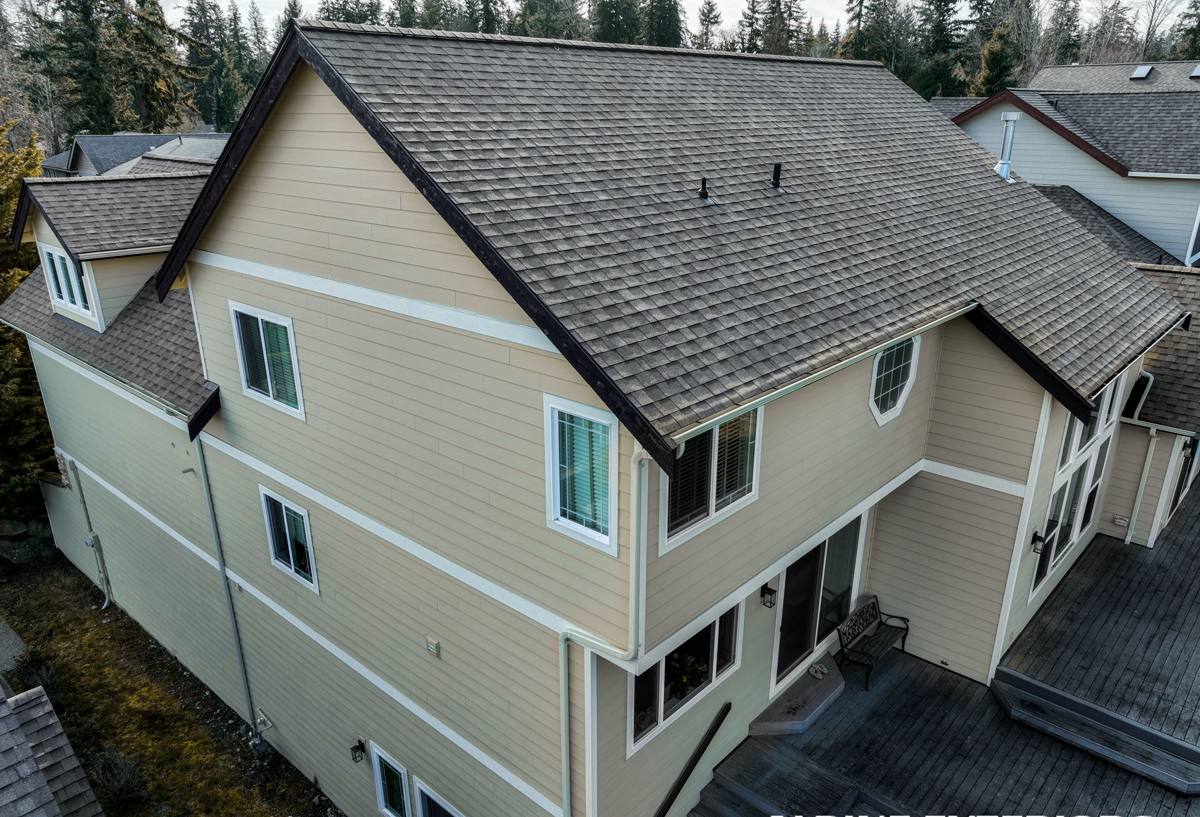
What Salt Air, Driving Rain, and Moss Actually Do to a Deck
Salt Air and Fasteners
Salt-laden air accelerates corrosion on any metal that isn't rated for coastal exposure — screws, joist hangers, bolts, flashing. A standard-grade fastener that would last decades inland can start rusting and weakening within a few years this close to the bay. Once fasteners corrode, they lose holding strength long before the wood around them shows obvious damage, which is why some decks feel "loose" or develop soft spots even though the boards themselves look okay.
Driving Rain and Hidden Water Entry
Wind off the water doesn't just fall on a deck, it drives into it — under railings, around post bases, behind ledger boards where the deck attaches to the house. If that connection wasn't flashed correctly the first time, water works its way into the rim joist and framing over years, and by the time it's visible from underneath, structural rot has usually already set in.
Moss Season and Trapped Moisture
Whatcom County's long wet season means moss and algae get a real foothold on any deck surface that doesn't dry out quickly — shaded sides of the house, areas under overhangs, boards installed with too little gap for airflow. Moss holds moisture against the wood, and moisture held against wood for months at a time is what turns a cosmetic problem into a structural one.
Signs a Deck Needs Replacement, Not Another Repair
Not every aging deck needs to come out. But there's a point where patching boards is just spending money to delay the same job. Walk your deck and check for these before deciding which direction to go:
- Soft, spongy, or bouncy spots when you walk across the surface, especially near the house
- Rust streaks below joist hangers, bolts, or screw heads
- Gaps or soft wood where the ledger board meets the house siding or foundation
- Persistent moss or dark staining that comes back within weeks of cleaning
- Railings that flex or feel loose when pushed, not just cosmetically worn
- Visible daylight or water staining on the framing underneath the deck
- A deck older than 15–20 years that has never had the substructure inspected
If you're seeing two or more of these, especially anything involving the ledger connection or framing, that's usually a structural conversation, not a board-swap.
Choosing Decking Material for a Semiahmoo Property
Every decking material handles salt air, rain, and moss differently, and the right choice depends on how exposed your specific lot is and how much upkeep you actually want to do. Here's how the common options stack up for this environment specifically:
| Material | Salt Air / Coastal Performance | Moss & Moisture Behavior | Maintenance |
|---|---|---|---|
| Pressure-treated wood | Fair — needs coastal-rated fasteners and regular sealing | Absorbs moisture; needs cleaning and re-sealing to resist moss buildup | Annual cleaning, periodic staining/sealing |
| Cedar | Good natural rot resistance, but still needs corrosion-resistant hardware | Sheds water well but greys and can host moss without upkeep | Regular cleaning, occasional finish renewal |
| Composite decking | Very good — doesn't corrode, holds up well to salt exposure | Resists rot but can still grow surface moss/algae in shaded, damp spots | Low — periodic washing |
| PVC / capped polymer | Excellent — fully sealed surface, no wood fibers to break down | Best moisture resistance of the group; least prone to moss staining | Lowest — occasional rinsing |
We're not going to tell you every deck on the spit needs to be PVC — a well-built cedar or treated-wood deck with the right hardware and proper drainage detailing will last plenty of years here too. But if your lot gets heavy shade, sits close to the water, or you want to minimize upkeep, the composite and capped-polymer options earn their higher upfront cost in reduced maintenance over time.
What a Correct Deck Replacement Actually Involves
A deck replacement done right in a coastal environment like Semiahmoo isn't just pulling old boards and screwing down new ones. The parts that matter most are the parts you won't see once it's finished:
Ledger Board and Flashing
The connection between the deck and the house is the single most common failure point we find. It needs proper flashing, correct fastening into structural framing (not just siding), and a water-shedding detail that keeps rain from tracking behind it — critical given how much wind-driven rain this area gets.
Framing and Fasteners
Joists, beams, and posts should be sized and spaced to current code, and every piece of hardware — hangers, bolts, screws — should be rated for coastal/marine exposure, not standard galvanized. This is where corners get cut on lower-bid jobs, and it's the corner that costs homeowners the most a decade later.
Footings and Post Bases
Post bases need to keep wood off standing water and allow drainage, especially on lower-lying Semiahmoo lots where ground moisture and drainage can be an issue for parts of the year.
Decking Board Gapping and Airflow
Board spacing and under-deck ventilation directly affect how fast a surface dries out after rain — get this wrong and you're setting up the same moss problem you just replaced the deck to fix.
Railings and Code Compliance
Railing height, baluster spacing, and guard strength all need to meet current building code, not just match what was there before — older decks in this area were often built to standards that have since changed.
Our Deck Replacement Process
- On-site assessment — we inspect the existing deck, framing, and ledger connection, not just the surface boards, and tell you honestly whether you need a full replacement or targeted repair.
- Design and material selection — we walk through decking and railing options with you based on your budget, sun/shade exposure, and how much maintenance you want going forward.
- Permitting — deck replacements of most sizes require a permit in Whatcom County; we handle that paperwork so you're not stuck navigating it yourself.
- Demolition and disposal — old decking, framing, and hardware removed and hauled off, with attention to protecting landscaping and siding during teardown.
- Rebuild — new footings/posts as needed, coastal-rated fasteners throughout, correctly flashed ledger connection, and code-compliant railings.
- Final walkthrough — we go over the finished deck with you, including what maintenance (if any) the material you chose actually needs.
Why a Crew That Already Works Semiahmoo Matters Here
Deck work in Semiahmoo isn't the same job as deck work in a sheltered inland neighborhood, and a crew that hasn't worked this stretch of coastline can miss details that matter. We already know to spec coastal-rated hardware as the default, not an upsell. We know which framing and flashing details actually hold up against the wind and salt exposure this part of Whatcom County gets, because we've gone back and looked at what failed on decks that weren't built that way. And we understand the seasonal rhythm here — timing a rebuild around the wettest stretches of the year so framing isn't sitting exposed through weeks of driving rain.
That local familiarity also means fewer surprises during permitting and inspection, since we're working within the same county requirements on every job, not learning them fresh each time.
What Affects the Cost of a Deck Replacement
| Factor | Why It Matters |
|---|---|
| Deck size and shape | More square footage and complex angles or levels increase material and labor |
| Decking material chosen | Pressure-treated costs least upfront; composite and PVC cost more but need less upkeep |
| Framing condition | Rotted joists, posts, or ledger connections found during teardown add rebuild scope |
| Height and railing requirements | Taller decks need more substantial railings and code-compliant guard systems |
| Site access | Waterfront and sloped lots can complicate equipment access and material staging |
| Permit and inspection requirements | Scope and structural changes affect what permitting is required |
We won't quote a number without seeing the actual deck and framing condition — a deck that looks fine from the surface can turn into a bigger rebuild once we're under the boards, and we'd rather tell you that upfront than surprise you mid-project.
Getting Started
If your Semiahmoo deck is showing soft spots, rust staining, persistent moss, or you just know it's due, we're happy to come take a look and give you a straight answer on repair versus replacement. There's no pressure and no charge for the estimate — fill out the form below and we'll schedule a time to walk the property with you.