 Ferndale Siding
 Window Replacement Built for Custer's Coastal Climate
Custer sits close enough to the water that homes here take a different kind of weather beating than houses ten or fifteen miles inland. Salt-laden air off the coast works on metal hardware and finishes year-round, driving rain off Georgia Strait and Birch Bay pushes water sideways into gaps that would stay dry elsewhere in Whatcom County, and the long, low-sun moss season keeps north-facing walls and window sills damp for weeks at a stretch. None of that is dramatic on its own, but stacked together over ten or twenty years, it's exactly the kind of slow, steady exposure that finds every weak point in a window installation.
Window replacement in Custer isn't a different product than window replacement anywhere else — it's the same window, installed with more attention to the details that matter here: flashing, sealant choice, frame material, and how the window is tied into the wall behind it. Get those details right and a window will handle decades of coastal weather without complaint. Get them wrong and you'll see the consequences in rot, fogged glass, and stuck sashes well before the window is actually "worn out."
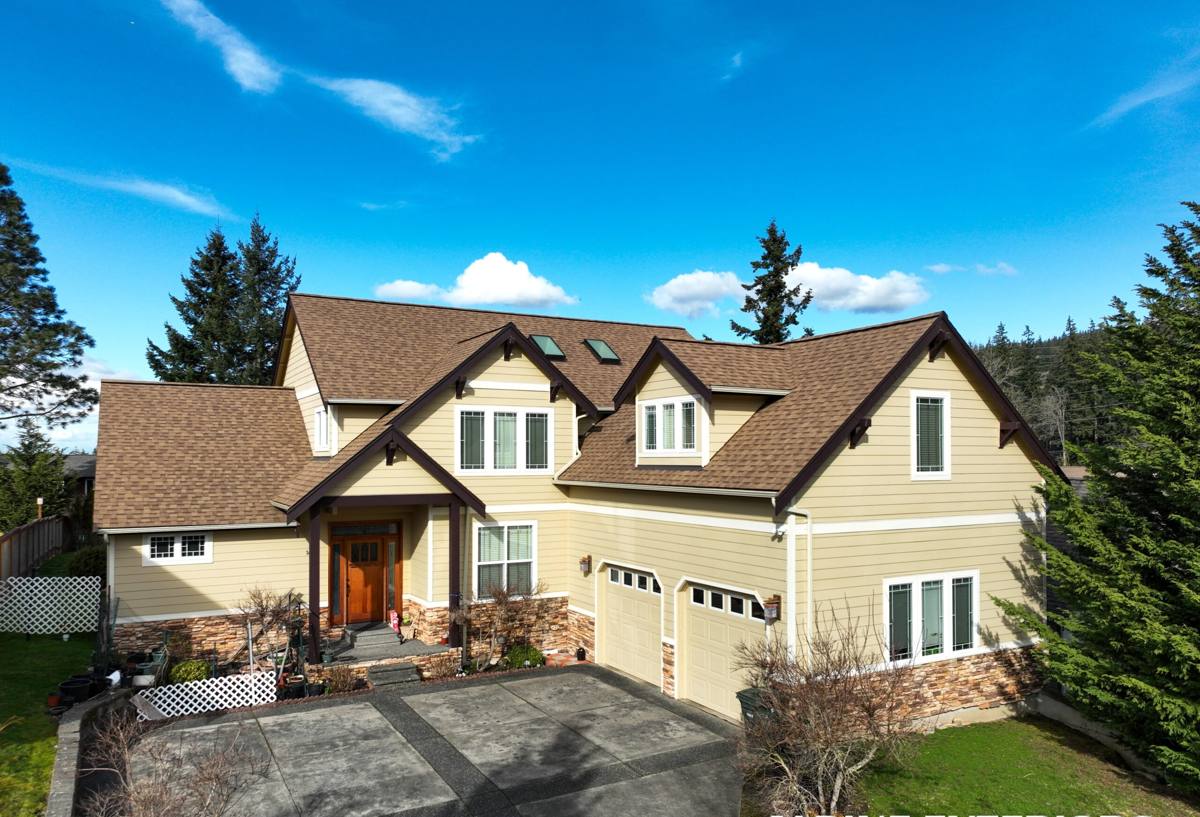
Signs a Custer Home Needs New Windows
Most homeowners call us because something has already started to go wrong, not because they were planning ahead. That's normal — but the earlier the signs are caught, the less collateral damage there is to the wall framing and interior finishes around the window. Common signs we see on service calls in this area include:
- Soft or spongy wood at the sill or lower corners of the frame — usually the first place driving rain finds its way in
- Fogging or a hazy film between panes of double-glazed glass, meaning the seal has failed and the insulating gas is gone
- Hardware — locks, cranks, hinges — that's pitted, stiff, or corroded, which happens faster this close to the coast
- Visible black or green staining on the sill or trim, a sign of the moisture and moss that this area holds onto longer than drier parts of the county
- Drafts you can feel with a hand near the frame on a windy day, even with the window latched
- Windows that are painted or caulked shut because the sash has swollen or the track has warped
Any one of these can often be addressed with a repair. Two or three together, especially on a window that's original to an older home, usually means replacement is the more honest recommendation — repeated patching on a failing frame just delays the same repair at a higher cost later.
Older Homes vs. Newer Construction
Custer has a mix of older farmhouses and site-built homes alongside newer construction, and the two categories fail differently. Older wood-frame windows tend to show their age through rot and hardware failure — the glass itself may still be fine, but the frame around it has taken on water. Newer vinyl windows from the 1990s and early 2000s more often fail at the seal (fogged glass) or the weep system (water pooling instead of draining out), especially if the original installation didn't account for wind-driven rain the way it should have.
What a Correct Window Replacement Actually Involves
The window itself is maybe a third of the job. The other two-thirds is everything that happens around it — and that's where most of the long-term performance in a place like Custer actually comes from.
Flashing and Water Management
Every window opening needs a sill pan or sloped flashing that directs any water that gets past the exterior seal back outside instead of into the wall cavity. On a home exposed to driving rain off the water, this isn't optional — it's the difference between a window that sheds an occasional wind-driven soaking and one that slowly rots the framing behind it without anyone noticing until the drywall or siding shows damage.
Air and Moisture Sealing
A correct install includes a continuous air seal between the window frame and the rough opening — typically a combination of self-adhered flashing tape and a compatible sealant, not just a bead of caulk around the trim after the fact. This matters twice over here: it stops drafts, and it keeps the damp, moss-friendly air from this region out of the wall cavity where it can sit against wood framing.
Fastening and Squaring
A window that isn't shimmed level and square will bind, won't lock tightly, and will wear its weatherstripping unevenly — all of which shorten its useful life and let in the exact wind and rain it's supposed to keep out.
Frame Materials for a Salt Air, High-Moisture Climate
We get asked often whether one frame material simply performs better this close to the coast. The honest answer is that several options work well if they're installed correctly — but they have real trade-offs worth understanding before you choose.
| Frame Material | How It Handles This Climate | Trade-Offs |
|---|---|---|
| Vinyl | Won't rot or corrode; handles moisture and salt air well | Can expand/contract with temperature swings; color and hardware quality vary a lot by manufacturer |
| Fiberglass | Very stable dimensionally, resists moisture and corrosion, holds paint well | Higher upfront cost than vinyl |
| Wood-clad | Warm interior appearance, good insulating value | Exterior cladding must be fully sealed at every joint — any gap invites the rot this climate is quick to cause |
| Aluminum | Strong and slim sightlines | Conducts cold and is more prone to corrosion in salt air unless it's a marine-grade or well-coated product |
For most Custer homes, we steer people toward vinyl or fiberglass for the exterior-facing frame, simply because they take moisture and salt exposure out of the maintenance equation entirely. Wood-clad and aluminum aren't wrong choices — they just ask more of the installation and of the homeowner's upkeep going forward, which is a trade-off worth going in with eyes open, not a defect in the product itself.
How We Approach a Window Replacement Job
The process is straightforward, and we walk you through each step before work starts so there are no surprises.
- On-site assessment — we look at each window individually, not just the ones you've flagged, since problems often show up first on the sides of the house that take the most weather
- Measurement and product selection — exact measurements for accurate ordering, and a straightforward conversation about frame material, glass package, and grille style based on your home and budget
- Removal and opening prep — old windows come out carefully to check the condition of the framing underneath before anything new goes in
- Flashing and sealing — sill pans, flashing tape, and sealant installed to manage water correctly, matched to the exposure of that specific wall
- Window installation — shimmed, squared, and fastened per manufacturer specification, not just "close enough"
- Interior and exterior finish work — trim, caulking, and cleanup so the job looks finished, not just functional
We also check and, where needed, correct the flashing on the opening itself — even when the old window looks fine at first glance, it's common to find the original flashing was undersized or missing altogether, which is often the real reason a window failed in the first place.
What Window Replacement Costs Depend On
We won't quote a number without seeing the job, but the main variables that move the price up or down are consistent from house to house:
| Factor | Why It Matters |
|---|---|
| Frame material | Vinyl is typically the most affordable; fiberglass and wood-clad cost more upfront |
| Number and size of openings | Larger windows and picture windows cost more than standard double-hungs |
| Glass package | Low-E coatings and gas fills improve efficiency but add cost per unit |
| Condition of the existing opening | Rot or framing damage found during removal adds repair work before the new window can go in |
| Full-frame vs. insert replacement | Insert replacement (new window into the old frame) is cheaper but only appropriate when the existing frame is sound; full-frame replacement costs more but lets us correct flashing and sealing issues |
That last line is worth pausing on. Insert replacement is a perfectly good option on a frame that's still structurally sound, but it's not the right call on a window where water has already gotten behind the original flashing — in that case, an insert just seals a problem back up inside the wall. We'll tell you honestly which situation you're in rather than defaulting to the cheaper option.
Choosing a Contractor for Window Replacement in Custer
Not every crew that installs windows pays attention to the flashing and sealing details that matter in this specific climate. Before hiring anyone, it's worth asking a few direct questions:
- Do they install sill pan flashing on every window, or only "if needed"?
- Will they show you the condition of the framing once the old window is out, before it's covered back up?
- Do they carry manufacturer-backed warranties on both the window and the installation labor?
- Can they explain, in plain terms, why they'd recommend full-frame replacement over an insert on a given window — or vice versa?
- Do they have experience working on homes in this specific part of Whatcom County, near the water?
A contractor who's used to working further inland, in a drier, less wind-exposed environment, can do fine work and still miss details that matter more here — the extra flashing course, the marine-grade sealant, the attention to weep holes that actually drain instead of clogging with debris. It's not a knock on their skill; it's just a different set of habits than the ones this coastline demands.
Maintenance After Installation
A correctly installed window in a good frame material needs very little upkeep, but a few habits go a long way in this climate:
- Rinse salt residue off exterior frames and hardware a couple of times a year, especially on walls facing the water
- Keep weep holes at the bottom of the frame clear of dirt, pollen, and moss so water can drain out as designed
- Check exterior caulking annually for cracking or separation, particularly after a hard winter
- Wipe down sills during the wetter months if you notice moss or algae starting to take hold, rather than letting it sit
None of this is heavy maintenance — it's the same kind of periodic attention this whole region's exterior surfaces need given how long things stay damp here.
Why Local Experience in Custer Matters
A crew that already works in and around Custer has a practical feel for which walls on a given home take the worst of the wind-driven rain, how much salt exposure to plan for on a house close to the water versus one set back a bit, and how the moss and moisture patterns here differ from a job in, say, Bellingham proper. That's not a marketing point — it changes real decisions on site, like which walls get extra flashing attention or where a slightly more corrosion-resistant hardware option is worth the small upcharge. It also means we're not learning Whatcom County's weather on your project; we've already seen how it treats windows over years of local work.
If your windows are showing their age — or you just want an honest opinion on repair versus replacement — we're happy to take a look. The estimate is free, there's no pressure to move forward, and you'll get a straight answer about what your home actually needs. Fill out the form below to get started.