 Ferndale Siding
 Siding Installation in Cordata: What Local Homes Are Actually Up Against
Cordata sits in the part of Whatcom County where marine air off the Salish Sea, frequent low-pressure systems, and heavy tree cover combine into one of the tougher siding environments in the state. It isn't dramatic weather — no hurricanes, no hailstorms — it's the slow, relentless kind: months of damp air, wind-driven rain that finds every gap, and shade patterns that keep siding wet long after a storm passes. A siding installation done for Cordata has to be planned around that reality from the first panel, not patched for it later.
This page focuses specifically on what a correct siding installation looks like for homes in this area — not siding in general, and not repair work. If your Cordata home needs new siding, the difference between a job that lasts fifteen years and one that lasts forty comes down to decisions made before the first piece of trim goes up.
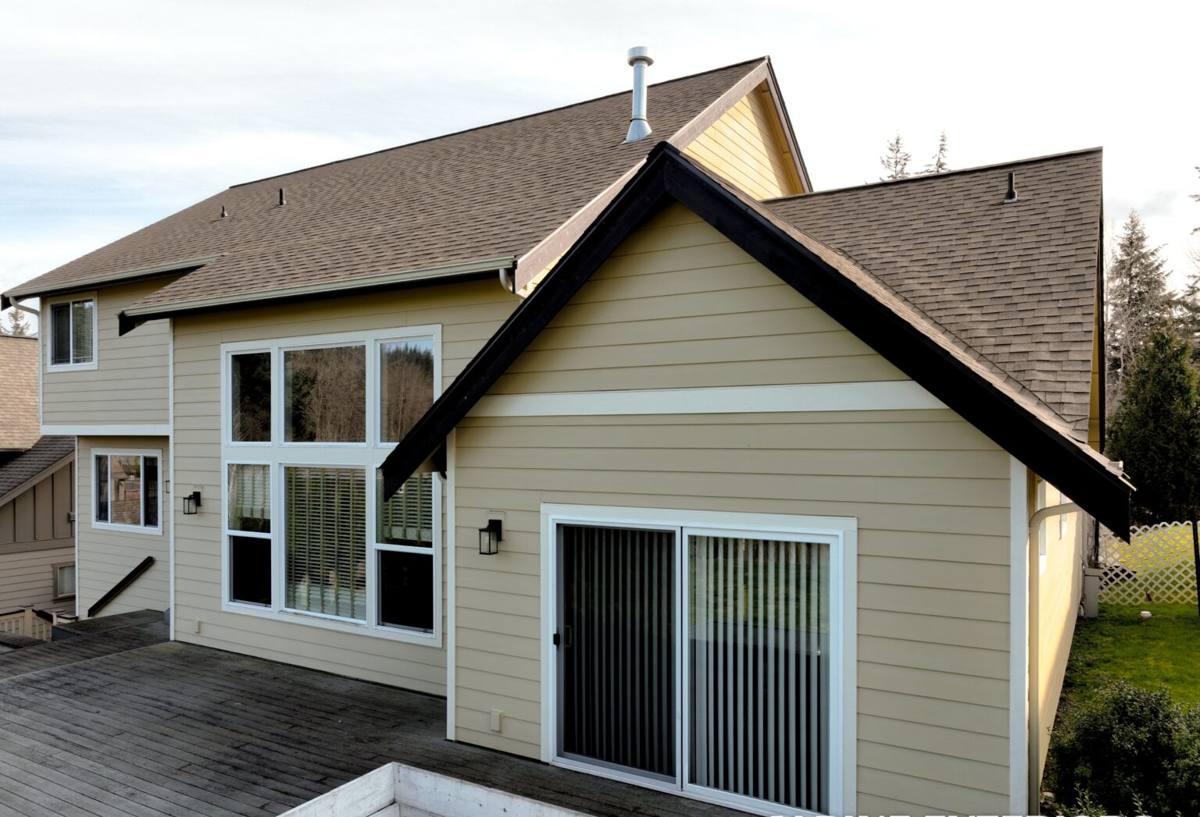
What Salt Air, Driving Rain, and Moss Do to Siding Over Time
Three climate factors show up again and again on siding jobs in this part of Whatcom County, and each one attacks a house differently.
Salt Air
Homes closer to the water deal with airborne salt that accelerates corrosion on exposed metal — fasteners, flashing, trim edges. On lower-grade siding materials this also speeds up finish breakdown, chalking, and fading years ahead of schedule. It's a slow chemical process, which is exactly why it gets ignored until the siding already looks tired.
Driving Rain
Rain here rarely falls straight down. Wind pushes it sideways into wall assemblies, which means the vertical joints, window and door trim, and bottom edges of siding take on far more water than a calm-weather installation would ever see. If the drainage plane behind the siding isn't done right, that water has nowhere to go but into the sheathing.
Moss and Sustained Moisture
Shaded lots, mature trees, and long stretches of overcast, damp weather mean moss and algae get a real foothold on north- and west-facing walls. Beyond the cosmetic issue, sustained moisture against a wall surface is what causes rot, delamination, and paint failure on materials that aren't engineered to handle it.
None of these three problems are solved by picking a "nicer" siding color or a slightly thicker panel. They're solved by material choice and installation detailing working together.
What a Correct Siding Installation Involves in This Climate
A siding installation that's actually built for Cordata's conditions isn't just panel-and-nail work. It's a system, and every layer of that system matters.
The Drainage Plane
Behind every properly installed siding job is a weather-resistive barrier and, ideally, a rainscreen gap that lets any water that gets past the siding drain out and lets the wall assembly dry. Skipping or shortcutting this layer is the single most common reason siding fails early in wet coastal climates — the siding itself can look fine while the wall behind it is rotting.
Flashing and Fastening
Every window, door, and horizontal trim piece needs flashing detailed to shed water outward, not trap it against the wall. Fasteners have to be corrosion-resistant and driven to the manufacturer's exact spec — too tight or too loose, and you've created a failure point that shows up in five years, not fifty.
Trim, Caulking, and Clearances
Proper ground clearance, gaps at inside corners, and the right caulking at joints keep water from wicking into the bottom of the siding or pooling where two surfaces meet. These are small details that take extra time and get skipped on rushed jobs — and they're usually the first place a poorly installed job starts to fail.
Why We Install Only James Hardie Fiber Cement
We don't install vinyl, LP SmartSide, or primed wood siding, and that's a deliberate standard, not a limitation of what we're capable of installing. James Hardie fiber cement is non-combustible, holds up to sustained moisture without swelling or delaminating, and its ColorPlus factory finish is baked on to resist the fading and chalking that salt air and UV exposure cause on field-painted materials. For this climate specifically, Hardie's HZ5 product line is engineered for regions that see freeze-thaw cycles and heavy moisture exposure — which describes a Whatcom County winter well.
Fiber cement also carries a strong transferable warranty when installed to manufacturer spec, which matters more here than in drier climates, since installation errors are exactly what turns a good product into a callback five years down the road.
Our Installation Process
Every job follows the same sequence, regardless of house size, because skipping steps is how moisture problems get built into a wall.
- On-site assessment of the existing siding, sheathing condition, and any trouble spots specific to the lot's sun exposure and drainage.
- Full removal of old siding and inspection of the sheathing underneath for hidden rot or moisture damage before anything new goes up.
- Repair of any compromised sheathing — this gets addressed before installation continues, not covered over.
- Installation of the weather-resistive barrier and drainage plane, detailed at every penetration.
- Flashing installed at all windows, doors, and horizontal trim transitions.
- James Hardie panel or lap installation to manufacturer fastening spec, including correct clearances at grade and corners.
- Trim, caulking, and final detailing.
- Walkthrough with the homeowner and cleanup of the site.
We don't shortcut steps two and three to save time. Installing new siding over damaged sheathing is one of the most common reasons a siding job fails within a decade, and it's invisible until it isn't.
Signs a Cordata Home Might Need New Siding
Not every siding problem means a full replacement, but these are the signs worth having looked at:
- Persistent moss or algae growth that comes back within a season of cleaning
- Soft spots, bubbling, or visible warping, especially on shaded or north-facing walls
- Paint that's peeling or chalking faster than it should for its age
- Visible gaps, cracking, or separation at seams and corners
- Rising heating bills that point to a wall assembly no longer doing its job
- Siding that's original to the house and thirty or more years old
What Siding Installation Costs in Cordata
Costs vary by house size, complexity of the roofline and trim, and how much sheathing repair is needed once the old siding comes off. Rather than quote a single number, here's what actually drives the range:
| Cost Factor | Why It Matters Here |
|---|---|
| House size and wall complexity | More corners, dormers, and trim transitions mean more flashing and detail work, not just more square footage |
| Sheathing condition | Damp-climate homes more often have hidden sheathing damage that has to be repaired before new siding goes on |
| Siding profile chosen | Lap, panel, and shingle-style Hardie products differ in material and labor cost |
| Trim and accent detailing | Custom trim work and color-matched accents add labor time beyond the base install |
| Access and site conditions | Tree cover, tight lot lines, or multi-story walls affect scaffolding and staging time |
We give firm, written quotes after an in-person assessment — not a phone estimate — because the sheathing condition and trim complexity genuinely can't be judged from a photo.
Choosing a Contractor Who Already Works This Area
A crew that regularly works Cordata and the surrounding Ferndale and Whatcom County area already knows which walls take the worst weather exposure, how local moss and moisture patterns behave through the winter, and what inspection and permitting steps apply locally. That's not a small advantage — it's the difference between a generic installation and one detailed for the actual conditions the house will face.
Before hiring anyone for a siding installation, it's worth asking:
- Do you install to the manufacturer's written installation instructions, and can I see them?
- Will you inspect and repair sheathing before installing new siding, and is that itemized in the quote?
- What's included in the warranty, and is it transferable if the home sells?
- Who's actually on the crew doing the work — subcontracted or in-house?
- Can you show me examples of the flashing and drainage detailing you use, not just the finished siding?
Any contractor unwilling to answer those clearly is worth a second look.
After Installation: Keeping It Performing
A correctly installed Hardie siding job needs very little upkeep, but a couple of habits extend its life even further in this climate: keep gutters clear so water isn't dumping down a wall face, keep landscaping trimmed back so walls get airflow and sun exposure, and rinse off moss or algae buildup before it takes hold rather than after. None of this is heavy maintenance — it's the kind of occasional attention that keeps a well-installed system performing for decades instead of just years.
If your Cordata home is due for new siding, or you're not sure whether what you have is holding up the way it should, we're happy to take a look. Reach out for a free, no-pressure estimate using the form below.