 Ferndale Siding
 Building Decks for Cordata's Specific Conditions
Homes in and around Cordata sit close enough to Bellingham Bay and the Strait of Georgia that salt-laden air is a real factor in how outdoor structures age, and Whatcom County's rain pattern means a deck here spends a large share of the year wet, not just rained on occasionally. Add a moss season that can stretch from October well into May, and you have a set of conditions that punishes decks built to a generic, one-size-fits-all spec. A deck that would hold up fine in a dry inland climate can start showing rot, corroded fasteners, and slick, moss-covered boards within a few seasons out here if it wasn't designed with this specific environment in mind.
We're not describing anything exotic — it's the ordinary combination of moisture, salt air, and shade that most Whatcom County properties deal with. What matters is that the framing, fasteners, decking material, and drainage details all account for it from the start, rather than being patched after the fact.
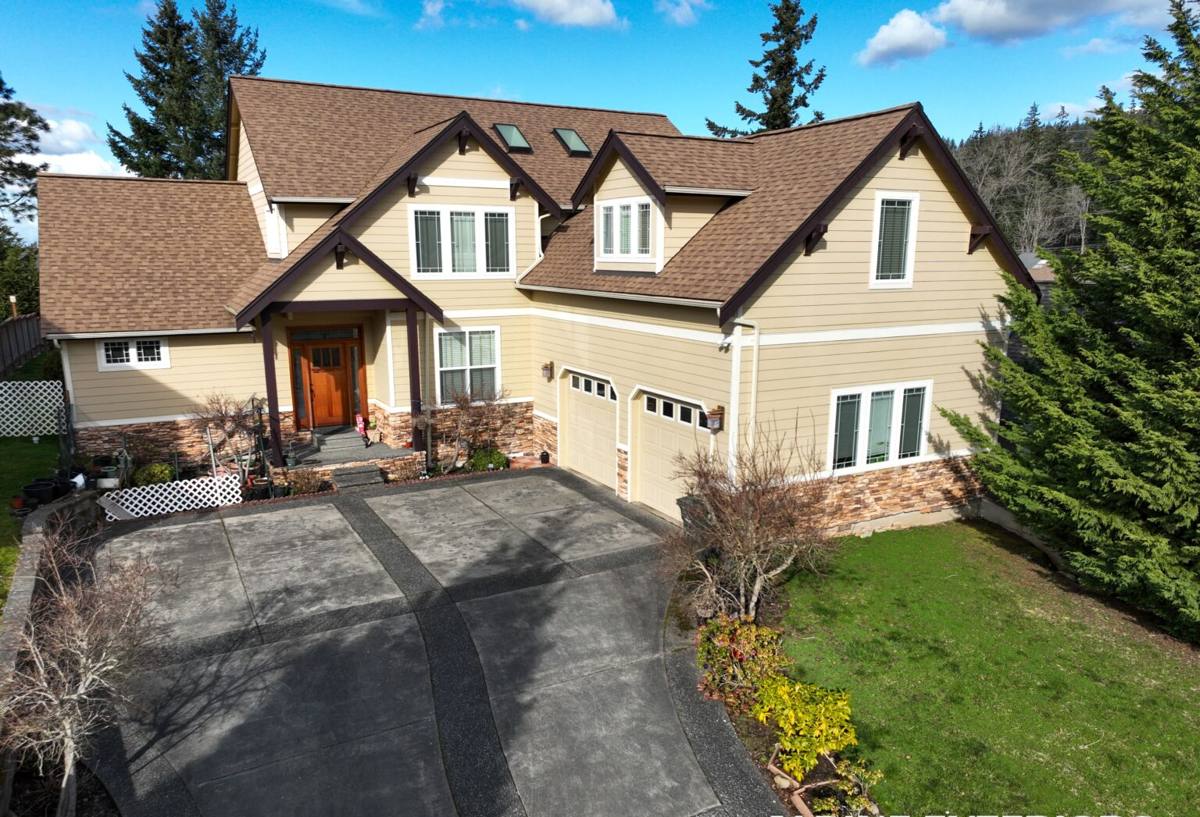
What Goes Wrong With Decks That Aren't Built for This Climate
Most of the deck problems we get called out to look at trace back to a handful of recurring issues, and almost all of them are avoidable at the construction stage:
- Ledger boards attached to the house without proper flashing, letting water track behind the siding and into the rim joist
- Standard interior-grade or bare steel fasteners that rust and streak the decking within a couple of wet seasons
- Joists and beams with no gap or drainage path underneath, so water pools and sits against the wood
- Decking boards installed tight together with no expansion gap, which traps moisture and debris between boards
- Low clearance between the deck framing and the ground, which limits airflow and keeps the underside damp longer than it should be
- Shaded, north-facing decks with no plan for moss and algae control, so the surface gets slick and dark within a year
None of these are dramatic failures on day one. They're slow problems that show up two, three, or five years in — which is exactly why the build quality matters more than it might seem when the deck is brand new and everything looks fine.
Getting the Framing and Substructure Right
The structure underneath a deck does more work than the decking boards on top, and it's the part a homeowner can't inspect once the project is finished. For Cordata-area builds, that means:
Ledger Attachment and Flashing
Where the deck ties into the house, we flash the ledger board properly so water sheds away from the wall rather than getting trapped behind it. This single detail is responsible for a large share of the moisture damage we see in older decks — it's easy to skip and hard to notice until there's a problem behind the siding.
Fasteners and Hardware
Salt air corrodes standard fasteners faster than most homeowners expect. We use corrosion-resistant, coated or stainless hardware rated for exterior and coastal-adjacent use throughout the structure — joist hangers, structural screws, and post bases included, not just the visible decking screws.
Footings and Post Bases
Footings are set below frost depth and post bases are installed to keep the wood post itself off the concrete, so water doesn't wick up into the base of the post. This is a small detail with an outsized effect on how long the structural posts last.
Clearance and Airflow
We build in enough clearance between the ground and the framing to let air move underneath the deck. Airflow is one of the simplest ways to keep a structure dry through a long wet season, and it costs nothing extra if it's planned from the start.
Choosing Decking Material for a Wet, Shaded Climate
There's no single "best" decking material — the right choice depends on how much maintenance the homeowner wants to do, how much sun or shade the deck gets, and the budget. Here's how the common options actually perform in Whatcom County conditions:
| Material | Moisture Behavior | Maintenance | Moss/Mildew Resistance | Typical Lifespan Here |
|---|---|---|---|---|
| Cedar | Naturally moisture-resistant, but still wood — will absorb water over time | Needs periodic cleaning, sealing, and refinishing | Moderate — better than untreated softwoods but still needs upkeep in shade | 15-20 years with regular maintenance |
| Pressure-Treated Fir/Pine | Treated for rot resistance but still wood; end cuts and fasteners are vulnerable points | Regular sealing recommended, especially on horizontal surfaces | Lower — prone to graying and moss buildup in shaded, damp spots | 12-20 years depending on upkeep |
| Composite Decking | Doesn't absorb water the way wood does; core material varies by product | Low — occasional washing, no staining or sealing | Better in most cases, though composite can still get slick with algae film in deep shade | 25+ years, varies by manufacturer warranty |
| PVC/Capped Polymer | Fully sealed surface, essentially impervious to moisture absorption | Lowest maintenance of the group | Best resistance, though surface film can still form in constantly shaded, damp areas | 25-30+ years |
We'll walk through these trade-offs honestly during the estimate rather than pushing whatever has the highest margin. A well-maintained cedar deck can look great for two decades; a composite deck can go almost maintenance-free but costs more up front. The right answer depends on the homeowner's priorities, not ours.
Designing for Moss and Slip Resistance
Given how much of the year is wet here, moss and surface algae are less a maintenance afterthought than a design consideration. A few things we build in from the start:
- Decking board spacing that allows water to drain through rather than sit on the surface
- Layout choices that avoid trapping standing water in low spots or against the house
- Board profiles and finishes with better slip resistance in shaded, damp areas
- Guidance on realistic cleaning intervals based on how much sun the specific deck gets
No deck in Whatcom County is going to be completely moss-proof if it sits in shade most of the year, but good drainage and the right material choice make a real difference in how often it needs attention and how slick it gets in between cleanings.
Our Process, Start to Finish
- On-site assessment: We look at sun exposure, drainage, soil, and how the deck ties into the existing structure before recommending anything.
- Material and design discussion: We go over decking material trade-offs, layout, railing, and any code requirements for the specific lot.
- Permitting: We handle the permit application and inspection scheduling required for the project, coordinating with the local jurisdiction.
- Framing and structural work: Footings, posts, beams, and joists go in first, built to the standards described above.
- Decking, railing, and finish work: Boards, railings, and any fascia or trim are installed with attention to expansion gaps and fastener placement.
- Final walkthrough: We go over the finished deck with the homeowner, including basic care and what to expect from the specific material chosen.
Permits and Local Code Considerations
Most deck projects that attach to a house or exceed a certain height above grade require a building permit in Whatcom County, and inspections are typically required at the framing stage and again at completion. Requirements can vary based on lot size, setback rules, and whether the deck is covered or attached to the house versus freestanding. We handle this coordination as part of the project rather than leaving it for the homeowner to sort out — skipping permitting on an attached deck can create real problems later, from insurance issues to complications when selling the home.
Why a Crew That Already Works This Area Matters
A contractor who works Cordata and the surrounding Ferndale-area neighborhoods regularly has already seen how decks in this specific microclimate hold up — or don't — over time. That's different from general deck-building experience picked up somewhere drier. We know which details actually matter here: the flashing at the ledger, the hardware coating, the drainage under the frame, the board spacing for a shaded yard. Those aren't things you learn from a spec sheet; they're things you learn from going back to look at decks built five and ten years ago and seeing what held up.
Questions to Ask Before You Hire a Deck Builder
- Are you licensed, bonded, and insured for structural exterior work in Washington State?
- Will you pull the permit and coordinate inspections, or is that on me?
- What fastener and hardware grade do you use, and is it rated for coastal-adjacent exposure?
- How do you flash the ledger board where the deck attaches to the house?
- What's the expected maintenance schedule for the decking material you're recommending?
- Can you explain the trade-offs between the material options rather than just recommending one?
A contractor who answers these clearly and specifically, without hedging, is usually one who's actually thought through how a deck needs to be built for this climate — not just how to frame a rectangle and screw boards to it.
Get a Straightforward Estimate
If you're planning a new deck or replacing an aging one in Cordata or elsewhere around Ferndale, we're happy to come take a look, talk through material options honestly, and give you a clear estimate with no pressure attached. Fill out the form below to get started.