 Ferndale Siding
 Roofing in Blaine Takes a Different Kind of Beating
Blaine sits right on the water, tucked against Semiahmoo Bay and Drayton Harbor at the top of Whatcom County, and that location shapes what a roof has to survive here. Salt-laden air off the Strait of Georgia works on metal fasteners, flashing, and vent components in ways inland Ferndale and Bellingham roofs rarely deal with. Add driving rain that comes in sideways during winter storms, and a north-facing tree line that keeps parts of many roofs shaded and damp most of the year, and you get a climate that's genuinely hard on a roof system. This page is about roof replacement specifically for Blaine homes, not a generic rundown of shingles and flashing — it's what actually matters when the job is thirty feet from saltwater and moss has a permanent foothold.
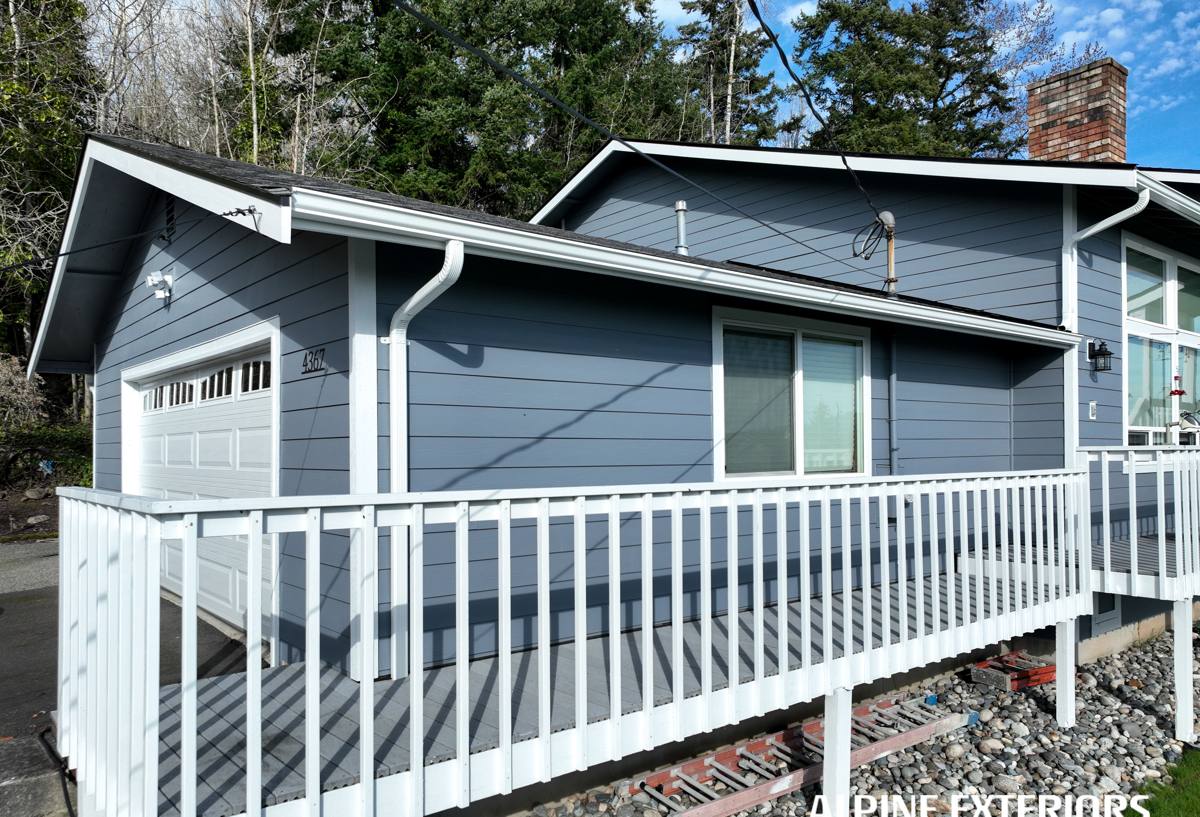
What Blaine's Climate Actually Does to a Roof
Salt Air and Corrosion
Airborne salt accelerates corrosion on exposed metal — nail heads, drip edge, flashing, and vent boots all age faster near the shoreline than they would a few miles inland. A roof that would hold up for 25 years in a drier, inland part of the county can show fastener rust and flashing failure well before that if it was installed with standard-grade materials and no attention to the coastal exposure.
Driving Rain and Wind-Driven Water
Storms coming off the water don't just drop rain straight down — they push it sideways, up under shingle tabs, and into any gap in the flashing. This is the single biggest reason roof replacements in this area fail early: water finds a way in through details that were fine in a calmer climate but aren't built for wind-driven rain.
Moss and a Long Wet Season
Whatcom County's wet season runs long, and shaded, north-facing roof slopes stay damp for weeks at a time. Moss and algae take hold in that environment and, left unchecked, they lift shingle edges, hold moisture against the roof deck, and shorten the life of even a well-installed roof. A correct replacement in Blaine has to account for this from the start, not treat it as an afterthought.
Signs a Blaine Roof Needs Replacement, Not Just Repair
- Granule loss heavy enough to see bare patches on asphalt shingles, especially on the rain-facing slopes
- Moss or algae established across large sections rather than a few isolated patches
- Curling, cupping, or cracked shingles, particularly on slopes that get direct wind exposure off the water
- Rust staining or visible corrosion at flashing, vent boots, or exposed fasteners
- Soft spots in the decking felt underfoot, or staining on interior ceilings after storms
- A roof approaching or past 20-25 years old with multiple prior repairs already patched in
- Missing or lifted shingles after a windstorm, especially if it's happened more than once
One or two of these on their own might mean a targeted repair is enough. Several at once, or a roof that's already had patchwork done, usually means repair costs start adding up faster than a full replacement would.
What a Correct Roof Replacement Involves Here
A roof replacement done right in Blaine isn't just stripping old shingles and nailing down new ones. Given the exposure this area gets, several steps matter more here than they would somewhere drier and calmer:
- Full tear-off, not an overlay. Roofing over old shingles hides deck problems and traps moisture — not something you want to do in a climate this wet.
- Deck inspection and repair. Every section of decking gets checked once the old roofing is off. Soft or delaminated sheathing gets replaced before anything new goes down, since covering a compromised deck just guarantees a callback later.
- Ice-and-water shield at vulnerable points. Eaves, valleys, and roof-to-wall transitions get self-adhering waterproof membrane, not just felt paper, because these are exactly the spots wind-driven rain finds a way in.
- Corrosion-resistant flashing and fasteners. Given the salt air, we don't cut corners here — flashing, drip edge, and fasteners rated for coastal exposure cost a little more up front and last considerably longer.
- Proper ventilation. Balanced intake and exhaust ventilation keeps the underside of the deck dry and helps prevent the trapped moisture that feeds moss and algae growth from the inside out.
- Moss-resistant materials on shaded slopes. Algae-resistant shingles (copper or zinc granule blends) are worth specifying on north-facing or heavily shaded sections of a Blaine roof.
- Clean tear-off and magnetic nail sweep. Old material, nails, and debris get fully cleared from the property and yard before we call the job done.
Choosing the Right Material for a Coastal Whatcom County Roof
There isn't one "best" roofing material for every Blaine home — it depends on budget, roof slope, how close the home sits to the water, and how much shade the roof gets. Here's how the common options actually compare for this climate:
| Material | Salt Air / Corrosion | Moss Resistance | Wind-Driven Rain Performance | Typical Lifespan |
|---|---|---|---|---|
| Architectural asphalt shingle | Good with coastal-rated fasteners & flashing | Fair; better with algae-resistant granules | Good when properly flashed and sealed | 20-30 years |
| Standing-seam metal | Very good with proper coating and fastener choice | Excellent; sheds moisture, little for moss to grip | Excellent; minimal seams for water to exploit | 40-50+ years |
| Cedar shake | Fair; needs regular maintenance near salt air | Poor without diligent upkeep and treatment | Fair; more installation-sensitive in driving rain | 20-30 years with upkeep |
Our standard is to steer most Blaine homeowners toward architectural asphalt with coastal-grade flashing and algae-resistant granules as the balanced choice, and metal for homes with heavy direct salt exposure or owners who want the lowest long-term maintenance. Cedar shake can look great, but it demands a maintenance commitment — regular treatment and inspection — that not every homeowner wants to take on this close to the water. That's a maintenance and moisture-behavior trade-off, not a knock on the material itself.
How Our Process Works
1. On-Site Inspection
We walk the roof and attic, not just look from the ground. Given how much moisture and moss issues in this area start in shaded or hard-to-see sections, a real inspection catches problems a drive-by estimate would miss.
2. Written, Itemized Quote
You get a clear breakdown of materials, labor, and any deck repair contingencies before work starts — no surprise change orders once the tear-off is underway.
3. Tear-Off and Deck Repair
Old roofing comes off in full, decking gets inspected and repaired as needed, and we confirm any additional work with you before proceeding.
4. Installation
Underlayment, ice-and-water shield, flashing, ventilation, and final roofing material go on in that order, with the coastal-specific details — corrosion-resistant hardware, extra attention at valleys and transitions — built in as standard, not an upsell.
5. Final Walkthrough and Cleanup
We walk the finished roof with you, sweep the property for nails and debris, and haul away the old material.
Why a Crew That Already Works Blaine Matters
A roof replacement in a coastal town like Blaine isn't the same job as one a few miles inland. A crew that already works this area knows to spec corrosion-resistant fasteners and flashing as standard, not as an add-on nobody mentions until something rusts out early. They know which slopes on a typical Blaine home hold shade and moisture long enough to need algae-resistant materials, and they've dealt with Whatcom County permitting and inspection requirements enough times that it doesn't slow the job down. That local familiarity is the difference between a roof that's built for this exact climate and one that's built for roofing in general and happens to be installed here.
Maintaining a New Roof in a Moss-Prone Climate
- Have the roof checked for moss and debris buildup once a year, more often if it's heavily shaded
- Keep gutters clear so water doesn't back up under the roof edge during heavy rain
- Trim back overhanging branches where practical to cut down on shade and moisture retention
- Don't pressure-wash a roof — it can strip granules and shorten shingle life; use gentle moss treatment methods instead
- Have flashing and fasteners inspected periodically for early corrosion, especially on homes closer to the water
- Address small leaks or lifted shingles right away rather than waiting for the next storm season
What Affects the Cost of a Roof Replacement in Blaine
| Cost Factor | Why It Matters Here |
|---|---|
| Roof size and pitch | More surface area and steeper slopes mean more material and labor time |
| Material choice | Asphalt, metal, and cedar carry different upfront costs and different long-term maintenance needs |
| Deck condition | Rot or soft decking found during tear-off adds repair cost but shouldn't be skipped |
| Coastal-grade hardware | Corrosion-resistant flashing and fasteners cost more than standard-grade but pay off in this climate |
| Roof accessibility | Steep or hard-to-access roofs take longer and require more safety setup |
| Tear-off layers | Removing multiple old roofing layers adds labor and disposal cost |
Costs vary enough project to project that we won't quote a number without seeing the roof, but a full replacement on an average home typically lands somewhere in the broad range of several thousand to the mid-five-figures depending on size, material, and pitch. An on-site inspection is the only way to get a number you can actually rely on.
Ready for an Honest Look at Your Roof?
If your roof is showing moss, rust, curling shingles, or you're just not sure how much life is left in it, we're glad to take a look. There's a free, no-pressure estimate form below — fill it out and we'll get in touch to schedule a real inspection, not a guess from the driveway.