 Ferndale Siding
 Why Blaine Roofs Wear Differently Than Inland Homes
Blaine sits right on the water, and that changes what a roof has to survive. Homes here deal with salt-laden air blowing in off Semiahmoo Bay and the Strait of Georgia, wind-driven rain that hits shingles at an angle instead of falling straight down, and a moss season that runs longer than almost anywhere else in Whatcom County. None of that is dramatic on its own, but stacked together year after year, it shortens the life of a roofing system that wasn't installed with these conditions in mind.
Salt air is corrosive to exposed metal fasteners, flashing, and vent components. Driving rain finds gaps that a straight-down rain never would, working its way sideways under shingle tabs and around poorly lapped flashing. And moss doesn't just sit on a roof looking bad — its root structure lifts shingle edges, holds moisture against the deck, and accelerates rot in ways that aren't visible from the ground. A new roof installation in Blaine needs to account for all three from day one, not as an afterthought.
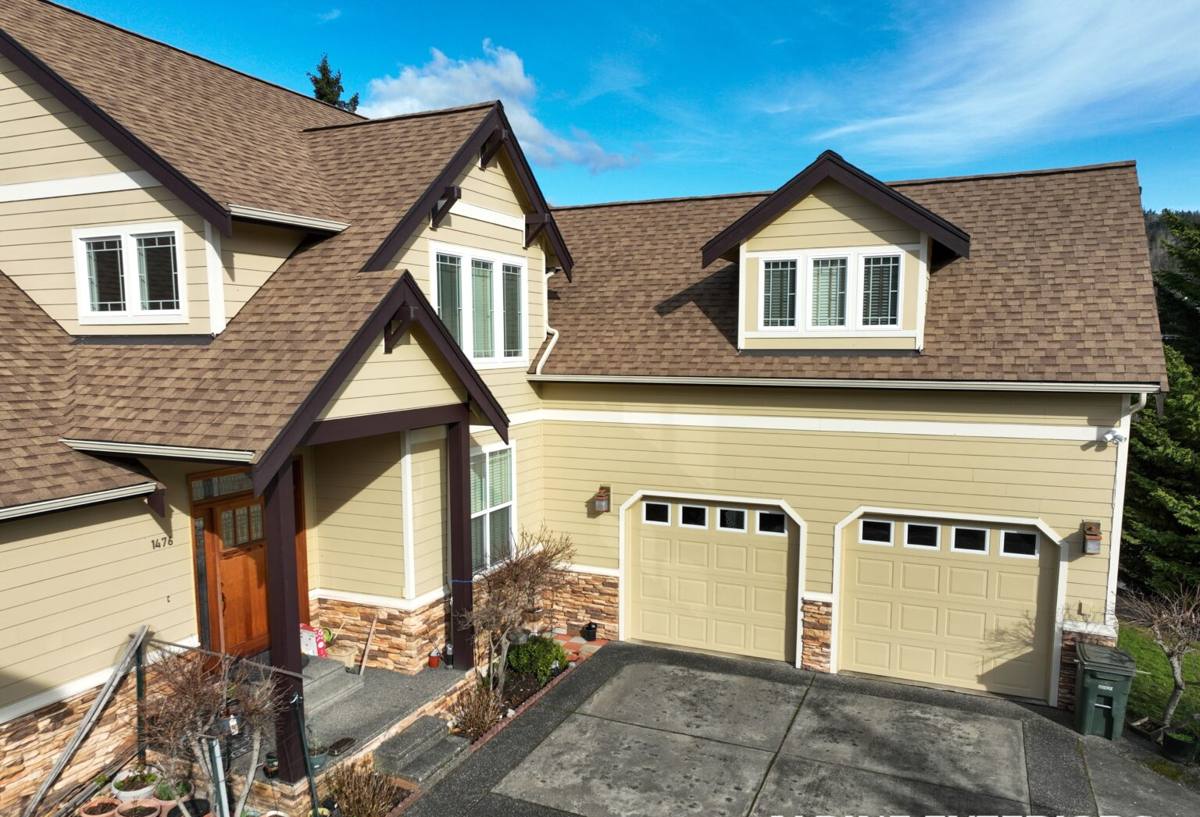
What a Correct New Roof Installation Actually Involves
"New roof" gets used loosely. A correct installation is a sequence of steps, and skipping or rushing any one of them is usually what shows up as a leak two or five years later.
Tear-Off and Deck Inspection
We remove the old roofing down to the deck rather than layering over it. That's the only way to actually see what's underneath — soft spots, old water staining, rot around plumbing boots or chimney flashing, or decking that's simply undersized for current code. Any damaged sheathing gets replaced before anything new goes down. Installing new roofing over a compromised deck just hides the problem and guarantees a repeat call sooner than later.
Underlayment and Flashing
This layer matters more in Blaine than in drier parts of the state. We use synthetic underlayment for overall coverage and ice-and-water shield membrane at the vulnerable points — eaves, valleys, and around every penetration — because that's where wind-driven rain and moss-related water intrusion actually cause damage. Flashing around chimneys, skylights, and wall intersections gets formed and lapped correctly rather than caulked over, since caulk is a temporary fix, not a flashing method.
Ventilation
A roof needs balanced intake and exhaust airflow to manage moisture from inside the house and temperature swings from outside. Get this wrong and you trap humid air in the attic, which condensates, soaks insulation, and rots decking from underneath — a problem that has nothing to do with the shingles themselves but gets blamed on them anyway.
Choosing a Roofing System for Coastal Whatcom County
There's no single "best" material — it depends on how long you plan to own the home, your budget, and how much maintenance you're willing to keep up with. Here's how the common options actually perform in a salt-air, high-moisture environment like Blaine:
| Roofing Material | Salt Air / Coastal Performance | Moss Resistance | Typical Lifespan | Maintenance Needs |
|---|---|---|---|---|
| Architectural asphalt shingle | Good with corrosion-resistant fasteners and flashing | Better with algae-resistant (AR) shingles; still needs periodic cleaning | 25–30 years | Moderate — moss/gutter checks 1–2x/year |
| Standing seam metal | Excellent when specified with marine-grade coatings and fasteners | Very good — moss struggles to root on smooth metal | 40–50+ years | Low — occasional debris and fastener check |
| Synthetic/composite shingle | Good; resists salt corrosion since it's not metal-fastener-dependent at the surface | Good, similar to AR asphalt | 30–50 years (product-dependent) | Moderate — similar to asphalt |
We steer homeowners away from lower-grade three-tab shingles for anything this close to the water — not because the product is unusable everywhere, but because the fastener and sealant tolerances leave less margin for driving rain and salt exposure, and the warranty coverage tends to reflect that shorter service life. It's a trade-off worth knowing about upfront rather than discovering at year twelve.
Our New Roof Installation Process
- On-site inspection and estimate. We walk the roof, check the attic for existing ventilation and moisture issues, and give you a written scope and price — no surprise add-ons buried in fine print.
- Material selection. We go over the options above against your budget and how long you're planning to stay in the home, and order materials rated for coastal exposure.
- Tear-off and deck repair. Full removal of old roofing, disposal, and replacement of any compromised sheathing.
- Underlayment, flashing, and ventilation install. The waterproofing layer that does the real work long after the shingles are the only thing you notice.
- Roofing material installation. Installed to manufacturer spec and local code, with attention to nailing pattern and exposure — details that directly affect wind and rain performance.
- Cleanup and magnetic sweep. Job site and yard cleared of debris and stray fasteners.
- Final walkthrough. We go over the finished roof with you before calling the job done.
Moss, Algae, and Salt Air: Long-Term Roof Care
A new roof installed correctly still needs some upkeep in this climate — that's just realistic, not a sales pitch for a maintenance plan. A few things make a real difference over the life of the roof:
- Zinc or copper control strips near the ridge, which release trace metal ions with rainfall that inhibit moss and algae growth over time
- Keeping gutters and valleys clear so water doesn't sit and give moss a place to establish
- Trimming back overhanging branches that shade the roof and keep it damp longer after rain
- A gentle moss removal (never pressure washing, which strips granules and shortens shingle life) once it appears, rather than letting it establish for a full season
- Periodic checks of flashing and fastener condition, especially after the first few years when sealants and coatings are settling in
None of this replaces a correct installation — it just protects the investment once it's in place.
Signs Your Blaine Home Needs a New Roof
Not every roofing issue means full replacement, but these are the signs worth taking seriously, especially on a home that's had a few decades of Whatcom County weather:
- Shingles that are cupping, curling, or losing granules in patches rather than evenly
- Moss established at the roof edges or in valleys that comes back quickly after cleaning
- Daylight visible through the roof deck from inside the attic
- Soft or spongy spots when walking the roof, or sagging visible from the ground
- Water staining on interior ceilings, especially near chimneys, skylights, or exterior walls
- Flashing that's rusted, lifted, or was caulked instead of properly formed
- A roof approaching or past the upper end of its material's expected lifespan
What Affects the Cost of a New Roof in Blaine
| Cost Factor | Why It Matters |
|---|---|
| Roof size and pitch | More square footage and steeper pitches mean more material and labor time |
| Deck condition | Rotted or undersized sheathing found during tear-off adds repair cost before installation can proceed |
| Material choice | Asphalt, synthetic, and metal carry different material and labor costs, reflected in the lifespan table above |
| Roof complexity | Valleys, dormers, chimneys, and skylights each add flashing work and labor time |
| Ventilation upgrades | Adding or correcting intake/exhaust venting during the same job is more efficient than doing it later |
| Access and site conditions | Tree cover, roof height, and staging space affect labor time and equipment needs |
We give real numbers during the on-site estimate rather than a ballpark over the phone — every one of these factors changes the total, and it's not honest to quote a price before seeing the roof and the attic.
Why Hire a Crew That Already Works in Blaine
A roofing crew that mostly works drier, inland areas will still build you a technically sound roof — but they may not default to marine-grade fasteners, won't necessarily flag moss risk on a north-facing slope, and might not know which details of Whatcom County's permitting and inspection process tend to trip up out-of-area contractors. Crews that already work in and around Ferndale and Blaine know how the wind comes off the water, which roof orientations take the worst of the driving rain, and how quickly moss establishes here versus a few miles inland. That local pattern recognition doesn't replace good workmanship, but it does mean fewer surprises and a roof that's built for the specific conditions it has to survive, not just a generic spec sheet.
If you're weighing a new roof installation for a home in Blaine, we're happy to take a look and walk you through what your roof actually needs — no pressure, no obligation. Request a free estimate below and we'll get a time on the calendar.