 Ferndale Siding
 Why Blaine's Marine Climate Is Hard on an Asphalt Shingle Roof
Blaine sits right on the water at the northwest tip of Whatcom County, and that location changes what a roof has to deal with compared to homes even a short drive inland around Ferndale or Lynden. The wind comes off the water with salt in it, the rain arrives sideways more often than straight down, and the wet season runs long enough that moss gets a real head start every year. None of that means a shingle roof can't hold up in Blaine — it means the roof has to be built and installed with those conditions in mind from the start, not treated the same as a roof going on a house in a drier, more sheltered part of the county.
Salt Air and Wind Exposure
Salt-laden air speeds up corrosion on anything metal on a roof — nail heads, flashing, vent stacks, and ridge caps. On homes closer to the water, we see fasteners and flashing show wear years before they would inland. Wind off the water also puts more uplift pressure on ridge lines, hips, and the edges of the roof, which is exactly where a lot of cheap installs cut corners on fastening and sealing.
Driving Rain and Wind-Driven Water
Rain that comes in at an angle doesn't behave like rain falling straight down. It gets pushed up under shingle tabs, into valleys, and around chimney and skylight flashing. A roof that would be fine in a calmer climate can leak in Blaine if the underlayment, flashing, and shingle overlap weren't detailed for wind-driven water specifically.
The Long Moss Season
Between the shade from mature trees on a lot of Blaine properties and a wet season that stretches from fall into spring, moss gets months of steady moisture to work with. Moss holds water against the shingle surface, works its way under tabs, and lifts them over time — which is how a roof that's only ten or twelve years old can already look and perform like one twice that age if moss was never addressed.
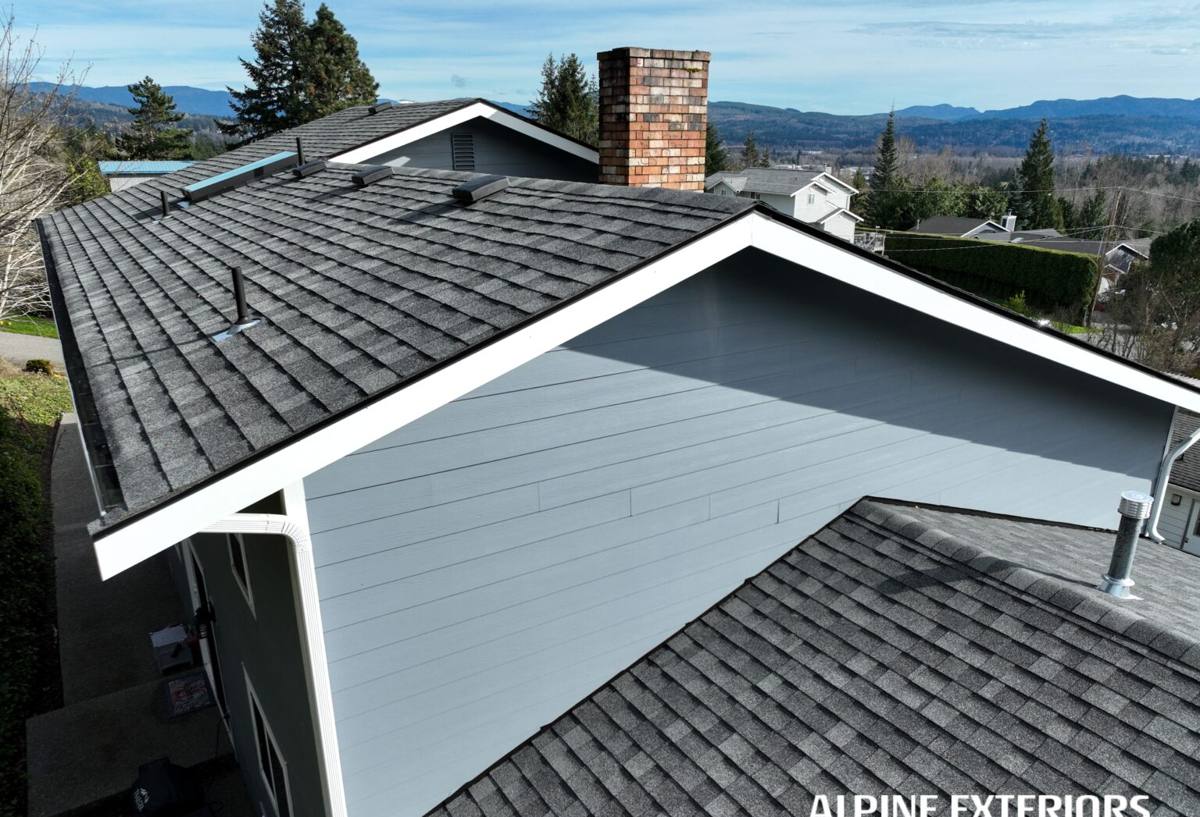
What a Correctly Installed Shingle Roof Includes Here
A roof that's going to hold up under Blaine's conditions needs a few things done right that are easy to skip on a rushed job. This isn't about upgrading to a premium product — it's about basic installation discipline.
Underlayment and Ice-and-Water Barrier
Self-adhering ice-and-water membrane at eaves, valleys, and around penetrations gives the roof a sealed layer where wind-driven rain is most likely to get pushed backward under the shingles. A quality synthetic underlayment across the rest of the deck adds a second line of defense if any water does get past the shingle surface.
Ventilation Balance
Intake at the eaves and exhaust at the ridge need to be balanced so moist attic air actually moves out instead of condensing on the underside of the roof deck. Poor ventilation traps moisture, which shortens shingle life from underneath — a problem that has nothing to do with the shingle brand and everything to do with how the roof was designed.
Flashing and Fastening Details
Step flashing at walls and chimneys, proper valley treatment, and correct nail placement (not staples, not over-driven or under-driven nails) all matter more in a windy, wet climate than in a mild one. This is also where corrosion-resistant fasteners earn their keep near the water.
Shingle Options for Blaine Homes
Not every shingle product handles moss and wind the same way. Here's how the common options compare for a home in this area:
| Shingle Type | Typical Lifespan | Moss/Algae Resistance | Wind Rating | Best Fit |
|---|---|---|---|---|
| 3-Tab | 15–20 years | None built in; needs treatment or regular cleaning | Lower | Budget projects, secondary structures |
| Standard Architectural/Laminate | 25–30 years | Moderate; thicker mat sheds water better but still grows moss without added protection | Mid to high | Most Blaine homes — balance of cost and durability |
| Algae-Resistant Architectural | 25–30+ years | Copper or zinc granules slow algae and moss growth | Mid to high | Shaded lots, north-facing slopes, homes near trees or water |
| Impact-Resistant (Class 4) | 30+ years | Same as standard unless also algae-resistant | High | Homeowners prioritizing storm durability |
For most homes in Blaine, we point people toward an architectural shingle with algae-resistant granules, especially on north-facing slopes or roofs shaded by trees. It costs a little more up front than a standard laminate shingle but it directly addresses the moss problem instead of just delaying it.
How We Handle a Blaine Roofing Job
The process is the same core steps every time, but the details get adjusted for the specific roof, its exposure, and its slope orientation.
- On-site inspection of the existing roof, decking, ventilation, and any moss or moisture damage already present
- A written scope covering shingle choice, underlayment class, flashing work, and ventilation changes if needed
- Tear-off of the old roofing down to the deck, with the deck inspected for soft spots or rot before anything new goes down
- Repair or replacement of any damaged sheathing before underlayment goes on
- Ice-and-water membrane at eaves, valleys, and penetrations, then underlayment across the field
- New flashing at walls, chimneys, and skylights rather than reusing old flashing
- Shingle installation with correct nailing pattern and exposure
- Ridge vent or other exhaust ventilation installed or confirmed, balanced against intake
- Full cleanup, magnetic sweep for stray fasteners, and a walk-through of the finished roof
Signs a Blaine Roof Needs Attention
A lot of roof problems in this area show up gradually, so it helps to know what to watch for before a small issue turns into a leak.
- Granules building up in gutters or at the base of downspouts
- Visible moss on north-facing slopes, in valleys, or along the ridge
- Shingle tabs that are curling, cupping, or cracked
- Missing shingles or exposed nail heads after a windstorm
- Daylight visible through the roof deck from inside the attic
- Water stains or damp insulation in the attic, especially near valleys or chimneys
- Soft or spongy spots underfoot near roof penetrations
- Rust streaks around flashing, vents, or fasteners
- A roof that's at or past its shingle manufacturer's rated lifespan
Maintenance Between Full Roof Replacements
A well-installed roof still needs some upkeep in a climate like this one. Zinc or copper control strips near the ridge let rainwater carry trace metal down the roof face, which helps slow new moss growth on the rest of the slope. Gutters and valleys need to be cleared more often here than in drier parts of the county, since a clogged valley during a heavy rain event is one of the more common ways water finds its way under shingles. We don't recommend pressure washing a shingle roof — it strips granules and shortens the roof's life faster than the moss it's meant to remove. Soft washing with an appropriate solution, done carefully, is the safer way to knock back existing moss between major maintenance visits.
Cost Factors for Asphalt Shingle Roofing in Blaine
Every roof is different, so we don't quote a number without seeing the roof first, but these are the main things that move the price up or down:
| Factor | Why It Matters |
|---|---|
| Roof size and pitch | More square footage and steeper slopes mean more material and more labor time |
| Number of existing layers | Tearing off multiple layers of old roofing takes longer and adds disposal cost |
| Decking condition | Rotted or soft sheathing found during tear-off needs to be replaced before new roofing goes on |
| Ventilation changes | Adding or correcting intake and exhaust vents adds labor but pays off in shingle lifespan |
| Flashing complexity | Roofs with multiple valleys, chimneys, or skylights need more custom flashing work |
| Shingle tier | Algae-resistant or impact-resistant shingles cost more per square than standard laminate |
| Access and site conditions | Steep lots, limited driveway access, or landscaping close to the house can add setup time |
As a broad range, most straightforward asphalt shingle roof replacements on a typical single-family home run from the lower five figures up toward the low-to-mid twenties depending on size and complexity — steeper, larger, or more detailed roofs land higher in that range. An on-site inspection is really the only way to give you a number that means anything.
Why a Ferndale Crew That Already Works Blaine Makes a Difference
Being based in Ferndale means we're not driving in from out of the area when a Blaine homeowner needs a roof looked at or a tarp put up after a storm — we're already working this part of Whatcom County regularly. That matters in a few practical ways: we know which slope orientations in Blaine tend to hold moss longest and should get algae-resistant shingles by default, we're familiar with the permitting process for this area, and we're not guessing at how the local wind and rain patterns should shape flashing and fastening decisions. A crew that treats every roof the same regardless of where it sits is going to miss details that matter here. A crew that works Blaine roofs regularly builds that knowledge into every job without having to relearn it each time.
If you're dealing with moss buildup, a roof that's reaching the end of its expected life, or you just want an honest look at where things stand, we're happy to come out, walk the roof, and give you a straight answer — no pressure, no obligation. Use the form below to request a free estimate.