 Ferndale Siding
 Why Birch Bay Asks More of a Shingle Roof
Birch Bay sits right up against the water, and that changes what a roof has to survive year over year. A shingle roof three miles inland in Ferndale deals with rain and cold. A shingle roof in Birch Bay deals with all of that plus salt-laden air coming straight off the water, wind-driven rain that gets pushed sideways under poorly sealed edges, and a moss season that runs longer than almost anywhere else in Whatcom County because the shade, humidity, and mild temperatures near the shoreline rarely give roofs a real chance to dry out. None of this means a shingle roof is the wrong choice for a Birch Bay home — it's still one of the most practical, cost-effective roofing systems available. It just means the installation details that get skipped on an easier job can't get skipped here.
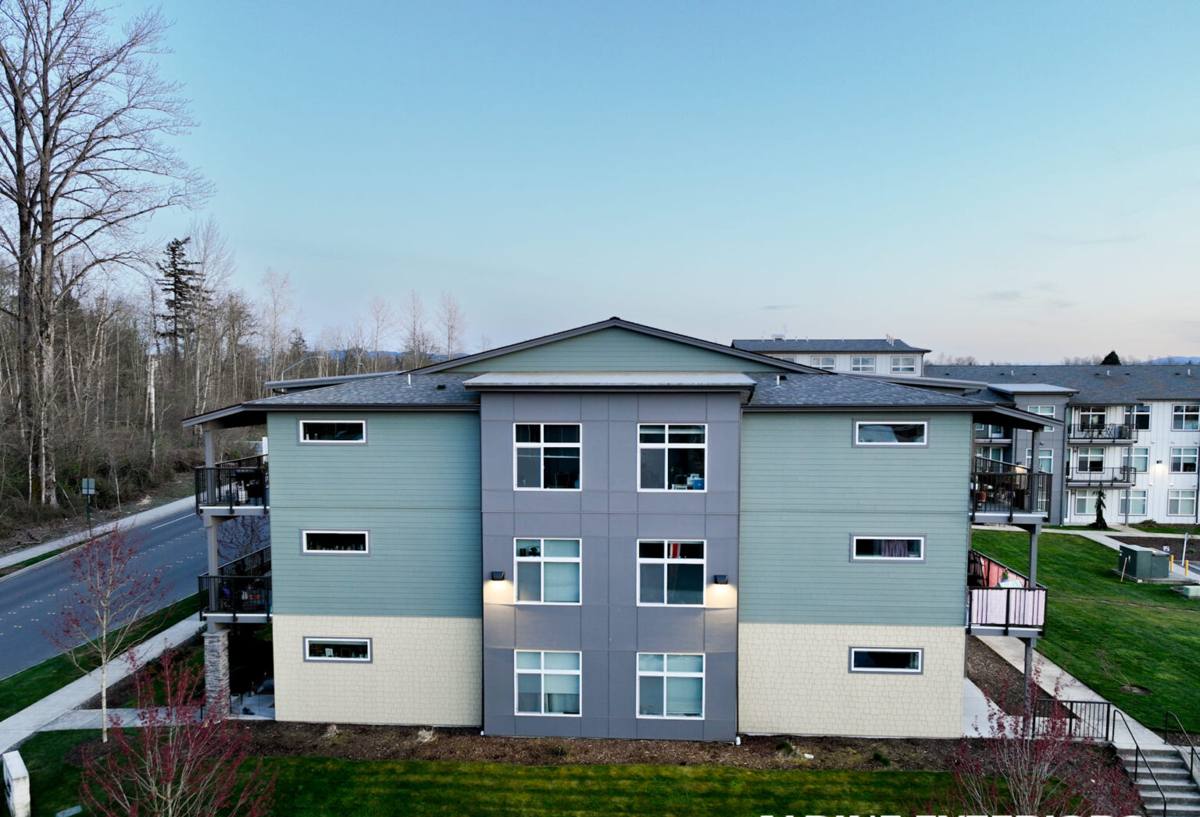
What Salt Air and Driving Rain Actually Do to a Roof
Salt Air
Salt in the air doesn't rot shingles the way it corrodes metal, but it accelerates the breakdown of exposed metal components on the roof — flashing, drip edge, nail heads, vent housings, and any exposed fasteners. Once those start to corrode, water finds its way underneath the shingle mat instead of running off the surface, and that's when small problems turn into deck damage. This is why the metal we use and how it's protected matters as much as the shingle itself on a home this close to the water.
Driving Rain
Wind off the water doesn't just drop rain straight down — it pushes it sideways and up under shingle tabs, into exposed nail lines, and along poorly lapped underlayment seams. A roof that would hold up fine in a calmer inland setting can leak in the same storm if the underlayment laps, starter strip, and shingle nailing pattern weren't done with wind-driven rain specifically in mind.
Moss, Algae, and Whatcom County's Long Wet Season
Whatcom County's wet season stretches long, and shaded, north-facing, or low-slope sections of a roof near Birch Bay often stay damp for weeks at a stretch. That's exactly the environment moss and algae need to take hold. Moss isn't just cosmetic — as it grows, it lifts shingle edges, holds moisture directly against the shingle surface long after the rest of the roof has dried, and works its root structure into the granule surface. Left long enough, it shortens the life of an otherwise sound roof by years. Algae staining (the dark streaking many homeowners notice on older roofs) is less structurally damaging but is a sign the roof surface is staying wetter, longer, than it should.
Choosing the Right Asphalt Shingle for a Home Near the Water
Not every asphalt shingle product is built with the same priorities, and for a Birch Bay home, wind rating, algae resistance, and sealant strength matter more than they would somewhere drier and calmer.
| Shingle Type | Typical Wind Rating | Algae Resistance | Best Fit |
|---|---|---|---|
| Standard 3-tab | Lower | Minimal unless specified | Budget projects, less wind exposure |
| Architectural (dimensional) | Higher, varies by line | Available with algae-resistant granules | Most Birch Bay homes |
| Impact/high-wind rated architectural | Highest | Available with algae-resistant granules | Fully exposed, waterfront-facing roofs |
We generally steer Birch Bay homeowners toward architectural shingles with algae-resistant (copper- or zinc-infused) granules. Standard 3-tab shingles are a legitimate lower-cost option and hold up fine on more sheltered homes, but on a roof exposed to sustained coastal wind and moisture, the thinner profile and lower wind rating mean it's doing more work with less margin. That's a trade-off we'll walk through honestly rather than push one product because it's what's on the truck.
What a Correct Installation Actually Involves
The shingle brand gets most of the attention, but on a coastal roof the materials underneath it and the details around it are what determine whether the roof performs for its full expected life.
- Underlayment: A synthetic underlayment with properly lapped, sealed seams — not stapled felt that wicks moisture at every fastener.
- Ice-and-water shield: Self-adhering membrane at eaves, valleys, and around every penetration, sized generously given how much wind-driven rain this location sees.
- Drip edge and flashing: Corrosion-resistant metal at all edges, valleys, and wall intersections, properly lapped with the underlayment rather than just caulked on top.
- Ventilation: Balanced intake and exhaust ventilation so the underside of the deck can dry out between wet stretches instead of staying damp.
- Nailing pattern: Correct nail count and placement per the shingle manufacturer's high-wind installation instructions, not just the minimum spec.
- Starter strip and sealant: A true starter course at eaves and rakes so the first row of shingles has proper sealant contact against wind uplift.
Skip any one of these and the shingle itself, no matter how good, is carrying more of the load than it was designed for.
How We Approach a Birch Bay Roofing Project
- On-site inspection: We look at the existing roof deck, ventilation, flashing condition, and any moss or moisture staining before we talk about shingles at all.
- Honest scope and quote: You get a written estimate that spells out tear-off, deck repair allowances if needed, underlayment, flashing, and shingle specifics — no vague line items.
- Tear-off and deck check: Old roofing comes off down to the deck so we can actually see and address any soft or water-damaged sheathing rather than roofing over it.
- Install to the coastal detail list above: Underlayment, ice-and-water shield, flashing, ventilation, and nailing pattern done to the standard this location needs, not the minimum code allows.
- Cleanup and walk-through: Site cleared of debris and nails, and a walk-through so you know what was done and what to watch for going forward.
What We Won't Do
We won't quote a roof-over (shingling directly over an existing layer) on a Birch Bay home unless there's a genuinely sound reason for it, because it traps moisture against the deck and hides the exact problems — soft sheathing, failed flashing — that this climate causes. It's a faster, cheaper job to sell, but it's not one we stand behind here.
Maintenance That Actually Extends Roof Life Here
- Have moss and debris cleared from valleys and low-slope sections at least once a year, more often under overhanging trees.
- Keep gutters clear so water isn't backing up under the shingle edge during heavy rain events.
- After major windstorms, do a visual check (from the ground is fine) for lifted or missing shingles rather than waiting for a leak to show up inside.
- Watch for dark streaking on north-facing slopes — it's early algae growth, not just discoloration, and it's easier to address before it spreads.
- Have flashing around chimneys, vents, and skylights checked every few years, since these are the first places corrosion or sealant failure shows up.
What Drives the Cost of a Shingle Roof in Birch Bay
| Factor | Why It Matters Here |
|---|---|
| Roof size and pitch | Steeper, more complex rooflines take longer and use more material per square |
| Deck condition | Coastal moisture exposure makes hidden deck damage more common on older roofs |
| Shingle tier chosen | 3-tab vs. standard architectural vs. high-wind architectural changes material cost directly |
| Flashing and detail work | Valleys, chimneys, and multiple penetrations add labor beyond a simple gable roof |
| Tear-off layers | Removing an existing roof-over adds disposal and labor cost versus a single-layer tear-off |
| Access | Steep sites or limited driveway/staging space near the water can affect setup time |
We don't publish a flat price because these factors genuinely change the number from one house to the next, and quoting blind isn't fair to you or accurate for us. What we can say is that the honest range for a full tear-off and re-roof with proper coastal detailing is a mid-range investment relative to other exterior projects — and it's one where cutting corners on the underlayment and flashing to hit a lower number almost always costs more in repairs within a few years.
Why Local Experience in Birch Bay Matters
A crew that only occasionally works this close to the water tends to install roofs the way they'd install one anywhere else — to code, but not necessarily to what this specific exposure demands. Working Birch Bay and the surrounding Ferndale area regularly means we've seen which flashing details actually hold up against driving rain off the bay, which roof sections consistently grow moss first, and where corner-cutting on a coastal install tends to show up as a callback two or three winters later. That's not a marketing line — it's the practical difference between a roof that's technically installed and one that's installed for where it actually sits.
If you're weighing a repair versus a full replacement, or just want a straight read on what shape your roof is in, we're glad to take a look. Fill out the form below for a free, no-pressure estimate — we'll tell you what we actually see, not just what's easiest to sell.