 Ferndale Siding
 Deck Repair Built for Whatcom County Weather
A deck in the Sumas area doesn't fail because of one bad storm. It fails from years of the same pattern repeating: rain soaking into end grain and fastener holes, a few dry days that never quite finish the drying, then more rain. Add in the driving rain that comes sideways off a Whatcom County wind and a moss season that can run from October into May, and you have the exact conditions that break down wood decks faster than most homeowners expect. Whether your deck sits closer to the coastal air near Ferndale or further inland toward Sumas, it's dealing with the same long wet season and the same shaded, slow-drying spots where moss and algae take hold.
Deck repair isn't just about replacing a few gray, splintering boards. The boards are usually the last thing to fail — by the time the surface looks bad, the framing underneath, the ledger board connection to the house, or the footings have often been absorbing water damage for a while. A repair that only addresses the top layer without checking what's underneath is a repair you'll be paying for again in a few years.
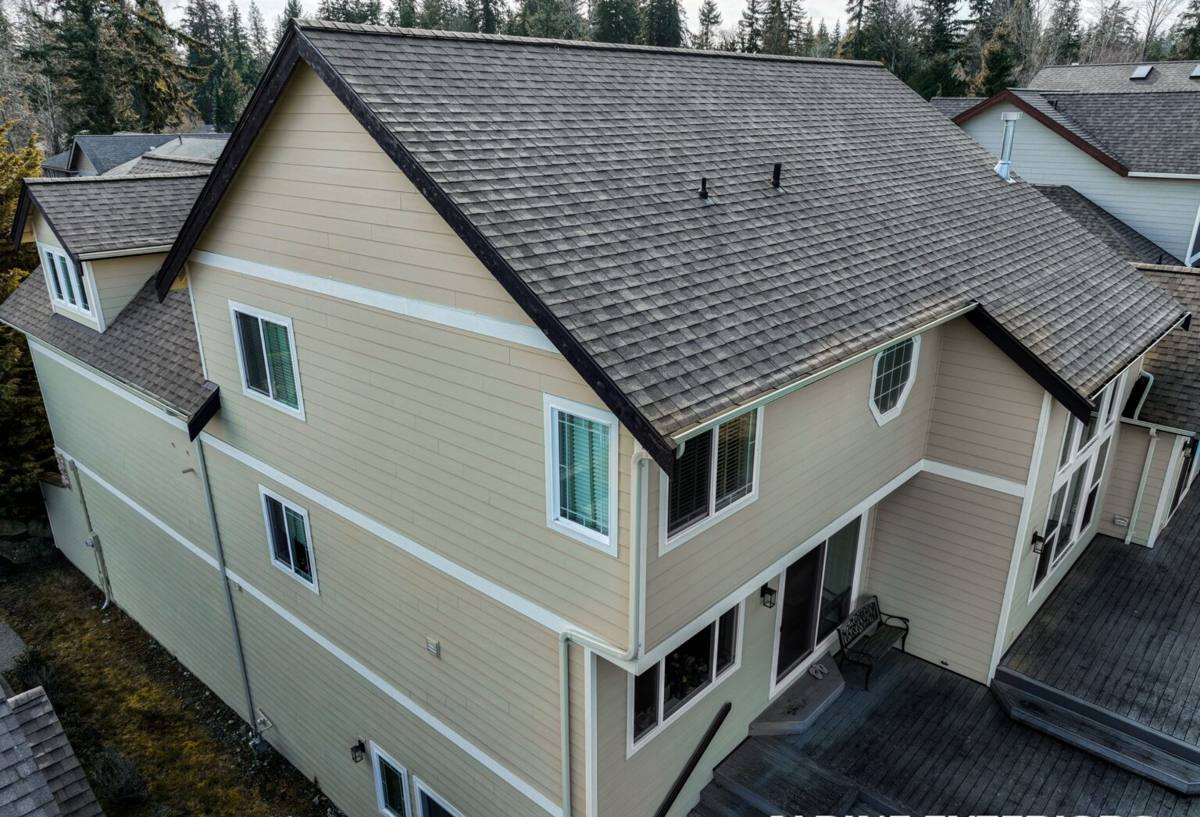
What's Actually Wearing Out Your Deck
Moisture, Not Just Age
Wood decks don't wear out on a calendar — they wear out from moisture cycling. Every time a board gets soaked and then dries, the wood fibers move slightly. Do that hundreds of times over a wet Pacific Northwest winter and spring, and you get cupping, checking, and eventually rot, especially anywhere water can pool or get trapped: board ends, around fasteners, and under debris that collects moss.
The Ledger Board Is the Highest-Stakes Spot
The ledger board — where the deck framing bolts into the house — is the single most important connection on the entire structure, and it's also the spot most prone to hidden water damage. If flashing was installed poorly or is missing, water works its way behind the ledger and rots both the ledger and the house's rim joist from the inside, often with no visible sign until the wood is soft. This is the area we check first on every repair call, because it's a safety issue, not just a cosmetic one.
Moss, Algae, and Slick Surfaces
Shaded decks and north-facing decks in this region grow moss and algae readily during the wet months. Beyond looking bad, moss holds moisture against the wood surface and makes boards dangerously slick underfoot. Left untreated for a season or two, moss growth accelerates surface decay in exactly the boards it's covering.
Fastener Corrosion
Older decks are often built with standard galvanized nails or screws that were adequate when installed but corrode over years of damp exposure, especially in areas closer to the coast where salt air adds to the corrosion load. Corroding fasteners lose grip strength, which shows up as boards that feel slightly loose or that squeak and shift underfoot.
Signs You Need Repair — Not Just a Cleaning
- Boards that feel spongy, springy, or soft when you press on them, especially near the house or at board ends
- Visible gaps opening up around the ledger board where it meets the house siding or trim
- Railings or posts that wobble or flex when you lean on them
- Fasteners that are rusted, popped up, or leaving dark stains in the wood around them
- Persistent moss or dark staining that comes back within weeks of cleaning
- Stairs that feel uneven, bouncy, or have visibly sagging stringers
- Gaps or cracks where deck posts meet their footings or concrete piers
- A noticeable slope or dip in a section of decking that wasn't there before
Any one of these on its own might be a minor fix. Several together usually mean the framing needs attention, not just the visible decking.
What a Correct Deck Repair Actually Involves
A repair done right starts underneath, not on the surface. Our process on a typical repair call looks at four layers:
1. Structural Framing
Joists, beams, and the ledger connection get checked for rot, cracking, and proper fastening — not just a visual glance, but probing suspect wood with a screwdriver or awl to find soft spots that look fine from a distance.
2. Footings and Posts
Posts should sit on footings that haven't shifted, cracked, or heaved. Whatcom County's freeze-thaw cycles, even mild ones, can move undersized or shallow footings over time, which shows up as a post that's no longer plumb or a deck that's developed a slight lean.
3. Decking and Railings
Individual boards are replaced where damaged rather than resurfacing the whole deck unnecessarily. Railings get evaluated for both looks and code-relevant safety — a railing that looks fine but flexes under load is a liability, not a finished repair.
4. Flashing and Water Management
This is the step that's easy to skip and the one that determines whether the repair lasts. Proper ledger flashing, gaps between boards for drainage, and keeping decking away from direct soil or siding contact all matter more than the species of wood you choose.
Repair vs. Rebuild: How We Make the Call
| Situation | Usually Repair | Usually Rebuild |
|---|---|---|
| Framing condition | Joists and ledger are sound, isolated soft spots | Widespread rot in joists, ledger, or posts |
| Age of structure | Under 15-20 years, built to a reasonable standard | Older deck with undersized or outdated framing |
| Footings | Stable, properly sized, no movement | Undersized, cracked, or heaving |
| Scope of damage | Localized to a few boards, a railing section, or stairs | Damage spread across most of the deck surface |
| Code compliance | Railings and stair rise/run already meet current standards | Railing height, spacing, or attachment doesn't meet current code |
We'll always give you a straight answer on which side of this line your deck falls on, with the reasoning behind it — not a push toward the bigger job.
Material Choices: Honest Trade-Offs
When we're replacing boards or rebuilding sections, homeowners usually choose between a few paths. None of them is universally "right" — it depends on budget, how the deck is used, and how much upkeep you want to do.
| Material | Upfront Cost | Maintenance | How It Handles Our Climate |
|---|---|---|---|
| Pressure-treated lumber | Lowest | Needs re-staining/sealing every 2-3 years | Good rot resistance if properly sealed and flashed; requires ongoing attention |
| Cedar | Moderate | Needs sealing or staining regularly to hold its color and resist decay | Naturally decay-resistant but still needs a maintained finish in this rainfall |
| Composite decking | Higher | Low — occasional cleaning, no staining | Resists rot and moss staining well; framing underneath still needs the same wood-safe attention |
Composite decking has real advantages in a wet climate — it doesn't rot and it resists moss staining better than wood — but it's also more sensitive to installation mistakes like inadequate ventilation or gaps, and it carries a manufacturer warranty structure that's only as good as the installation behind it. We'll walk you through what fits your deck and your budget rather than steering you toward whatever's easiest for us to install.
Our Process
- On-site inspection. We check framing, footings, ledger flashing, and decking together — not just the part you called about.
- Straight assessment. You get a clear picture of what's failing, what's still sound, and what the repair does and doesn't fix.
- Written estimate. Scope and cost factors laid out before any work starts, no surprise add-ons mid-project.
- Repair work. Framing and structural fixes first, then decking, railings, and finish work.
- Final walkthrough. We check the repaired areas with you and point out any maintenance you should keep an eye on going forward.
Why a Crew That Already Works Sumas and Ferndale Matters
Deck repair in this part of Whatcom County isn't the same job as deck repair somewhere dry. A crew that hasn't worked this region regularly may not think to check ledger flashing first, may under-spec fastener corrosion resistance, or may not account for how much moss recovery a shaded deck actually needs versus a quick pressure wash. We work on decks across the Ferndale and Sumas area routinely, so we're not guessing at how the local rain, humidity, and moss cycle affects a given repair — we've already seen how it plays out on decks like yours.
That local familiarity also means a faster, more accurate estimate. We're not learning the regional climate on your project; we're applying what we already know from repairing decks nearby.
Checklist Before You Hire Anyone for Deck Repair
- Do they inspect the framing and ledger board, or just quote based on what's visible from the deck surface?
- Do they explain flashing and water management as part of the repair, not just board replacement?
- Is the estimate written, itemized, and clear about what's included?
- Do they carry proper licensing and insurance for the work?
- Can they explain why they're recommending repair versus rebuild in your specific case?
- Are they familiar with local permit requirements for structural deck work?
If your deck has soft spots, a wobbly railing, or moss that keeps coming back no matter how often you clean it, it's worth getting an honest look before it becomes a bigger repair. We offer free, no-pressure estimates for deck repair throughout the Sumas and Ferndale area — use the form below to get one scheduled.