 Ferndale Siding
 Building a Deck That Belongs in Sumas' Weather
A deck in the Sumas area has to earn its keep every month of the year, not just on the handful of dry summer weekends when everyone's out on it. Whatcom County sits under a weather pattern that's tougher on outdoor wood and hardware than most of the country ever deals with: salt-laden air moving in off the water, long stretches of driving rain, and a moss and algae season that can run from fall clear through spring. A deck built with generic, one-size-fits-all methods will show it within a few seasons — soft spots at the ledger, green film on the boards, rust bleeding through fasteners. A deck built for this specific climate will still be tight and solid a decade or two later. This page is about what that actually takes, and what our crew does differently on Sumas-area deck builds because we already know this weather.
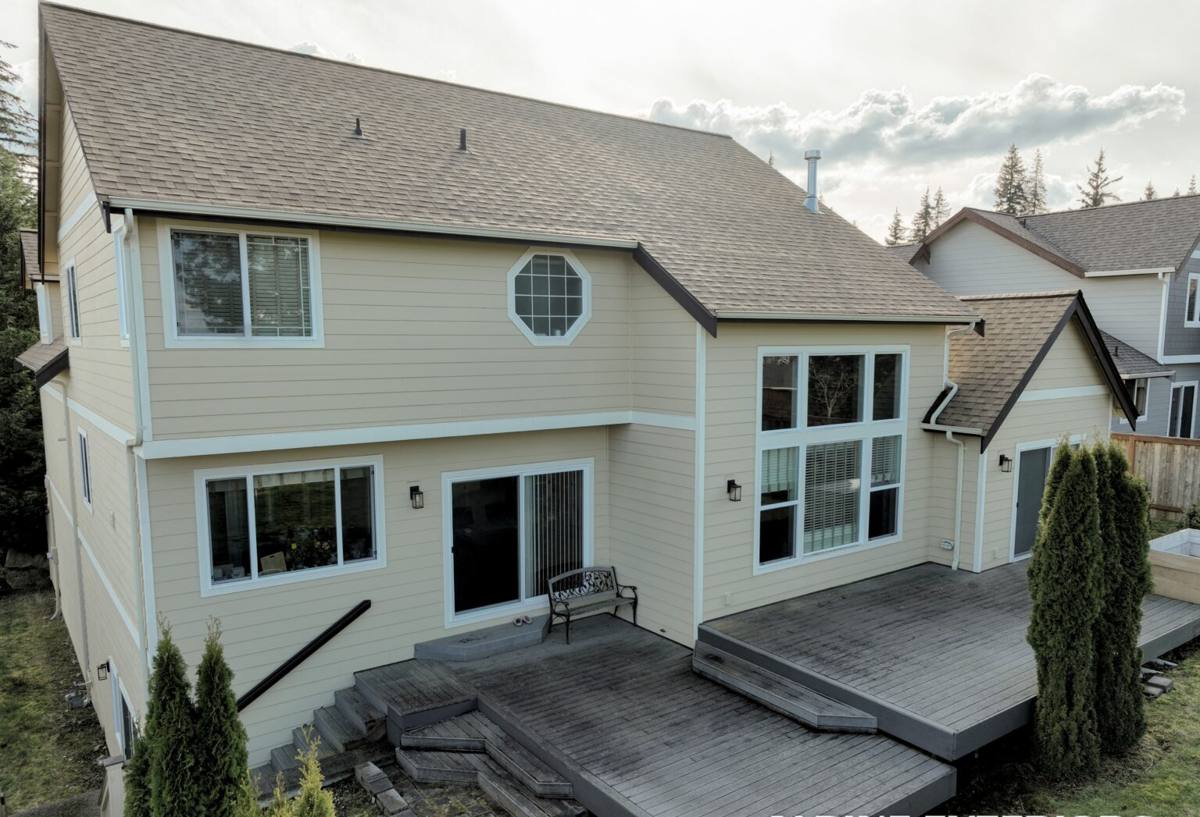
What Whatcom County Weather Does to an Unprotected Deck
Before talking about materials and methods, it helps to understand exactly what's working against a deck out here. The failures we see on older or poorly built decks almost always trace back to one of three things.
Salt Air and Metal Fatigue
Proximity to Puget Sound and the Strait of Georgia means the air carries a steady trace of salt, even well inland. Salt is an electrolyte — it speeds up corrosion on anything metal, from deck screws to joist hangers to railing hardware. Standard zinc-coated fasteners that would be fine in a dry inland climate can start rusting within a few years here, and once a fastener corrodes it loses holding strength long before it looks obviously bad from the surface.
Driving Rain and Hidden Rot
This isn't a light-drizzle climate. Rain here often comes sideways, driven by wind, which means it finds its way into every gap, seam, and unflashed joint. The most common rot we find on older decks isn't on the exposed decking boards — it's at the ledger board where the deck attaches to the house, and in the top of support posts, both places where water collects and can't dry out between storms.
The Long Moss Season
Cool, damp, and shaded conditions for much of the year are exactly what moss and algae need to take hold. On a deck, that shows up as a slick green film on boards, dark staining in the wood grain, and in the joints between boards where debris traps moisture. Beyond looking bad, a mossy deck surface is genuinely slippery and becomes a fall hazard, especially on stairs.
Choosing a Decking Material That Fits This Climate
There's no single "best" decking material — the right choice depends on budget, how much upkeep you want to take on, and how the deck will be used. Here's how the common options actually perform under Sumas-area conditions, based on how each material behaves with sustained moisture and salt exposure rather than how it's marketed.
| Material | Moisture & Moss Behavior | Maintenance | Typical Lifespan Here |
|---|---|---|---|
| Pressure-treated pine/fir | Absorbs water, prone to surface moss if not sealed regularly | Needs cleaning and re-sealing every 1–2 years | 15–20 years with upkeep |
| Cedar | Naturally rot- and insect-resistant, still needs sealing to hold color and shed moisture | Annual cleaning, periodic oil or sealer | 20+ years with upkeep |
| Composite (capped) | Doesn't absorb water like wood; moss/algae can still grow on the surface film and needs washing | Occasional washing, no sealing or staining | 25–30 years, backed by manufacturer warranty |
| PVC | Fully synthetic, sheds water completely, most resistant to surface staining | Lowest — occasional washing | 25–30+ years, backed by manufacturer warranty |
For homeowners who want the lowest-maintenance option and don't mind the higher upfront material cost, composite or PVC decking generally makes the most sense in this climate — you're trading a larger initial investment for far less time spent cleaning, sealing, and repairing down the road. For a more traditional look and a lower material cost, cedar holds up honestly well here as long as it gets sealed on a schedule. Pressure-treated lumber is still a reasonable choice on a tighter budget, but it's the option that demands the most consistent upkeep to avoid moss buildup and surface checking.
The Structural Work Nobody Sees
The decking boards are what you notice — the framing underneath is what actually determines whether the deck lasts. This is where a lot of corners get cut on lower-bid jobs, because it's invisible once the boards go down.
- Ledger flashing: Where the deck attaches to the house, we install proper flashing that directs water away from the band joist and wall sheathing, rather than relying on caulk alone, which fails silently over time.
- Joist tape: A self-adhering waterproof membrane on top of every joist keeps rain from soaking directly into the end grain of the framing lumber through the fastener holes — one of the most common places we find hidden rot on decks that skipped this step.
- Footings below frost depth: Support posts sit on concrete footings poured to the local required depth so the structure doesn't shift with seasonal ground movement.
- Post bases that keep wood off concrete: Elevated post base hardware keeps the bottom of each post from sitting in standing water on the footing, which is a common rot starting point.
Fasteners and connector hardware matter just as much as the wood itself, especially given the salt air discussed above.
| Hardware Type | Why It Matters Here |
|---|---|
| Stainless steel or heavy hot-dip galvanized fasteners | Resist the accelerated corrosion that standard coated screws experience in salt-influenced air |
| Coated structural screws rated for treated lumber | Prevent the chemical reaction that occurs between certain treated wood chemicals and lower-grade metal coatings |
| Stainless or heavy-coated joist hangers and post caps | Carry structural load at the most stress-concentrated connection points — not a place to save money |
Drainage, Slope, and Moss Control
Two building details do more to keep moss off a deck long-term than any cleaning product. First, the decking surface needs a slight slope away from the house — typically a small amount of fall over the run of the deck — so water sheds instead of pooling. Second, gap spacing between boards needs to be consistent and sized correctly for the material, wide enough to let water and debris pass through and allow airflow underneath, but not so wide it becomes a hazard or trap for small objects. A deck with flat, tight-fitting boards and no underside airflow will hold moisture in the joints all winter, and that's exactly where moss and algae take hold first. On enclosed or low-clearance decks, we also make sure there's enough ventilation underneath so the framing can actually dry out between rain events instead of staying damp for weeks at a time.
Railings, Stairs, and Code Requirements
Any deck more than a modest height off the ground needs a code-compliant guardrail, and stairs have their own set of requirements for rise, run, and handrails. Building code in this area generally follows the same guardrail height, baluster spacing, and stair specifications used across Washington under the residential building code — guardrails around 36 to 42 inches depending on application, baluster gaps that won't allow a small child to pass through, and graspable handrails on stairs with a certain number of risers. Getting these details right isn't optional and it isn't just a paperwork issue: a railing built to the wrong height or with wide baluster spacing is a real safety liability, and it's one of the first things a building inspector checks. We build every deck to pass inspection the first time, not to be corrected after the fact.
Permits, Setbacks, and Site Conditions Near Sumas
Most new decks and significant deck rebuilds in Whatcom County require a building permit, and setback rules determine how close a structure can sit to property lines. Sites in and around the Sumas area can also have their own site-specific factors — sloped lots, drainage patterns, or soil conditions that affect footing depth and placement. We handle the permit process as part of the job rather than leaving it to the homeowner, and we do a site walk before any design work starts so the plan accounts for the actual conditions on your lot instead of a generic layout.
Our Process for a Sumas-Area Deck Build
The process is straightforward, and we keep it that way on purpose — no surprise change orders, no vague scope.
- Site visit and design conversation: We look at the site, talk through how you'll actually use the deck, and discuss material options honestly, including trade-offs on maintenance and budget.
- Design and permit drawings: We put together a plan that meets local code and setback requirements and handle the permit submission.
- Demolition of any existing structure: If we're replacing an old deck, we remove it and inspect the ledger area and framing underneath before building new.
- Footings and framing: Footings poured to required depth, framing built with joist tape and proper flashing as described above.
- Decking, railings, and stairs: Installed to spec, with attention to consistent board spacing and slope.
- Final walkthrough and inspection: We walk the finished deck with you, and it goes through the required local building inspection.
Maintenance Checklist and Why Local Experience Matters
A well-built deck in this climate still needs some seasonal attention, especially through the wetter months. Here's what we recommend to homeowners in the Sumas area regardless of which material they chose:
- Sweep off leaves and debris regularly in fall — trapped organic matter is what feeds moss growth in the board gaps.
- Rinse the surface periodically through the wet season rather than waiting until spring, when moss has had months to establish.
- Check the ledger flashing area yearly for any sign of water staining on the siding above it.
- For wood decking, plan on cleaning and re-sealing on the schedule appropriate to the material — skipping a cycle is when moisture damage tends to start.
- Inspect railings and stair connections yearly for any looseness, especially after the first year as everything settles.
- Keep an eye on fastener heads for early rust bleed, which is easier to address early than after it's spread into the wood.
Beyond the build itself, there's real value in hiring a crew that already works this specific area regularly. We already know what inspectors here are looking for, what soil and drainage conditions tend to show up on local lots, and which construction details actually hold up against this particular combination of salt air, driving rain, and moss. That's not something a crew coming in from outside the region picks up on the first job — it's built from doing this work here, repeatedly, and seeing how decks built different ways actually age in this climate over time.
If you're planning a new deck or need to replace one that's showing its age, we're happy to come take a look and give you an honest, no-pressure estimate. Use the form below to get started.