 Ferndale Siding
 Building Decks for Sudden Valley's Specific Climate
Sudden Valley sits inland from Bellingham Bay but still lives inside the same Whatcom County weather system as the rest of the coast: moisture-laden marine air, rain that blows in sideways as often as it falls straight down, and a moss season that can run most of the year on shaded, tree-covered lots. A lot of Sudden Valley properties back up to trees or sit on sloped, wooded ground near the lake and golf course, which means more shade, more standing humidity around the structure, and more debris falling onto deck surfaces than a home out in the open would deal with. A deck built without that context in mind, using generic framing and fastener choices, tends to show problems early: soft spots, rust streaks, slick green growth on the boards, and rot starting exactly where water collects and never gets a chance to dry.
We build decks for Sudden Valley homeowners with those conditions treated as the starting assumption, not an afterthought. That means the framing, fasteners, ledger attachment, and decking material all get chosen and installed with this specific microclimate in mind, not a one-size-fits-all approach borrowed from a drier region.
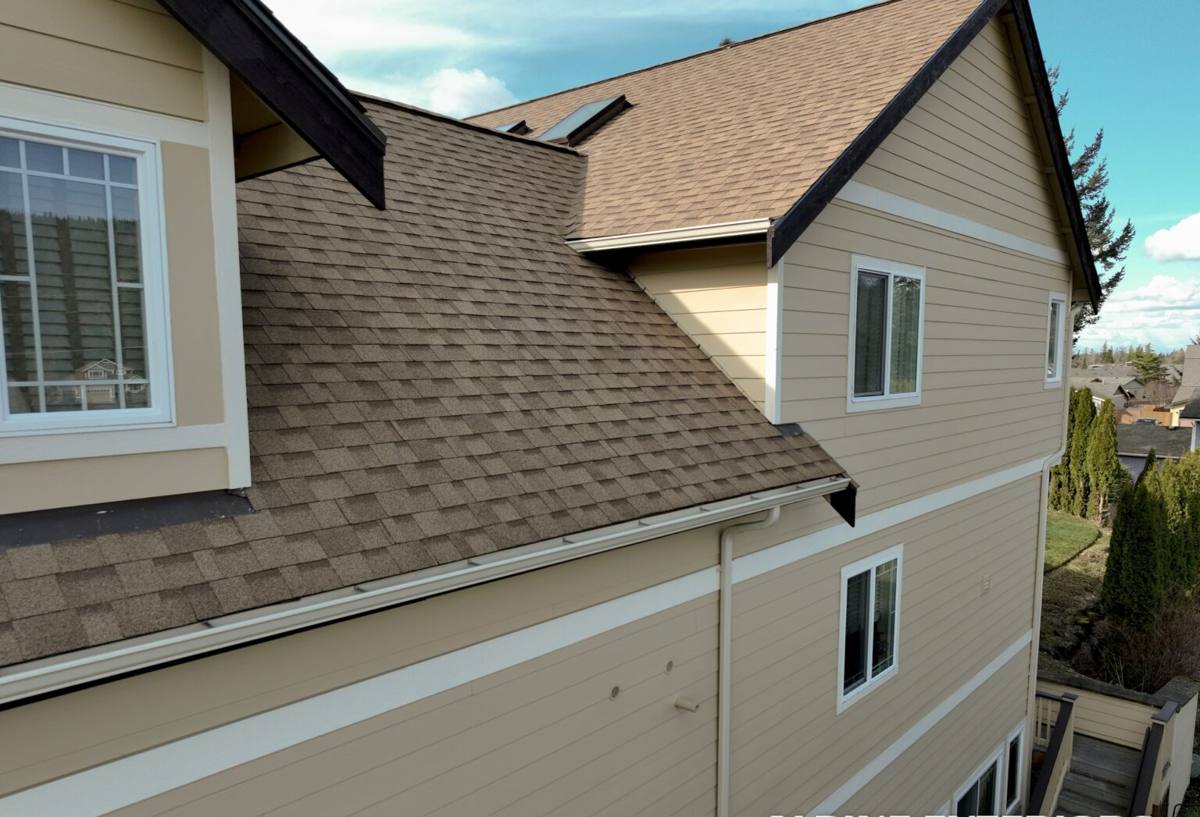
What Sudden Valley's Climate Actually Does to a Deck
Driving Rain and Standing Moisture
Wind-driven rain doesn't just fall onto a deck surface, it gets pushed under railings, into board gaps, and against the house where the ledger board attaches. On a lot with tree cover, that moisture also has less sun and wind to dry it back out between storms, so the wood or composite stays damp longer after every rain event than it would on an open, sun-exposed site.
A Long Moss and Algae Season
Shaded decking, especially the north or east-facing side of a house or anywhere under a stand of trees, builds up moss, algae, and mildew film across most of the year here. Beyond looking bad, that growth holds moisture against the board surface and turns a deck slick and genuinely dangerous underfoot, particularly on stairs.
Salt-Tinged Air
Even set back from the water, this part of Whatcom County still gets salt-influenced marine air moving through. Over years, that air is harder on exposed fasteners, hardware, and lower-grade metal connectors than an inland, dry climate would be, and corroding hardware is one of the more common hidden failure points we find on older decks.
Organic Debris Load
Wooded lots mean leaves, needles, and seed litter landing on the deck surface and settling into board gaps and around posts. Left alone, that debris holds moisture directly against the wood or composite and accelerates exactly the kind of rot or staining a well-drained deck should avoid.
What a Correctly Built Deck Looks Like Here
A deck that's going to hold up on a Sudden Valley lot needs a few things done right from the framing up, not just a nice-looking surface on top.
- Proper ledger flashing: The ledger board attachment to the house is the single most common point of hidden rot on any deck. Correct flashing, and a gap or drainage path behind the ledger, keeps water from tracking into the house rim joist.
- Corrosion-resistant fasteners and hardware: Hot-dip galvanized or stainless structural hardware holds up to marine-influenced air far longer than standard coated fasteners, which can start rusting and staining the decking within a few seasons here.
- Adequate joist spacing and drainage slope: A slight slope away from the house and consistent joist spacing under the decking material keep water moving off the structure instead of pooling on it.
- Ventilated substructure: Framing that's boxed in tight against the ground or a slope traps moisture underneath the deck. Keeping airflow moving under the structure helps everything dry out between rain events.
- Decking material matched to shade and moisture exposure: A heavily shaded deck under tree cover has different real-world needs than one that gets full sun most of the day, and the material choice should reflect that instead of using the same board on every job regardless of exposure.
Choosing Decking Material for a Shaded, Damp Lot
There isn't one universally correct decking material, there's a correct material for the specific exposure and maintenance appetite of the homeowner. Here's how the common options actually compare for a lot like the kind common in Sudden Valley.
| Material | Moisture/Moss Behavior | Maintenance | Typical Lifespan Here |
|---|---|---|---|
| Pressure-treated wood | Absorbs moisture; needs sealing to resist moss and rot in shade | Annual cleaning, periodic sealing/staining | Roughly 10-15 years with upkeep, less if neglected in shade |
| Cedar | Naturally rot-resistant but still needs sealing in wet, shaded spots | Regular sealing and moss removal | Roughly 15-20 years with consistent maintenance |
| Capped composite | Doesn't absorb moisture the way wood does; moss can still grow on the surface film and needs periodic washing | Occasional washing, no sealing or staining | Often 25+ years, backed by manufacturer warranties |
| Uncapped composite (older-generation) | More porous than capped composite; can hold moisture and stain in heavy shade | Periodic cleaning, more upkeep than capped composite | Shorter than capped composite in a wet, shaded setting |
For heavily shaded Sudden Valley lots with real moss pressure, we lean toward capped composite or a well-sealed cedar depending on the homeowner's budget and appearance preference, but we'll walk you through the honest trade-offs for your specific site rather than push one material on every job.
Framing, Footings, and What's Underneath the Surface
The decking boards are the part everyone sees, but the framing and footings underneath are what actually determine whether a deck is safe and long-lasting. On sloped Sudden Valley lots, footing depth and placement have to account for the grade, not just sit at a standard depth regardless of terrain. We also look hard at ledger attachment and existing rim joist condition on any deck that's replacing or rebuilding an older structure, because that's frequently where we find the moisture damage a homeowner never knew was there. Post spacing and beam sizing get calculated for the actual span and load, not eyeballed, and every structural connection uses hardware rated for the load and the exposure, not just whatever's cheapest at the yard.
Our Process, Start to Finish
1. On-Site Assessment
We walk the actual lot, note the slope, tree cover, sun exposure, and how water moves across the site, and take a look at any existing structure we're replacing or building against.
2. Design and Material Selection
We talk through layout, size, railing style, and decking material based on your budget and how shaded or exposed the site actually is, not a generic recommendation.
3. Permitting
Deck projects above certain size and height thresholds typically require a permit through the applicable local building department. We handle that process rather than leaving it to the homeowner to sort out.
4. Framing and Structural Work
Footings, posts, beams, joists, and ledger attachment go in first, with flashing and hardware chosen for this climate, not a drier region's standard spec.
5. Decking, Railing, and Finish Work
Decking boards, railing systems, and any stairs go in last, followed by a final check of fastener seating, gaps, and drainage.
6. Final Walkthrough
We walk the finished deck with you, point out any maintenance specifics for your material choice, and answer questions before we consider the job done.
Signs an Existing Sudden Valley Deck Needs Attention
- Soft, spongy, or springy spots underfoot, especially near the ledger board or stairs
- Visible rust streaks running from screws or structural hardware
- Persistent green or black film that comes back quickly after cleaning
- Gaps opening up between boards or boards cupping and warping
- Wobble or movement in railings or stair stringers
- Visible daylight or gaps at the ledger board where it meets the house
Any one of these on its own might be minor. Several together, especially involving the ledger or structural framing, usually means it's worth a professional look before the deck gets used heavily again.
Why a Local Crew Matters for a Sudden Valley Deck
A crew that already works in and around Sudden Valley has seen how these wooded, sloped lots actually behave across a full wet season, not just how a deck design looks on paper. That shows up in decisions like where extra flashing attention pays off, which corners of a lot stay damp longest, and which decking material is actually going to hold up under a specific tree canopy rather than a generic recommendation. It also means fewer surprises with permitting and site access on terrain that isn't flat, and a crew that isn't learning Whatcom County's climate on your job. We also handle siding, roofing, and windows, so if a deck project uncovers a moisture issue at the house itself, like a ledger area that's affecting the wall behind it, we can address that as one connected job instead of leaving you to find a second contractor mid-project.
If you're planning a new deck or need an honest look at an existing one in Sudden Valley, we're glad to take a look. Reach out using the form below to schedule a free, no-pressure estimate.