 Ferndale Siding
 Window Installation in Sandy Point: Built for Life on the Water
Sandy Point sits right on the water west of Ferndale, facing the Strait of Georgia, and that waterfront position puts homes here under a level of weather exposure that most of Whatcom County simply doesn't see. It's a community built largely around its beach — a mix of older cabins and cottages that have been converted into year-round homes over the decades, alongside newer construction built with the exposure in mind from the start. Whatever the vintage of the house, the windows sit at the most exposed seam in the whole exterior: the point where salt air, wind-driven rain, and the county's long moss season all meet the inside of the home. A window installed without that exposure in mind doesn't fail somewhere down the road in Sandy Point — it tends to fail fast.
Ferndale Siding Replacement installs and replaces windows throughout Sandy Point and the rest of our Ferndale and Whatcom County service area. Windows are never really an isolated product to us; they're one component of the wall assembly, tied to the siding, flashing, and framing around them. On siding specifically, our namesake service, we install James Hardie fiber cement exclusively, and for the same reason, we don't treat window flashing as an afterthought here — we've seen firsthand what this stretch of coastline does to materials and installations that weren't built for it.
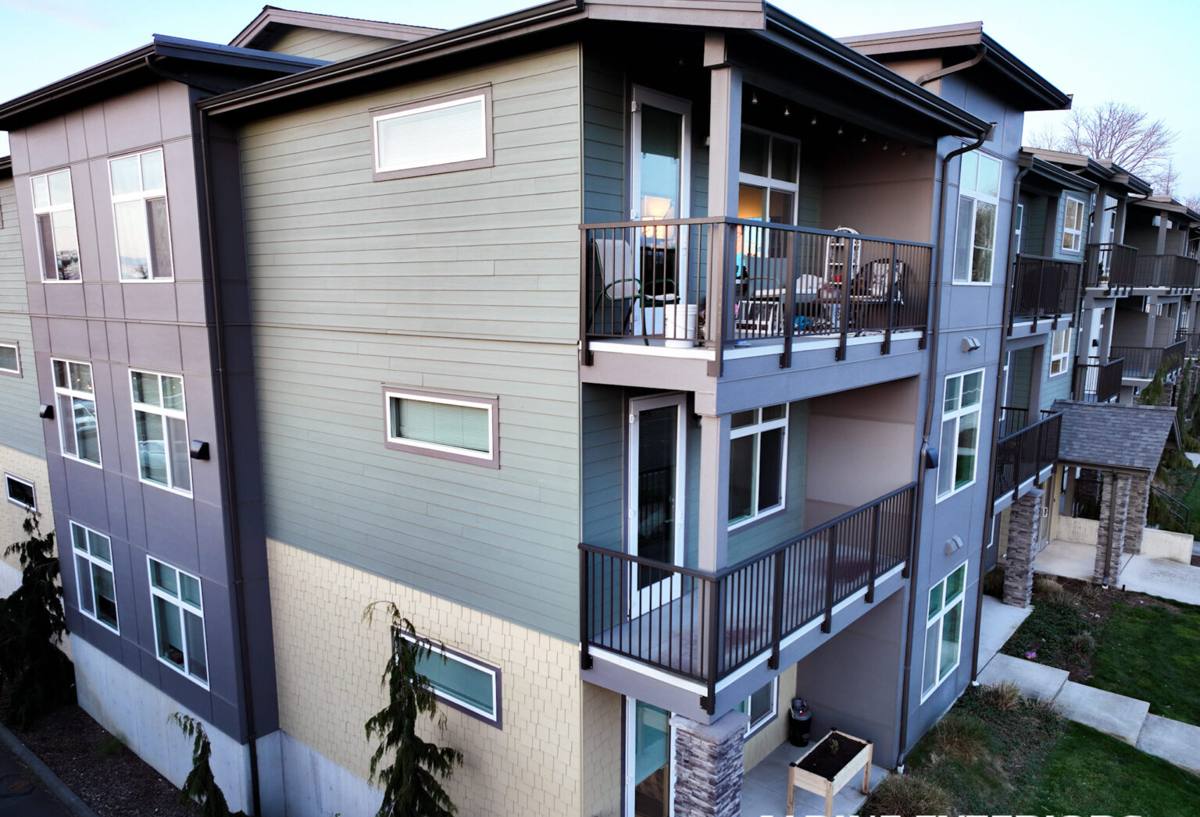
What Sandy Point's Waterfront Exposure Does to Windows
Every part of Whatcom County deals with the same general marine climate, but Sandy Point takes it more directly than most. There's little standing between the wind and salt off the water and the front of a house, and that changes the math on what a window actually needs to hold up here.
Salt Air and Hardware Corrosion
Homes set directly on or near the beach take a steady, concentrated dose of salt-laden air that inland Whatcom County properties rarely see. Salt accelerates corrosion on window hardware, screen frames, and fasteners, and it breaks down lower-grade finishes years before they'd wear out in a drier or more sheltered location. On a Sandy Point home, hardware and fastener quality isn't a detail to skip past — it's one of the first things that decides how long a window actually lasts.
Wind-Driven Rain Off the Strait
With open water right in front of many Sandy Point homes, storms don't just drop rain — they drive it sideways into window flashing, head trim, and sill pans with real force. That sideways load tests the quality of the installation far more than it tests the window unit itself. A quality window with a sloppy flashing job will leak on an exposed lot like this; a modest window installed correctly, with a properly pitched sill pan and lapped flashing, usually won't. Most of the water intrusion we find around windows in this kind of exposure traces back to how the window was installed, not what brand it was.
A Long Moss and Mildew Season
Mild temperatures and near-constant moisture give moss and mildew a growing season that can run most of the year on shaded or north-facing walls, and the humidity off the water keeps things damp longer here than at inland properties. Window sills that don't drain well hold onto that moisture, and on wood-framed windows it eventually shows up as soft spots or slow rot at the sill and lower corners — usually well before a homeowner notices anything beyond peeling paint.
Sandy Point's Housing Stock: Why Window Needs Vary Lot to Lot
Sandy Point isn't a single housing type, and that matters for window work. Older beach cottages and cabins, some converted from seasonal use to full-time residences over the years, often have window openings that predate current standard sizing, along with flashing details — if there ever were any — that were never built for year-round exposure to this climate. Newer construction on the same streets tends to have more standard openings but still needs materials and installation details matched to a direct-waterfront lot, not a generic countywide spec. And because Sandy Point lots vary in how exposed they are — a home facing open water head-on versus one set back or partially sheltered by neighboring structures — two houses close together can genuinely need different scopes of work.
We treat that as a starting point, not a footnote. A field assessment on a Sandy Point home means looking at the actual openings, the actual orientation to wind and water, and the actual condition of what's there now, rather than assuming every house on the point needs the identical fix.
Choosing the Right Frame Material for This Exposure
There's no single correct answer for every home, but the trade-offs matter more on a direct-waterfront lot than they would further inland, where the margin for a lower-grade material is a little wider.
| Frame Material | Moisture & Corrosion Behavior | Typical Maintenance | Realistic Lifespan on a Waterfront Lot |
|---|---|---|---|
| Vinyl | Won't rot; seam and weld quality matters more here than in a sheltered location | Low; regular track and weep-hole cleaning to clear salt buildup | 15-25 years |
| Fiberglass | Dimensionally stable, strong resistance to moisture and corrosion | Low | 25-35+ years |
| Wood, painted or clad | Attractive but vulnerable at joints and sills without diligent, ongoing upkeep | Higher; more frequent finish maintenance this close to salt air | 10-25 years depending on upkeep |
| Aluminum | Conducts cold and corrodes over time under direct salt exposure unless heavily finished | Moderate to higher near the water | 15-25 years |
On lots with the most direct exposure to wind and salt off the Strait, we lean toward vinyl or fiberglass frames with corrosion-resistant hardware, simply because they hold up with less maintenance in conditions like these. That's not a rule we apply blindly — a homeowner who wants a wood-look interior, or who's restoring an older cottage's original character, has real options too, and we'll walk through what that means for long-term upkeep before you decide.
Full-Frame Replacement vs. Insert Replacement
One of the first decisions on any Sandy Point window project is whether to do a full-frame replacement, which takes the old window out down to the rough opening and rebuilds the flashing from scratch, or an insert replacement, which fits a new window into the existing frame. Insert replacement is faster and less disruptive to the surrounding siding and trim, and it's a reasonable choice when the existing frame is sound and was properly flashed to begin with. Full-frame replacement takes longer and costs more, but it's the honest recommendation whenever there's already moisture damage at the sill or jambs, or when the original flashing was never adequate for this kind of direct water exposure — which is common on older Sandy Point cottages that were built for seasonal, not year-round, use.
What Drives the Cost
| Factor | Why It Matters on a Sandy Point Home |
|---|---|
| Number and size of openings | More or larger windows mean more material and more flashing labor |
| Full-frame vs. insert | Full-frame involves more demolition, framing repair, and flashing work |
| Existing moisture damage | Rot at the sill or jambs found once the old unit comes out adds repair scope |
| Frame material chosen | Vinyl, fiberglass, wood, and aluminum carry different material costs and lifespans |
| Exposure level of the lot | A home facing open water directly may warrant heavier-duty hardware and flashing than a more sheltered lot nearby |
| Site access and staging | Beach-adjacent lots can add setup time and material staging considerations |
These are general cost drivers, not a quote. We won't put a real number on a project until we've walked the property, because two homes on the same stretch of Sandy Point can need very different scopes once we're actually looking at the existing openings.
Installation Details We Won't Skip
Most window failures we see in this kind of exposure aren't failures of the window itself — they're shortcuts in the flashing and sealing work that don't show up until a wet season or two later. On a Sandy Point install, that means:
- A properly pitched sill pan that sheds water outward rather than letting it pool under the frame
- Head flashing integrated with the housewrap or building paper above the window, lapped to shed water downward and outward
- Jamb flashing tied into the surrounding wall assembly, not left to rely on caulk alone
- Weep holes and drainage paths left clear and functional rather than sealed shut during installation
- Corrosion-resistant fasteners and hardware rated for sustained, direct salt exposure
- Insulation and air sealing around the frame that doesn't trap moisture against the framing
None of this adds much to the cost of a project relative to the window itself. Skipping it is what turns a window that should last decades into one leaking behind the wall within a few years — and on an exposed lot like Sandy Point, that timeline can be a lot shorter than homeowners expect.
Our Process, Start to Finish
- On-site assessment — we look at the actual openings, the home's orientation to wind and water, and the condition of the existing frames and flashing
- Honest recommendation — insert replacement, full-frame replacement, or repair, explained with the reasoning behind it, not just whichever option is fastest to sell
- Material selection — frame material and hardware matched to how exposed the specific lot actually is
- Removal and opening prep — the old unit comes out carefully, and any hidden rot or flashing failure gets addressed before the new window goes in
- Installation and flashing — the new unit is set, shimmed, and flashed in the sequence this climate actually requires, not a shortcut version of it
- Trim and finish — exterior trim integrated to match the surrounding siding and hold up to the same conditions
Signs Your Sandy Point Home Needs Window Attention
- Fogging or condensation between panes, usually a sign of a failed seal on a double- or triple-pane unit
- Drafts or a noticeable temperature difference near a closed window
- Soft, discolored, or spongy trim and sill material, especially on the side of the house facing the water
- Difficulty opening, closing, or latching a window that used to work smoothly
- Stiff, pitted, or corroded hardware and hinges
- Peeling paint or bubbling finish on wood-framed windows
- Visible gaps, cracked caulk, or daylight around the frame from inside
- Water staining on interior wall or ceiling surfaces near a window
Any one of these is worth a look before it becomes a bigger repair. On an exposed lot, problems that would take years to develop further inland can move faster here, so it's worth having them checked rather than waiting out another wet season.
Why a Crew That Already Works Sandy Point Matters
A contractor who only occasionally sees a waterfront property tends to treat Sandy Point like any other Whatcom County address and apply a generic approach built for average conditions. A crew that works this community regularly sees how differently a house on a direct-water lot ages compared to one set back or sheltered — how much faster hardware corrodes, how much more flashing attention a water-facing wall needs, and which details are worth the extra time on install day so a homeowner isn't dealing with a leak after the next storm off the water. That kind of familiarity doesn't come from a spec sheet. It comes from having actually done the work here, on homes with this exact exposure, through more than one wet season.
We also know Sandy Point's mix of older cottages and newer builds well enough to recognize the difference on sight — which openings are likely original and undersized by today's standards, which flashing details were probably never done correctly the first time, and which newer homes just need materials matched to their exposure rather than any structural rework. That saves time during the assessment and helps us give you a straight answer instead of a guess.
Get a Free, No-Pressure Estimate
If your Sandy Point home has windows that are fogging, drafty, hard to operate, or original to a cottage that was never built for year-round exposure, we're glad to take a look and give you a straightforward, honest read on what it actually needs. Reach out using the form below to schedule a free estimate — no pressure, no upsell script.