 Ferndale Siding
 Composite Decking in Nooksack: Built for Whatcom County Weather
Nooksack sits close enough to the coast to catch salt-laden air off the Strait of Georgia, and far enough inland to sit under the same low, wet cloud deck that soaks Whatcom County most of the year. That combination is hard on outdoor living spaces. A deck here isn't just a place to put a barbecue — it's a structure that has to shed water fast, resist moss and algae for eight or nine months a year, and hold up to salt air without corroding its own fasteners. Composite decking, installed correctly, handles all three better than wood. Installed carelessly, it fails in the same ways wood does, just more slowly and expensively.
This page covers what we actually do differently for composite decks in the Nooksack area, not a generic pitch for composite as a product.
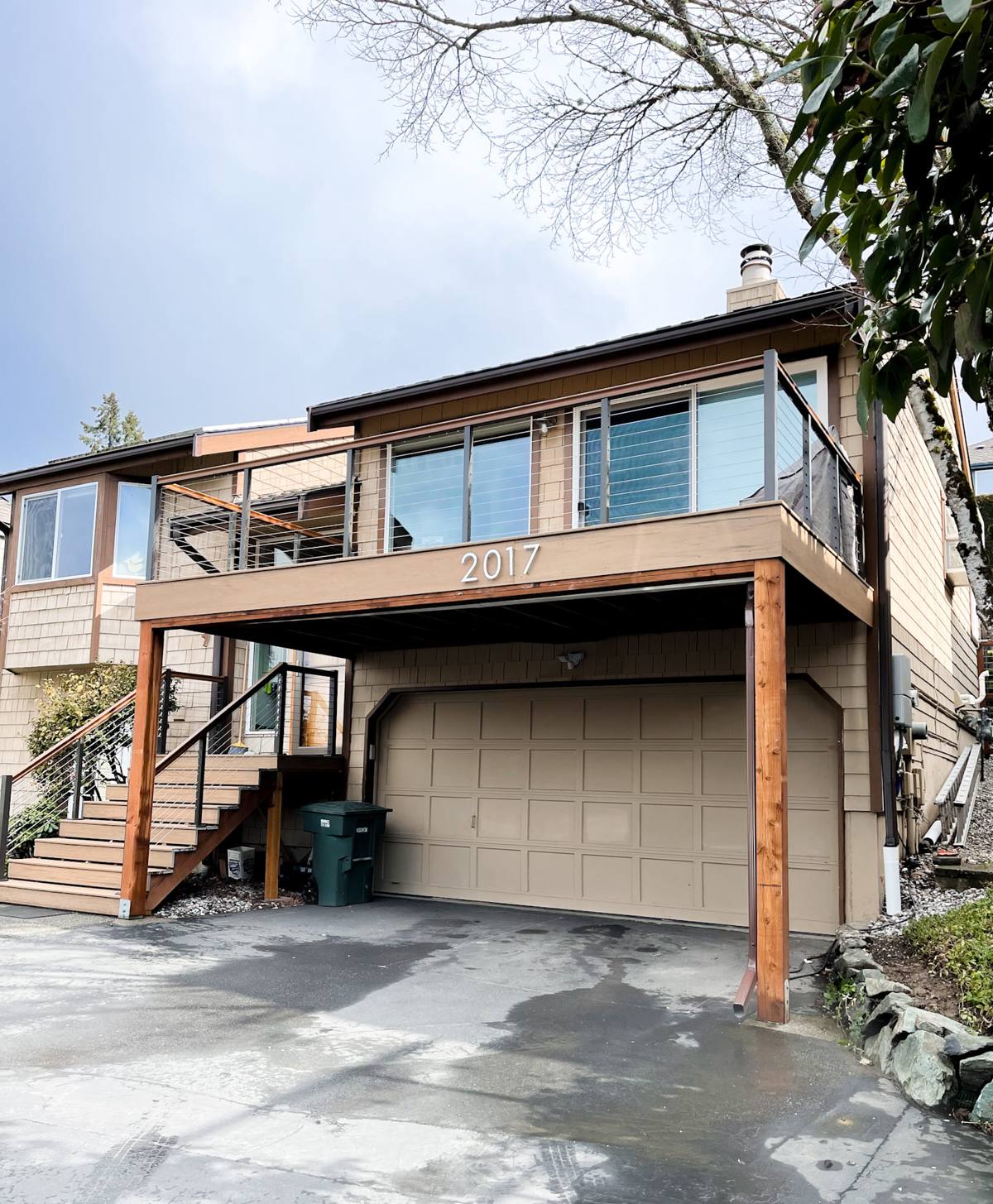
Why Composite Makes Sense Here — And Where It Still Needs Help
Composite boards resist rot, don't need annual staining, and shrug off the moss and mildew that colonize wood decking in our shoulder seasons. That's the appeal. But composite is not maintenance-free, and it is not immune to the local climate — it just fails differently than wood does if the install is wrong.
What composite actually solves
- No annual sanding, staining, or sealing to keep water out of the wood grain
- Consistent color and surface that doesn't cup, split, or splinter as it ages
- Better resistance to the moss and algae film that forms on shaded, damp decks
- No rot risk in the board itself, even with repeated wetting and drying cycles
What it doesn't solve on its own
- Moisture trapped underneath the deck (in the joists, ledger board, or framing) still rots wood structure — composite boards just hide the problem longer
- Cheap or mismatched fasteners still corrode in salt-influenced air, especially near the coast-facing side of a property
- Poor drainage under the boards still grows moss and algae on the composite surface itself, just on top of the board instead of inside it
- Full sun composite still gets hot, and full shade composite still stays damp longer through our wet months
What a Correct Composite Deck Build Involves
Most composite deck problems we get called out to fix aren't the boards' fault — they're framing, drainage, or fastener mistakes made underneath boards that look fine on top. A correct build addresses the structure first.
Substructure and framing
Joists and beams still need to be pressure-treated lumber or an approved structural composite, sized correctly for the span and spaced to the manufacturer's tighter composite spacing requirements (usually closer than standard wood-deck spacing because composite boards flex more than wood under load). We check ledger board flashing and connection to the house carefully — a poorly flashed ledger is the single most common source of hidden rot behind a deck that otherwise looks new.
Drainage underneath the deck
With a full wet season here, water that gets under the deck needs somewhere to go. That means correct joist spacing for airflow, no low spots where the substructure can pond water, and in some cases a drainage membrane or gap system depending on how close to grade the deck sits. Decks built low to the ground or over patios need this addressed specifically, not as an afterthought.
Fasteners and hardware
We use fasteners and structural hardware rated for the corrosion exposure this area actually sees, not just whatever is cheapest at the yard. Hidden fastener clip systems designed for the specific composite board profile keep the deck surface free of exposed screw heads, which also removes a common point where water intrusion and staining start.
Board layout and expansion gaps
Composite boards expand and contract with temperature more than people expect. Gaps at butt joints, picture-frame borders, and against the house need to be set to the manufacturer's spec — too tight and boards buckle in a hot stretch, too loose and the deck looks sloppy and traps debris.
Moss, Algae, and Salt Air: The Three Things That Age a Nooksack Deck
These three factors show up on nearly every deck we look at in this area, whether it's composite or wood:
Moss and algae
Our long wet season and heavy tree cover in and around Whatcom County give moss and algae months to establish on any deck surface that stays damp. Composite resists staining better than bare wood, but a deck that never dries out — because of shade, poor drainage, or debris buildup in the board grooves — will still grow a film on top. Board selection with a textured, capped surface and a layout that lets the deck actually dry between rain events both matter more here than in drier climates.
Driving rain and wind-blown water
Storms off the water push rain sideways, not just straight down. That means fascia boards, stair stringers, and any point where the deck meets the house need flashing and gapping that accounts for wind-driven water, not just vertical rainfall. This is a detail that's easy to skip and shows up as staining or soft framing two or three years later.
Salt air and corrosion
Even well inland from the immediate coastline, salt air travels with the prevailing weather and accelerates corrosion on unprotected metal. Structural screws, joist hangers, and fastener clips that aren't rated for this exposure will rust and weaken years before the composite boards themselves show any wear. This is one of the most overlooked failure points on decks built by crews using generic hardware not chosen for this specific climate.
Composite vs. Wood vs. PVC: An Honest Comparison for This Climate
| Factor | Wood (cedar/treated) | Composite | PVC/vinyl |
|---|---|---|---|
| Rot resistance | Requires ongoing sealing; rots without it | Board itself won't rot; framing underneath still can | Won't rot; framing underneath still can |
| Moss/algae resistance | Low — bare wood holds moisture | Moderate to good with capped, textured boards | Good — nonporous surface |
| Salt air / fastener corrosion risk | Same risk as any deck — depends on hardware choice | Same risk as any deck — depends on hardware choice | Same risk as any deck — depends on hardware choice |
| Annual maintenance | Sanding, staining/sealing most years | Periodic cleaning; no sealing | Periodic cleaning; no sealing |
| Upfront cost | Lowest | Mid to upper-mid | Upper-mid to highest |
| Feel underfoot in cold, wet weather | Natural, but can be slick when mossy | Textured options reduce slip | Can be slicker when wet |
Note that fastener corrosion risk is the same across all three deck types — it's a hardware and installation decision, not a property of the decking material. This is exactly the kind of detail that separates a deck that lasts fifteen-plus years from one that needs structural repair in five.
Our Process for a Composite Deck Build in Nooksack
- On-site assessment — we look at drainage, sun/shade exposure, proximity to mature trees, and how exposed the site is to driving rain and wind before recommending a board profile or layout.
- Framing and structural check — new build or replacement, we verify joist sizing, spacing, and ledger flashing meet code and composite manufacturer spec, not just legacy wood-deck standards.
- Drainage plan — for decks close to grade or over living space below, we address water management under the deck before boards go down, not after.
- Fastener and hardware selection — corrosion-rated hardware appropriate to this area's salt air exposure, chosen for the specific board system being installed.
- Installation — correct expansion gaps, hidden fastener systems where the board profile supports them, and clean transitions at stairs, borders, and the house connection.
- Walkthrough — we go over what maintenance the deck actually needs (usually just periodic washing) and what to watch for as it settles through its first wet season.
What to Ask Any Contractor Before They Touch Your Deck
Whether you call us or someone else, these questions separate a crew that understands this climate from one that's just installing boards:
- What fastener and hardware corrosion rating do you use, and why that one for this area?
- How do you handle drainage for a deck built close to grade or over a patio?
- What joist spacing do you use under composite, and does it match the manufacturer's requirement for this board?
- How do you flash the ledger board where the deck meets the house?
- What expansion gap do you build in at butt joints and against the house?
- Do you warranty the labor separately from the manufacturer's product warranty, and for how long?
A contractor who answers these specifically, without hedging, has probably built decks in this exact climate before. One who shrugs and says "composite doesn't need any of that" hasn't.
Why Local Experience with Nooksack Properties Matters
A deck design that works fine in a dry inland climate can be the wrong call here. Crews who haven't worked Whatcom County's wet season, salt-influenced air, and moss pressure tend to default to generic fastener choices and standard drainage details that are fine elsewhere but undersized for what this area actually throws at a structure over a few winters. We work decks and siding throughout Ferndale and the surrounding Whatcom County communities, including Nooksack, and the framing, drainage, and hardware decisions above are the ones we've seen matter most on the decks we get called back to for repairs versus the ones that just keep working.
If you're planning a new composite deck or replacing an aging wood one, we're happy to take a look at your site and walk through what it actually needs — no pressure, no obligation. There's a free estimate request form below; tell us a bit about the property and we'll follow up.