 Ferndale Siding
 Why Lummi Island Is a Different Kind of Siding Job
Lummi Island sits out in the salt water of Whatcom County, and that changes what siding has to survive. Homes here take a steady dose of salt-laden air off the water, wind-driven rain that hits walls sideways instead of just falling on the roof, and a wet season that runs long enough for moss and algae to get a real foothold on north- and west-facing walls. None of that is unique to any one house on the island — it's the baseline every exterior surface out there has to deal with, year after year.
Regular vinyl, thin-gauge wood composites, and unfinished cedar all struggle with some combination of those three stresses. Salt air accelerates corrosion on fasteners and trim hardware. Driving rain finds every weak seam, lap, and penetration and pushes water behind the cladding if the install isn't done right. And a long moss season means anything with an absorbent or textured surface becomes a magnet for growth that traps moisture against the wall. We install James Hardie fiber cement siding exclusively because it's the one product system built to hold up against all three at once, and because getting it installed correctly matters as much as the material itself out here.
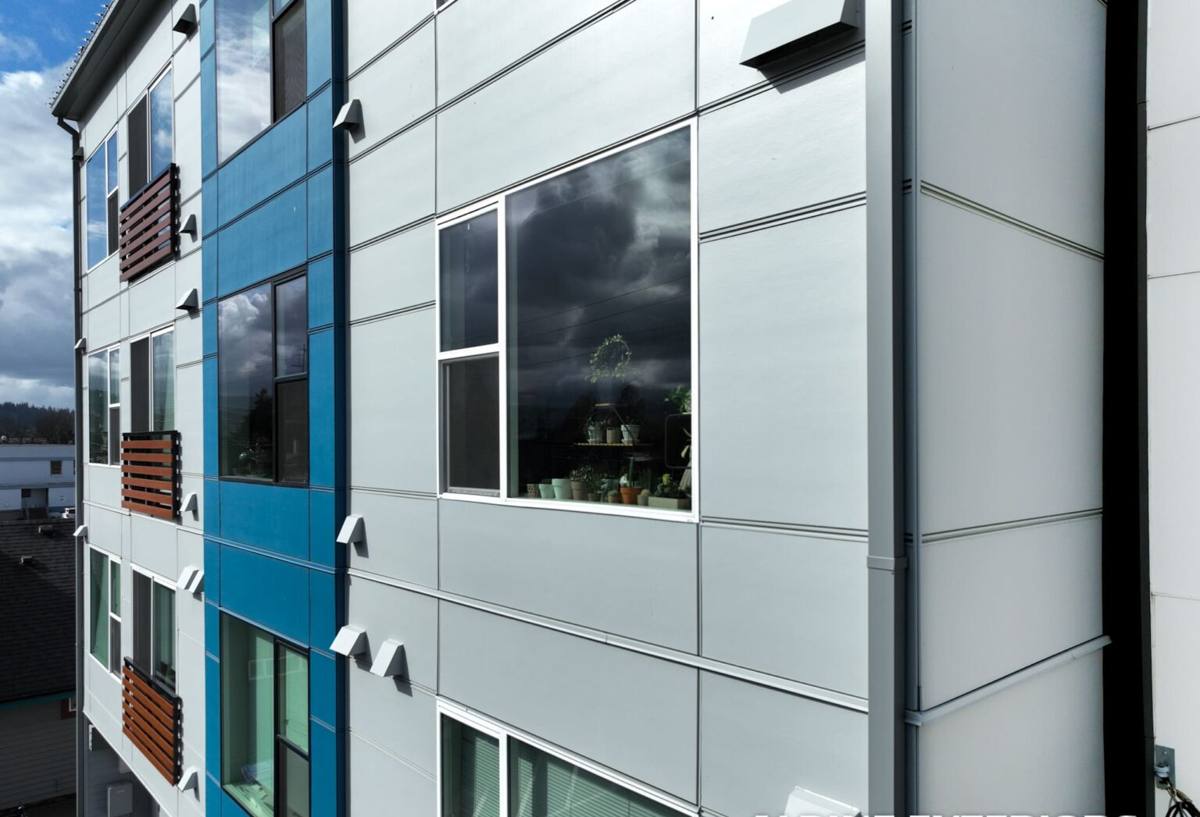
What James Hardie Brings to a Marine-Influenced Climate
James Hardie's fiber cement is cement, sand, and cellulose fiber — not wood, not vinyl. That composition is what makes it a good match for Lummi Island conditions specifically:
- It doesn't rot or absorb water the way wood-based siding does. Salt air and constant damp are what kill wood siding over time — fiber cement isn't organic material, so it isn't food for rot fungi and doesn't swell and split the way engineered wood products can.
- It's dimensionally stable in swings between wet and dry. Vinyl expands and contracts with temperature and can warp or pull loose over the years; fiber cement holds its shape, which keeps seams and laps tight against wind-driven rain.
- The ColorPlus factory finish is baked on, not just painted after install. That finish is engineered to resist fading and holds up better against salt exposure than a standard field-applied paint job, which is a real advantage on an island where refinishing trips aren't quick or cheap.
- It's non-combustible. Not the primary driver for a coastal job, but it's part of why we standardized on Hardie across every site we work.
James Hardie also builds climate-specific HZ product lines — HZ5 for colder, wetter regions like the Pacific Northwest — engineered around moisture and freeze-thaw performance rather than a one-size-fits-all formulation. For a Whatcom County island property, that's the right starting point, not an upsell.
Moss Season and Surface Texture
Moss and algae need three things to take hold: moisture, shade, and a surface they can grip. Textured wood-grain lap siding gives spores more to hold onto than a smoother factory finish does. Hardie's factory-applied finish sheds water and resists the kind of surface breakdown that gives moss a foothold, which means less scrubbing and fewer premature repaints on the shaded, damp-prone sides of a house — exactly the walls that struggle most on a wooded or waterfront lot.
What a Correct Installation Actually Involves
Fiber cement siding is only as good as the install behind it. This is where a lot of the "Hardie didn't hold up" stories actually trace back to workmanship, not the product. On a salt-air, high-rain site like Lummi Island, we pay particular attention to:
Water Management Behind the Cladding
Every wall assembly needs a drainage plane — a weather-resistive barrier, correctly lapped flashing at windows, doors, and penetrations, and a rainscreen gap where conditions call for it — so that any water that does get past the siding has somewhere to go besides the sheathing. Driving rain off the water finds gaps that a calmer inland site would never expose.
Fastening and Clearances
James Hardie specifies exact nailing patterns, fastener types, and minimum clearances from grade, roofing, and other flatwork. Corrosion-resistant fasteners matter more here than almost anywhere else in the county — salt air is hard on standard hardware, and a fastener that starts bleeding rust stains a wall long before the siding itself is due for attention.
Joints, Caulking, and Butt Seams
Every horizontal butt joint and vertical seam is a potential entry point for wind-driven rain. Correct lap spacing, factory-primed cut edges (never bare cut edges left exposed), and the right sealant in the right places are what keep those joints tight through years of the wet, windy weather this location gets.
Trim and Penetration Details
Vents, hose bibs, light fixtures, and other wall penetrations are where poor installs fail first. Each one gets flashed and sealed as part of the water management plan, not treated as an afterthought once the field siding is up.
Siding Options Compared for This Climate
| Material | Salt air / corrosion resistance | Driving rain performance | Moss/algae resistance | Long-term maintenance |
|---|---|---|---|---|
| James Hardie fiber cement (HZ5) | Strong — non-organic, factory finish holds color | Strong when correctly flashed and lapped | Good — smoother factory finish resists buildup | Periodic rinsing; ColorPlus finish extends repaint interval |
| Vinyl siding | Fair — hardware and trim can corrode faster than the panel itself | Weak seams; can be pushed by wind-driven rain over time | Fair — smooth but seams and J-channel trap debris | Low, but warping/fading are common in coastal exposure |
| Engineered wood (e.g. LP SmartSide) or primed spruce | Weaker — organic substrate is vulnerable to prolonged salt-damp exposure | Vulnerable at unsealed cuts and joints | Weaker — textured, organic surface holds moisture | Higher — repainting and edge-sealing on a shorter cycle |
| Unfinished cedar | Weak — natural wood in constant salt-damp air weathers and checks | Vulnerable without diligent finish maintenance | Weak — classic moss and algae substrate | Highest — refinishing and repair on an ongoing basis |
This is why we don't offer those other products as alternatives. It's not that they can't be installed — it's that we don't think they hold up to what Lummi Island's climate does to a wall over ten or twenty years, and we'd rather stand behind one system we know performs than sell a cheaper option and watch it struggle in year five.
Cost Factors for a Lummi Island Job
Every siding estimate is specific to the house, but a few things move the number more on an island property than they would on a typical inland lot:
| Factor | Why it affects the estimate |
|---|---|
| Access and logistics | Material delivery and crew scheduling around ferry timing can add planning time compared to a mainland job |
| Existing siding removal | Tear-off and disposal of failing wood or vinyl siding adds labor before new siding goes up |
| Water management upgrades | Older homes may need housewrap, flashing, or rainscreen detailing brought up to current standards during the reside |
| Wall complexity | Dormers, multiple gables, and trim-heavy elevations take more time to flash and finish correctly |
| Siding profile and trim package | Lap width, shingle-style accents, and trim boards all carry different material and labor costs |
How Our Process Works
- On-site assessment. We look at the existing siding, wall assembly, and problem areas — the shaded sides, the wall that takes the worst of the weather — before we quote anything.
- Written estimate. Product line, profile, color, trim package, and water management scope are spelled out, not left vague.
- Scheduling built around the site. We plan material staging and crew days with the realities of an island job in mind, so the work isn't held up mid-project.
- Installation to James Hardie's fastening, flashing, and clearance specs. Not a generalized approach — the specs written for this product, in this region's HZ line.
- Final walkthrough. We go over the finished work with you before we call it done.
Why a Crew That Already Works Lummi Island Matters
A contractor who's done siding on the island already understands the logistics — getting materials and crew there and back on a schedule, working around weather windows that can close fast on the water, and building water management details that account for how hard the rain comes in sideways rather than just from above. That's not something you can fully substitute for on a first visit. It also means we've already made the judgment calls a general Whatcom County siding job doesn't require — where to add rainscreen detailing, which elevations need extra attention to flashing, and how much clearance to leave at grade given how damp the ground stays through the wet months.
Maintaining Hardie Siding on the Island
James Hardie siding is low-maintenance, not no-maintenance. A simple annual rinse — a garden hose and soft brush on the shaded, moss-prone walls — keeps salt film and organic buildup from accumulating. Check caulking at trim and penetrations periodically, and keep an eye on any area where plantings or landscaping have grown up against the wall, since that traps moisture against the siding regardless of what it's made of. Compared to repainting a wood-based product every few years or dealing with warped, discolored vinyl, this is a modest routine.
Quick Checklist Before You Hire
- Ask which James Hardie product line and HZ rating they're specifying for this climate zone
- Confirm what water management details — housewrap, flashing, rainscreen — are included, not assumed
- Get the fastener type and nailing pattern in writing
- Ask how butt joints and cut edges will be sealed and primed
- Confirm the crew has worked on island or waterfront properties before, not just inland sites
- Get a written estimate that breaks out removal, materials, trim, and labor separately
If you're weighing a reside on Lummi Island, we're happy to walk the property, look at what your current siding is dealing with, and put together a straightforward, no-pressure estimate for a James Hardie install built for this climate. Use the form below to get started.